


Site Admin
25. George Saimes
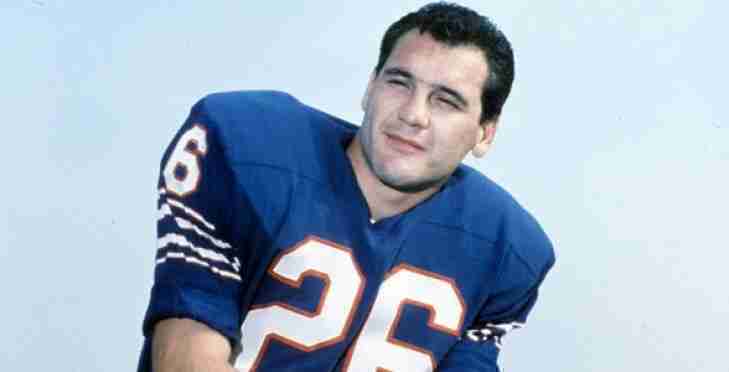
As for the Bills, they inducted the two-time AFL Champion into their Wall of Fame in 2000.
19. Kyle Williams
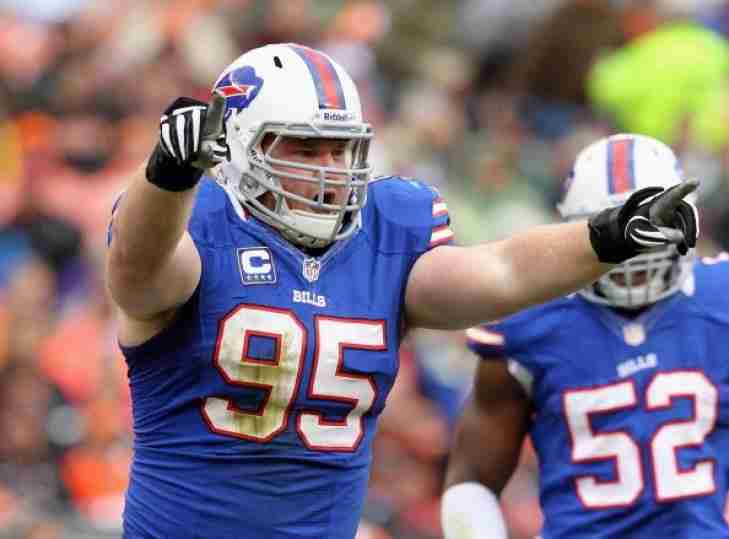
Selected in the fifth round (134th overall) of the 2006 NFL Draft out of LSU, Kyle Williams was widely written off by talent evaluators as undersized for an interior defensive lineman. Standing 6 feet 1 inch and tipping the scales around 300 pounds, "Meatball" proved his doubters wrong almost instantly, seizing a starting job as a rookie and serving as the uncontested heart and soul of Western New York for 13 seasons.
What Williams lacked in prototypical length, he made up for with a low center of gravity, cat-like initial quickness, and a motor that never stopped. Operating as a 3-technique and nose tackle across multiple defensive schemes, he used leverage and explosive hand placement to shoot interior gaps before guards could set their bases. Against the run, he routinely disrupted plays in the backfield, while his relentless effort as a pass rusher made him a constant threat to push the pocket from the inside.
Williams secured his full-time starting position in 2006 and gradually established himself as one of the league’s most esteemed interior defenders. His standout season came in 2010, showcasing an exceptional performance. During that year, he recorded 73 tackles, 5.5 sacks, and 14 tackles for loss, earning Second-Team All-Pro honors and his first Pro Bowl invite.
Throughout the decade, consistency defined his career. Williams earned four additional Pro Bowl selections in 2012, 2013, 2014, and 2016. In the 2013 season, he partnered with Marcell Dareus, Mario Williams, and Jerry Hughes to create the formidable "Cold Front" defense, achieving a personal best with 10.5 sacks while playing as a defensive tackle.
Williams, the longest-serving Bill during a prolonged postseason absence, showcased his leadership culminating in 2017. He played a key role in returning Buffalo to the playoffs after 17 years, even lining up as a fullback to score a rushing touchdown in Week 17, securing their spot. He finished his illustrious career in 2018 with his sixth Pro Bowl selection before retiring.
Williams, who played his entire career as a Bill, played 183 games (178 starts), with 610 tackles, 103 tackles for loss, and 48.5 sacks—setting the franchise record for sacks by a defensive tackle.
30. Nate Odomes
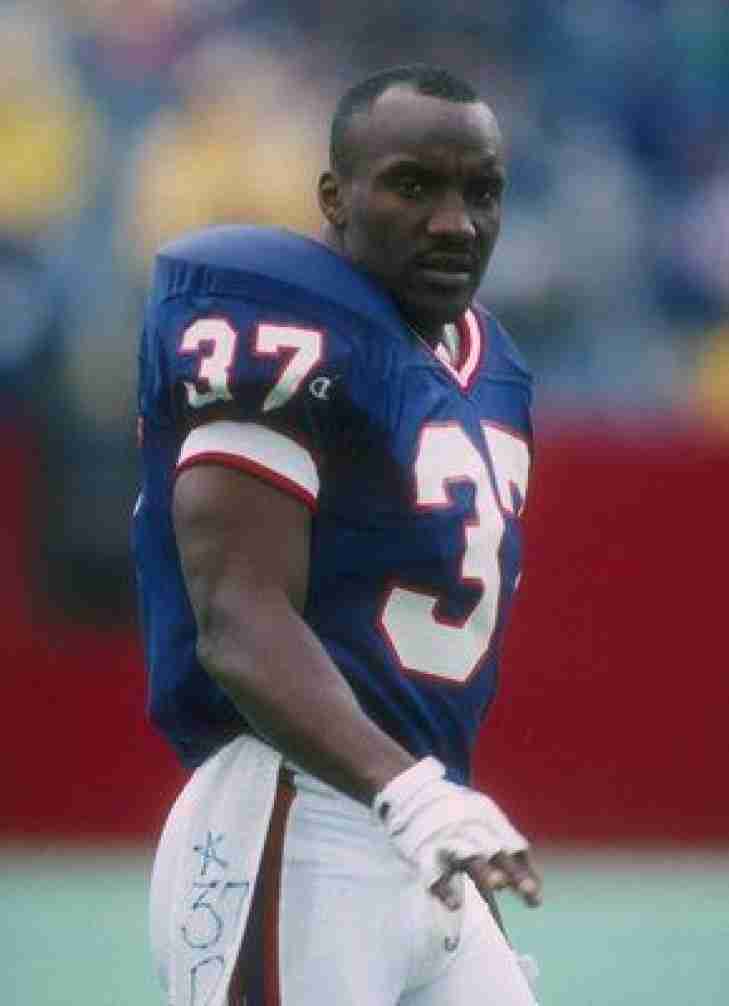
Taken in the second round (29th overall) of the 1987 NFL Draft out of Wisconsin, Nate Odomes stepped directly into the Buffalo secondary and became a key defensive pillar throughout the franchise's legendary run of four straight AFC Championships. Functioning as a ball-hawking shutdown cornerback on the outside, Odomes possessed the rare instincts and closing speed that routinely turned defensive stops into game-changing turnovers.
Odomes integrated physical press coverage at the line of scrimmage with outstanding ball-tracking abilities in deep zone schemes. When defending against the opponent's best wideouts, he employed quick, fluid hips and an aggressive recovery burst to break up route stems. His defining trait was his diagnostic vision: Odomes immediately recognized quarterback eye progression, jumping intermediate passing lanes to turn precise throws into quick interceptions.
Odomes has a talent for making crucial plays in high-pressure postseason moments. In the notable 1992 AFC Wild Card Game—"The Comeback"—he made a decisive interception of Oilers quarterback Warren Moon, which led to the game-winning field goal and marked the greatest comeback in playoff history. He maintained his reputation for clutch performance by intercepting passes in both Super Bowl XXVII and Super Bowl XXVIII.
His individual performance peaked during his 1993 campaign. Odomes co-led the NFL with a career-high nine interceptions, spearheading Buffalo's pass defense and earning his second consecutive Pro Bowl selection and Second-Team All-Pro honors.
During his seven seasons with the Bills (1987–1993), Odomes started 107 regular-season games, recording 26 interceptions, eight fumble recoveries, and two defensive touchdowns. He signed with the Seattle Seahawks as a free agent in 1994, but severe knee injuries kept him out for two seasons. He made a brief comeback with Atlanta in 1996. Odomes's significant impact was honored when he was named to the Buffalo Bills 50th Anniversary Team.
22. Butch Byrd
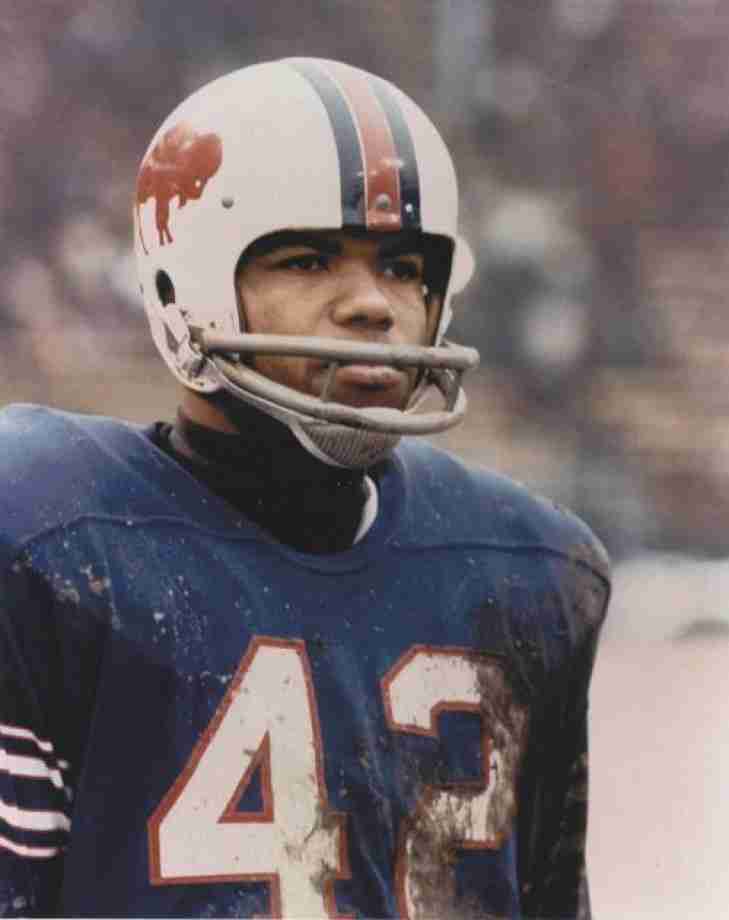
Chosen in the fourth round (25th overall) of the 1964 AFL Draft out of Boston University, Butch Byrd arrived in Western New York as an explosive, physical athlete. Stepping straight into the starting lineup as a rookie, Byrd locked down the right cornerback spot and quickly established himself as the premier ball-hawking defensive back in the American Football League.
Byrd uniquely combined sprinter's quickness with the physical strength typical of a 1960s cornerback. Playing on the island in Lou Saban's defense, he was adept at reading quarterbacks’ eyes, intercepting boundary routes, and breaking up deep passes. When he gained possession, his experience as a college running back quickly became evident—transforming interceptions and punt returns into pivotal scores with his open-field running ability.
Byrd made a notable impact in his rookie 1964 season, intercepting seven passes and returning one for 72 yards and a touchdown. He also recorded another interception in the postseason, contributing to Buffalo's 20–7 win over San Diego in the AFL Championship. His dominance reached its peak during Buffalo's 1965 title defense, where he snagged five interceptions while also returning punts. Byrd was named First-Team All-AFL and earned his second of five AFL All-Star selections as the Bills secured back-to-back AFL Championships.
Byrd was a relentless big-play threat in the late 1960s. In 1966, he intercepted six passes and returned a 74-yard punt for a touchdown in the AFL Championship Game. He received First-Team All-AFL honors in 1966 and 1969, and Second-Team All-AFL awards in 1964 and 1968. Over seven seasons with Buffalo, he started 98 straight regular-season games without missing any.
After the 1970 season, the Bills traded Byrd to Denver, where he played one final year in 1971 before retiring. His career excellence was recognized by the Pro Football Hall of Fame when he was named to the AFL All-Time Second Team.
In Western New York, Byrd played in 98 regular-season games, leaving as the undisputed single-season and career king of the Bills' secondary. Over half a century later, he remains Buffalo's all-time franchise leader in interceptions (40), interception return yards (666), and interception return touchdowns (5).
