


Site Admin
207. Savannah Leaf

206. Reed Kessler

17. Jose Vidro
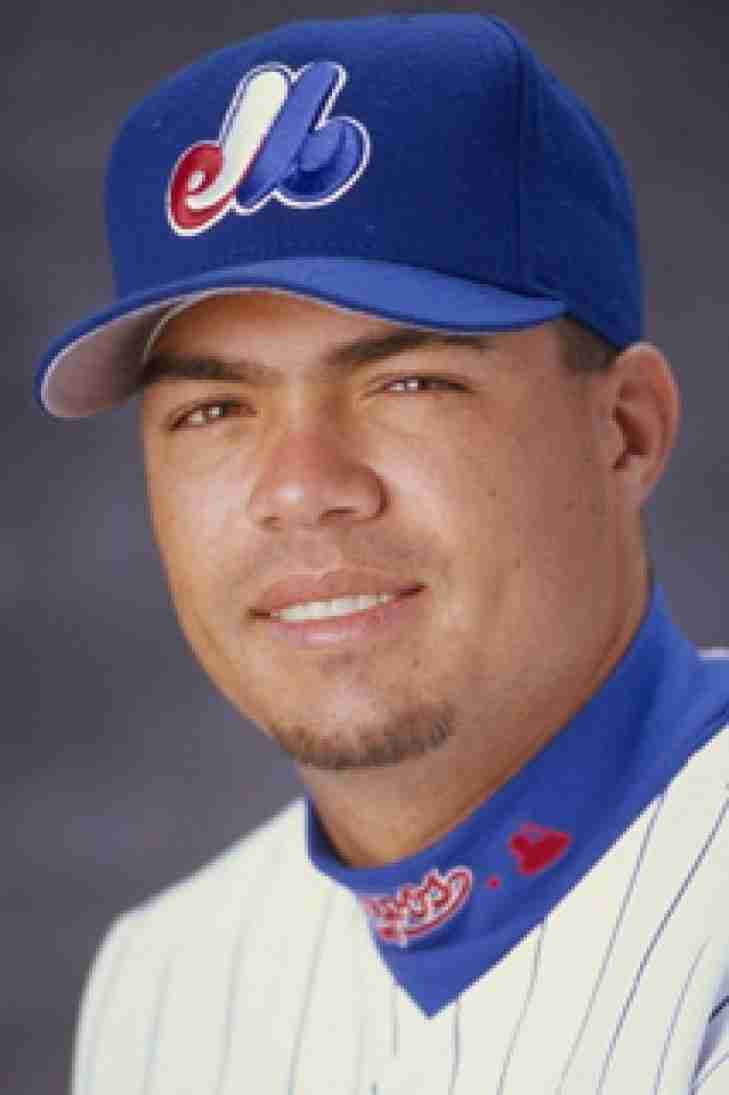
Jose Vidro, a proud Mayagüez native from Puerto Rico, was a switch-hitting second baseman who became one of the most challenging batters in the National League around the turn of the century. Although he didn't draw as much national attention as some of his more flamboyant, power-hitting peers, Vidro’s exceptional wrists and outstanding hand-eye coordination made the batter's box his domain of precise line-drive hitting.
His progression from a minor role to a key player peaked during an outstanding 2000 season. Vidro overwhelmed National League pitchers with a smooth, level swing from both sides of the plate, hitting an impressive 200 times and leading the league with 51 doubles. He also added a career-best 24 home runs and 97 RBIs, maintaining a hot .330 batting average. These achievements earned him his first All-Star appearance and cemented his status as a vital part of the organization.
Vidro consistently upheld an elite offensive level well beyond a single summer, demonstrating notable reliability. He showcased a series of high-average seasons, earning back-to-back All-Star selections in 2002 and 2003. His outstanding 2003 season—batting .310 with 36 doubles and a.397 on-base percentage—earned him the National League Silver Slugger Award as the league's top offensive second baseman. When the franchise moved to Washington before the 2005 season, Vidro played a vital role as a cultural link, anchoring the middle of the lineup during the Nationals' first season.
However, when considering the overall historical record, Vidro’s highest potential can sometimes be viewed with nuance. His bat was undeniably exceptional, yet his all-time franchise ranking is hampered by his weaker defensive stats. His bulky physique and ongoing lower-body injuries, such as chronic knee and ankle issues, notably restricted his lateral movement, making it difficult to reliably execute impressive double plays or make defensive plays that save runs.
Following the 2006 season, the front office traded the veteran infielder to the Seattle Mariners for Chris Snelling and Emiliano Fruto. Vidro hit 1,280 times with the Expos/Nationals, including 293 doubles, 115 home runs, and 549 RBIs, with a .301/.364/459 slash line (113 OPS+).
23. Rusty Staub
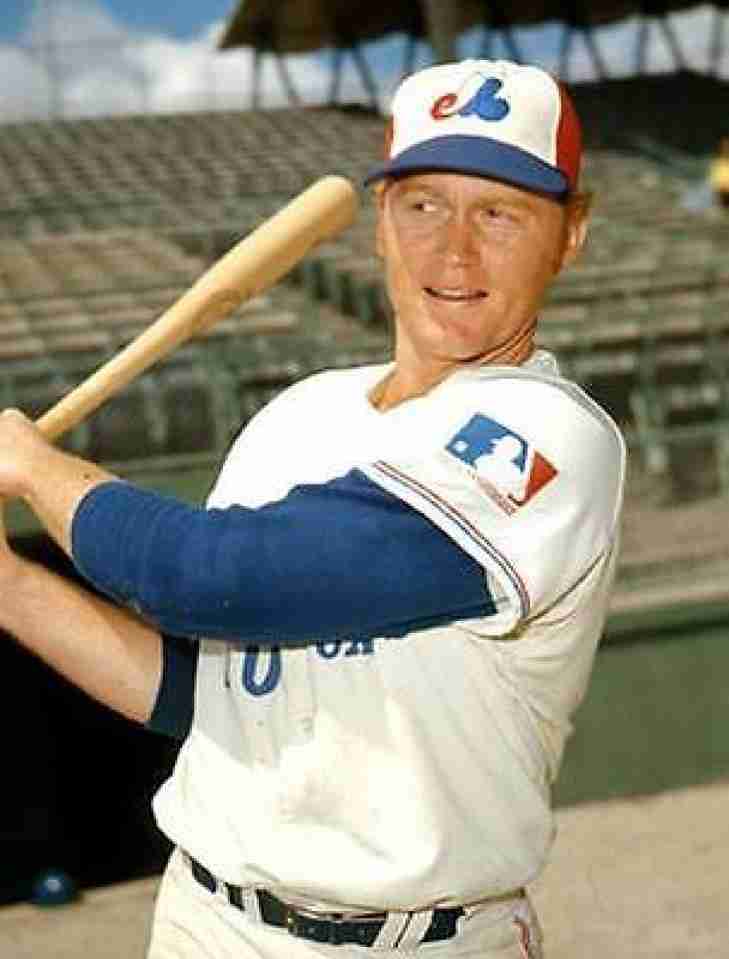
When the expansion Montreal Expos took the field for their inaugural season in 1969, they desperately needed an identity. They found it in Rusty Staub. With an unmistakable shock of red hair, an incredibly disciplined left-handed approach, and a genuine eagerness to learn French so he could converse directly with the fans, Staub didn't just become the young franchise’s first legitimate star—he became a cultural icon in Quebec. Completely embraced by the local faithful, who affectionately christened him Le Grande Orange, Staub turned Parc Jarry into his personal sanctuary during three of the most dazzling, high-volume offensive seasons the city would ever witness.
His introductory 1969 campaign in Canada was a masterclass in elite plate discipline and high-leverage execution. Staub completely paralyzed National League pitchers, launching 29 home runs, drawing an astonishing 110 walks, and batting a brilliant .302. He weaponized his deep understanding of the strike zone to generate a magnificent, league-leading .426 on-base percentage—an explosive franchise-record clip that set the gold standard for expansion team table-setters.
Far from a single-summer outlier, he sustained that elite efficiency through the next two calendars. In 1970, Staub clubbed a career-high 30 home runs and walked 112 times while driving in 94 runs. He backed it up in 1971 by playing in all 162 games, collecting a career-best 186 hits and batting .311. Across all three full seasons of his initial Montreal residency, he earned consecutive All-Star selections and was arguably one of the toughest outs in the Senior Circuit.
Yet, as the small-market Expos scrambled for roster depth, the front office made the highly unpopular decision to trade their franchise face to the New York Mets prior to the 1972 season. It broke the hearts of Montreal fans, but the deep-seated mutual adoration never truly faded. After a long, productive journey through New York, Detroit, and Texas, Staub engineered a brief, highly emotional homecoming in July 1979. Though it was just a short "cup of coffee" consisting of 38 games primarily as a veteran pinch-hitter, the roar of the Montreal crowd upon his return beautifully underscored his permanent place in the fabric of Canadian baseball history.
With the Expos, Staub appeared in 518 games. He accumulated 508 hits, 86 doubles, 78 home runs, and 289 RBIs. Driven by 310 walks against just 206 strikeouts, he generated an exceptional .296/.402/.481 slash line—good for an elite 146 OPS+.
