


Site Admin
342. Asdis Hjalmsdottir
341. Gaetane Thiney

36. Al Oliver
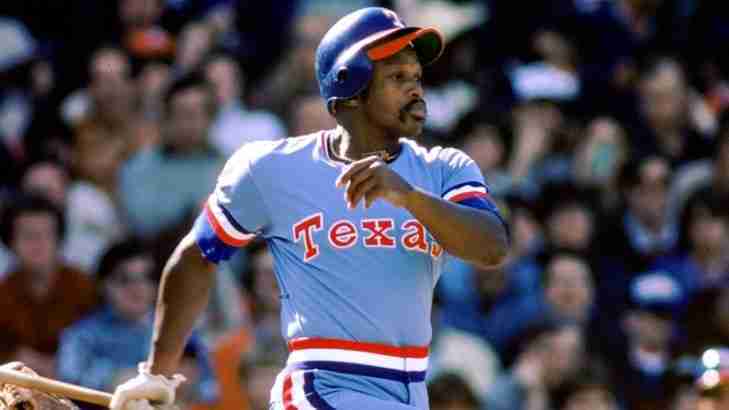
When Al Oliver arrived in Arlington before the 1978 season as part of the first four-team blockbuster trade in major league history, he was already a seasoned, World Series champion with the Pittsburgh Pirates. Known as "Scoop" for his smooth fielding at first base, the left-handed hitter brought a pure, relentless line-drive swing to the American League. Despite switching leagues, Oliver's performance remained consistent: he simply continued to hit baseballs with power and precision.
Oliver transformed contact hitting into a model of consistency during his Texas years, challenging the rising trend of high-strikeout sluggers. He reliably posted a quality batting average every night, hitting over .300 in each of his four seasons with the team and always finishing at least ninth in the American League batting standings. His outstanding bat-to-ball technique combined with significant gap power, as he sprayed line drives into Arlington Stadium's corners to gather an impressive 668 hits during his relatively brief stay.
His standout offensive season came in 1980, during an impressive and durable iron-man campaign. Playing all 163 games for the Rangers and sporting the number 0, Oliver used his smooth swing to achieve a .319 batting average. He set personal bests across multiple categories, accumulating 209 hits, hitting 43 doubles, and driving in 117 runs, earning his first All-Star nod in Texas and the AL Silver Slugger Award as an outfielder. He continued his strong performance in the strike-shortened 1981 season, batting .309 with 29 doubles in 102 games, earning a second straight All-Star selection and another Silver Slugger, this time as a designated hitter.
That impressive stint in Texas ended abruptly before the 1982 season, when the Rangers traded him to the Montreal Expos. Oliver quickly won a National League batting title in Canada and surpassed 2,700 career hits. However, his greatest offensive achievements occurred during his multiple All-Star years in Texas.
He accumulated 668 hits, 135 doubles, 49 home runs, and 337 RBIs while generating a stellar .319/.361/.478 slash line (134 OPS+) with Texas.
35. Will Clark
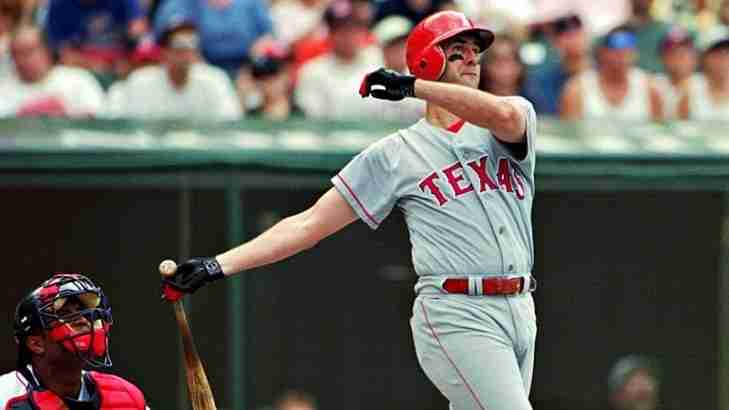
When Will "The Thrill" Clark arrived in Arlington ahead of the 1994 season, he faced the unenviable task of replacing a franchise icon in Rafael Palmeiro at first base. Having already established himself as a fierce, intense superstar with the San Francisco Giants, the left-handed hitting master brought a pristine, textbook swing and an unassailable competitive fire to the Lone Star State. While the national media frequently suggested he was entering a mid-career decline, Clark quickly proved that his pure hitting mechanics and high-leverage instincts were entirely intact.
He made an immediate, tone-setting impression during his inaugural 1994 summer in Texas. Clark silenced the critics by batting a blistering .329, hitting 13 home runs, and driving in 80 runs in just 110 games before the player strike abruptly ended the season. He earned an American League All-Star selection and a top-10 finish in the AL MVP race.
Far from declining, Clark became the steady hand at the heart of a highly explosive Rangers batting order. Across his five full seasons with the franchise, he was a model of line-drive consistency, routinely frustrating opposing pitching staffs by refusing to give away an at-bat. He batted over .300 in four of his five years in Texas, showcasing elite strike-zone discipline to post a stellar, premium .395 on-base percentage during his tenure.
His level-headed leadership and veteran stability reaped massive rewards for the organization down the stretch, anchoring the infield for the historic 1996 and 1998 squads that captured the franchise’s first two American League West division titles.
Following the 1998 campaign, Clark hit the open market as a free agent, moving on to Baltimore and eventually St. Louis before closing out his borderline Hall of Fame career. With the Rangers, Clark had 663 hits, 126 doubles, 78 home runs, and 373 RBIs while generating a .308/.395/.481 slash line (121 OPS+).
