


Site Admin
10. Alex Karras
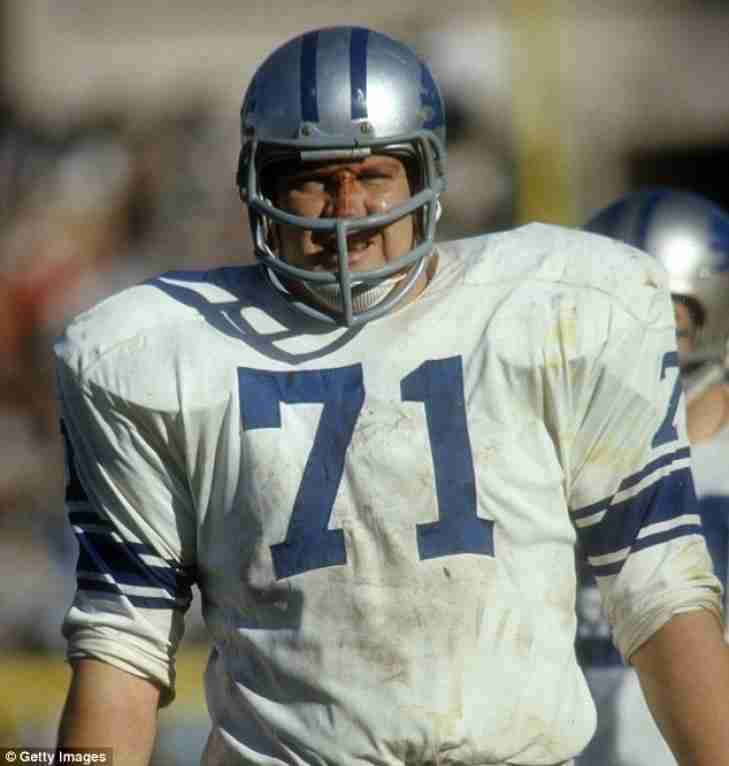
“Never mind that shit, here comes Mongo!”
The 1957 Outland Trophy winner, Alex Karras from Iowa, was selected tenth overall in the 1958 NFL Draft and brought immediate star power to Detroit. At 6-foot-2 and 248 pounds, Karras relied on explosive quickness, violent hand usage, and a relentless motor to penetrate opposing backfields. Alongside Roger Brown, Ndamukong Suh-precursor defensive tackle pressure, and a punishing front four, Karras anchored Detroit's defense throughout the 1960s.
When the whistle blew, Karras was pure bedlam for opposing interior linemen. He lacked the towering height of traditional tackles, but he weaponized his lower center of gravity with a devastating bull rush and a lightning-quick arm-over move that left guards lunging at air. In an era before sacks were an official stat, Karras made a habit of living in the backfield, most famously during the 1962 Thanksgiving Day "Thanksgiving Day Massacre" against Green Bay. Karras and the Lions' front four subjected Vince Lombardi’s unbeaten Packers to a brutal afternoon, sacking Bart Starr 11 times—including a safety by Karras—to hand Green Bay its only loss of the season.
Karras established his dominance early, reeling off three consecutive First-Team All-Pro selections and Pro Bowl nods from 1960 to 1962. His trajectory hit a dramatic wall in 1963 when NFL Commissioner Pete Rozelle suspended him for the entire season for gambling on NFL games and placing bets on his own team. Rather than let the controversy define him, Karras spent the year professional wrestling before marching right back onto the field in 1964 without missing a beat. He earned First-Team All-Pro honors again in 1965 while continuing to terrorize quarterbacks, remaining the emotional center of a defense that routinely ranked among the league's most fearsome. Film study research credits him with roughly 100 career sacks, a staggering output for an interior lineman in that era.
After retiring after the 1970 season, Karras seamlessly transitioned into a mainstream media icon. He punched Mongo in Blazing Saddles, spent years as a color commentator on Monday Night Football, and starred as the dad on the hit 1980s sitcom Webster. Yet despite his Hollywood fame, his gridiron legacy remained elite.
Karras played in 161 regular-season games with 155 starts. He compiled an unofficial 100.0 sacks, 18 fumble recoveries, four interceptions, and one safety. A four-time Pro Bowler, nine-time overall All-Pro (four First-Team selections), member of the 1960s All-Decade Team, and Pride of the Lions inductee (2018). His path to Canton was notoriously delayed, but justice finally arrived when he was chosen by the Centennial Slate Committee.
8. Jack Christiansen
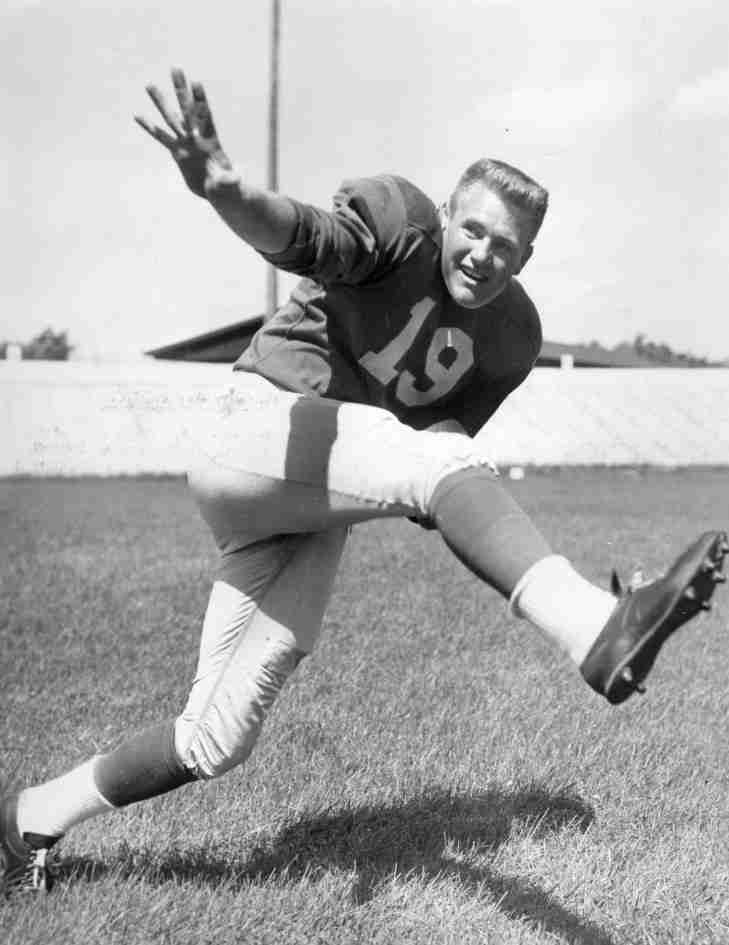
From Colorado A&M, Jack Christiansen was chosen in the sixth round of the 1951 NFL Draft, and he came in as a track-star athlete with game-breaking speed. Operating as the catalyst for Detroit’s secondary—famously nicknamed "Chris's Crew"—Christiansen revolutionized the safety position. His closing speed and instincts forced opposing offenses into a strict game plan: don't throw into his zone, and whatever you do, don't punt the ball anywhere near him.
Christiansen made his debut with an outstanding rookie season in 1951, establishing an NFL record by scoring four touchdowns on punt returns. This included a notable single-game achievement against Los Angeles, where he returned two punts for touchdowns—a feat he impressively replicated six weeks later against Green Bay on Thanksgiving. He maintained this momentum throughout 1952, achieving an NFL-record average of 21.5 yards per punt return along with two additional touchdowns. During this period, he also contributed significantly to the secondary, helping Detroit secure its first world championship in 17 years.
In 1953, Christiansen reached his peak performance, transitioning fully to strong safety and delivering one of the most impressive defensive seasons ever. He topped the league with 12 interceptions, including a 92-yard return for a touchdown, helping the Lions secure consecutive NFL Championships against Cleveland. This outstanding year sparked a six-year run of First-Team All-Pro selections (1952–1957), during which he recorded 8 interceptions in 1954 and again in 1956.
The crown jewel of his career came in 1957. Christiansen once again led the NFL in interceptions with 10 takeaways, serving as the defensive general for a squad that dismantled Cleveland 59–14 in the championship game, securing his third world title ring. By the time injuries prompted his retirement after the 1958 season, his eight career punt return touchdowns remained an NFL gold standard for more than three decades.
Statistically, Christiansen played in 89 regular-season games and amassed 46 interceptions for 717 return yards, three pick-sixes, and 85 punt returns for 1,084 yards (a 12.8 career average) with eight touchdowns, alongside three NFL Championship rings. A six-time First-Team All-Pro, five-time Pro Bowler, two-time NFL interception leader, and member of the NFL’s 1950s All-Decade Team, Christiansen was enshrined in the Pro Football Hall of Fame in 1970 and named a charter member of the Pride of the Lions in 2009.
11. Calvin Johnson
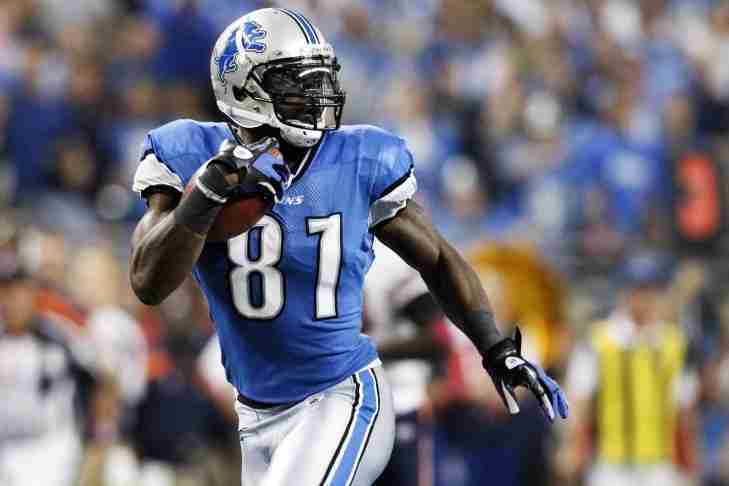
Selected second overall in the 2007 NFL Draft out of Georgia Tech, Calvin Johnson walked into Motown boasting physical attributes straight out of a video game. At 6-foot-5, 237 pounds with 4.35 speed and a 42.5-inch vertical, he earned the fitting nickname "Megatron" from teammate Roy Williams. Beyond those jaw-dropping athletic traits, Johnson was a pristine route runner with an absurd catch radius who turned double and triple coverage into a hopeless defensive strategy.
After showing star potential in his first few seasons—including a league-leading 12 touchdown catches in 2008—Johnson put together an absolute reign of terror from 2010 through 2013. His historic peak came in 2012, when he delivered the greatest receiving season in pro football history. Johnson shattered Jerry Rice's long-standing mark by hauling in an NFL-record 1,964 receiving yards on 122 catches, while recording eight consecutive 100-yard games along the way. Whether snatching jump balls over three defensive backs or outrunning cornerbacks on deep posts, he made the Lions an absolute must-watch national attraction.
That notable 2012 season marked the beginning of a streak with three consecutive First-Team All-Pro honors (2011–2013) and six consecutive Pro Bowl appearances (2010–2015). In 2013, he set a record by recording 329 receiving yards in a single game against Dallas, the highest total in regulation in NFL history. Despite dealing with persistent ankle and knee injuries from his aggressive playing style, Johnson remained a top performer until his final game, achieving 1,214 yards and nine touchdowns in his last season in 2015 before unexpectedly retiring at age 30.
Though his career spanned just nine seasons, Megatron rewrote the franchise record book, leaving as the Lions' all-time leader in receptions, receiving yards, and receiving touchdowns. He became the fastest player in NFL history to reach 10,000 receiving yards (doing so in just 115 games) and was named to the NFL’s 2010s All-Decade Team.
Across nine active seasons spent entirely with the Detroit Lions (2007–2015), Johnson played in 135 regular-season games with 130 starts. He compiled 731 receptions, 11,619 receiving yards, and 83 touchdown catches. A six-time Pro Bowler, three-time First-Team All-Pro, two-time NFL receiving yards leader, and Pride of the Lions member, Megatron was enshrined in the Pro Football Hall of Fame on his very first year of eligibility in 2021.
6. Doak Walker
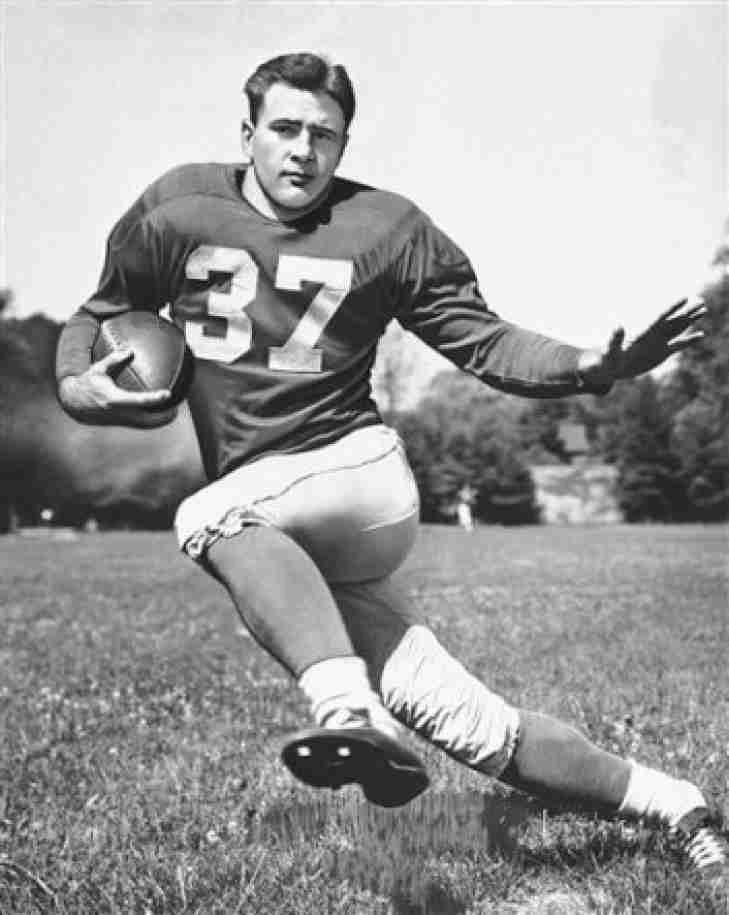
Drafted third overall in 1949 after an iconic collegiate tenure at SMU—where he won the 1948 Heisman Trophy and became such an institution that the national award for college football's top running back bears his name—Doak Walker stepped onto the professional stage carrying massive expectations. At 5-foot-11 and 173 pounds, critics openly questioned whether his lightweight frame could handle the physical toll of the NFL. Walker answered those doubts instantly, claiming Rookie of the Year honors in 1950 while leading the entire league in scoring with 128 points, racking up 11 touchdowns from scrimmage alongside 38 extra points and eight field goals.
Walker's impact on the game extended far beyond standard rushing charts. Operating as a halfback, wide receiver, placekicker, punter, and defensive back, he stood as the ultimate multi-dimensional threat in an era defined by two-way ironmen. Though his rushing total (1,520 career yards) appeared modest on paper, his versatility kept opposing coaches up at night; he averaged a remarkable 16.7 yards per reception out of the backfield, accumulating 2,539 receiving yards and 21 touchdown catches across his six seasons in Honolulu Blue.
That diverse skill set fueled Detroit's early 1950s dominance. Reuniting with his Highland Park High School teammate Bobby Layne, Walker became a clutch offensive playmaker who excelled at turning key moments in championship games. In the 1952 NFL Championship against Cleveland, he ended a scoreless tie with a memorable 67-yard touchdown run down the sideline, helping Detroit secure a 17–7 win. The next year, in the 1953 rematch against the Browns, Walker scored Detroit's first touchdown and later kicked the crucial extra point in a narrow 17–16 victory.
Walker concluded his career in 1955 with a remarkable individual performance, securing his second NFL scoring title with 96 points and earning his fifth Pro Bowl selection. At only 28 years old and at the height of his skills, he surprised the football world by retiring. When asked about his choice, Walker succinctly stated that he had achieved all his on-field goals, was in good health, and was prepared to focus on business pursuits outside football.
Walker played six seasons in Detroit (1950–1955), appearing in 67 games, with 1,520 rushing yards, 2,539 receiving yards, and 33 touchdowns. He also kicked 49 field goals and 183 extra points for 534 total points. A four-time First-Team All-Pro and NFL 1950s All-Decade Team member, his No. 37 jersey was retired by the Lions. Inducted into the Pro Football Hall of Fame in 1986, he became a Pride of the Lions charter member in 2009.
