


Site Admin
34. Dominic Raiola
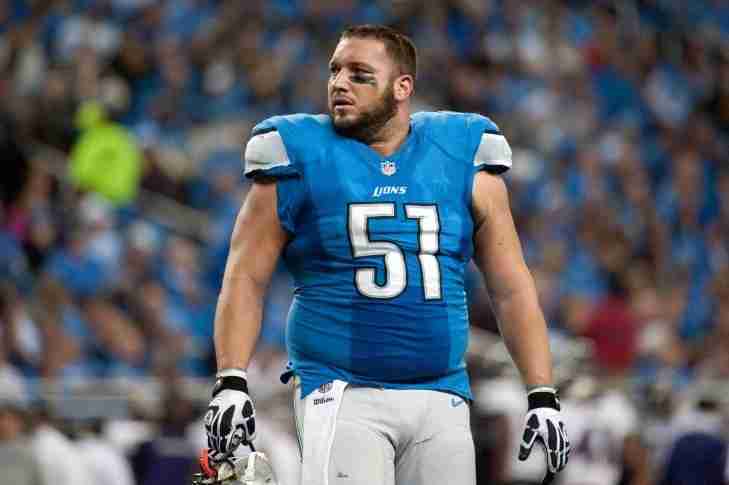
Fresh off winning the inaugural Rimington Trophy as the top center in college football at Nebraska, Dominic Raiola was selected by Detroit in the second round of the 2001 NFL Draft. After spending his rookie year learning the ropes in a backup role, Raiola took over as the starting center in 2002 and held down the pivot point of Motown's offensive line for the next thirteen seasons.
Raiola's time with Honolulu blue was marked by exceptional durability and a tough, fiery attitude. Throughout a career that saw frequent coaching changes, quarterback shifts, and limited supporting talent, he missed only four games in 14 seasons. His sharpness as a line caller and resilience in the trenches made him the key leader for the protection units that achieved franchise records for fewest sacks in 2002 and 2003.
Although postseason awards and Pro Bowl selections often overlooked him, Raiola was highly respected within the organization for his durability and long career. He made history as the first Lion to play 200 games for the franchise, playing a key role in transitioning from the tough, underperforming years of the 2000s to the dynamic playoff teams featuring Matthew Stafford and Calvin Johnson.
By the time he retired following the 2014 season, Raiola had logged 219 games played and 203 starts in a Detroit uniform—placing him behind only Jason Hanson on the franchise's all-time games played list.
25. Billy Sims
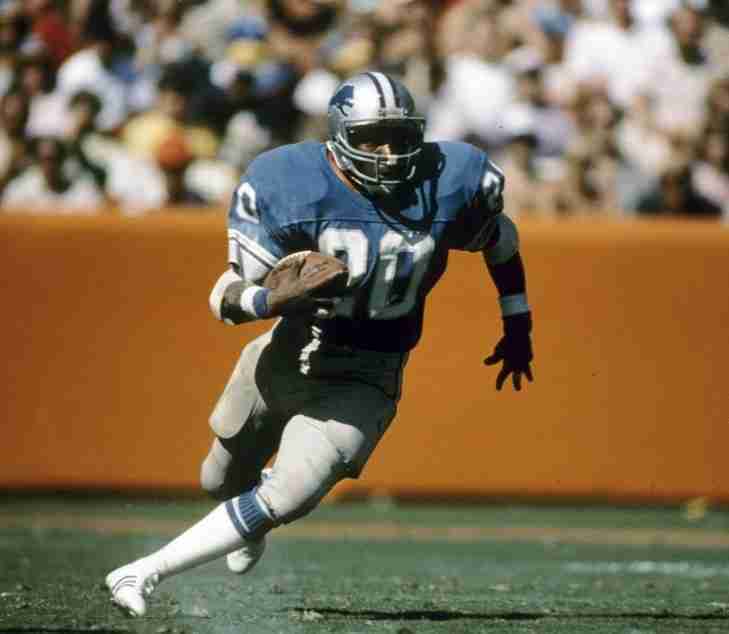
Few tailbacks in NFL history burst onto the professional scene with the raw, jaw-dropping athleticism of Billy Sims. Selected first overall in 1980 after winning the Heisman Trophy at Oklahoma, Sims brought an electric mix of track-star speed, violent high-stepping action, and open-field agility that instantly made him a national sensation and a beloved hero across Motown.
Sims hit the league like a lightning bolt, rushing for 1,303 yards and leading the NFL with 13 rushing touchdowns as a rookie to capture AP Offensive Rookie of the Year honors. He followed that up with a First-Team All-Pro campaign in 1981, racking up 1,437 rushing yards while averaging 4.9 yards per carry. His signature, airborne goal-line dives and karate-style high kicks over prospective tacklers captivated fans, earning him three consecutive Pro Bowl trips from 1980 to 1982 while anchoring Detroit's offense.
His dominance extended far beyond carrying the football. As a dual-threat weapon out of the backfield, Sims regularly tore up defenses on screen passes and swing routes, compiling over 7,000 yards from scrimmage and an astounding 63 Approximate Value across just 60 career games.
Then came the sudden, heart-wrenching halt. On October 21, 1984, during an eight-game stretch in which he averaged 5.3 yards per carry, Sims suffered a catastrophic right knee injury when his cleat caught in the artificial turf at the Hubert H. Humphrey Metrodome against Minnesota. Despite spending nearly two years in grueling rehabilitation, the devastating tear ended his career at just 29 years old.
Across five active seasons spent entirely with the Detroit Lions (1980–1984), Sims played in 60 regular-season games with 58 starts, plus two postseason contests. He compiled 5,106 rushing yards, 42 rushing touchdowns, 186 receptions, 2,072 receiving yards, and 47 total touchdowns over his brief and explosive run.
19. Jim David
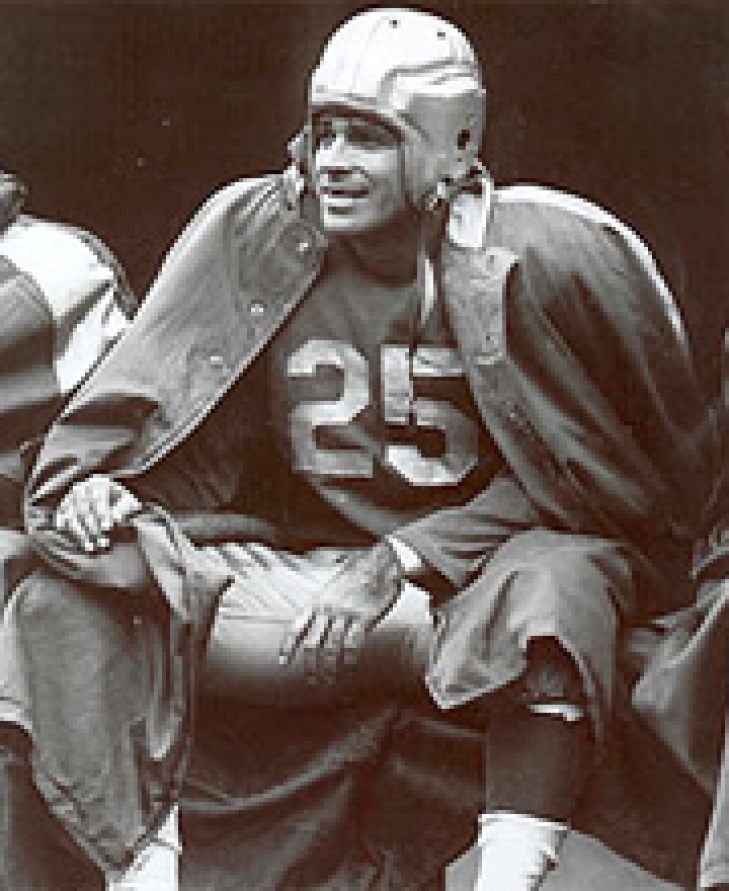
Standing just 5-foot-11 and barely tipping the scales at 175 pounds, Jim David entered the league as a 22nd-round longshot out of Colorado A&M in 1952. What he lacked in bulk, he made up for with pure, unadulterated hostility on the field. Opponents quickly dubbed him "The Hatchet"—a moniker earned after his relentless, bone-crushing tackles knocked Hall of Fame talents like Y.A. Tittle and Tom Fears out of back-to-back games in 1953.
Operating at right defensive halfback, David served as the physical Enforcer of "Chris' Crew," Detroit's legendary secondary alongside Hall of Famers Jack Christiansen and Yale Lary. While his reckless tackling set a terrifying defensive tone for Buddy Parker's squad, his ball-hawking range was equally lethal. David hauled in seven interceptions as a rookie in 1952, going on to match that seven-pick mark in both 1954 and 1956.
His true claim to Motor City immortality came on the postseason stage. David was a vital catalyst for Detroit's three NFL Championship teams (1952, 1953, and 1957), remarkably picking off a pass in all three title game victories. From 1954 through 1959, he was selected to six consecutive Pro Bowls, establishing himself as one of the era’s premier defensive backs.
After retiring in 1959, David remained a fixture in the organization, eventually serving as Detroit's defensive coordinator from 1967 to 1972 under former teammate Joe Schmidt. He was inducted into the Michigan Sports Hall of Fame in 1997.
David compiled 36 interceptions, 259 interception return yards, and five fumble recoveries in Detroit (adding three postseason picks).
27. Doug English
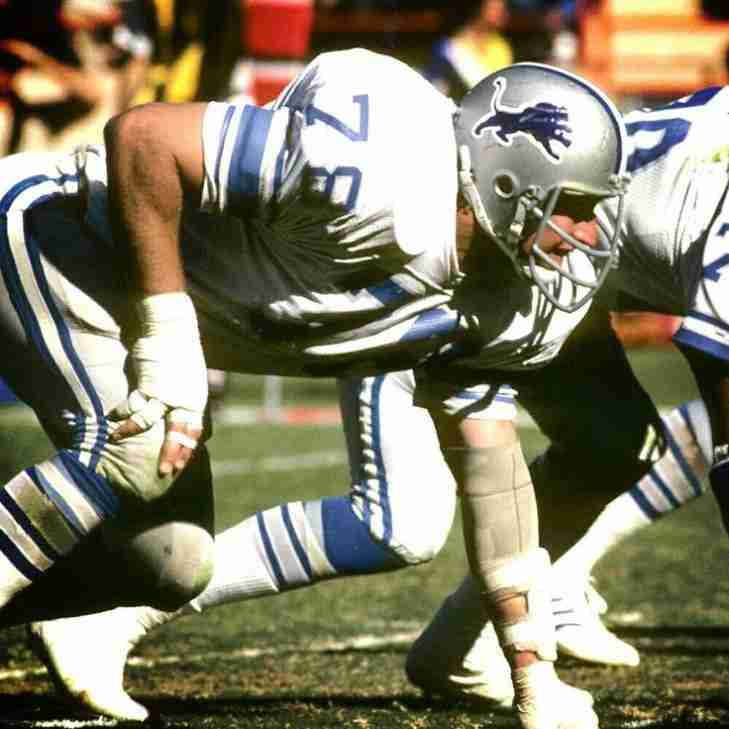
Selected in the second round out of Texas in 1975, College Football Hall of Famer Doug English didn't take long to transform Detroit's front four into an absolute nightmare for opposing offenses. Sliding into the interior at defensive tackle, he emerged as the undisputed centerpiece of Motown's fearsome "Silver Rush" defensive line alongside pass-rushing terrors Al Baker, Bubba Baker, and Dave Pureifory.
English possessed a rare combination of raw power and quickness off the snap, allowing him to collapse pockets from the inside just as easily as he stuffed the run. After earning his first career Pro Bowl selection in 1978, he briefly stepped away in 1980 to recharge, but returned in 1981 without missing a beat. His finest campaign arrived in 1983, when he recorded a career-high 13.0 official sacks to lead Detroit to an NFC Central title while earning consensus First-Team AP All-Pro honors and his third Pro Bowl nod.
In addition to his pass-rushing prowess, English proved to be uniquely opportunistic when trapped near the opponent's goal line. He shares the NFL record for most career safeties with four, including a rare two-safety performance during his explosive 1983 season. While the NFL did not track sacks as an official statistic until 1982—leaving his official total at 25.0—unofficial tracking credits him with 59.0 total sacks across his decade in Detroit, a mark that firmly ranks among the top six in franchise history.
English remained a dominant interior disruptor until a severe neck injury cut his career short in 1985, ending a solid run spent entirely with the Lions.
