


Site Admin
39. Larry Hand
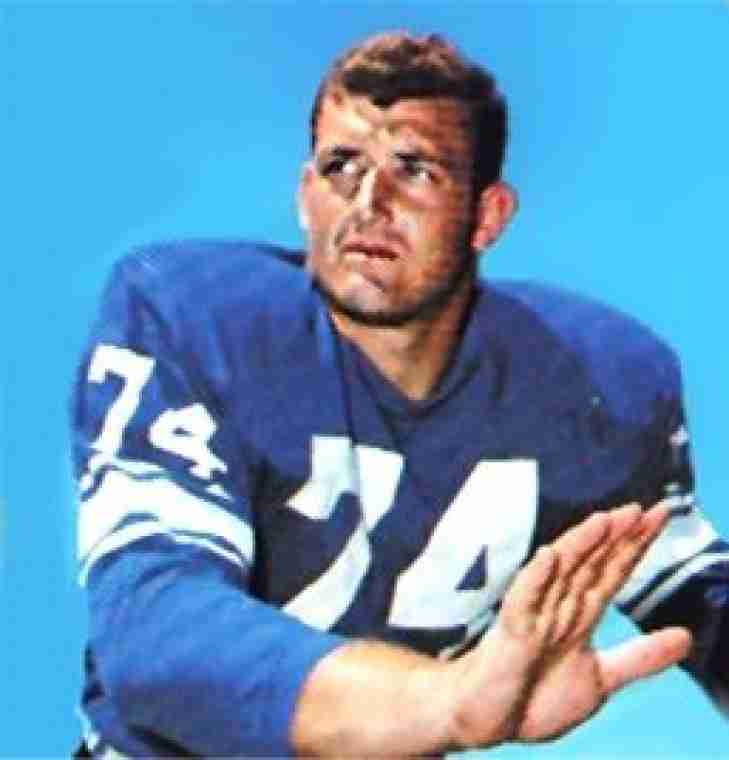
Taken in the 10th round (132nd overall) out of Appalachian State in the 1964 NFL Draft, Larry Hand joined the Lions as a late-round pick who soon became one of the franchise's most notable draft steals. The 6-foot-4, 250-pound defensive lineman secured a roster spot through relentless effort and physical discipline, earning a starting position on Detroit's front four by his second season and maintaining it for more than ten years.
Hand demonstrated exceptional positional flexibility, fluidly moving between defensive end and tackle based on scheme needs. As a formidable run defender and a persistent pressure creator, he was a key component of Detroit's defense alongside Alex Karras and Wayne Walker. Although he never received Pro Bowl honors, his teammates and coaches recognized his value in 1972 by voting him the Detroit Lions’ Most Valuable Player after an outstanding season.
Durability and defensive playmaker instincts defined Hand's 13-year run. In addition to terrorizing backfields for 62.5 retroactively tracked sacks, Hand had an uncanny knack for turning defensive plays into points—housing three of his five career interceptions for touchdowns, including a 62-yard pick-six against Chicago in 1970. When he retired following the 1977 season as a lifelong Lion, he had logged 164 games played, cementing his legacy as one of the most dependable interior anchors in team history.
He compiled 62.5 sacks, five interceptions (110 return yards, three defensive touchdowns), and eight fumble recoveries over his career.
38. Gail Cogdill
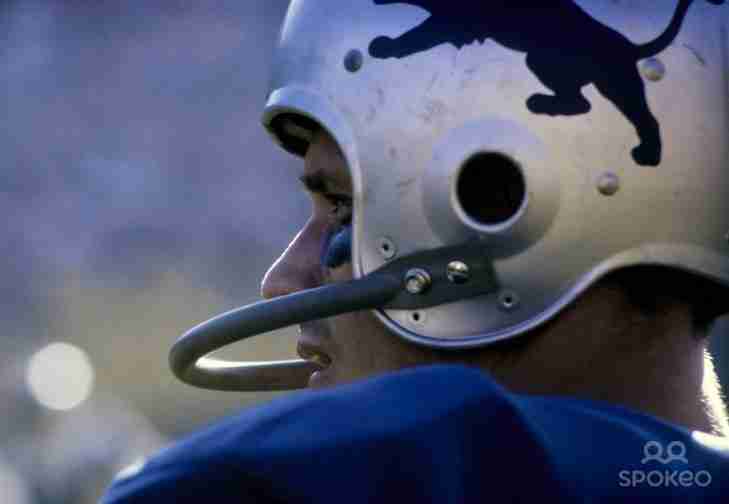
Selected in the sixth round out of Washington State in the 1960 NFL Draft, Gail Cogdill stepped onto the field as a smooth, long-striding split end with vertical speed that immediately stretched opposing defenses. He burst onto the professional scene like a flash of lightning, claiming the 1960 UPI and Sporting News NFL Rookie of the Year awards while establishing himself as Detroit's primary deep threat.
Cogdill's inaugural campaign set the tone for an explosive decade in Motown. As a rookie, he hauled in 43 passes for 964 yards and seven touchdowns, averaging an astonishing 22.4 yards per reception and earning his first Pro Bowl selection. He remained the focal point of Detroit's aerial attack throughout the early 1960s, earning two more Pro Bowl nods (1962, 1963) and three consecutive AP Second-Team All-Pro honors from 1962 to 1964.
Operating in an era dominated by ground-and-pound run schemes, Cogdill's ability to rack up air yardage was extraordinary. He posted back-to-back 900-plus-yard receiving seasons in 1962 and 1963, consistently bailing out quarterbacks like Earl Morrall and Milt Plum on long third-down conversions. Though injuries hampered the later stages of his career, Cogdill remained a steady veteran leader until his departure in 1968, when he finished his career with brief stops in Baltimore and Atlanta.
When Cogdill moved on from the organization, he held virtually every major receiving record in franchise history, leaving a blueprint for future Lions split ends to follow. He would later be named to the club’s 75th Anniversary Team and the All-Time Team. Overall, he had 325 receptions, 5,221 receiving yards and 28 receiving touchdowns.
26. Ndamukong Suh
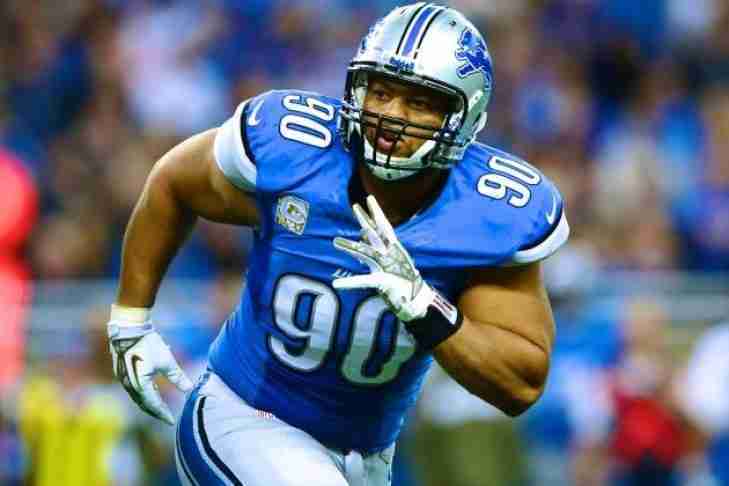
Selected second overall out of Nebraska in 2010 after one of the most terrifying individual college seasons in gridiron history, Ndamukong Suh stepped into the state of Michigan as an instant structural force. Boasting rare raw power, explosion off the snap, and a mean streak that threw opposing offensive lines into complete disarray, Suh immediately redefined what an interior defensive tackle could accomplish.
Suh took the NFL by storm as a rookie, racking up 10.0 sacks, 66 tackles, an interception, and a fumble recovery for a touchdown to capture 2010 AP Defensive Rookie of the Year honors alongside First-Team All-Pro recognition. Alongside Nick Fairley and Cliff Avril, he anchored a vicious front four that helped transform Detroit from a league afterthought into a playoff contender, propelling the Lions to postseason berths in 2011 and 2014.
Suh’s prime years in Detroit were pure interior disruption. Opposing offensive coordinators had to fundamentally alter their game plans, committing two and sometimes three blockers to contain him, yet he still routinely blew up plays in the backfield. His relentless pursuit and upper-body strength made him equally devastating against the run, suffocating interior rushing lanes and allowing linebackers like DeAndre Levy to roam freely. During his final season in Detroit in 2014, Suh led a unit that finished as the NFL’s top-ranked rushing defense, allowing an astonishingly low 69.3 rushing yards per game.
While his relentless physical style frequently crossed the line—earning him an infamous reputation as one of the league's dirtiest players alongside a string of hefty fines and high-profile suspensions—there was no denying his sheer game-disrupting dominance. Teams were forced to commit double-teams on virtually every snap, yet Suh routinely collapsed pockets from the inside and disrupted backfield handoffs before they could even materialize.
He departed following the 2014 season to sign a record-breaking contract with Miami, later winning Super Bowl LV with Tampa Bay and earning a spot on the NFL 2010s All-Decade Team. He compiled 238 tackles, 36.0 sacks, 66 tackles for loss, 98 quarterback hits, and one interception in Detroit.
36. Greg Landry
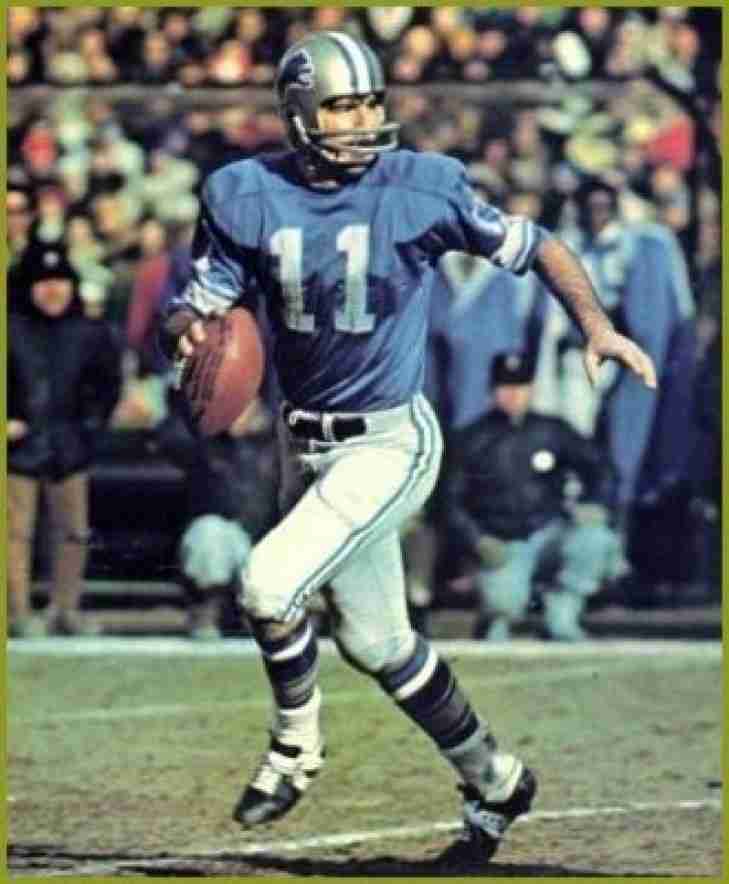
Stepping out of UMass in 1968, Greg Landry provided Motown with a rare structural prototype long before the modern dual-threat quarterback became standard operating procedure. Standing 6-foot-4 and 210 pounds with exceptional open-field athleticism, Landry brought a bruising, power-running dimension to the signal-caller position that fundamentally altered how defenses had to prepare for Detroit.
After earning the starting job full-time in 1971, Landry unleashed a solid season. He threw for 2,237 yards and 16 touchdowns while rushing for 530 yards and three scores, becoming the first quarterback in NFL history to pass for over 2,000 yards and rush for over 500 in the same campaign. His rare athletic skill set earned him a Pro Bowl selection and First-Team AP All-Pro honors as he led Detroit to a 7–6–1 record. He backed it up in 1972 by throwing 18 touchdown passes and rushing for a career-high nine touchdowns on the ground.
Landry's running ability wasn't just a scramble drill when plays broke down; head coach Joe Schmidt routinely called designed option plays and quarterback draws for his imposing field general. Though major knee and shoulder injuries limited his availability in the mid-1970s, Landry staged a triumphant comeback in 1976, passing for 2,191 yards and 17 touchdowns to earn the PFWA Comeback Player of the Year award.
After losing his starting role to Gary Danielson and seeing his playing time dwindle during a frustrating 1978 campaign, Landry's eleven-year tenure in Detroit came to an end in April 1979 when he was traded to the Baltimore Colts in exchange for draft picks. He went on to spend three seasons as a backup and spot starter in Baltimore, brief stints in the USFL, and a final year with Chicago before transitioning into coaching. With Detroit, Landry amassed 12,451 passing yards, 80 passing touchdowns, 81 interceptions, 2,502 rushing yards, and 19 rushing touchdowns.
