


Site Admin
29. Harley Sewell
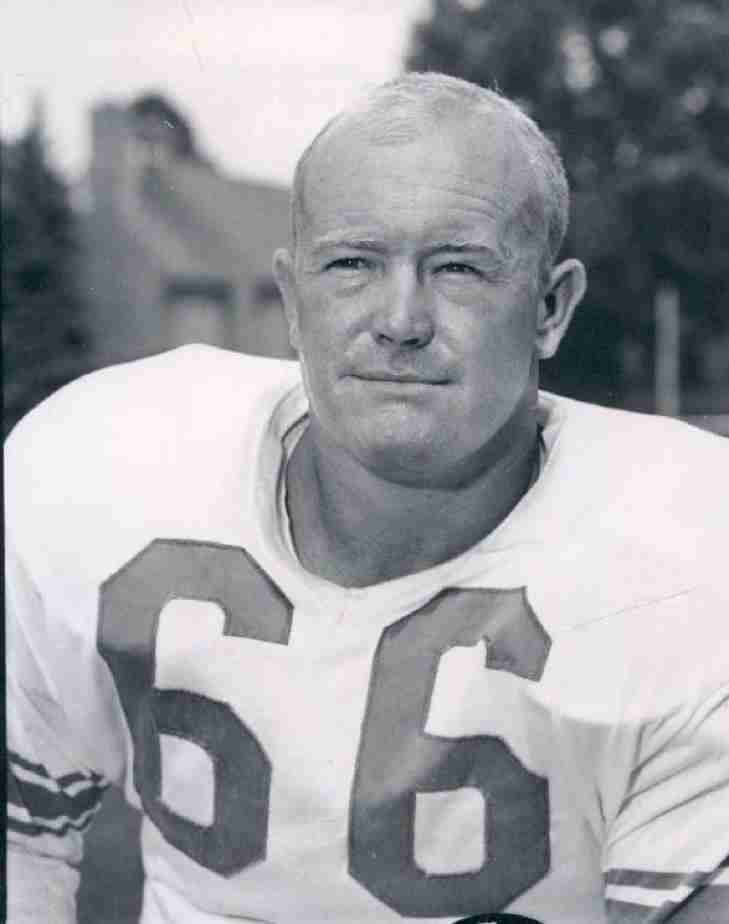
Taking him in the first round (13th overall) out of Texas in the 1953 NFL Draft, the Detroit Lions added an immediate physical presence to their interior line in Harley Sewell. Known for his exceptional speed and leverage as a pulling guard, Sewell stepped into the starting left guard spot as a rookie and instantly solidified Motown's offensive line.
Sewell's mobility made him the ideal lead blocker on sweeps and traps, clearing paths for iconic backs like Doak Walker and Bobby Layne. He earned immediate postseason success, helping power Detroit to an NFL Championship as a rookie in 1953 and capturing a second title ring in 1957. Recognized as one of the premier interior guards of his era, Sewell earned four Pro Bowl selections (1957, 1958, 1959, 1962) and a Second-Team AP All-Pro nod in 1957.
Beyond his offensive line mastery, Sewell was a relentless hustler who also starred on special teams, regularly leading the coverage units in tackles. After ten dependable seasons anchoring the Lions' interior, he concluded his career with a brief stint with the Los Angeles Rams in 1963. Detroit later honored his enduring impact with a spot on the Lions’ 75th Anniversary Team.
Sewell had 111 starts over his 120 games for the team.
40. Mel Gray
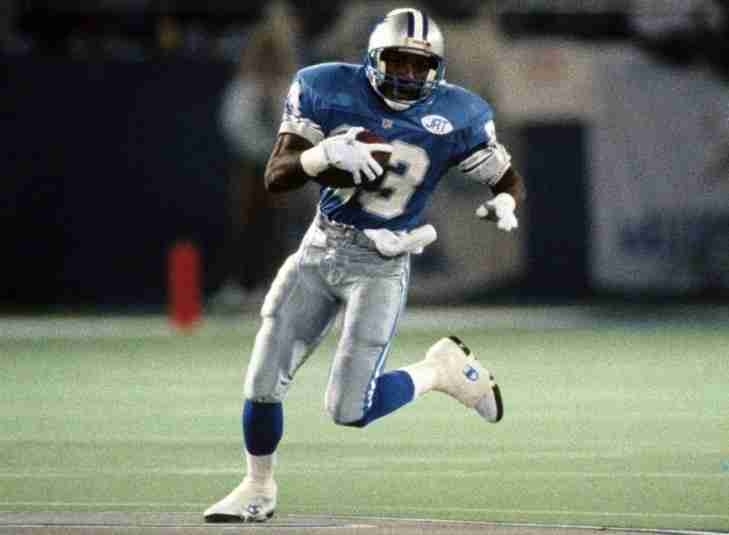
Before recent changes to the kickoff rule changed the game strategy, Mel Gray was a lightning-fast force on the field, particularly in field position. Joining Detroit in 1989 after playing in New Orleans and the USFL, the dynamic return specialist spent six key seasons shaping the Lions' special teams, setting standards for speed and agility that still stand unmatched in franchise history.
Gray saw limited involvement in Detroit’s standard offensive passing schemes, but his exceptional ability as a return specialist made him a key figure in the team's mid-1990s playoff campaigns. When punters and kickers missed the sidelines, Gray turned standard kicks into highlight-worthy plays. His sharp vision, quick burst of speed, and precise cuts often gave Barry Sanders and the Lions' offense advantageous field positions.
His prime years were between 1990 and 1994, a remarkable period when he earned First-Team AP All-Pro honors in three seasons (1990, 1991, 1994) and received four straight Pro Bowl selections. His standout performance was in 1994, leading the league with a remarkable 28.4-yard kickoff return average and returning three kickoffs for touchdowns, notably a 102-yard run versus the Chicago Bears.
By the time he left Detroit after 1994, Gray had nearly 7,000 return yards and 7 touchdowns with the Lions. He was the franchise leader in kickoff returns (216), yards (5,478), and touchdowns (5). Named to the NFL 1990s All-Decade Team as a kickoff returner, Gray’s legacy as a top special teams player in Motown endures.
20. Matthew Stafford
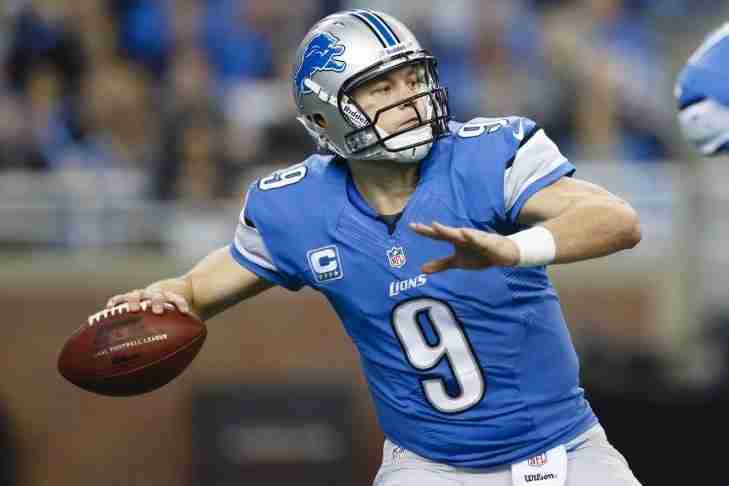
Selected first overall out of Georgia in 2009, Matthew Stafford stepped into a Motor City franchise coming off a bleak 0-16 campaign, tasked with resurrecting the organization from the ground up. Equipped with a signature cannon arm and extraordinary toughness, Stafford locked down the starting job instantly and spent twelve seasons operating as the unquestioned face of the franchise.
Stafford's statistical explosion came in 2011—his first fully healthy season—when he threw for 5,038 yards and 41 touchdowns, earning Comeback Player of the Year honors while leading Detroit to its first playoff berth in over a decade. Possessing lethal arm strength from every platform angle, Stafford made a habit of staging late-game heroics, setting an NFL single-season record in 2016 with eight fourth-quarter comeback victories.
Throughout his run, he developed an iconic connection with Hall of Famer Calvin Johnson, but even after Megatron's retirement, Stafford continued to rack up monster production. He cleared the 4,000-yard passing threshold in seven separate seasons as a Lion (19 overall), earned a Pro Bowl nod in 2014, and snapped a long franchise drought by becoming the first Lions passer since Greg Landry in 1971 to earn a Pro Bowl trip.
Despite his jaw-dropping volume, a lack of consistent defensive support and a nonexistent running game frequently left Stafford fighting uphill, resulting in a 74-90-1 regular-season mark in Detroit. A blockbuster 2021 trade sent him to the Los Angeles Rams, where he immediately validated his elite ceiling by capturing Super Bowl LVI in his inaugural West Coast campaign.
Over his run in Detroit, Stafford compiled 45,109 passing yards, with a 282-144 TD-INT ratio.
,
37. Ed Flanagan
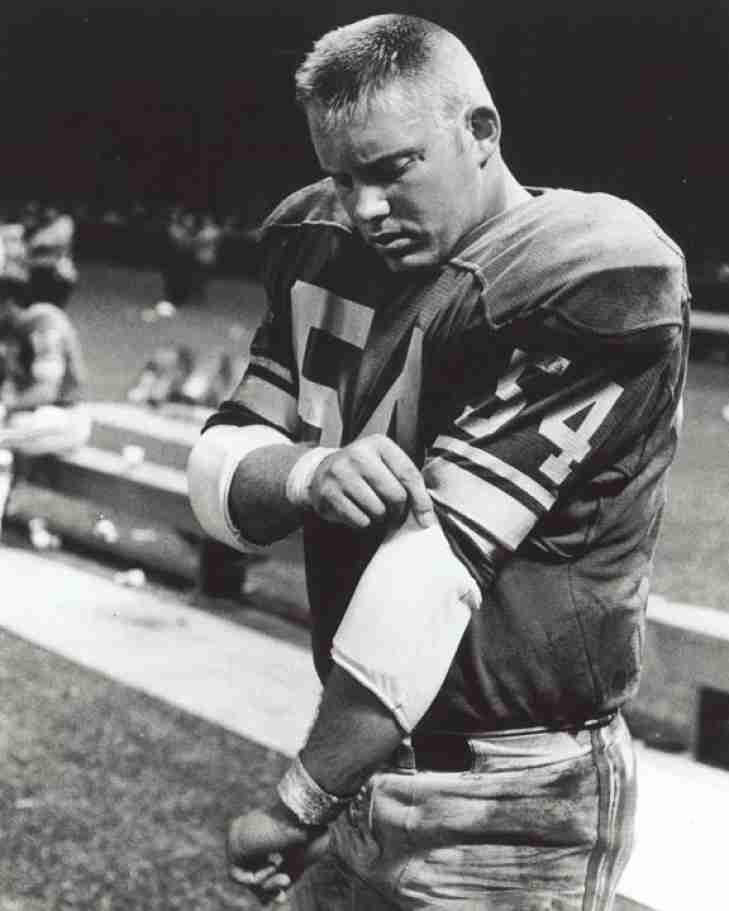
Selected in the fifth round out of Purdue in 1965, Ed Flanagan had an elite athletic foundation and technical mastery that allowed him to make an immediate impact. Stepping onto the field as a rookie, he instantly claimed the starting center spot, anchoring the middle of Detroit's offensive line with quiet brilliance for the next decade.
Flanagan stood out for his exceptional leverage, swift lateral movement, and flawless line calls, serving as the unsung engine for Detroit's offense. Operating in the trenches during a punishing era of interior line play, he earned immense respect from opposing defensive tackles across the NFC who recognized his tactical consistency. His exceptional play earned him four Pro Bowl selections (1969, 1970, 1971, 1973) and two Second-Team AP All-Pro nods (1969, 1970), solidifying his reputation as one of the premier centers of his era.
From 1965 through 1974, he anchored the pivot through a grueling 129 consecutive games, serving as a steady protector for quarterbacks like Greg Landry and Bill Munson while clearing lanes for power runners like Altie Taylor. After ten seasons in Detroit, he capped off his career with a two-year stint with the San Diego Chargers before retiring.
His contributions to the franchise were later recognized with selections to both the Lions 75th Anniversary Team and the All-Time Team.
