


Site Admin
6. Justin Verlander
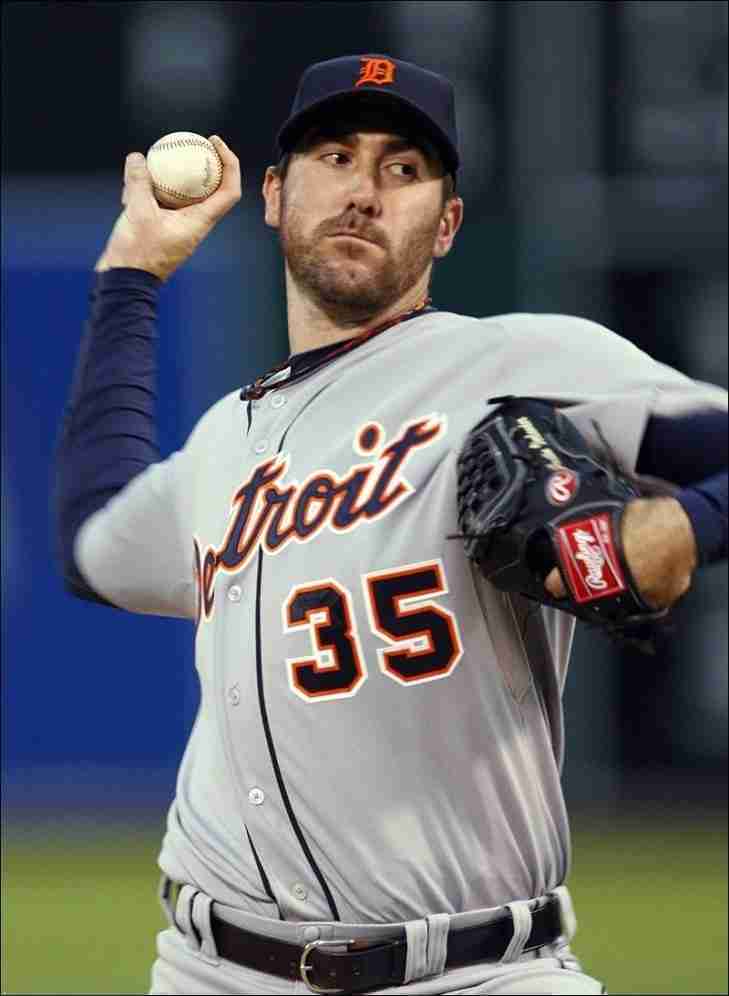
The arrival of Justin Verlander in 2005 was the first tremor of a seismic shift in Detroit baseball. While he debuted as a high-velocity prospect, he quickly matured into the undisputed titan of the American League, a right-hander whose combination of an elite fastball and a relentless competitive fire restored the Tigers to national relevance. Across two distinct eras in the Motor City, Verlander evolved from a fireballing Rookie of the Year into a sophisticated, first-ballot immortal, serving as the high-leverage anchor for a decade of championship aspirations.
Verlander’s rise was instantaneous, capturing the 2006 Rookie of the Year award and immediately leading the club to its first World Series in over twenty years. He established a standard of specialized durability that became his trademark, but the true ascension occurred in 2011. That summer remains a pillar of modern pitching history; he secured the rare Triple Crown—leading the league in wins (24), strikeouts (250), and ERA (2.40)—en route to a historic sweep of both the Cy Young and the American League MVP. He was a model of high-frequency dominance, utilizing a professional resilience to carry the staff through four consecutive postseason runs from 2011 to 2014.
The middle chapters of his Detroit tenure were defined by his tactical mastery of the "big game." Verlander was the primary engine of the 2012 pennant-winning rotation, famously out-dueling the league’s best in October to cement his status as a franchise icon. He possessed a specialized ability to maintain his velocity into the late innings, a craftsmanship that earned him six All-Star nods and two no-hitters in a Tigers uniform. Even as the team’s competitive window began to close in 2017, leading to a blockbuster trade to Houston, where he finally secured a World Series ring, his heartbeat remained tied to the city that raised him.
After a legendary journey through Houston, New York, and San Francisco, the narrative came full circle in February 2026. Following a resilient 2025 campaign with the Giants, where he proved his health by logging 152 innings, Verlander signed a one-year deal to return to Detroit for a final act.
17. Bobby Veach
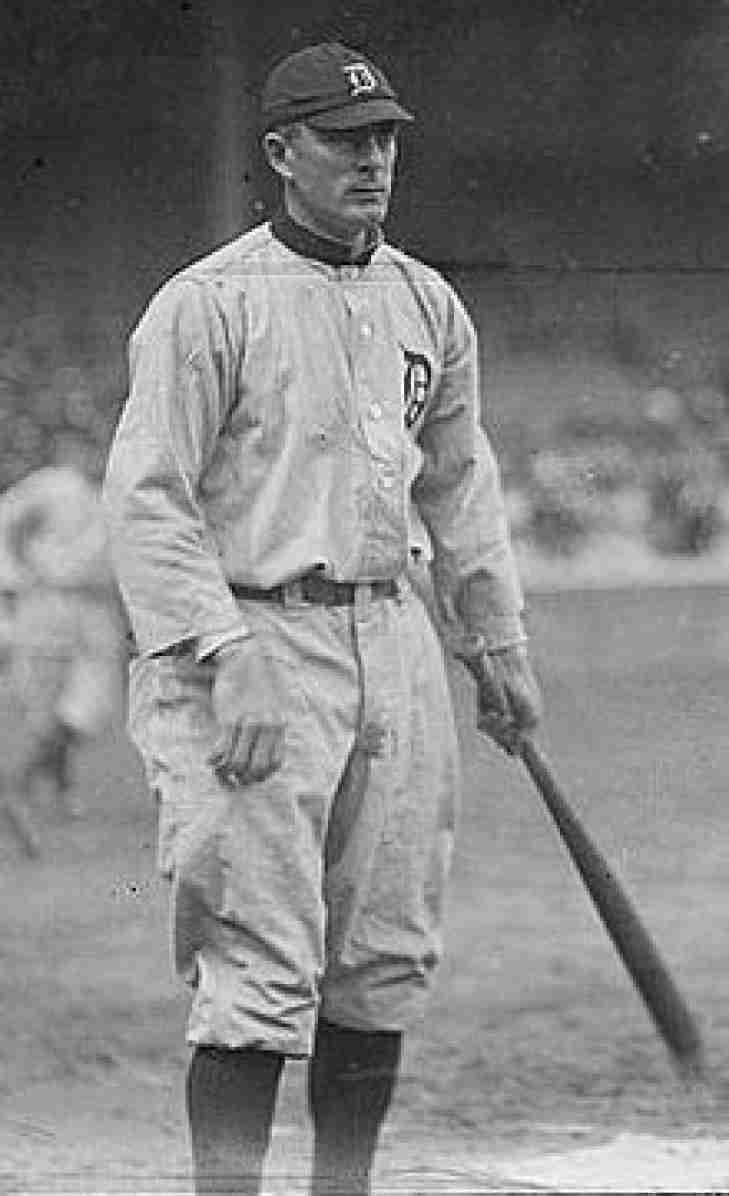
Bobby Veach had the singular misfortune of being an elite ballplayer who spent his entire prime in the physical and historical shadow of three Hall of Fame legends. While he patrolled left field for the Detroit Tigers, the other two spots in the grass were occupied by Ty Cobb and either Sam Crawford or Harry Heilmann. Because he wasn't a "character" like Cobb or a refined technician, Veach was often dismissed as a mere product of his environment, a "cleanup hitter" who just happened to be standing there when Cobb and Crawford crossed the plate. But a look at the linear progression of his career reveals a player who was arguably the most consistent run-producer in the American League for a decade.
Veach’s arrival in Detroit in late 1912 was an immediate spark; he hit .342 in a 23-game audition, convincing the Tigers they had finally found a permanent solution for left field. By 1915, he had reached his first major campaign, leading the American League in both doubles (40) and RBIs (112), tying his teammate Crawford for the latter. It was the birth of what sportswriters called the "$100,000 Outfield." While Cobb and Crawford played "inside baseball”, choking up and bunting, Veach was a specialized power threat who swung from the heels, a style that made him a statistical outlier in the height of the Deadball Era.
The center of his career was a relentless run of high-frequency production. He secured back-to-back RBI titles in 1917 and 1918, proving he was more than just a supporting actor for Cobb. In 1919, he excelled again, leading the league in hits (191), doubles (45), and triples (17) while batting a career-high .355. He was a model of specialized durability, rarely missing a game and providing above-average defense; his range factor and assist totals frequently topped the league's left fielders, showing a defensive craftsmanship that Cobb famously (and perhaps unfairly) criticized as lacking "fire."
The final years of his Detroit residency were marked by a bizarre psychological experiment. In 1921, Cobb, now the player-manager, instructed Harry Heilmann to shout insults at Veach from the dugout to "toughen up" his easygoing nature. The result was another elite plateau: Veach responded with 128 RBIs and 207 hits. However, the tension with Cobb eventually led to his exit; despite hitting .321 in 1923, he was sold to the Boston Red Sox to make room for a younger Heinie Manush. He finished his Tigers tenure with 1,859 hits and a .311 average, leaving as the only player in franchise history to lead the league in hits, doubles, triples, and RBIs who isn't currently in Cooperstown.
With the Tigers, Veach compiled 1,859 hits, 393 doubles, and three RBI titles while maintaining a .311 career average.
12. Tommy Bridges
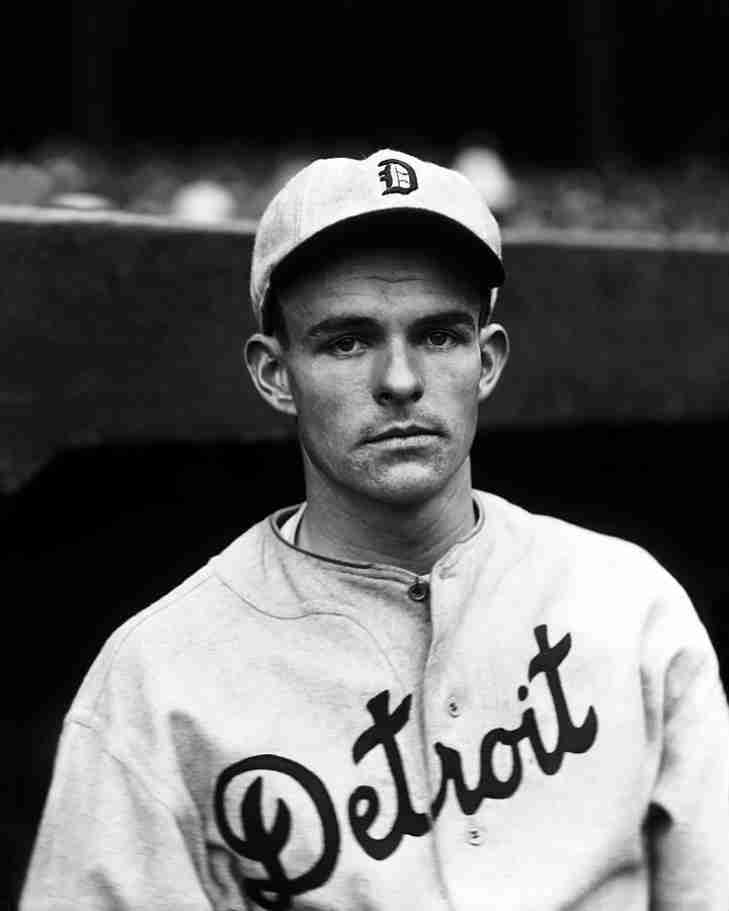
In the history of the Detroit Tigers, few players have personified "pound-for-pound" greatness quite like Tommy Bridges. A diminutive right-hander who stood barely 5'10" and weighed just 150 pounds, Bridges used one of the most devastating curveballs in the history of the sport to anchor the Detroit rotation for sixteen years.
Bridges’ time in Detroit was marked by relentless, high-frequency dominance, during which he became the franchise's primary strikeout threat for over a decade. He reached a peak between 1934 and 1936, a three-year stretch where he rattled off three consecutive 20-win seasons. During this span, he led the American League in strikeouts twice and in wins once (1936), establishing himself as a perennial All-Star and a foundational piece of a roster that featured four future Hall of Famers. His ability to miss bats was legendary; he retired with 1,674 strikeouts, a total that stood as the Tigers' franchise record for a right-hander for fifty years.
The most iconic chapter of his career unfolded during the 1935 World Series. After a gutsy performance in Game 2, Bridges took the mound for Game 6 with the championship on the line. In the ninth inning, with the score tied and a runner on third with nobody out, Bridges displayed what manager Mickey Cochrane famously called "150 pounds of courage." He proceeded to retire three straight Chicago Cubs, including a pair of strikeouts with his signature curveball, to keep the game tied, setting the stage for a walk-off victory in the bottom half. It was the performance that secured Detroit’s first-ever world title and cemented Bridges' reputation as one of the gutsiest performers of his generation.
Like many of his contemporaries, he saw his statistical totals interrupted by a commitment to duty; he missed the 1944 season and nearly all of 1945 due to military service in World War II. He returned just in time to make a relief appearance in the 1945 Fall Classic, earning his second championship ring and joining Hank Greenberg as the only players in franchise history to appear in four different World Series for the club. He retired after the 1946 season.
With the Tigers, Bridges compiled 194 wins and 1,674 strikeouts while winning two World Series titles and leading the AL in strikeouts twice.
13. Norm Cash
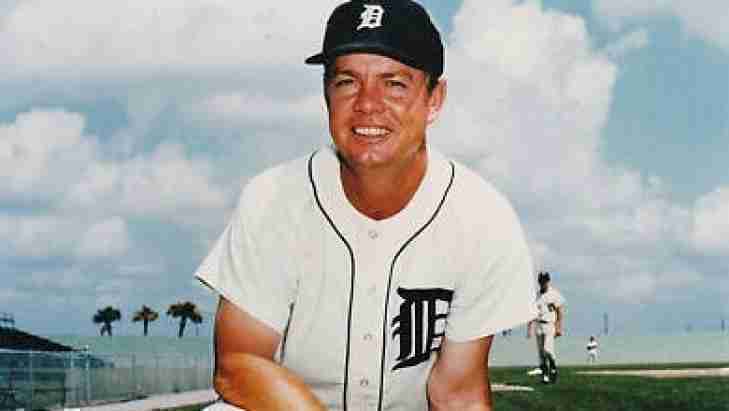
The 1961 baseball season is immortalized by the pinstriped pursuit of Babe Ruth’s ghost, but while the world watched Roger Maris and Mickey Mantle, Norm Cash was quietly putting forth one of the greatest offensive anomalies in the history of the sport.
Arriving in Detroit a year prior in a lopsided trade with Cleveland, "Stormin' Norman" evolved into a left-handed powerhouse whose swing was as distinctive as his colorful personality. Cash spent fifteen seasons as the defensive and emotional heartbeat of the Tigers' infield, blending a Texas-sized sense of humor with a bat that could leave Tiger Stadium in a heartbeat.
Cash’s tenure in the Motor City was highlighted by a 1961 campaign that defies modern logic. That summer, he put together a statistical profile that would look at home in a video game, capturing the American League batting title with a staggering .361 average, a mark that remained the highest by any player in the 1960s. He didn't just hit for contact; he led the league in on-base percentage (.487) and OPS (1.148) while launching 41 home runs and driving in 132. It was a season of such profound efficiency that even a 6.0 bWAR barely does it justice; he simply operated on a different plane than the rest of the league, even if the national spotlight was fixed firmly on the home run chase in New York.
While he never replicated that magical "one-off" peak, Cash remained a model of high-frequency power throughout the next decade. He was the only American League player to belt at least 20 home runs every year from 1961 to 1969, serving as the veteran stabilizer for a Detroit lineup that was consistently among the league's most dangerous. He possessed a specialized athleticism at first base, setting franchise defensive records for putouts and double plays that stood for decades. His professional resilience was never more evident than during the 1968 World Series, where he channeled his 1961 form to hit .385 against the Cardinals. His clutch single in the seventh inning of Game 7 ignited the rally that finally broke a scoreless tie and brought the championship back to Michigan.
His presence in the clubhouse was defined by an infectious energy and a legendary wit that made him a favorite among teammates and fans alike. Whether he was famously trying to use a table leg as a bat against Nolan Ryan or providing the high-leverage hits needed to secure the 1972 division title, he played with a grit that solidified his status as a Detroit institution.
Retiring after the 1974 season, Cash compiled 373 home runs, 1,793 hits, and a World Series ring while winning the 1961 AL Batting Title.
