


Site Admin
39. Chet Lemon
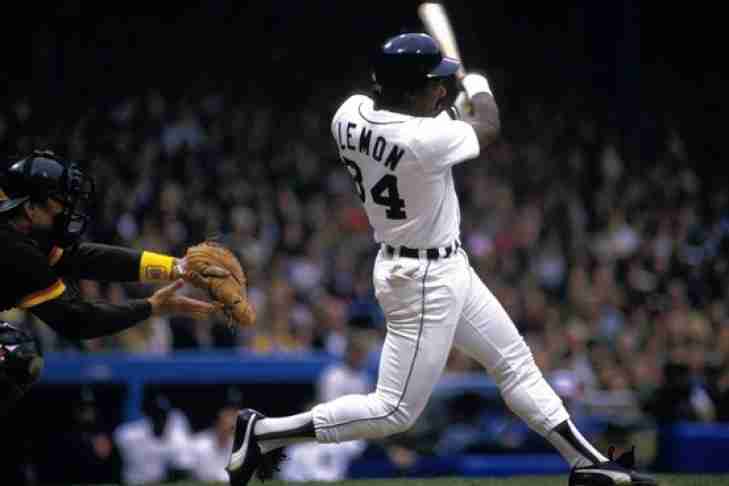
Chet Lemon arrived in Detroit through a 1981 trade with the White Sox, a seasoned outfielder known for an aggressive, nose-to-the-grindstone approach that immediately meshed with the Tigers' blue-collar identity. Rather than slowing down as he entered his thirties, he became a central fixture in a lineup that was building toward a historic peak.
Lemon’s tenure in a Detroit uniform reached a historic high during the legendary 1984 campaign. As the club sprinted to a 35-5 start and eventually secured the World Series title, he was an integral part of the roster, earning an All-Star selection and providing the steady production required of a championship starter. He demonstrated a specialized ability to drive the ball with authority, recording 20 home runs and 76 RBIs while covering the gaps in center field with a reckless abandon that often saw him diving for liners or colliding with the wall. He showed the organization that he was a foundational winner, delivering the veteran-like poise needed on the game's biggest stage.
The bulk of his Detroit years were defined by elite consistency and a knack for getting on base by any means necessary. Between 1982 and 1987, Lemon was a constant presence in the heart of the order, recording three separate seasons with at least 20 home runs.
He retired after the 1990 season, having compiled 1,071 hits and 141 taters.
34. Virgil Trucks
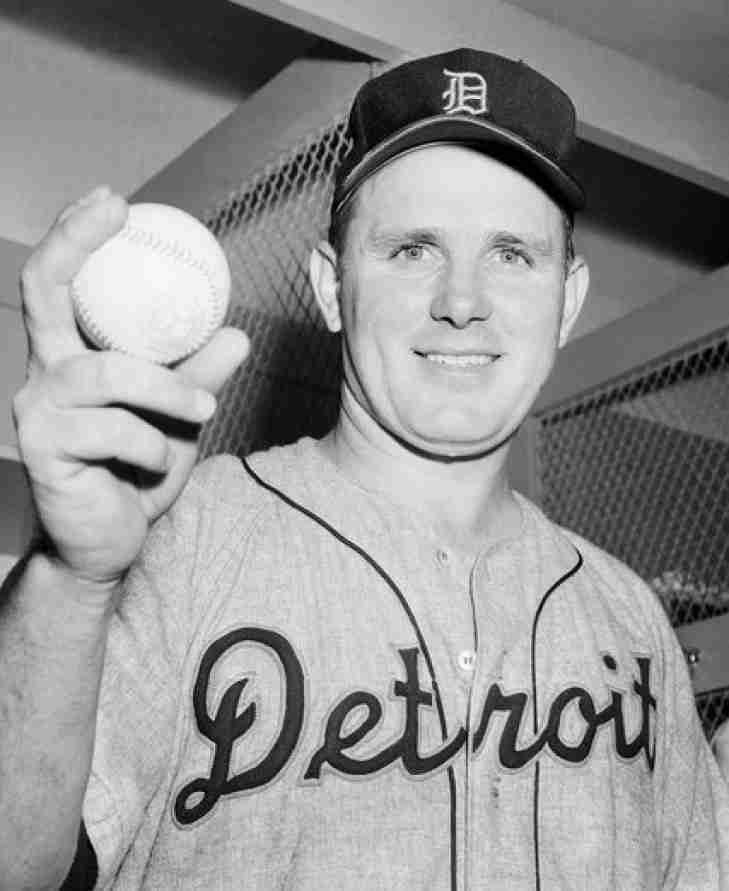
Virgil Trucks earned his "Fire" nickname in Detroit by overwhelming hitters with a high-velocity fastball that anchored the Tigers' rotation for over a decade. After debuting in 1941, he quickly became a centerpiece of the pitching staff, providing a gritty, power-pitching presence that helped define the post-war era in the Motor City. For 12 seasons, he served as a reliable cog in the Detroit rotation.
Trucks’ journey in a Detroit uniform reached an immediate championship high in 1945. After returning from military service late in the year, he was thrust into the heat of a pennant race and responded by helping the Tigers secure the World Series title. He demonstrated a focused intensity on the game's biggest stage, earning a crucial victory in Game 2 against the Cubs. This performance signaled his transition into a premier American League arm, showing the organization that he possessed the big-game temperament required to lead a staff toward a world championship.
In 1949, Trucks reached a career peak for individual dominance, leading the league with 153 strikeouts and earning an All-Star selection. However, it was the 1952 season that cemented his place in baseball lore; despite a low win total for a struggling team, he became only the third pitcher in history to hurl two no-hitters in a single campaign. He silenced the Washington Senators in May and repeated the feat against the New York Yankees in August.
Despite these historic individual achievements, the 1952 Tigers suffered through a miserable season, finishing in the cellar of the American League. Seeking to shake up the roster, the front office orchestrated a major multi-player trade in December of 1952, sending their no-hit specialist to the St. Louis Browns. After a few years spent pitching for the Browns and White Sox, the veteran hurler made a sentimental return to the Tigers for the 1956 season. While his high-velocity days were winding down, this final stint allowed him to conclude his Detroit journey where it began, though he did play afterward briefly with the Kansas City Athletics and New York Yankees.
As a Tiger, Trucks had a record of 114-96 and 1,046 strikeouts over 1,800.2 innings of work.
28. Frank Lary
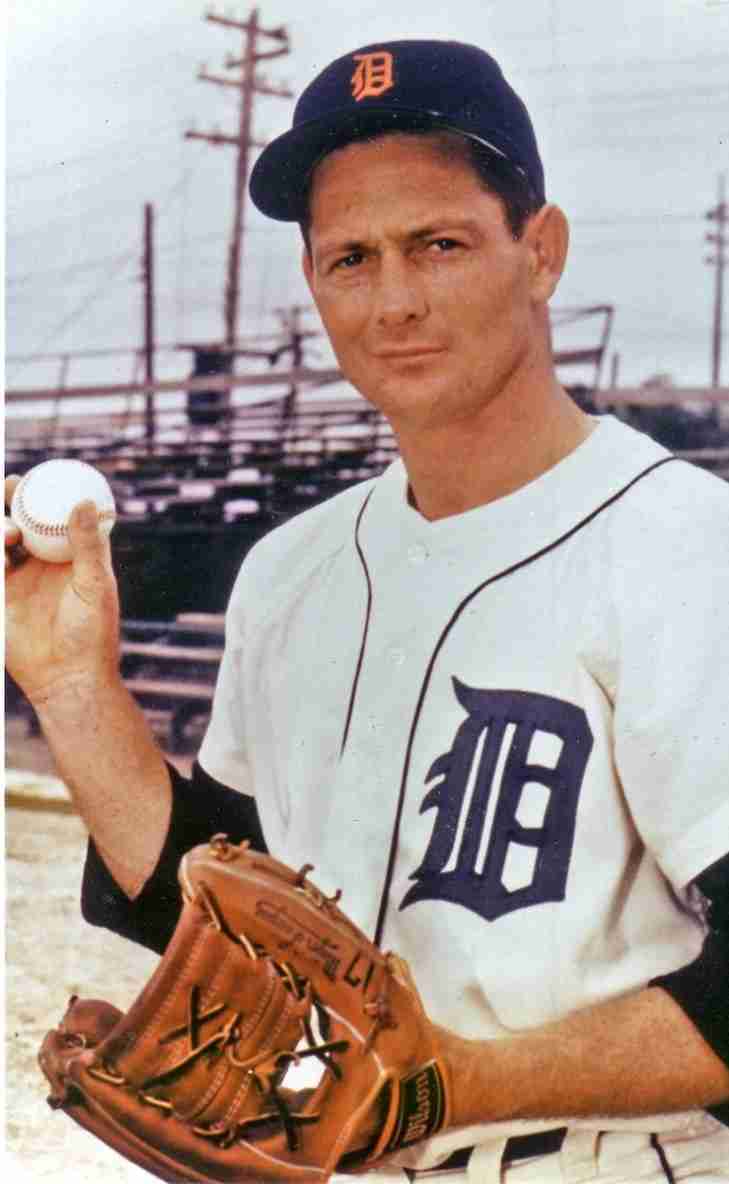
Frank Lary arrived in Detroit as a workhorse right-hander who possessed a unique psychological edge over the most dominant dynasty in the sport. While he was a reliable presence against the entire American League, he earned his place in Tigers folklore as the "Yankee Killer," a pitcher who seemed to reach a different level of intensity whenever the pinstripes were in the opposing dugout.
Lary’s emergence in Detroit reached a definitive peak during the 1956 campaign. After showing promise in his initial seasons, he secured his place as a premier starter by leading the American League with 21 wins. This performance signaled a transition from a young arm to a frontline leader who specialized in high-frequency workloads. He showed the organization that he was a foundational piece of the staff, leading the league in innings pitched for the first of three times and providing the dependable, day-to-day production that kept the Tigers competitive during a rugged era of baseball.
The core of his time in Detroit was defined by elite efficiency and a reputation for durability. Between 1955 and 1961, Lary was a statistical force who routinely surpassed 250 innings and 20 complete games. He reached a career peak during the 1961 season, where he won 23 games, earned his second All-Star selection, and finished third in the Cy Young voting. Despite the heavy physical toll of his delivery, he remained a model of resilience, eventually recording 123 wins in a Detroit uniform. His legacy, however, was anchored by his mastery of the New York Yankees; his 27-10 career record against the Bronx Bombers made him a folk hero in the Motor City.
During the 1964 season. The Tigers eventually traded their veteran ace to the New York Mets, marking the end of an era for the Detroit rotation. With the Tigers, Lary compiled 123 wins, 1,031 strikeouts, and three American League innings titles.
32. John Hiller
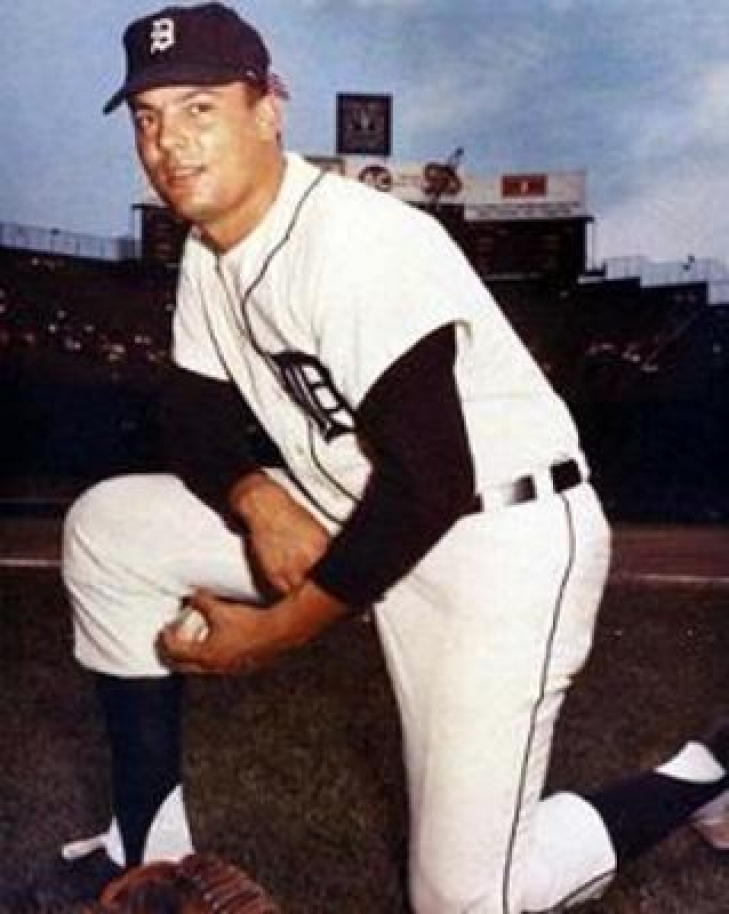
John Hiller carved out a unique place in Detroit history as a left-handed reliever whose career defined the very concept of resilience. While he first established himself as a versatile arm for the 1968 championship squad, his path to becoming a franchise icon was nearly derailed by a massive physical setback. For fifteen seasons, he anchored the Tigers' bullpen, proving that a player could become a premier pillar of the organization by mastering the specialized role of the late-inning stopper long before the modern closer was a standard fixture of the game.
During the 1968 season, he provided the dependable production required of a young arm on a pennant-winning team. However, his journey faced a life-threatening plateau in 1971 when he suffered a major heart attack at the age of 28. Most assumed his playing days were over, but he showed a focused intensity in his recovery that signaled a transition from a sidelined veteran to a premier American League force. He returned to the mound in 1972, setting the stage for a statistical explosion that would redefine the value of a relief pitcher in the Motor City.
The core of his time in Detroit was defined by elite efficiency during the historic 1973 campaign. That summer, Hiller reached a career peak for all-around value, recording 38 saves, a staggering high-frequency mark for an era when relievers often pitched multiple innings per appearance. He finished the season with a 1.44 ERA over 125 innings, earning fourth-place finishes in both the Cy Young and MVP voting. He showed the organization that a reliever could be a primary engine for winning, following that performance with an All-Star selection in 1974. He remained a model of resilience throughout the seventies, eventually recording 125 saves and over 1,000 strikeouts in a Detroit uniform.
