


Site Admin
17. Alan Ameche
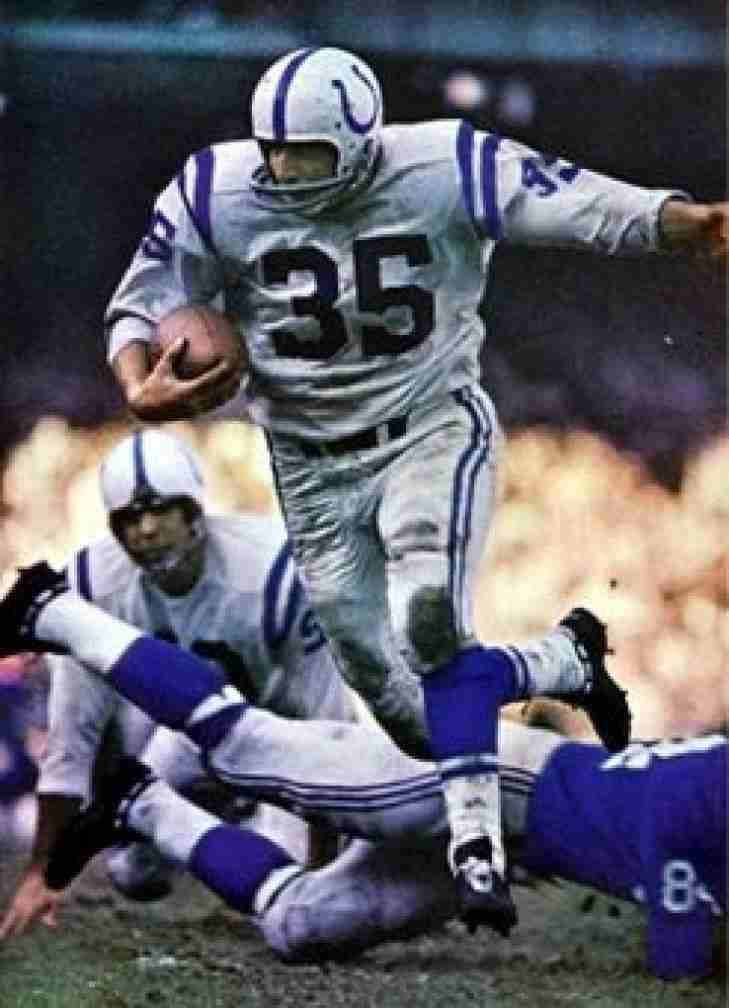
Fresh off winning the 1954 Heisman Trophy at Wisconsin, Alan "The Horse" Ameche arrived in Baltimore as the third overall pick in the 1955 NFL Draft and immediately established himself as a dominant focal point for the Colts. Combining a power-packed 218-pound frame with elite speed, he burst onto the professional scene by rushing for 194 yards in his very first career game against the Chicago Bears, featuring a staggering 79-yard touchdown run. Ameche capped his stellar debut campaign by winning the NFL rushing crown with 961 yards and a league-leading nine rushing touchdowns, sweeping Rookie of the Year honors and earning a First-Team AP All-Pro selection.
Ameche served as the ideal backfield anchor for head coach Weeb Ewbank and quarterback Johnny Unitas, delivering punishing runs between the tackles while absorbing heavy workloads. He earned Pro Bowl selections in each of his first four seasons (1955–1958) and added three Second-Team AP All-Pro selections (1956, 1958, 1959). His peak seasons provided the physical backbone for Baltimore's offensive explosion: in 1956, he eclipsed 1,000 yards from scrimmage and racked up nine touchdowns, following that up in 1958 with a dominant 791-yard, eight-touchdown effort on the ground. His career became forever etched in gridiron lore during the 1958 NFL Championship Game against the New York Giants—widely remembered as "The Greatest Game Ever Played". In sudden-death overtime, Ameche capped a grueling drive with a legendary one-yard touchdown dive into the end zone, securing Baltimore's first world championship.
He remained a vital weapon the following season as the Colts captured back-to-back titles in 1959, powering through defenses for 679 rushing yards and five scores while opening up passing lanes for Unitas and Raymond Berry. Tragically, Ameche’s stellar trajectory was cut short during his sixth season in 1960 when he suffered a severe Achilles tendon injury that forced him to retire at just 27 years old. Despite his brief career, his impact across the decade earned him a selection to the NFL 1950s All-Decade Team.
Overall, Ameche amassed 4,045 rushing yards, 40 rushing touchdowns, 101 receptions, 733 receiving yards, and four receiving touchdowns.
23. Bert Jones
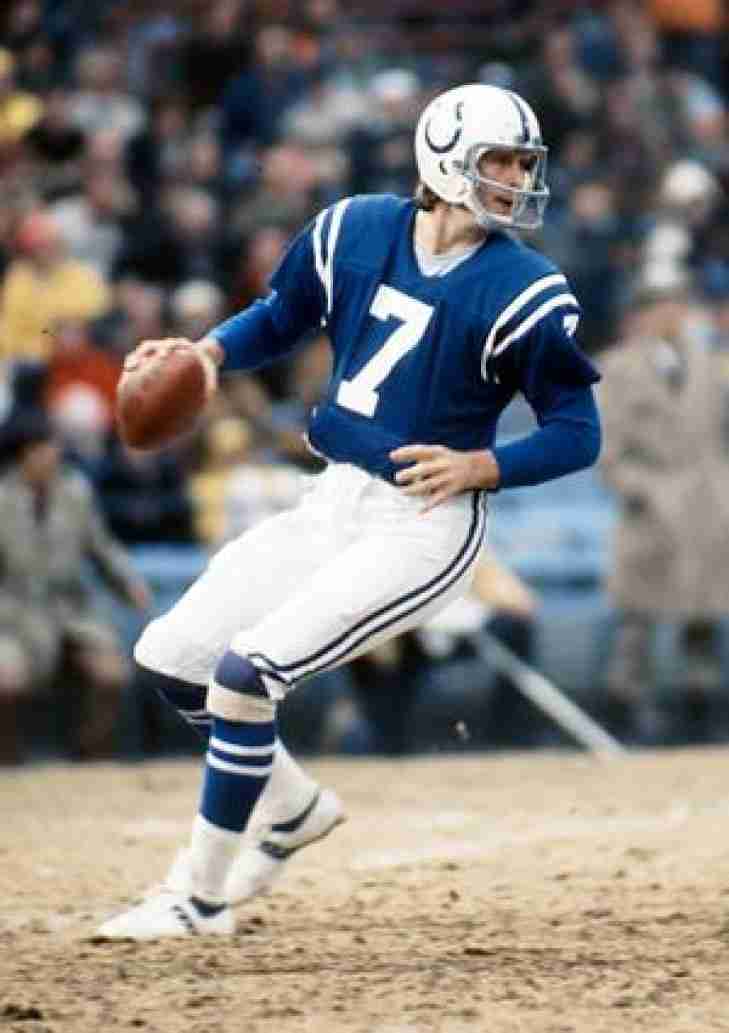
Taking over the reins of a franchise directly following a legend like Johnny Unitas is one of the most daunting assignments in football history. Selected second overall out of LSU in the 1973 NFL Draft, Bert Jones met that challenge head-on, earning the nickname "The Ruston Rifle" for a bullet pass and fearless pocket presence that quickly won over the fan base.
Without the deep championship cast that surrounded Unitas in the late 1950s, Jones willed the Colts back into national prominence through sheer individual excellence. Orchestrating head coach Ted Marchibroda's offense, he led Baltimore to three consecutive AFC East division crowns from 1975 to 1977. The crown jewel of his tenure came in 1976—a dominant season where he led the NFL with 3,104 passing yards, threw 24 touchdowns against nine interceptions, and compiled a league-leading 102.5 passer rating. That brilliant run swept the league's top honors, earning him the 1976 AP NFL Most Valuable Player award, AP Offensive Player of the Year, and First-Team All-Pro honors.
Known as one of the toughest and purest arm talents of his era, Jones routinely earned the admiration of opposing coaches and players. Regrettably, persistent shoulder injuries beginning in 1978 siphoned away his prime years and limited his availability. After nine seasons anchoring the offense in Maryland, Jones played a single final campaign with the Los Angeles Rams in 1982 before a neck injury brought his career to an early close.
With the Colts, Jones had a 56.1% completion percentage for 17,663 passing yards, a 122-97 TD-INT ratio, alongside 1,350 rushing yards and 14 rushing touchdowns.
22. Bob Vogel
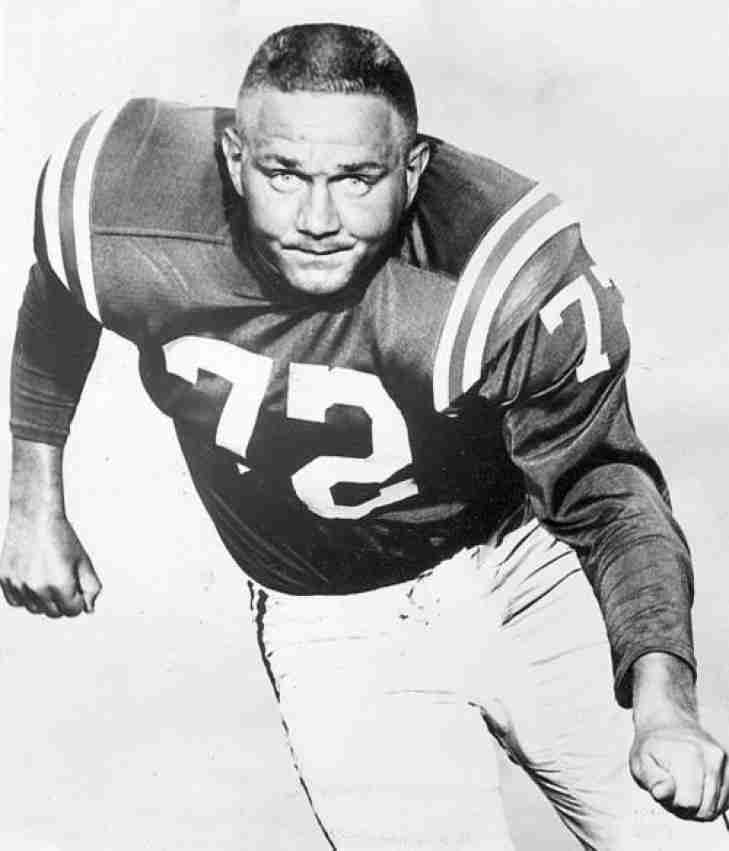
Taken fifth overall in the first round of the 1963 NFL Draft out of Ohio State, Bob Vogel landed in Baltimore and immediately stepped into one of the most demanding assignments in football: protecting the blind side of Hall of Fame quarterback Johnny Unitas. Vogel took over as the starting left tackle from day one and locked down the position for a decade, serving as the unsung protector who allowed Baltimore's explosive passing attack to flourish.
Vogel’s time in the blue and white was marked by exceptional durability and precise technique. He started all but one game for the franchise over 10 seasons, becoming one of the top offensive tackles of the 1960s and routinely challenging the league's most formidable defensive ends. He received five Pro Bowl selections (1964, 1965, 1967, 1968, 1971) and two Second-Team AP All-Pro honors (1965, 1968). Vogel was a key contributor to the 1968 team that claimed the NFL Championship, leading an offensive line that helped Baltimore finish 13–1 in the regular season.
His decade of elite play culminated on the game's ultimate stage in Super Bowl V against the Dallas Cowboys. Starting at left tackle, Vogel helped neutralize a suffocating Dallas pass rush, paving the way for Baltimore's dramatic 16–13 victory to capture the franchise's first Super Bowl title. Vogel retired after the 1972 season at just 31, walking away on his own terms as one of the most respected offensive linemen of his era.
21. Tarik Glenn
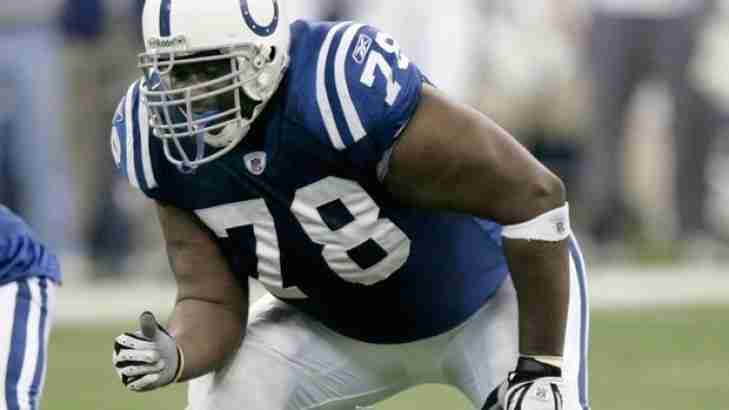
Selected in the first round (19th overall) out of California in the 1997 NFL Draft, Tarik Glenn stepped into the Indianapolis Colts' starting lineup as a rookie at right guard before permanently locking down the crown-jewel spot at left tackle. Possessing rare functional strength and light-footed agility, Glenn anchored the blind side of the offensive line for a decade, serving as the trusted primary protector for Peyton Manning during the franchise's meteoric rise to elite status.
Glenn’s presence was the rock around which offensive line coach Howard Mudd built one of the most efficient pass-blocking units in gridiron history. Tasked with shutting down the league's most terrifying edge rushers without assistance, Glenn’s mastery at left tackle allowed Manning's high-octane, no-huddle offense to flourish without fear of backside pressure. He started all 16 games in seven of his 10 professional seasons, earning three consecutive Pro Bowl selections from 2004 through 2006 as national recognition caught up to his elite on-field production.
His career reached a fairytale climax during the 2006 campaign. After dominating through four postseason victories, Glenn’s final game in uniform came on football's grandest stage, Super Bowl XLI. On a rain-soaked field in Miami, Glenn neutralized the Chicago Bears' pass rush, helping clear the way for 425 total yards of offense in a 29–17 victory. Walking off the field as a world champion, Glenn announced his retirement that offseason at the top of his game. He was permanently enshrined in franchise lore when he was inducted into the Indianapolis Colts Ring of Honor in 2022.
Glenn notably started all 154 games of his career.
