


Site Admin
26. Chris Hinton
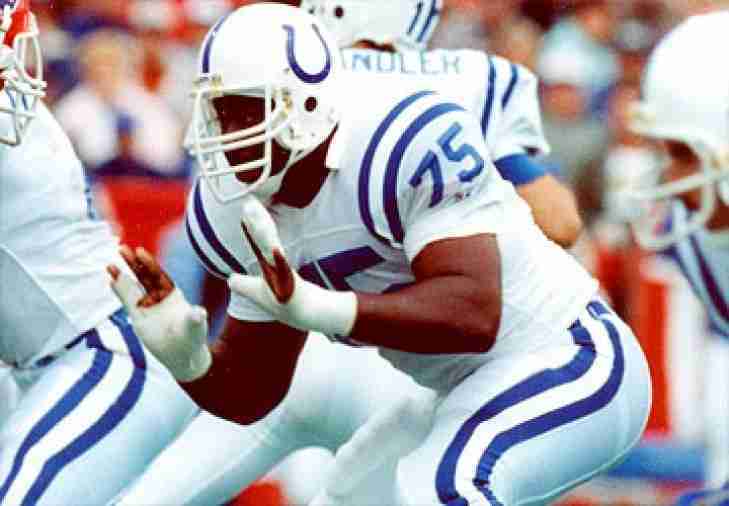
Drafted fourth overall in the 1983 NFL Draft by the Denver Broncos, offensive tackle Chris Hinton was immediately thrust into the spotlight when he was traded to the Baltimore Colts as the centerpiece of the historic deal for John Elway. While Elway's refusal to play for Baltimore reshaped the franchise's trajectory, Hinton quickly proved to be an elite, perennial All-Pro caliber anchor in his own right, famously joking years later that if Elway had stayed in Baltimore, Hinton wouldn't have been there to block for him anyway.
Plugging in immediately at guard as a rookie before switching to left tackle, Hinton weathered the franchise's turbulent relocation to Indianapolis in 1984 while serving as the focal point of the offensive line. Possessing rare technical precision and explosive functional power, he handled the league's premier pass rushers week after week. Across his seven seasons with the Colts, Hinton earned six Pro Bowl selections (1983, 1985–1989), two First-Team AP All-Pro selections (1987, 1989), and three Second-Team AP All-Pro honors (1985, 1986, 1988), spearheading a unit that paved the way for Eric Dickerson's dominant rushing campaigns in the late 1980s.
Hinton spent the final six years of his 13-season NFL career with Atlanta and Minnesota, earning a seventh Pro Bowl nod with the Falcons in 1993. His sustained excellence across the decade was permanently recognized when he was named to the NFL 1980s All-Decade Team. The Colts formally honored his enduring impact by inducting him into the Indianapolis Colts Ring of Honor in 2001.
29. Ray Donaldson
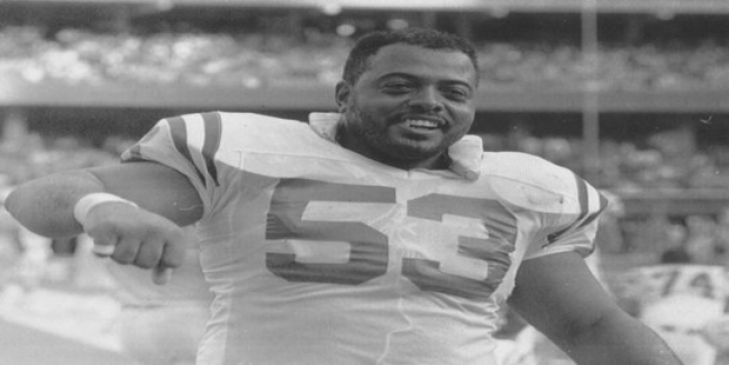
Drafted in the second round (32nd overall) of the 1980 NFL Draft out of the University of Georgia, Ray Donaldson arrived in Baltimore initially ticketed for interior depth. But by his second season in 1981, "Bulldog" earned the starting nod at center, breaking historical ground as the first African-American starting center in NFL history. That barrier-breaking moment launched a stellar, decade-plus run as the unyielding anchor of the Colts' offensive line.
Donaldson was the ultimate model of durability and quiet leadership through a turbulent chapter in franchise history. He served as the primary pivot man during the team's overnight relocation from Baltimore to Indianapolis in 1984, becoming the undisputed engine of the offense. Combining dense functional strength with elite footwork, he carved out gaping lanes for dynamic backfield talents—most notably clearing the way for Eric Dickerson’s league-leading 1,659 rushing yards during the 1988 season.
Donaldson’s peak national recognition in horseshoe blue came in the late 1980s. Between 1986 and 1989, he was selected to four consecutive Pro Bowls, earned Second-Team AP All-Pro honors in 1987, and helped lead Indy to an AFC East division crown and a playoff berth. His streak of 152 consecutive starts over a 10-year span highlighted a relentless work ethic that earned universal reverence from teammates and defensive linemen across the NFL.
He went on to spend two productive years anchoring the line for the Seattle Seahawks before experiencing a career renaissance with the Dallas Cowboys.
19. Lydell Mitchell
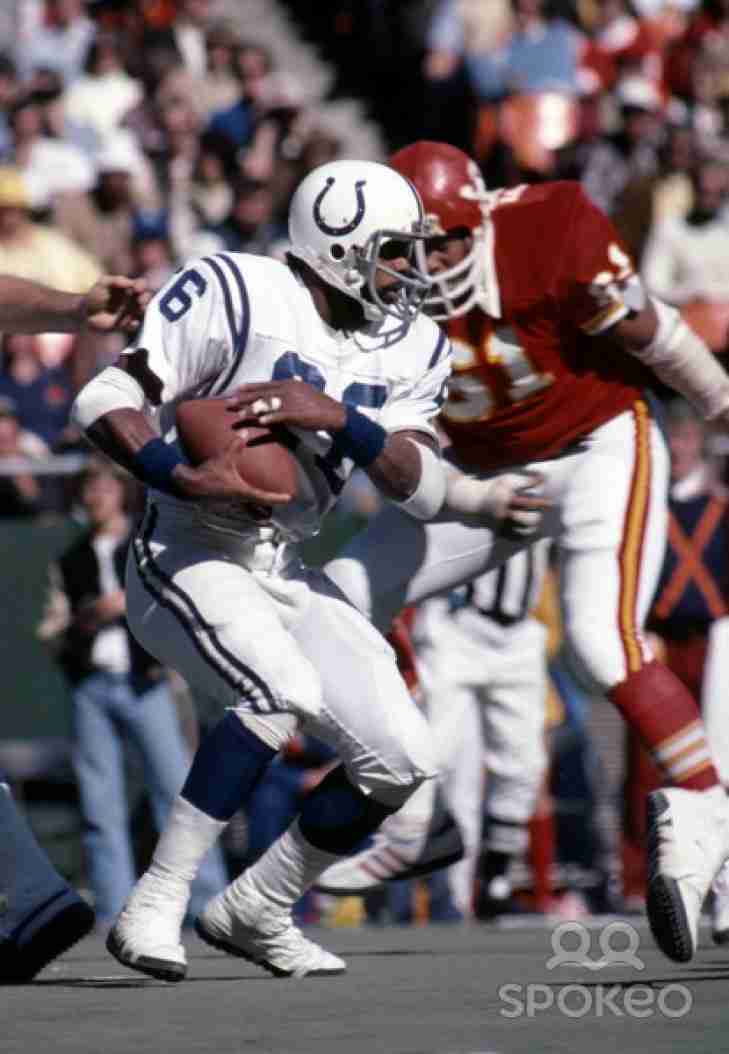
Drafted in the second round of the 1972 NFL Draft out of Penn State, Lydell Mitchell arrived in Maryland as an elite, multi-dimensional weapon ready to transform Baltimore's backfield. After a couple of seasons settling into the professional ranks, Mitchell exploded into full stardom alongside quarterback Bert Jones, serving as the offensive engine for a juggernaut squad that captured three consecutive AFC East division titles from 1975 to 1977.
Mitchell’s prime in blue and white was characterized by constant dual-threat versatility. He became the franchise’s first to achieve three straight 1,000-yard rushing seasons, surpassing 1,193 yards in 1975, 1,200 in 1976, and 1,159 in 1977. His most groundbreaking achievements, however, came through the air: Mitchell led the NFL in receptions twice—72 catches in 1974 and 71 in 1977—a rare feat for a running back at that time. In his outstanding 1976 season, he recorded an NFL-high 23 Approximate Value (AV), 1,755 scrimmage yards, and eight touchdowns, earning Second-Team AP All-Pro honors.
During his peak stretch, Mitchell was a three-time Pro Bowl selection (1975, 1976, 1977) and a two-time Second-Team AP All-Pro choice. Whether grinding out tough yards between the tackles or lining up as Jones' primary safety valve out of the backfield, he regularly generated high-volume output, racking up over 1,700 yards from scrimmage in three straight campaigns. After a contract dispute, Mitchell spent his final three NFL seasons with San Diego and the Los Angeles Rams, but he reached his highest level in Baltimore.
With the Colts, Mitchell had a total of 8,010 yards from scrimmage and 41 total touchdowns.
To know Him Is To Love Him
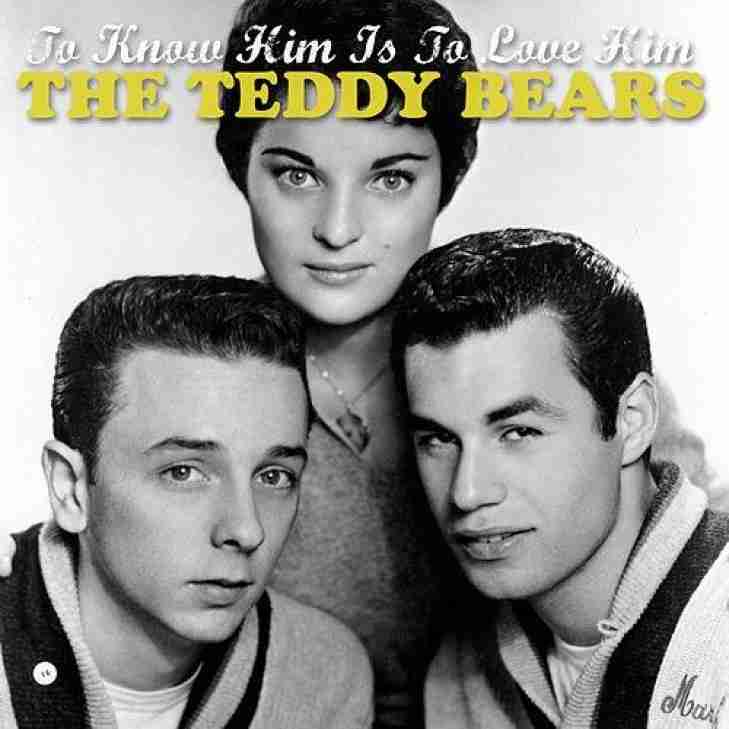
The Teddy Bears
To Know Him Is to Love Him
