


Site Admin
26. Dan Plesac
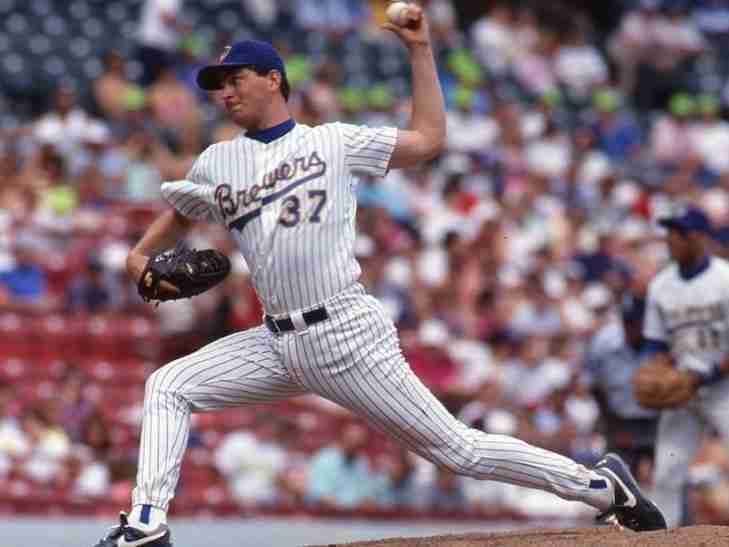
Dan Plesac, a 1983 first-round pick, was a durable southpaw and one of the most dominant relievers in franchise history. Though he started with the velocity of a closer, he anchored the bullpen for seven seasons in Cream City.
After a strong rookie year in 1986 with 14 saves and a 2.97 ERA, Plesac achieved remarkable success by earning three consecutive All-Star selections from 1987 to 1989. During this peak, he demonstrated mastery of the American League, posting a 2.41 ERA in 1988 and a career-high 33 saves in 1989. He was a key late-inning reliever and a vital part of the Brewers’ shift to a relief-focused approach.
Plesac recorded back-to-back seasons with at least 30 saves, becoming the first Milwaukee pitcher to do so. He ranked among the top five in saves three times. During the 1991 season, even when tried as a starter, he remained a high-leverage pitcher, setting a career high in strikeouts and proving his left-handed slider was effective in any role. By 1992, he had achieved a historic milestone few relievers of his era could match.
He departed Milwaukee for the Chicago Cubs before the 1992 season. As a Brewer, Plesac compiled a 3.21 ERA, 133 saves, and 452 strikeouts.
21. Yovani Gallardo
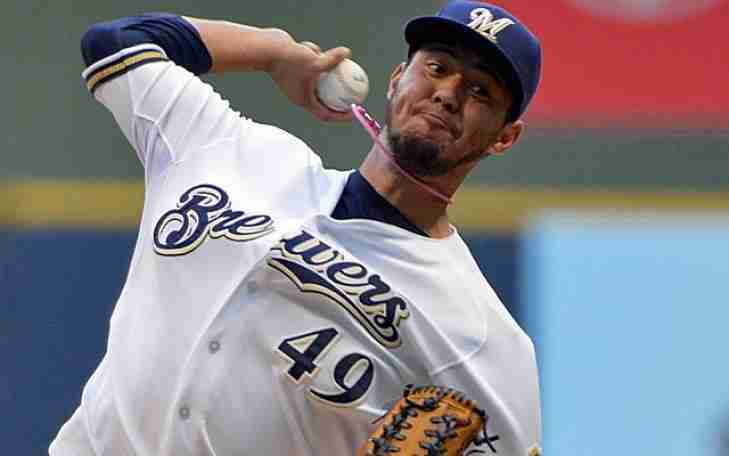
Yovani Gallardo debuted for the Milwaukee Brewers in 2007, a second-round pick out of Texas who quickly established himself as the most dominant right-hander the franchise had seen since the prime of Ben Sheets.
After a brief coffee break in 2007, Gallardo reached a peak in individual performance starting in 2009. He recorded four straight seasons with over 200 strikeouts, consistently ranking in the league’s top ten. During this period, he demonstrated complete mastery of his skill set, especially in 2010 when he earned his only All-Star selection and received the Silver Slugger Award. He was not only a formidable pitcher but also a key hitter in the lineup, once even homering off Randy Johnson to become the only pitcher ever to hit the "Big Unit" deep.
In the 2011 season, he was the primary engine of the rotation, recording a career-high 17 wins and finishing seventh in the Cy Young voting. He proved his mettle as a "big-game" giant in the NLDS against the Diamondbacks, allowing only one run over eight dominant innings in Game 1 and later helping the club reach the NLCS. Across this era, he was a professional mainstay of the Opening Day festivities, eventually setting a franchise record with five consecutive Opening Day starts.
Gallardo was traded to the Texas Rangers before the 2015 season, and he left behind a 89-64 record, a 3.69 ERA, and 1,226 strikeouts.
25. Sixto Lezcano
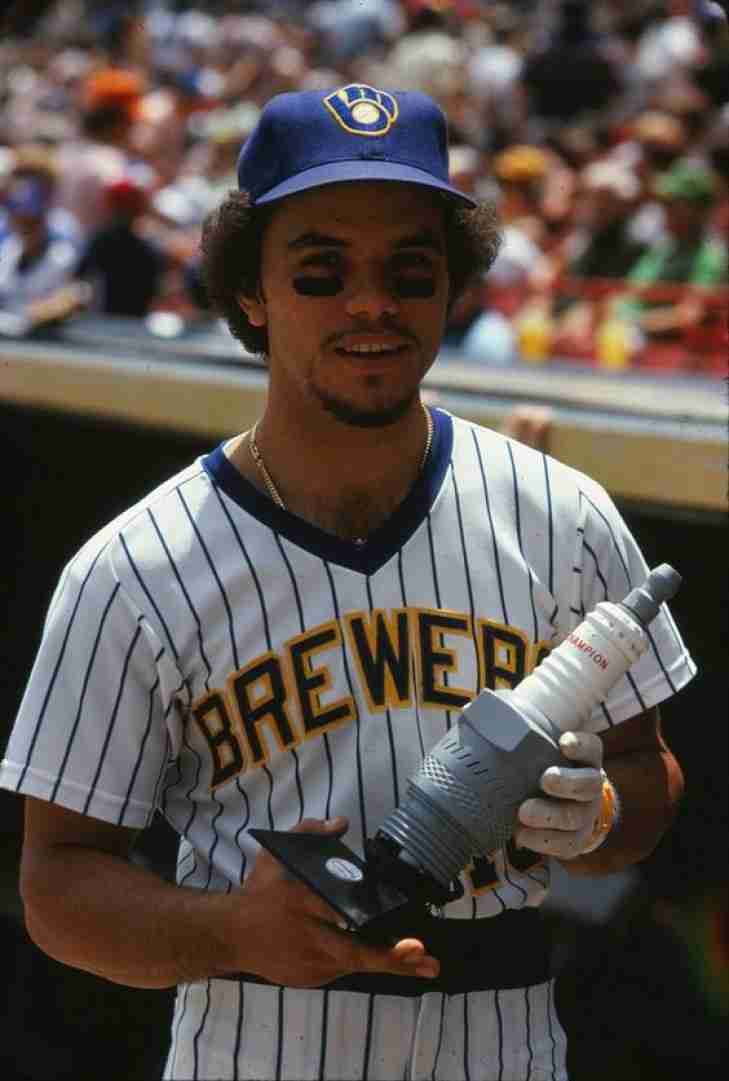
A 20-year-old phenom from Puerto Rico, Sixto Lezano, came to Wisconsin possessing one of the most feared throwing arms in the American League. While he was a cornerstone of the "Bambi’s Bombers" era.
Lezcano became the only player in Major League history to hit a grand slam on two different Opening Days (1978 and 1980), showcasing a knack for big moments. This helped the Brewers emerge as an offensive force. Notably in 1978, he led the league in outfielder assists, demonstrating a strong right-field arm that thwarted many rallies.
During the 1979 season, he had a standout year, batting a career-high .321 with 28 home runs and 101 RBIs. He posted a .987 OPS, earned a Gold Glove, and finished 15th MVP voting. As a key member of a legendary outfield with Gorman Thomas and Ben Oglivie, he was the most well-rounded contributor, helping the Brewers' first winning seasons and showcasing their talent development.
Lezcano was the centerpiece of a historic trade with the St. Louis Cardinals that brought future Hall of Famer Rollie Fingers, Ted Simmons, and Pete Vuckovich to Milwaukee. He left the 414 with a statistical footprint that includes 102 home runs and 749 hits.
28. Bill Wegman
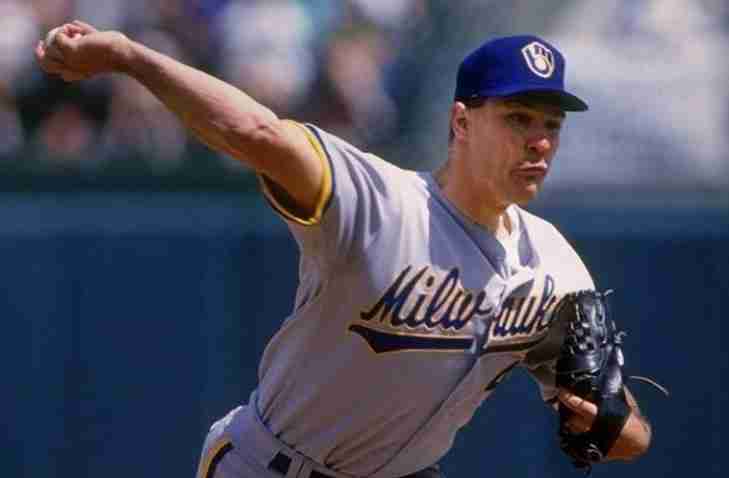
Bill Wegman, a Cincinnati native, arrived in Milwaukee as a fifth-round pick in 1981. He became a true franchise ‘lifer,' known for his control and cerebral style rather than high velocity, wearing a Brewers uniform for 11 seasons.
After a brief 1985 stint, Wegman reached peak efficiency in the late 80s, pitching 200+ innings in 1987 and 1988. He demonstrated an excellent command of the strike zone, finishing in the top ten for BB/9 five times. While his win-loss record reflected team ups and downs, he was known for eating innings and preventing home runs, with a career-high 261.2 innings in 1992.
During the 1991 season, he authored a remarkable campaign, posting a 15-7 record with a 2.84 ERA, the third-best in the American League. He led the league in WHIP (1.117) and finished with seven complete games. His emotional peak was winning the Hutch Award, given to the player who best exemplifies "fighting spirit and competitive desire."
He retired after playing all 11 of his major league years for the Brewers, and Wegman compiled an 81-90 record, a 4.16 ERA, and 696 strikeouts.
