


Site Admin
40. Craig Swan
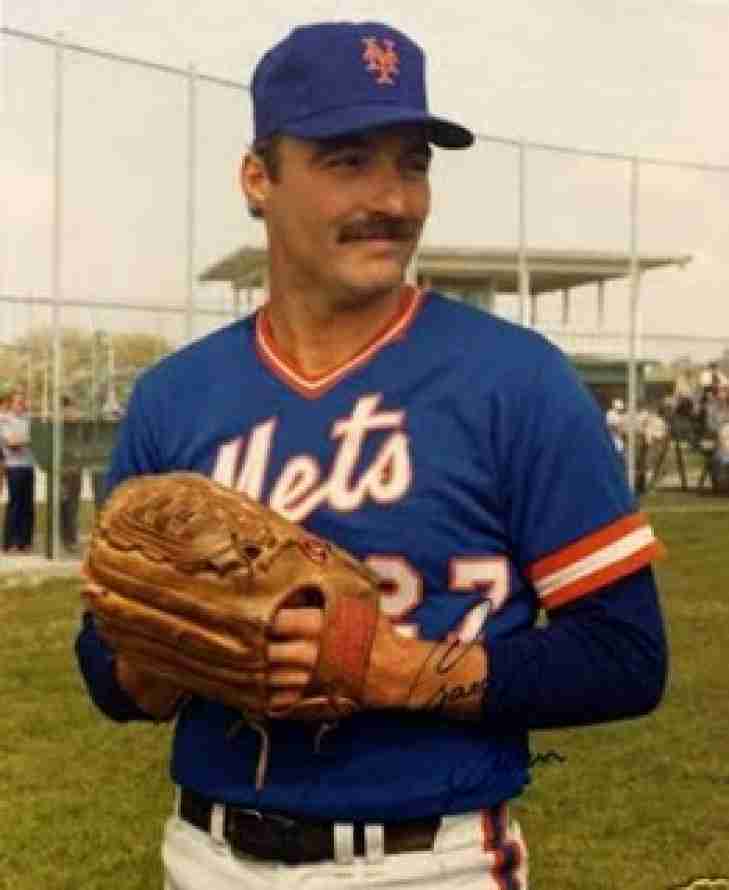
Craig Swan first broke into the major leagues with New York in September 1973, a third-round draft pick out of Arizona State University who possessed a heavy, low-90s fastball and a sharp slider. Arriving just as the "Ya Gotta Believe" pennant race reached its boiling point, the young right-hander was largely a spectator during the team's World Series run, spending the next two seasons waiting for a permanent opening while refining his craft in Triple-A.
Swan secured a permanent spot in the starting rotation during the 1976 season, delivering a strong debut as a regular starter with a 6-9 record and a solid 3.54 ERA, including a remarkable five-hit, 11-strikeout shutout against Atlanta. He remained a reliable, volume-focused starter throughout the difficult 1977 season. After the surprising mid-summer trading of Tom Seaver, Swan was placed in a higher-pressure role, leading a weakened pitching staff with 9 wins and 146.2 innings pitched, even as the team fell to the bottom of the National League East.
In 1978, Swan was the unheralded anchor of a 96-loss team. He completely shocked the baseball world by capturing the National League ERA Title with a spectacular 2.43 mark. He pairs that baseline achievement with an era-defining 143 ERA+ to lead the senior circuit, while finishing second in the league in both WHIP (1.07) and hits allowed per nine innings. He was entirely unhittable at Shea Stadium, where he spun a microscopic 1.68 ERA, but the punchless Mets lineup routinely wasted his efforts, leaving him with a deceptive, hard-luck 9-6 record that masked a brilliant 5.6 bWAR campaign.
He demonstrated that his remarkable peak was no accident by increasing his workload during the 1979 season, achieving his best statistical season with traditional volume. As the team's Opening Day starter, Swan bore a heavy load for a team that lost 99 games, pitching a career-high 251.1 innings over 35 starts and completing 10 games. He recorded a personal best of 14 wins, more than his two rotation teammates combined, along with 145 strikeouts and a solid 3.29 ERA. His outstanding two-year performance earned him the largest pitching contract in franchise history at that time when the front office signed him that winter.
His career took a frustrating turn after that financial peak as physical roadblocks derailed his efficiency. Swan started strongly in 1980 with a 2.21 ERA into June, but a torn rotator cuff ended his summer and wiped out most of his 1981 schedule. He made a strong late-career comeback in 1982, going 11-7 with a 3.35 ERA over 166.1 innings, narrowly missing the NL Comeback Player of the Year. Sadly, his arm shattered again early in 1983, and he spent the rest of his career trying to pitch through severe joint damage.
Swan was released in May of 1984, finishing up with a 59-72 record and a 3.74 ERA.
35. Lenny Dykstra
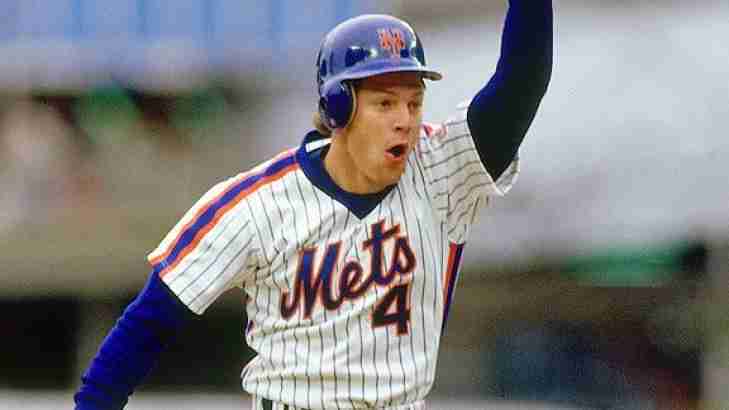
Lenny Dykstra made his Major League debut with the New York team in May 1985. He's a tough, gritty center fielder from Southern California, known for playing recklessly and putting his body on the line. His nickname reflects his iron-willed toughness, and he brought a driven, energetic presence to the top of the batting order.
Known as “Nails,” Dykstra was a fearless, dirt-stained player who set the tone for the legendary 1986 championship season. He earned a significant role in the outfield, becoming the team’s undisputed "spark plug" and leadoff hitter for a squad that finished with 108 regular-season wins. That summer, he had an outstanding campaign, batting .295 with a team-high 31 stolen bases and 77 runs scored. He combined that volume of action with a keen eye at the plate, striking out only 55 times and giving the Mets a fierce, gritty identity right at the top of the order.
Although Dykstra’s regular-season contributions were excellent, he became a legendary figure in New York through his clutch performances in October. In the 1986 NLCS Game 3 against Houston, facing a potential series loss, he hit a memorable walk-off two-run homer, one of the franchise’s most iconic moments. He built on that momentum during the World Series against Boston, starting Game 3 with a historic home run at Fenway Park that fueled a big win and helped lead the Mets to their 1986 championship.
Dykstra was a postseason warrior, batting .429 in the 1988 NLCS against the Dodgers. His time in Flushing ended on June 18, 1989, when he, McDowell, and Edens were traded to the Phillies for Juan Samuel. In Pennsylvania, he reached his peak, earning three All-Star selections and finishing as NL MVP runner-up in 1993.
Dykstra compiled 469 hits and 116 stolen bases as a Met.
34. Tom Glavine
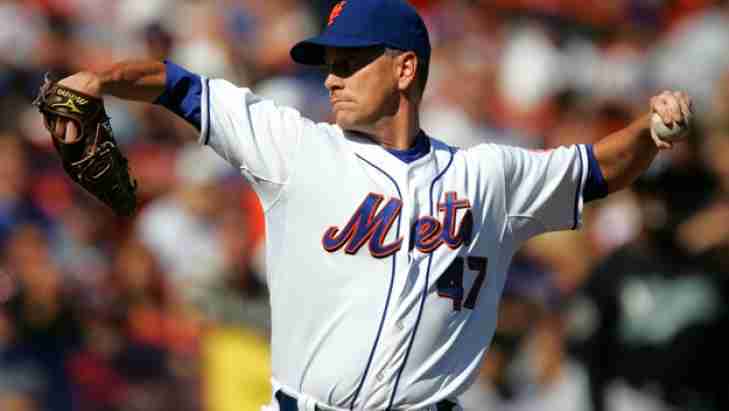
In December 2002, Tom Glavine surprised baseball fans by switching teams, signing a four-year, $42.5 million deal to leave the Atlanta Braves and shake up the National League East. Glavine will always be thought of as a Brave, but his work in the Big Apple is worth celebrating.
Throughout his five seasons in Queens, Glavine consistently started at least 32 games each season. His standout years were 2004 and 2006, when he earned two National League All-Star selections as a Met. In 2006, he delivered a masterful performance, going 15-7 with a 3.82 ERA, serving as a key veteran and frontline pitcher for a strong team that won the NL East and advanced to Game 7 of the NLCS.
Beyond his run prevention, Glavine achieved a historic milestone. On August 5, 2007, at Wrigley Field, he outperformed the Cubs to win his 300th game, becoming the 23rd pitcher in MLB history to reach this milestone. In the final game of the regular season, Glavine had his worst outing as a Met, lasting only one out in a game that eliminated the Mets from playoff contention. Glavine would depart afterward to rejoin the Braves.
With the Mets, Glavine had a 61-56 record, a 3.97 ERA, and entered the Baseball Hall of Fame in 2014.
Everybody's Somebody's Fool
Connie Francis
Everybody’s Somebody’s Fool
