


Site Admin
10. Camilo Pascual
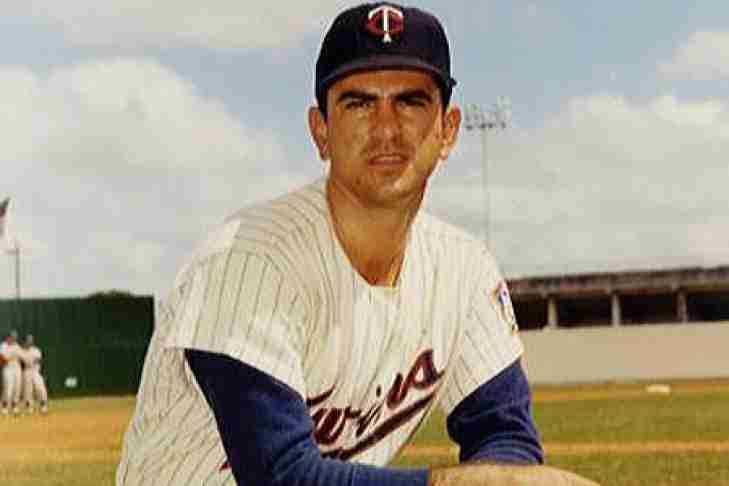
Camilo Pascual reached the Majors with Washington in 1954 at age 20, known for his back-arching windup and a devastating curveball that Ted Williams called the "most feared" in the American League for nearly twenty years.
Between 1954 and 1958, Pascual showcased a specialized ceiling as a strikeout threat, although his win-loss record was often affected by the team's poor performance. In 1959, he reached a career peak, leading the American League with 17 complete games and 6 shutouts, earning his first of seven All-Star nominations.
After the franchise moved to Minnesota in 1961, Pascual enjoyed a three-year period of dominance that remains a significant benchmark in team history. He led the American League in strikeouts for three straight seasons (1961–1963) and achieved consecutive 20-win seasons. In 1963, he went 21-9 with a 2.46 ERA and led the AL in complete games for the third time. During this peak, he was a reliable, high-volume pitcher whose durability enabled him to pitch over 240 innings each year, making him a specialized ace for the Twins as they grew into a pennant contender.
In 1966, the final year of his primary tenure, he transitioned into a veteran role. Before that, he played a crucial part in the 1965 World Series team. Although an injury caused him to miss much of that championship summer, he made his mark on team history on April 27, 1965, by hitting a grand slam, one of the rare pitchers to do so.
Ironically, he was traded to the second incarnation of the Washington Senators in 1967, thus ending his stay in the Twin Cities. Pascual went 145-141 for the franchise, fanning 1,885 Strikeouts. The Twins inducted him into their franchise Hall of Fame in 2012.
8. Sam Rice
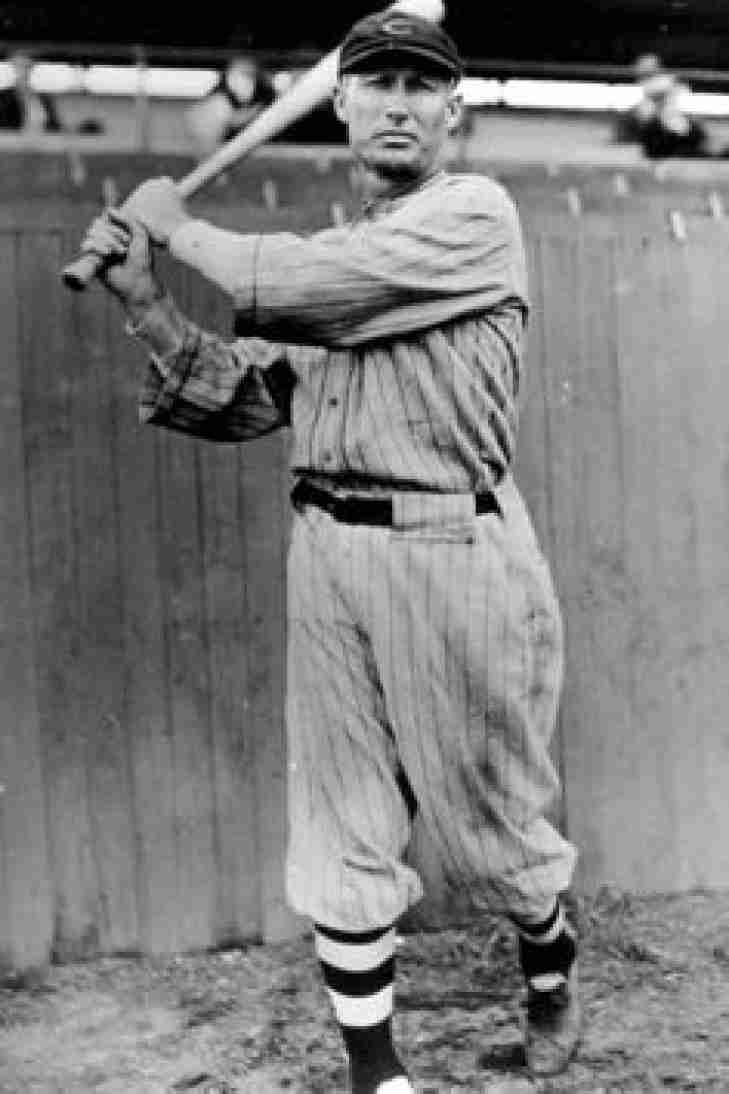
Sam Rice began his MLB career with the Washington Senators in 1915, where he would establish himself as one of the game’s premier table setters, though that took a while to transpire.
Rice started his career as a pitcher but achieved greater success as an outfielder. After serving in the Army during World War I, he demonstrated complete mastery of the leadoff role, leading the league in stolen bases in 1920 with a career-high 63 steals. Between 1924 and 1926, he was highly efficient, leading the American League in hits twice and accumulating 216 hits to help the Senators win their first World Series in 1924. At his peak, he was a strategic force at the plate, known for his difficulty in striking out and his ability to spray the ball across the expansive outfields of that era.
Rice reached a historic milestone in longevity when he entered his 40s, playing a standout season in 1930 that remains unique in baseball history. He showed hitting ability by collecting 207 hits at age 40, making him the only player in the sport's history to surpass 200 hits at that age or older. He ended that season with a .349 batting average, one of 13 seasons in which he hit over .300 for the Senators. His career was marked by his key role in all three of the franchise's World Series appearances, during which he served as the veteran leader of a lineup that frequently challenged the dominance of the New York Yankees.
The Senators released him in early 1934 to make room for younger players. He signed with the Cleveland Indians for his final season, ending just 13 hits shy of 3,000. With the Senators, Rice amassed 2,889 hits, a .323 average, and 346 stolen bases, and he received the call from Cooperstown in 1963.
9. Johan Santana
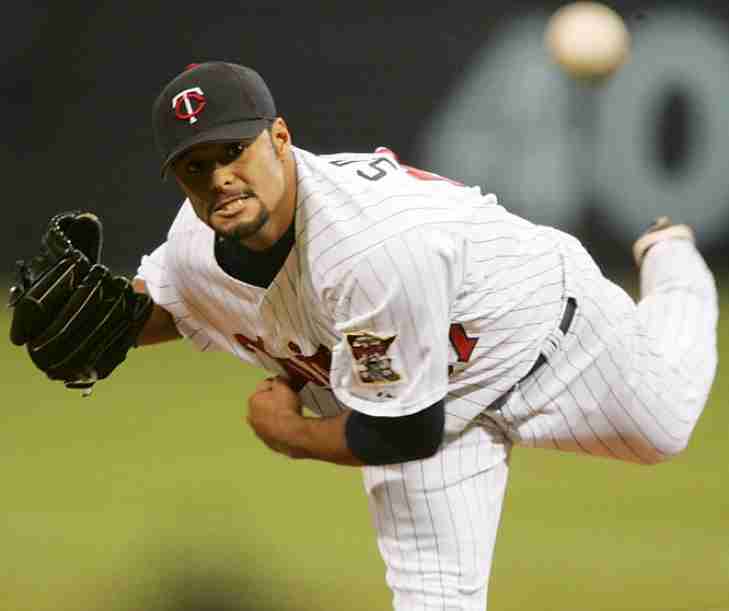
Arriving in Minnesota via the Rule 5 Draft, Johan Santana was a left-hander from Venezuela with a high-velocity fastball and a changeup that many considered the most devastating pitch of the era.
Santana spent his first three years as a mainstay in the bullpen and a spot starter, but everything changed dramatically in the second half of 2004. He delivered an incredible stretch, going 13-0 with a 1.21 ERA after the All-Star break, earning his first Cy Young Award by a unanimous vote. He mastered the league, leading the AL in strikeouts (265), ERA (2.61), and WHIP (0.92). This period proved he was an elite talent capable of shutting down baseball's most dangerous offenses, establishing himself as one of the best in the game.
Santana achieved a historic summit between 2005 and 2006, demonstrating a level of consistency that established him as the most sought-after pitcher in the league. In 2006, he attained the rare Pitching Triple Crown, leading the league in wins (19), ERA (2.77), and strikeouts (245), thus earning his second unanimous Cy Young Award. Although he "only" finished third in the 2005 voting, a result that remains subject to debate among sabermetricians, he demonstrated a relentless capacity to produce swings and misses, leading all Major League Baseball pitchers in strikeouts for three consecutive seasons. During this period of peak performance, he was a master tactician who consistently gave the Minnesota Twins a high probability of victory about every five days.
Before the 2008 season, with free agency looming and the Twins unable to meet his market value, the organization initiated a blockbuster trade, sending him to the New York Mets in exchange for a four-prospect package that included Carlos Gómez. With Minnesota, Santana compiled a 93-44 record, a 3.22 ERA, and 1,381 strikeouts, and in 2018, he took his rightful spot in the Twins Hall of Fame.
7. Bert Blyleven
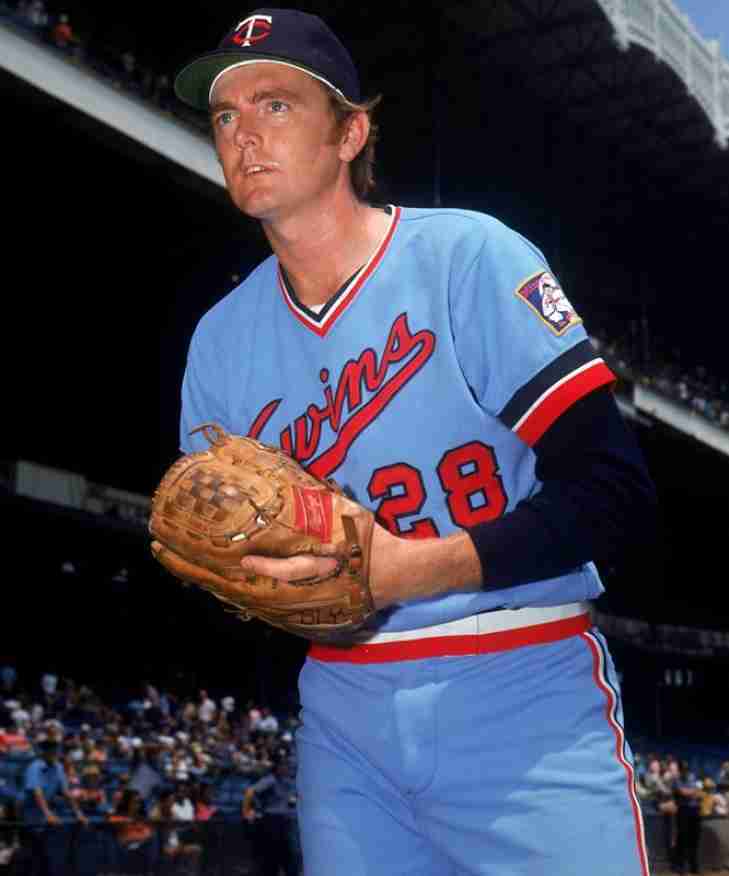
One of the most durable pitchers in baseball history, Bert Blyleven’s MLB career began in 1970 as a 19-year-old phenom, armed with a curveball so sharp it was said to buckle the knees of even the most seasoned veterans. While he spent time in five other cities during his 22-year journey, his heart and his most dominant statistical stretches belonged to the Twin Cities.
From the very start, Blyleven proved he had what it takes at the major league level, winning 10 games and earning the Rookie Pitcher of the Year honors. Between 1970 and 1973, he consistently showcased a strong command of his skills, averaging 16 wins per season. His first Twins career highlight came in 1973 when he delivered an outstanding season: winning 20 games, leading the league with 9 shutouts, pitching 325 innings, and setting a team record with 258 strikeouts. During this time, he was a true workhorse, known for his remarkable efficiency in the American League.
His first exit from the club in 1976 was defined by a clash with ownership. Frustrated by salary negotiations with Calvin Griffith and a perceived lack of run support, Blyleven’s residency became strained. On June 1, 1976, just days after being booed by the home fans during a contract dispute, he was traded to the Texas Rangers in a six-player blockbuster. He famously threw a no-hitter in his final start for Texas before beginning a journey that took him to Pittsburgh and Cleveland, winning a World Series ring along the way, but on the 1985 Trade Deadline, he was back in a Twins uniform, completing a season where he was third in Cy Young voting.
In 1986, Blyleven recorded his 3,000th career strikeout in a Twins uniform. The season after, he served as the specialized anchor for the rotation that delivered the franchise’s first World Series title in Minnesota. While he famously surrendered a high volume of home runs during this stretch, his ability to log nearly 270 innings and strike out nearly 200 batters proved he was still a valuable asset.
After the 1988 season, he was traded to the California Angels, which would be his last stop in the Majors. With the Twins, he had a 149-138 record, a 3.28 ERA, and 2,035 strikeouts. In 2011, he was inducted into the National Baseball Hall of Fame on his 14th ballot and saw his No. 28 retired by the Twins.
