


Site Admin
5. Derek Jeter
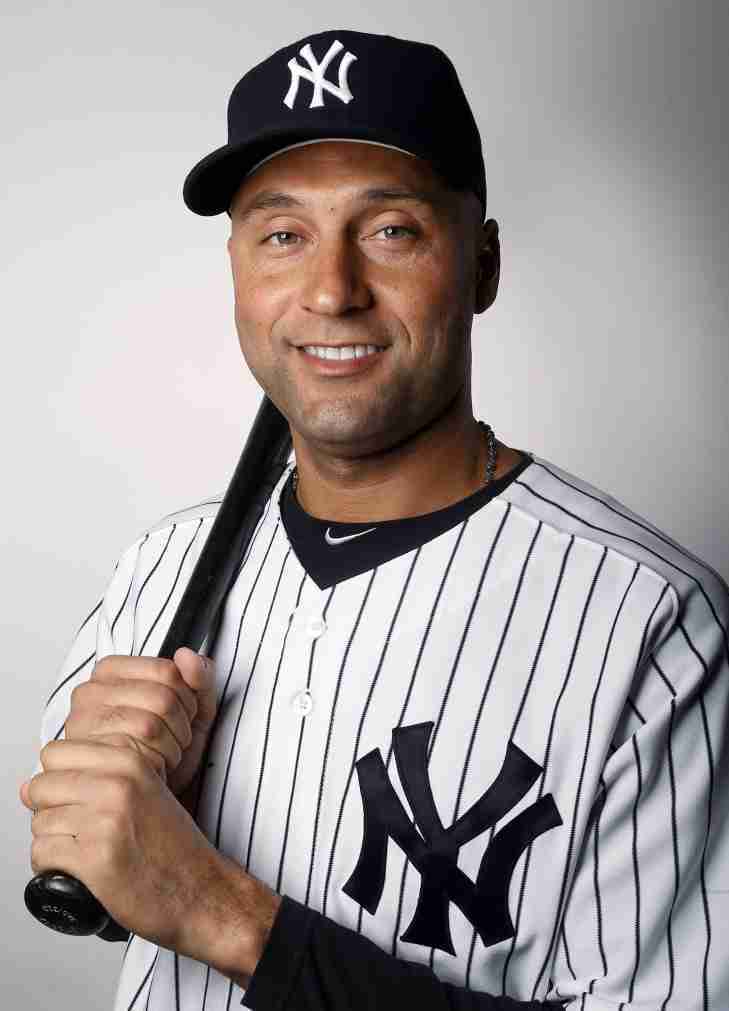
Derek Jeter's journey in the Bronx began in 1995 when he arrived as a 20-year-old rookie. With a quiet confidence and a hometown reputation as a promising talent who had always dreamed of donning the pinstripes, he quickly captured hearts. From the moment he stepped into the starting shortstop position in 1996, he became the guiding force behind a new era of success, serving as a steadfast leader for a team that went on to win four championships in five years. Over his 20 seasons with the Yankees, Derek emerged as a true icon of the sport, breaking franchise records for durability and consistency, and earning the affectionate nickname "The Captain" while becoming a beloved figure worldwide.
His rookie season was truly remarkable, a storybook start that set the tone for an incredible career. In 1996, Jeter made an unforgettable debut, batting .314 and earning the American League Rookie of the Year award, while also helping the Yankees secure their first championship in nearly twenty years. That year marked the beginning of a legendary era, with Jeter becoming the driving force behind the Yankees' remarkable "three-peat" of World Series wins from 1998 to 2000. In 1999, he achieved a personal best with 219 hits and a .349 batting average, and he capped off that championship run by earning both the All-Star and World Series MVP titles in 2000.
As the new millennium arrived, his role shifted from being a rising star to becoming the dependable emotional and tactical cornerstone of the team. On October 13, 2001, he wrote "The Flip" to help secure a win in an elimination game against Oakland, and just a few weeks later, he earned the nickname "Mr. November" after hitting a walk-off home run in the World Series. His leadership was officially celebrated on June 3, 2003, when George Steinbrenner named him the 11th captain in Yankees history. Throughout this period, he demonstrated exceptional mastery of his role, earning five Gold Glove Awards and guiding the Yankees to their 27th World Series title in 2009, batting an impressive .407 in the Fall Classic.
In 2011, he embarked on a remarkable journey in baseball history, surpassing Lou Gehrig as the franchise's all-time hit leader. On July 9, 2011, he reached a significant milestone when he became the first Yankee to get 3,000 career hits, celebrated with a stunning home run off David Price. Despite facing a tough ankle injury in 2012, he showed incredible resilience by returning to the field and ending his career with a heartfelt farewell tour. During his final game at Yankee Stadium in 2014, he made it even more special with a memorable walk-off single, sealing his legacy as the only player in franchise history to reach 3,465 hits.
In 2017, the organization honored him by retiring his No. 2 and placing him in Monument Park. He left behind an impressive legacy, having played more games in pinstripes than any other player, along with a postseason record of 200 hits and 20 home runs. His remarkable journey concluded in 2020 when he was inducted into the National Baseball Hall of Fame with the highest voting percentage ever for a position player, cementing his status as a beloved icon of New York.
4. Joe DiMaggio
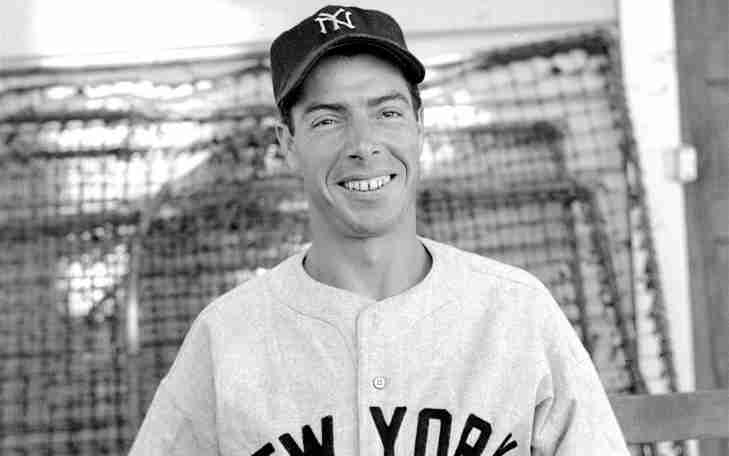
Joe DiMaggio came to the Bronx in 1936, succeeding Babe Ruth’s era, as a graceful and efficient center fielder who became the emblem of the "Yankee Clipper" age. Although his short marriage to Marilyn Monroe in 1954 cemented his status as a pop-culture icon, DiMaggio had already spent thirteen seasons as the strategic driving force behind a dynasty.
Between 1936 and 1942, DiMaggio reached an historic peak, guiding the Yankees to the World Series six times in those seven years, and securing the championship in five of those appearances. He debuted in 1936 as a 21-year-old star, setting a franchise rookie record with 29 home runs and quickly becoming the main run producer after Babe Ruth. By 1937, he was at a career-best peak of effectiveness, leading the American League in home runs (46), runs scored (151), and total bases (418), narrowly finishing second in the MVP voting.
DiMaggio reached the peak of his career in 1939 and 1941, earning two of his three MVP awards early on. In 1939, he won his first batting title with a.381 average, one of the highest in Yankees history. Two years later, he set the still-unmatched 56-game hitting streak, a testament to individual endurance. In a season when Ted Williams batted .406, DiMaggio’s consistent performance and his league-leading stats in RBIs (125) and total bases (348) earned him the 1941 MVP Award. During this period, he was a formidable presence, providing leadership and stability to a lineup that was determined to succeed.
In 1942, the Yankees secured another pennant, although DiMaggio’s individual performance experienced a slight decline to a .305 batting average, marking his lowest at that point. With the onset of global conflict, he elected to pause his professional sports career to enlist in the United States Army Air Forces. At the age of 28, he exchanged his iconic pinstripes for a military uniform, thereby leaving the sport at the peak of his physical condition. Although he eventually returned to attain new heights in the late 1940s, those initial seven seasons established a statistical record that many players would find fortunate to achieve within twenty campaigns.
After returning from the war in 1946, DiMaggio found himself in a league that was missing its shining star. As the "Yankee Clipper" gradually got back into his groove, his final chapter in baseball was marked by a personal struggle against his own limits. Despite missing part of the 1947 season due to the removal of a three-inch bone spur from his heel, he managed an inspiring comeback that earned him his third MVP Award. In one of baseball’s most talked-about races, he narrowly beat Ted Williams by just one point—even though Williams had achieved the Triple Crown, thanks to DiMaggio’s crucial, high-pressure contributions that helped the Yankees win the pennant. That season, he finished with a .315 batting average and 97 RBIs, leading to his sixth World Series title after a dramatic seven-game win over the Brooklyn Dodgers.
By 1948, DiMaggio reached a statistical summit, proving he was still a tactical giant at the plate. He led the American League in home runs (39) and RBIs (155), while batting .320, finishing second in MVP race. This performance earned him the first $100,000 contract in 1949, making him the highest-paid player in history. However, a recurring heel injury cost him the first 65 games. His June return was cinematic; arriving in Boston without spring training, he hit four home runs in three games against the Red Sox, boosting team morale and fueling another championship.
After the 1951 World Series, at 36, his body finally showed signs of wear. Recurring injuries to his knees and shoulders had slowed down his legendary swing, bringing his batting average down to a career-low .263. Despite this, he proved his reliability in his final postseason by hitting a home run in Game 4, helping him secure his ninth World Series title. Instead of accepting a $100,000 offer for a part-time role in 1952, he chose to step away with his dignity still intact, famously stating that he could no longer deliver the level of baseball his fans deserved.
DiMaggio compiled 2,214 hits, 361 home runs, and a .325 batting average. The Yankees retired his number 5 in 1952, and DiMaggio was inducted into the Hall of Fame in 1955.
3. Mickey Mantle
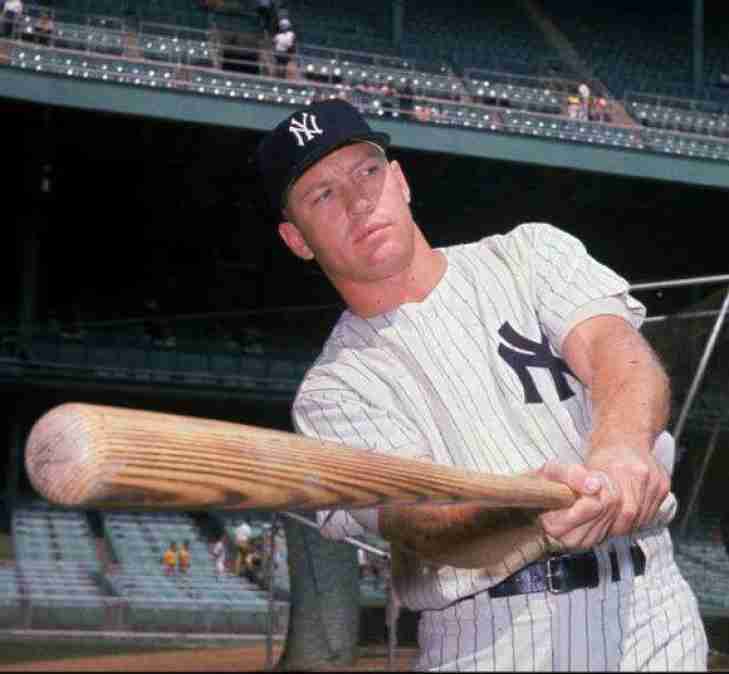
In 1951, Mickey Mantle stepped onto the grass as a nineteen-year-old with blonde hair and the kind of country-strong power that seemed to belong in a comic book. Taking over center field from Joe DiMaggio, he shouldered a level of expectation that would have crushed most athletes, yet he transformed into the quintessential Yankee superstar.
Despite a traumatic knee injury in the 1951 World Series that would plague him for life, Mantle showed a high-frequency ability to dominate top pitching. By 1952, he earned his first All-Star nod, proving to be a reliable player who could impact from both sides of the plate. This early phase established a strong foundation, showing that the post-DiMaggio Yankees were still the undisputed kings of the hill.
Between 1953 and 1955, Mantle transformed from a promising player to the Yankees' top offensive force. In 1953, he hit a 565-foot home run, coining the term "tape-measure home run," And hit a crucial grand slam in the World Series to secure the Yankees' fifth consecutive title.
By 1954-1955, Mantle refined his approach, combining power with a keen eye. He led in runs scored in 1954 and in 1955, he topped the American League in home runs, triples, and walks, finishing second in MVP voting. Mantle was no longer just a switch-hitter but a formidable offensive threat.
Mantle reached a historic pinnacle of individual performance during his 1956 Triple Crown campaign, posting a season that remains a benchmark of offensive efficiency. That summer, he demonstrated complete dominance of the league by leading the American League in batting average (.353), home runs (52), and RBIs (130). He secured the first of his three MVP Awards by unanimous vote, establishing himself as a high-caliber force within the Bronx offense. Throughout this peak period, each time he stepped to the plate, the stadium would fall into a hushed anticipation for the subsequent 500-foot home run.
The late 1950s saw Mantle maintain a level of dominance that seemed a permanent fixture at the pinnacle of the leaderboards. In 1957, he produced a season that was considered by many to be technically superior to his Triple Crown year, batting .365 with a career-high .512 on-base percentage, thereby securing his second consecutive Most Valuable Player (MVP) Award. He demonstrated a remarkable ability to score, leading the league in runs and walks, and earned a Gold Glove Award in 1958. This period underscored his prowess as both a tactical and physical giant, as he again led the league in home runs in 1958 and 1960, providing a robust offensive foundation that made the New York Yankees perennial pennant favorites.
By the conclusion of the 1960 season, Mantle had firmly established himself as the most formidable figure in the sport. He led the American League in home runs (40) and runs scored (119) while anchoring a team that returned to the World Series. Although the Yankees were defeated in a seven-game series by Pittsburgh, Mantle’s individual performance was exceptional, culminating in a slash line of .400/.543/.600 during the Fall Classic. No longer merely the young heir to DiMaggio, he had become the unequivocal face of baseball, a high-caliber superstar entering the zenith of his career.
The turn of the decade featured one of the most famous statistical races in history during the 1961 season. While he was locked in a high-stakes battle with teammate Roger Maris to break Babe Ruth's record, Mantle showcased a career-high 54 home runs. Although an infection late in the season cut his chase short, his efficiency remained elite, as he led the league in walks and slugging percentage. He left behind a statistical footprint in New York that remains staggering, including a career .421 On-Base Percentage and 1,733 walks, proving he was a tactical genius who knew when to take a base and when to clear them. It was such a battle between the two Yankee sluggers that people forget that New York cruised to another World Series title.
In the mid-1960s, "The Mick" became the franchise's elder statesman, maintaining offensive threat despite injuries. In 1964, he hit 35 home runs, finished second in MVP, and set a World Series record with three home runs, surpassing Babe Ruth. His mobility declined, but he remained a key veteran contributor. His final years saw a position switch to first base in 1967 to keep his bat in the lineup. Though his speed faded, his discipline kept him dangerous, reaching 500 home runs in May 1967. Despite a lower batting average in 1968, he led the league in walks per nine innings, with a .421 OBP and 1,733 walks, leaving a lasting statistical legacy.
The postseason cemented Mantle as a high-stakes legend, guiding the Yankees to twelve American League Pennants and seven World Series titles. He demonstrated October power with a record 18 World Series home runs, a feat highlighting his clutch performance. Whether hobbling or hitting walk-offs, he had a knack for big moments.
The longevity of his service was formally recognized in 1969 when the Yankees retired his number 7, followed by his first-ballot induction into the Baseball Hall of Fame in 1974. Mantle compiled 536 home runs and 1,509 RBIs with the club.
2. Lou Gehrig
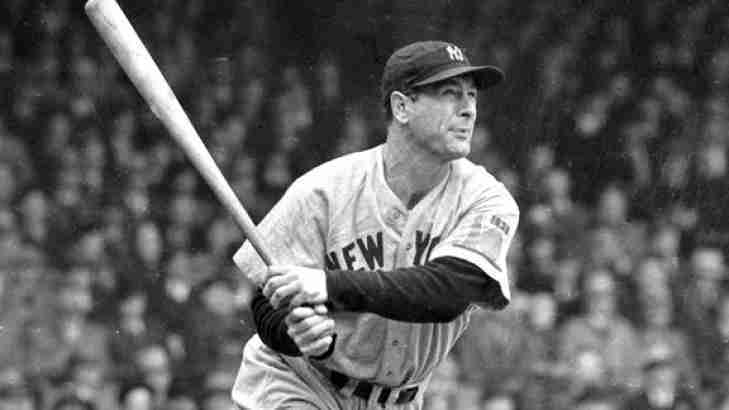
June 2, 1925.
That was the day that Lou Gehrig replaced Wally Pipp at first base and where the legend of the “Iron Horse” began. However, this was he was far more than an endurance athlete; he was a powerhouse who combined elite contact with high-frequency run production,
In 1925, during his inaugural season as a regular player, he demonstrated specialized power by hitting 20 home runs and recording the first of his record 23 career grand slams. Gehrig followed his breakout performance with a 1926 campaign that served as a technical warning to the rest of the American League. He showcased a high-frequency ability to secure extra bases, leading the league with 20 triples while driving in 109 runs. During the 1926 World Series, he was a high-stakes performer, batting .348 at the age of 23, thus providing consistent offensive production even in a losing effort against the St. Louis Cardinals. This period established a foundation of dependable excellence, illustrating that while Babe Ruth offered spectacle, Lou Gehrig provided unwavering stability.
The era known as "Murderers' Row" marked the transformation of Gehrig into an eminent superstar, beginning with his historic 1927 Most Valuable Player (MVP) campaign. During that year, he achieved a batting average of .373, hit 47 home runs, and amassed 175 RBIs, an extraordinary performance that would have garnered significant attention in any other year, notwithstanding Ruth’s record of 60 home runs. He continued to display exceptional technical skill over the subsequent seasons, recording 210 hits in 1928 and guiding the Yankees to another World Series sweep. By the end of the decade, he had firmly established himself as a prolific run producer who consistently performed at an extraordinary level, laying the groundwork for a period of statistical dominance that seemed to transcend the limits of human fatigue.
Between 1930 and 1933, Gehrig maintained a remarkably high level of production that was, frankly, intimidating for opposing pitchers. In 1931, he demonstrated exceptional skill in RBI efficiency, setting the American League record with 184 runs batted in while hitting 46 home runs. On June 3, 1932, he executed a distinguished performance against the Philadelphia Athletics, becoming the first player in the modern era to hit four home runs in a single game. In 1933, he further distinguished himself by participating in his 1,308th consecutive game, thereby surpassing the previous record. During this period, he also led the league in walks and maintained a batting average of .334. This sequence of achievements confirmed his status as a high-caliber player capable of carrying the offensive load regardless of the era or the opposition.
As remarkable as Gehrig had been, 1934 would be epic. That summer, he showcased total mastery at the plate to win the Triple Crown, leading the American League in batting average (.363), home runs (49), and RBIs (166). This high-caliber run cemented his status as a perennial superstar, as he demonstrated a specialized ability to drive in runners at a historic rate. He eventually led the league in RBIs five times, including an incredible 184 RBIs in 1931, a mark that still stands as the American League single-season record.
Between 1923 and 1939, he was a tactical nightmare for pitchers, winning five On-Base Percentage titles and maintaining a career .447 OBP, ranking fifth all-time. His home run power was immense, 493 career long balls, and he showed versatility with over 200 hits in a season eight times. His career stats include a .340 batting average and 1,995 RBIs, reflecting a lifetime of heavy lifting.
The postseason was where Gehrig solidified his status as a high-stakes legend, helping lead the Yankees to six World Series championships. He showcased a specialized brand of clutch hitting in October, slashing an extraordinary .361/.483/731 across 34 World Series games. Whether he was hitting 10 postseason home runs or driving in 35 runs on the game's most prominent stage, he possessed a distinctive aptitude for rising to the occasion. He demonstrated that true greatness resides in the combination of exceptional talent and unwavering determination, serving as the vital element of the most formidable lineup ever assembled.
The trajectory of his journey took a heartbreaking turn in 1938 and 1939 as he began to battle the early symptoms of ALS. As his performance slipped, he famously removed himself from the lineup on May 2, 1939, ending his historic consecutive-games streak. On July 4 of that same year, he stood before a sellout crowd at Yankee Stadium to deliver the most iconic speech in sports history. Despite a terminal diagnosis, he displayed high-caliber dignity by declaring himself the "luckiest man on the face of the Earth," a moment that transcended the sport and made him an eternal symbol of courage.
He was rushed into the Baseball Hall of Fame that year via a special election, as he should have been.
