


Site Admin
46. Reggie Jackson
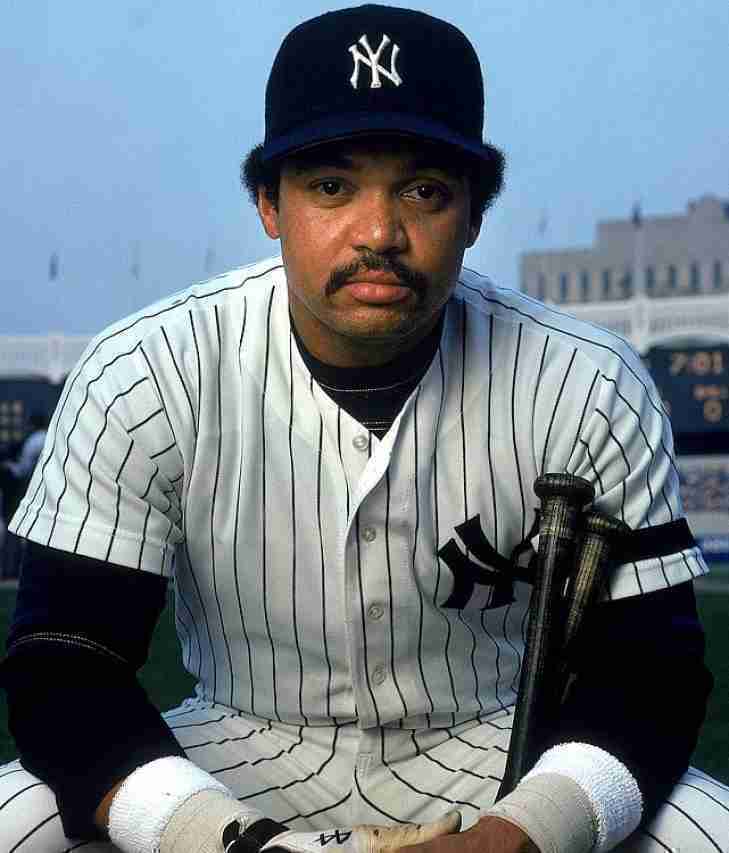
Oh boy…
This was by far the hardest one to rank on any MLB top 50 list.
When the high-stakes winter of 1976 arrived, the Bronx front office desperately craved a transformative center stage attraction to anchor a new era of baseball supremacy. They found their lightning rod in Reggie Jackson. Arriving with a larger-than-life persona and a thunderous, left-handed swing built for the short right-field porch, he single-handedly injected a fierce, high-drama electricity into the clubhouse.
No wonder he was nicknamed Mr. October.
The story started in November 1976 when Jackson signed a landmark five-year, $3.5 million free-agent deal, selecting George Steinbrenner's Yankees over more lucrative offers from other teams. He entered the Bronx with a clear mission to lead a new chapter of baseball dominance, instantly bringing a dynamic and intense energy to the clubhouse by famously stating he was "the straw that stirred the drink.”
His 1977 debut season was marked by sensational headlines, including a well-known, nationally televised dugout clash with manager Billy Martin at Fenway Park. As the season progressed, Jackson became a legendary figure. His standout moment in Game 6 of the 1977 World Series against the Los Angeles Dodgers is a hallmark in baseball history. He hit three straight home runs on three pitches from three different pitchers, helping the Yankees win the championship. Throughout the series, he hit five home runs and earned the World Series MVP award with an impressive .450 batting average and a 1.250 OPS, earning the nickname "Mr. October” and securing his place in sports lore.
A rigorous sabermetric review confirms why he holds a complex position on the franchise leaderboard. In just five seasons, his high-activity presence was relatively short, with only 653 regular-season games. He was more than a strikeout threat; he was a high-variance slugger, with 573 strikeouts and 661 hits in New York. Advanced metrics criticize his defense, highlighting limited lateral mobility and poor spatial awareness in right field, which often negatively affected his seasonal bWAR figures. He never ranked in the top ten in positional bWAR while with the Yankees, illustrating a profile of a flawed, specialized run-producer rather than a consistent five-tool player.
Nevertheless, Cooperstown called Jackson in his first year of eligibility in 1993, as they should have.
50. Bob Meusel
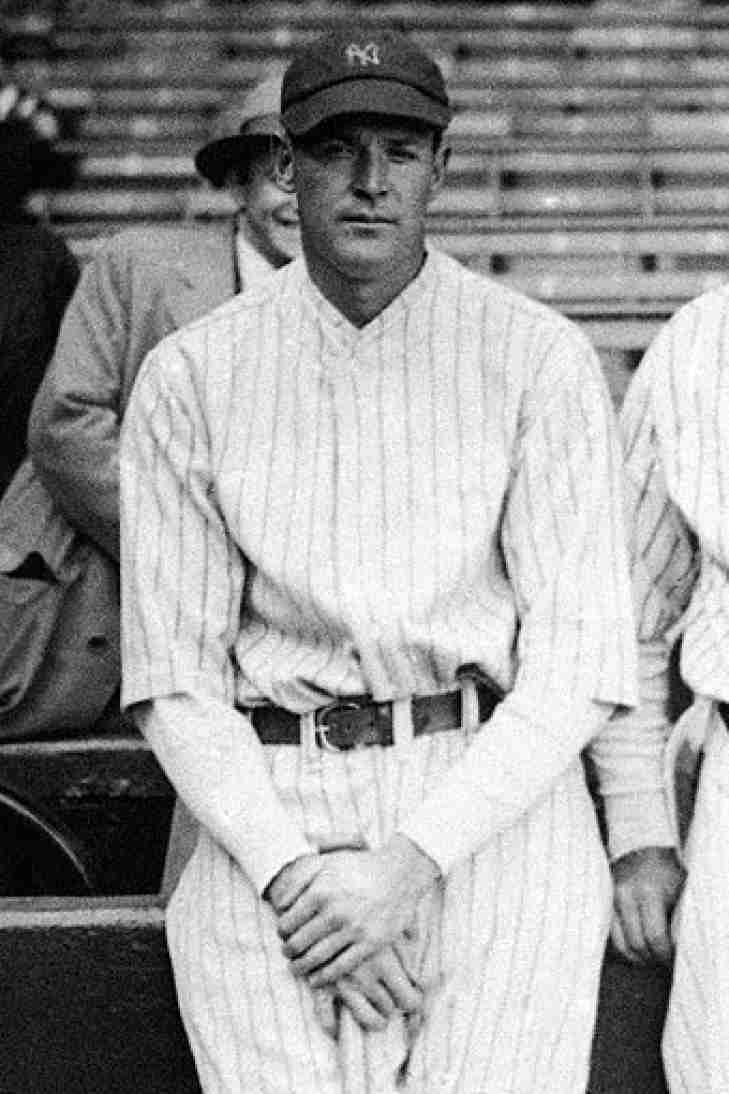
When Bob Meusel entered the batter's box in the 1920s, he offered an optimal and formidable safeguard for the most intimidating lineup in the history Of baseball. Positioned immediately behind Babe Ruth and Lou Gehrig in the renowned "Murderers' Row" batting order, Meusel did not need to dominate the media spotlight to cause significant harm. His presence contributed to a balanced and exceptionally comprehensive offensive strategy for the Yankees, effectively punishing opposing pitchers who attempted to avoid confronting the team's larger-than-life figures.
His pinstriped career was characterized by an exceptionally smooth, line-drive swing that achieved elite consistency. Meusel adapted instantly to the Bronx hitting environment, consecutively recording six seasons with a batting average exceeding .310.
Although he was largely overshadowed by Ruth’s historic fly-ball revolution, Meusel possessed considerable, effortless strength capable of suddenly dominating a game. The zenith of this run-producing power was reached during the 1925 season. With Babe Ruth sidelined by illness for a significant portion of the year, Meusel assumed the spotlight, delivering an exceptional performance to secure the American League home run title with 33 home runs and leading the junior circuit with an impressive 134 RBIs.
Beyond his impressive power statistics, Meusel brought a lively, athletic flair to the field that was uncommon among corner outfielders of his time. He was an adept baserunner, using sharp instincts to steal 15 or more bases on four occasions, including a bold steal of home during the 1921 World Series. Defensively, he intimidated opposing third-base coaches with one of the most formidable, rifle-like throwing arms in the game, consistently throwing out runners attempting to stretch hits from both right and left field.
His persistent performance was a vital driver for the franchise's first major dynasty, directly contributing to the Yankees’ three World Series titles, including the historic, wire-to-wire 1927 season. Meusel's stint in New York ended after the 1929 season, when the front office decided to focus on younger players and sold his contract to the Cincinnati Reds.
Meusel concluded his brilliant, ten-year run in pinstripes with 1,565 hits, 156 home runs, and a commanding .500 slugging percentage.
49. Jack Chesbro
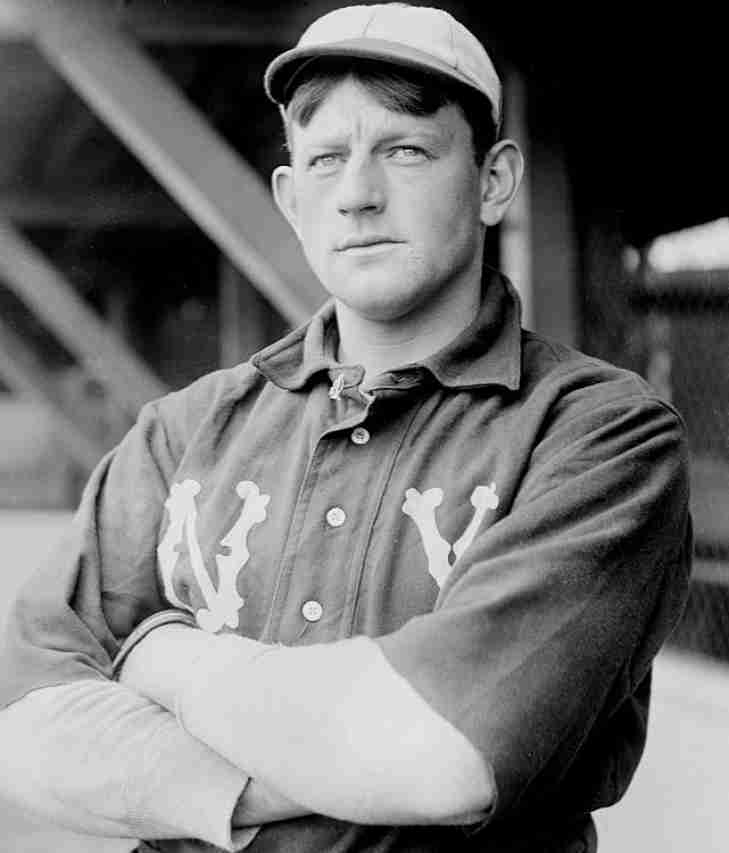
"Happy Jack" Chesbro is a fascinating anomaly in Cooperstown. Critics say his plaque mainly hinges on a single, remarkable regular-season outlier. That season, leading the New York Highlanders, predecessors of the modern Yankees, cemented his legacy in the franchise's history.
His arrival in New York stemmed from the chaotic and aggressive founding of the American League. In late 1902, the new junior league was eager to establish a strong presence in Manhattan to compete head-to-head with the established National League. To quickly build a competitive team, AL founders recruited players from the NL by offering much higher salaries and attractive signing bonuses.
Chesbro was the standout talent in this cross-league recruiting effort. After a successful 28-win season with the National League champion Pittsburgh Pirates, he chose to switch leagues and join the newly established New York team for 1903, motivated by a sizable $1,000 signing bonus. His move made headlines across baseball, especially after a Pirates teammate, under the influence of pain medication, revealed the secret plan, leading the Pittsburgh front office to release Chesbro before the season ended. According to the 1903 major league peace agreement, he officially became property of the New York team—later pitching and winning the franchise's first home game.
His New York stay's most memorable highlight came during the legendary 1904 season. Relying on a deadly, unpredictable spitball that baffled American League batters entirely, Chesbro amassed a volume of work that seems incredible today. He made 51 starts, threw 48 complete games, and pitched an incredible 454.2 innings. By season's end, he recorded a 41-12 record with a stellar 1.82 ERA and a remarkable 10.2 bWAR. The 41 wins set a modern Major League record that remains completely unbreakable in today’s game.
However, the irony of his historic 1904 milestone is that it ended with one of the most tragic and stressful mistakes in early baseball history. On the final weekend of the season, with New York competing against the Boston Americans for the pennant, Chesbro threw a wild pitch in the top of the ninth inning that let the winning run score, ultimately costing the Highlanders the championship.
Although he never came close to replicating that workload, summarizing his New York tenure as a one-year wonder overlooks a highly productive run at Hilltop Park. Across seven seasons with the franchise, Chesbro was a dependable, top-of-the-rotation workhorse, compiling a strong 128-93 record, a sharp 2.58 ERA, and an efficient 1.120 WHIP.
During the 1909 season, his time in New York gradually came to an end as the intense physical strain from his high-volume pitching took a toll on his arm, prompting his move to the Boston Red Sox. Many years after his final pitch, the Veterans Committee confirmed his legendary status by inducting Chesbro into the National Baseball Hall of Fame in 1946, securing his legacy as the pitcher behind one of the sport's greatest single-season performances among the sport's all-time greats.
47. Paul O'Neill
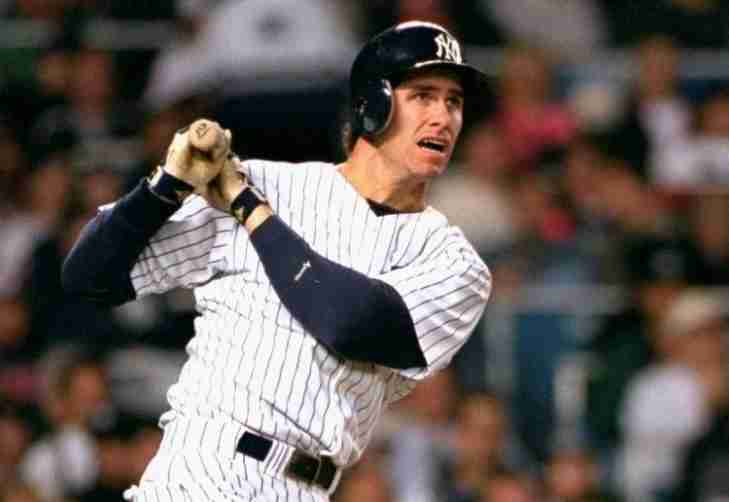
By the time Paul O’Neill reached the Bronx, he was no longer an untested player. He had already been an All-Star and had a World Series title with the 1990 Cincinnati Reds. However, the trade that sent him to New York in November 1992, in exchange for Roberto Kelly, marked a new chapter in his career. He was no longer just a team member; he became the driving force of a dynasty.
O’Neill quickly became one of the most cherished figures in modern franchise history. While he was never the most glamorous or the most talented athlete on a team filled with homegrown stars, he was widely respected for his wholehearted commitment and passion on the field. His natural intensity and rejection of failure led owner George Steinbrenner to bestow upon him the highest honor: "The Warrior."
His pinstriped journey was characterized by remarkably consistent, straightforward execution. O’Neill quickly adapted to the Bronx hitting environment, consecutively posting six seasons with a batting average above .300.
The pinnacle of this regular-season mastery occurred during the strike-shortened 1994 season. He delivered an outstanding performance at the plate, intimidating American League pitchers to win the AL batting title with a remarkable .359 average. He also added 21 home runs and 83 RBIs in only 103 games. His exceptional summer led to a notable fifth-place finish in the 1994 AL MVP voting.
As the decade progressed, his unwavering dedication made him the ideal veteran anchor for the late-1990s dynasty. O’Neill received four All-Star selections while with the pinstripes and was instrumental in leading the organization to four World Series titles (1996, 1998, 1999, and 2000). He contributed crucial, high-pressure hits and set a fierce competitive tone that shaped the clubhouse environment.
He walked away from the game after the 2001 Fall Classic, leaving a lasting legacy of excellence in right field. Across his nine seasons in New York, O’Neill compiled a robust .303 batting average, clashing his way to 1,426 hits, 304 doubles, and 185 home runs. New York honored him with a plaque in Monument Park in 2014 and retired his number 21 in 2022.
