


Site Admin
40. Kelvin Herrera
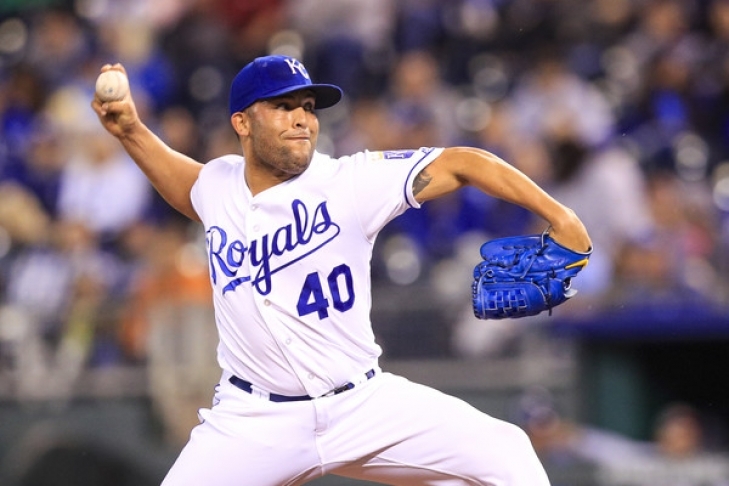
Signed as an amateur free agent in 2006, Kelvin Herrera was a fire-balling right-hander from the Dominican Republic who would eventually become a foundational pillar of the most dominant bullpen in modern baseball history. Known for a specialized triple-digit fastball that appeared effortless, he transitioned from a young prospect into a high-leverage weapon.
Herrera was at his best during the back-to-back World Series runs of 2014 and 2015. He demonstrated a specialized ability to bridge the gap to the ninth inning as the seventh-inning anchor of the legendary "HDH" trio alongside Wade Davis and Greg Holland. He showed the organization he was a foundational winner by posting a staggering 1.26 ERA across 22 postseason appearances for Kansas City. It was an overall performance that helped secure the 2015 World Series title and earned him consecutive All-Star selections in 2015 and 2016.
Notably, in 2013, he demonstrated a specialized ability to handle international pressure by helping the Dominican Republic secure a gold medal in the World Baseball Classic.
Herrera was traded to the Washington Nationals in June of 2018, but he left the Royals with 57 saves, a 23-26 record, and a postseason ERA of 1.26.
45. Alcides Escobar
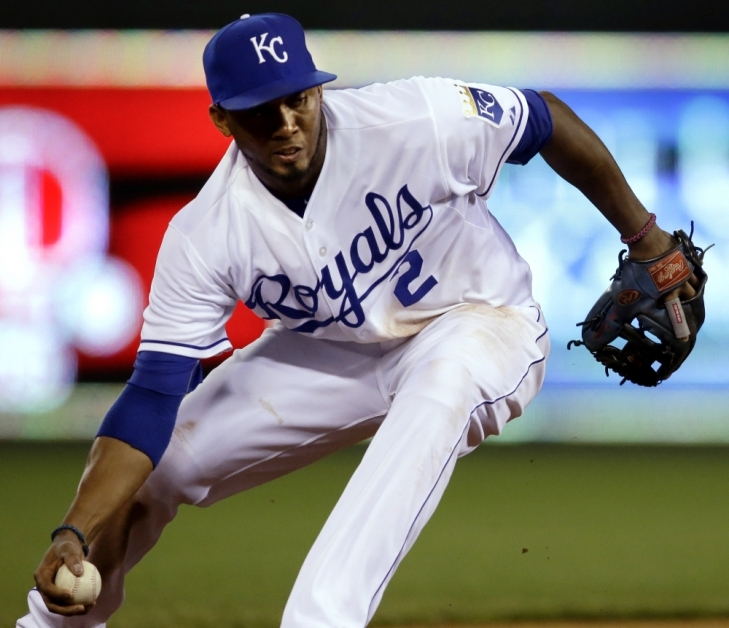
Alcides Escobar arrived in the Kansas City organization via a December 2010 blockbuster trade with the Milwaukee Brewers, a deal that sent Zack Greinke to the NL in exchange for a package of young talent. While he arrived as a highly touted defensive prospect, he evolved into the literal iron man of the franchise's most successful era.
After arriving in the 2010 trade, Escobar immediately took over the starting shortstop duties in 2011, providing a foundational defensive stability the organization had lacked for years. He showed the organization he was a specialized professional by batting .293 with 35 stolen bases in 2012, a high-frequency offensive performance that hinted at his potential as a spark plug. Between 2013 and 2014, he established his reputation as the team's "Iron Man," appearing in nearly every game and serving as the defensive anchor for the 2014 squad that reached the franchise's first World Series in nearly three decades.
This specialized durability and high-tempo approach served as the perfect lead-in to his historic 2015 campaign. That summer, he demonstrated a knack for rising to the occasion, earning his first career All-Star selection and winning a Gold Glove Award. He showed the organization he was a foundational winner during the postseason, where his bat became a localized phenomenon; he was named the ALCS MVP after hitting .478 against the Blue Jays. The Royals went on to win the World Series, though his skills quickly eroded afterward.
Escobar was traded after the 2018 season, and overall as a Royal, he had 1,208 Hits.
38. Billy Butler
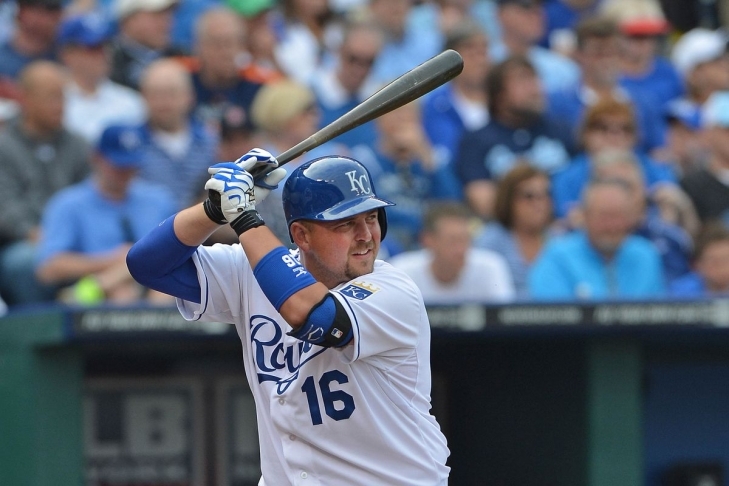
Billy Butler arrived in the Kansas City organization as a first-round selection in 2004, a hitter whose natural affinity for the gaps made him one of the most prolific doubles machines in franchise history. While his defensive limitations eventually led to a permanent role as a designated hitter, he became the club’s primary offensive engine during the lean years of the late 2000s.
Debuting for the Royals in 2007, Butler recorded a career-high 29 home runs and 107 RBIs while batting .313. That season, he won his first career All-Star selection and won the Edgar Martinez Award as the American League’s premier designated hitter. This performance was the crown jewel of a five-year stretch (2009–2013) where he consistently delivered at least 15 home runs and 80 RBIs.
He had three seasons in which he batted .300, and in 2014, his veteran presence helped the Royals reach the World Series, but that was when his Kansas City run came to an end. Butler signed with the Oakland Athletics, though he would never have a season as he did in powder blue.
As a Royal, Butler compiled 1,273 hits, 127 home runs, and the 2012 Silver Slugger Award.
44. Al Cowens
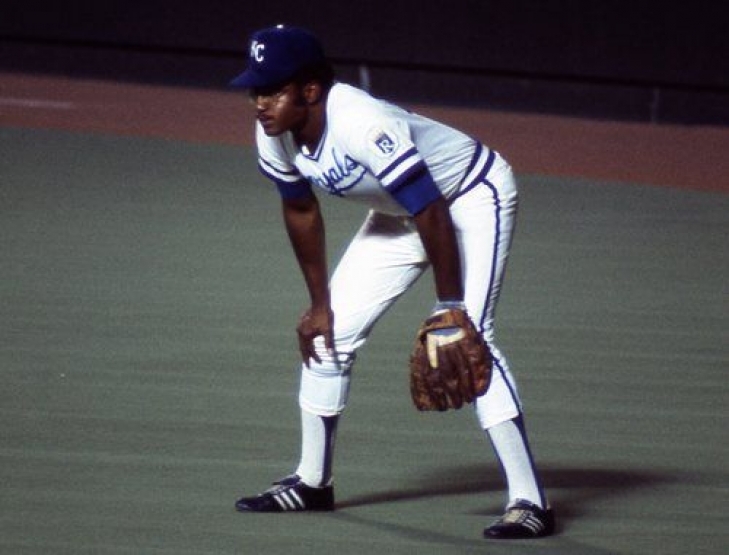
Al Cowens arrived in the Kansas City organization as a 75th-round draft pick in 1969, a staggering underdog story for a player who would eventually become a cornerstone of the franchise's first great era. He secured the starting right-field job by 1974, and in 1977, Cowens exploded with one of the best offensive seasons in franchise history of the 1970s.
That year, Cowens recorded career highs in home runs (23), RBIs (112), and batting average (.312). He showed the organization he was a foundational superstar by finishing as the runner-up for the American League MVP, falling just short of Rod Carew. His value was equally high on the grass, where he led the league in Total Zone Runs and earned a Gold Glove Award, cementing his reputation as a premier two-way threat.
While many remember his long-standing feud with pitcher Ed Farmer, sparked by a broken jaw sustained in a 1979 pitch and culminating in a famous 1980 brawl, his real legacy in the Heartland was built on his durability and steady offensive production. Cowens was traded to the California Angels after the 1979 season.
With the Royals, Cowens amassed 784 hits with 80 stolen bases and a .282 batting average.
