


Site Admin
19. Sam Thompson
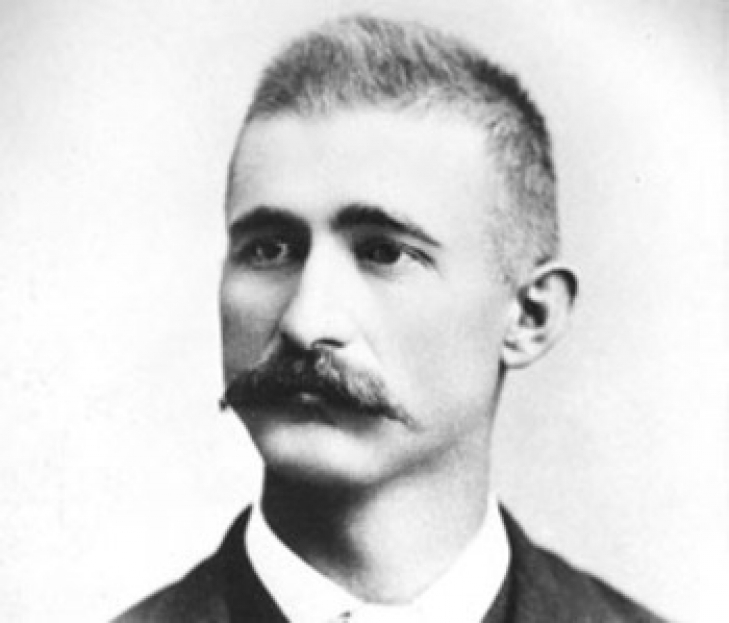
Back in late 1888, the Philadelphia Quakers, who would eventually become the modern Phillies, made a bold move by paying $5,000 to buy Samuel Luther Thompson's contract from the shrinking Detroit Wolverines. At the time, this was a huge financial risk, but it quickly paid off. In just one summer, it became clear that the front office had scored one of the greatest deals in professional sports history. Thompson, a towering six-foot-two with a big handlebar mustache, had a powerful, left-handed swing that completely changed the game of raw, line-drive power in the 19th century, turning the outfield into his personal stage of destruction.
His first campaign in Philadelphia in 1889 was a historic breakthrough. Thompson broke all tactical limits by hitting an astonishing 20 home runs, becoming the first left-handed hitter in major league history to reach that milestone and winning the National League home run title convincingly.
He demonstrated that heavy, long-ball hitting was a consistent weapon by winning a second home run title during the 1895 team explosion that produced 190 runs. His consecutive drives into the gaps, marked by relentless force, helped him secure back-to-back National League slugging titles in 1894 and 1895, greatly boosting the team's extra-base power.
However, labeling "Big Sam" only as a pioneering, one-dimensional slugger overlooks the remarkable contact-hitting skills he displayed throughout his career. During his ten years with the franchise, he consistently posted high batting averages, with five seasons surpassing .300. The peak of this versatile excellence was in 1894, when Thompson achieved an incredible .415 batting average, standing out in an all-Hall-of-Fame outfield with Billy Hamilton and Ed Delahanty.
Thompson was a ruthlessly efficient run producer, famously weaponizing his heavy approach to drive in runs at a density that modern analysts still marvel at, including a league-leading 165 RBIs in 1895.
A series of nagging injuries and a desire to pursue business ventures reduced his physical presence late in his career, causing him to leave the regular lineup after 1898. Despite this, his consistent season performance resulted in a remarkable .334/.389/509 franchise batting line, along with 1,478 hits and 95 home runs. This impressive benchmark continues to be highly regarded by modern roster analysts.
In 1977, the Baseball Hall of Fame Veterans Committee selected Thompson and in 1995, he was inducted into the Philadelphia Baseball Wall of Fame.
18. Cy Williams
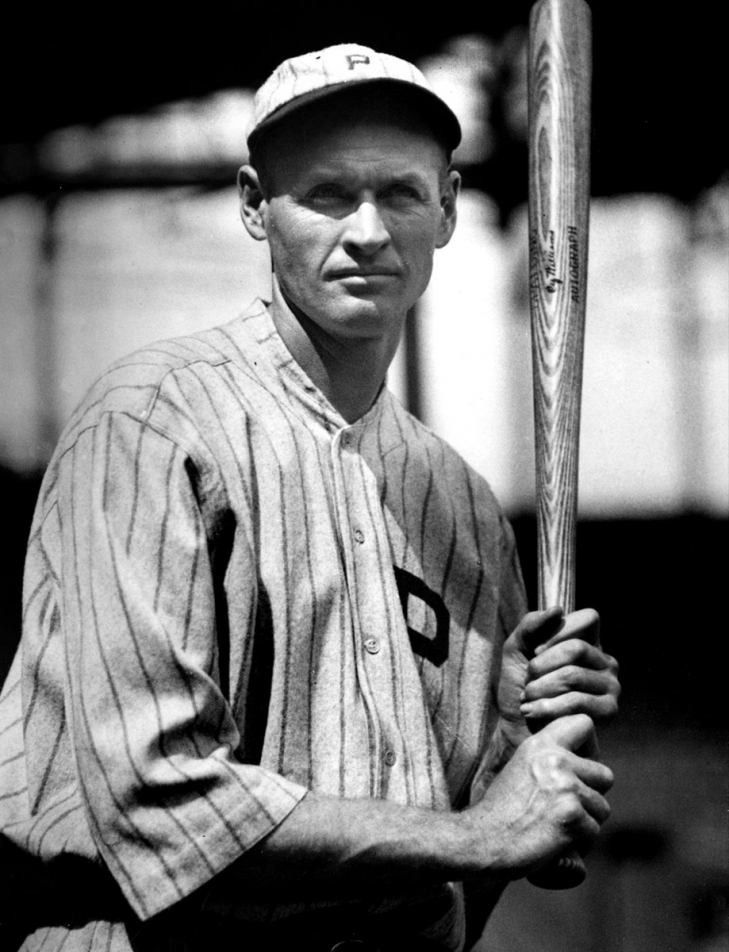
Within the extensive archives of baseball trades, some exchanges become increasingly imbalanced with each winter. Before the 1918 season, the Chicago Cubs executed a veteran trade, sending 30-year-old outfielder Fred "Cy" Williams to the Philadelphia Phillies in return for Dode Paskert. Paskert immediately experienced a sharp decline in performance at age 36 in Chicago, while Williams was only beginning to enter the most important phases of his career. He had already demonstrated his ability to excel during the dead-ball era, winning a National League home run title with 12 homers in 1916. Moving to the hitter-friendly Baker Bowl helped the left-handed batter develop his skills further and lay the foundation for his future success.
The offensive evolution didn’t happen overnight. As the sport shifted its tactical focus to the longball in the early 1920s, Williams adapted his approach to fit the new pace. During the 1920 season, he earned his second career home run title by hitting 15 home runs.
Most importantly, that summer was his first time batting over .300 in an individual season. This achievement was not a one-time feat; Williams surpassed that elite contact-hitting mark five more times while playing for Philadelphia, disproving the idea that he was only a power hitter.
As his physical prime aligned with the live-ball era, Williams posted impressive modern power stats. He earned two more senior circuit home run titles, hitting a league-high 41 home runs in 1923 and adding 30 in 1927 to secure his fourth career crown. Between 1922 and 1926, he became a consistent force of extra-base hits, recording five straight summers with a slugging percentage well above .500.
When he ultimately left the diamond after the 1930 schedule, he held the esteemed title of the National League's all-time career home run leader. This achievement, a significant milestone in baseball history, cemented his status as an elite pioneer of the modern power game, even though it was eventually surpassed by future players.
He accumulated 1,553 hits, 280 doubles, 217 home runs, and a superb .306 career batting average as a Phillie, and the club enshrined Williams into their Baseball Wall of Fame in 1985.
15. Curt Schilling
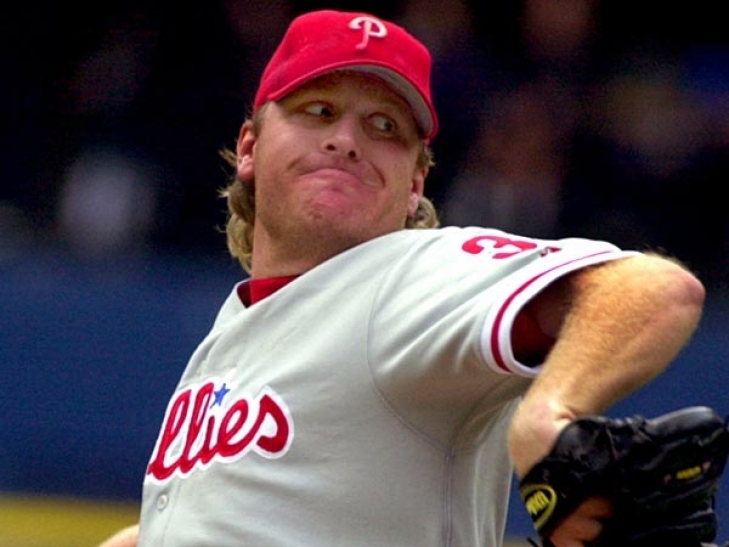
Long before Curt Schilling became famous for leading historic World Series victories in the desert and New England, he spent almost ten years building his reputation in eastern Pennsylvania. Although many remember him nationally for his later championship successes, his regular-season performance and overwhelming statistical achievements with the Philadelphia Phillies are fundamental to his career. In fact, his personal statistics during his time with the Phillies closely match his combined achievements in Arizona and Boston.
Schilling officially joined the team through a discreet trade with the Houston Astros in 1992 and quickly demonstrated a remarkable individual breakthrough. Transitioning into a permanent spot in the starting rotation, he baffled National League hitters with a powerful, explosive four-seam fastball combined with a sharp splitting finger. He finished the season with a 14-11 record, a stellar 2.35 ERA, and led the entire senior circuit with an impressive 0.996 WHIP.
During the renowned 1993 pennant race, his fundamental efficiency metrics naturally exhibited a low-variance regression, recording a 4.02 ERA despite securing 16 victories. Notwithstanding, Schilling reserved his most significant contributions for the most prestigious stage. He led the pitching rotation with remarkable determination in October, receiving the 1993 NLCS Most Valuable Player award for his performance against the Atlanta Braves. Subsequently, he delivered a remarkable, five-hit complete-game shutout in Game 5 of the Fall Classic against the Toronto Blue Jays, thereby preserving the Phillies' postseason prospects.
A series of challenging bone spur surgeries and shoulder problems considerably constrained his physical capacity over the following three years. However, Schilling emerged from this injury-ridden period as a formidable force. Between 1997 and 1999, he achieved a remarkable individual peak, earning three consecutive All-Star selections and recording 47 victories.
He emerged as the premier high-leverage strikeout artist, securing consecutive National League strikeout titles in 1997 and 1998 by surpassing the distinguished 300-strikeout threshold in successive summers. Despite his notable individual achievements, the front office consistently struggled to assemble a competent supporting roster around their ace. Significantly disillusioned by the organization's ongoing losing streak, Schilling ultimately requested a change of environment, which led to a trade to the Arizona Diamondbacks midway through the 2000 season.
With Philadelphia, Schilling posted a record of 101-78 with 1,554 Strikeouts and a 3.35 ERA. The Phillies added Schilling to the Philadelphia Baseball Wall of Fame in 2013.
14. Dick Allen
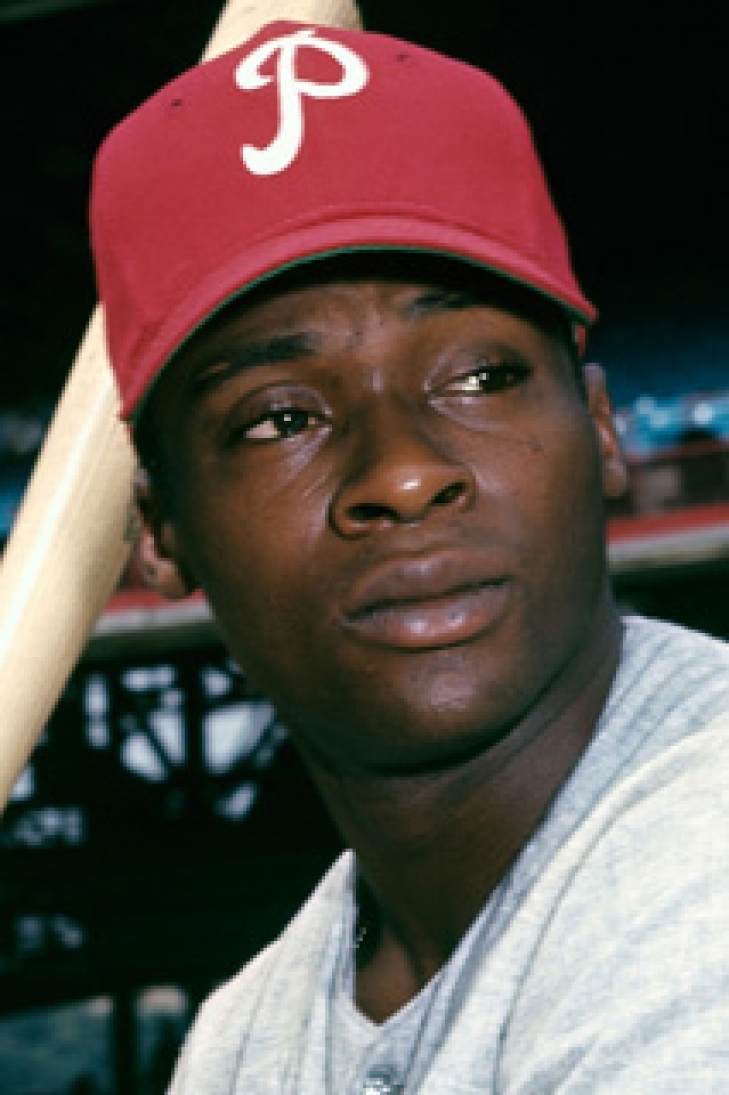
Dissecting Dick Allen's historical impact requires confronting the turbulent, racially charged controversy of his era in eastern Pennsylvania. As the first Black superstar in a conservative Philadelphia Phillies organization, Allen carried an overwhelming psychological weight. The franchise was among the last in the National League to integrate, and Allen had already faced severe systemic racism as the sole Black player on their minor league team in Little Rock. When he reached the major leagues, he entered a highly volatile environment, often targeted by parts of the local fanbase and a hostile media that refused to see him as a person or an elite athlete.
Nevertheless, solely concerning the diamond, Allen was an immediate and extraordinary force that defied logic. He distinguished himself by receiving the 1964 National League Rookie of the Year award in an impressive manner, wielding a swiftly swinging, 40-ounce bat that decisively penetrated the pitching-dominated landscape of the 1960s.
He was a leading offensive player, achieving three seasons with at least 30 home runs—a remarkable feat at the time, and hitting a career-high 40 home runs in 1966. More than just a power hitter, he excelled at contact hitting, with four straight seasons batting over .300 from 1964 to 1967, ending with a league-best .404 on-base percentage in 1967.
While his exceptional offensive performance captivated purists, his defensive shortcomings at third base offered ample opportunity for his detractors to criticize. Allen twice led the National League in errors, demonstrating an inconsistent glove that significantly fell below the major league average.
The fractures escalated into a full-scale mutiny in 1965 following a pre-game altercation with white teammate Frank Thomas, who reportedly struck Allen in the shoulder with a baseball bat. When management subsequently dismissed Thomas, the local press portrayed Allen as a destructive influence within the club. Refusing to assume the submissive role expected by reporters, Allen defiantly inscribed messages in the infield dirt with his cleats, ultimately demanding a trade to escape the toxic environment.
After a highly successful decade, including a standout 1972 American League MVP season with the Chicago White Sox, time eventually mended old wounds. In a fitting turn of history, veteran Allen was traded back to Philadelphia in 1975. While he was no longer the explosive, high-speed superstar of his earlier years, the city had transformed itself and embraced him with great warmth and respect.
With Philadelphia, Allen blasted 204 Home Runs, batted .290, and had 1,143 Hits. The Phillies added Allen to their Philadelphia Baseball Wall of Fame in 1993. The team retired his number 15 in 2020, shortly before he died. His eternal standing in baseball history was cemented soon after, when the Golden Days Era Committee posthumously elected Allen into the National Baseball Hall of Fame as part of the Class of 2022.
