


Site Admin
36. Scott Rolen
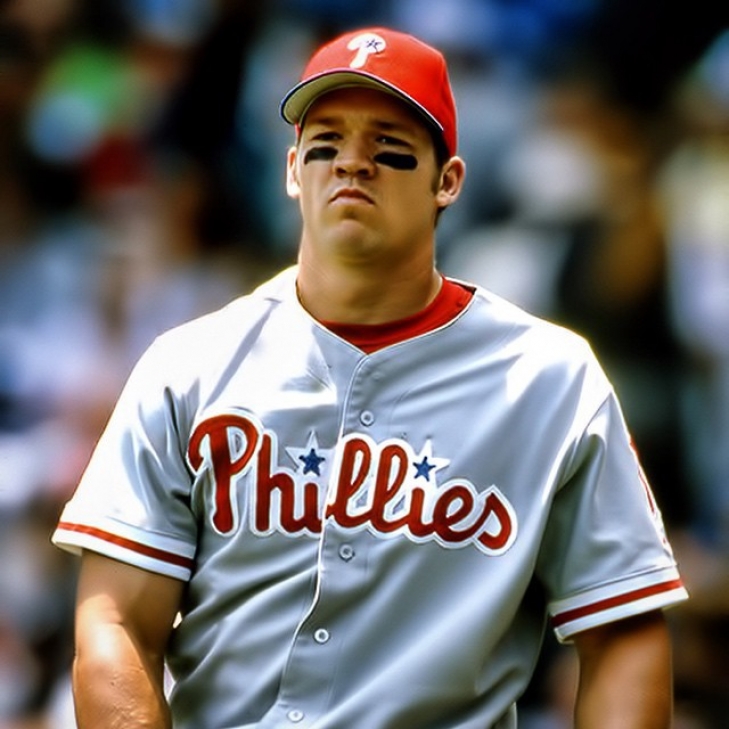
Few entries on a historical leaderboard spark as much analytical fascination or emotional debate as Scott Bruce Rolen. For many in the wider baseball community, Rolen’s legacy is firmly associated with a bright red St. Louis Cardinals cap. This makes sense at first glance; he was a multiple-time All-Star in Missouri, finished fourth in the 2004 National League MVP race, and earned a World Series ring with the 2006 Redbirds. In contrast, during his time in eastern Pennsylvania, he received only a single, modest All-Star nod and no MVP considerations, making the narrative clear-cut.
However, when you look beyond the surface praise and examine the raw, stark reality of both traditional and advanced metrics, a clear truth comes to light: Rolen was genuinely a more prolific and consistent hitter in a Philadelphia Phillies uniform than he was anywhere else.
His debut on Broad Street midway through the 1996 season marked a major change at third base. At six-foot-four with gentle hands and a quick first step, Rolen delivered an exceptional display of third baseman skills, earning him the 1997 National League Rookie of the Year award unanimously.
Far from a mere one-year sensation, he evolved into a formidable defensive presence on the left side of the diamond. Rolen consistently dominated, intercepting everything hit his way, and earned four Gold Glove Awards with Philadelphia. He led the Senior Circuit in defensive bWAR in both 1997 and 1998. Combining this elite, era-defining glove work with a highly refined power attack, he amassed 880 hits, 150 home runs, and 559 RBIs over 844 games wearing red pinstripes. He regularly surpassed 25 home runs and 90 RBIs, earning a well-deserved Silver Slugger Award in 1999, cementing his reputation as one of the sport’s most versatile threats.
Despite his exceptional individual performance, his tenure was characterized by significant structural obstacles. Rolen became increasingly frustrated with the front office's apparent frugality and what he saw as a lack of organizational dedication to creating a sustainable, winning team.
The boiling point was reached after a series of high-profile, toxic conflicts with fiery manager Larry Bowa. Recognizing that the relationship had irreparably broken down, Rolen declined a substantial contract extension and clearly asked to be traded. Management eventually agreed, making a major deal that sent him to St. Louis halfway through the 2002 season.
His departure left local fans with a bitter taste, leading to a decade of constant booing whenever he returned to Citizens Bank Park. Because of this, his remarkable performance with the Phillies is often overlooked. In Philadelphia, Rolen averaged an impressive 5.5 bWAR per 162 games, surpassing the 4.7 bWAR average he achieved during his peak years in St. Louis.
Rolen was inducted into the Baseball Hall of Fame in 2023.
40. Charlie Buffinton
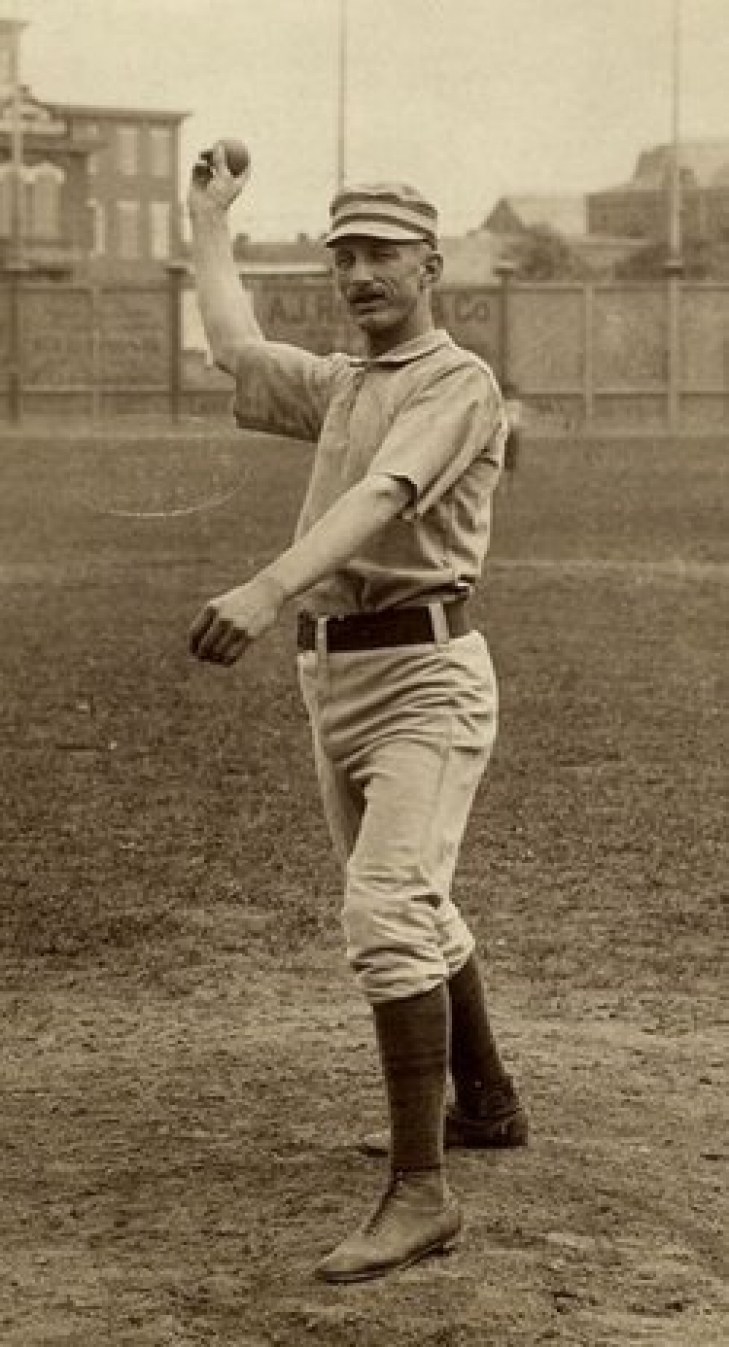
Although it may seem unlikely to rank a player with just three summers in red pinstripes above long-established franchise legends, advanced metrics reveal why Charlie Buffinton occupies such a notable position on the all-time leaderboard. To casual fans, his name has mainly faded into 19th-century baseball history, eclipsed by his outstanding 48-win season and 15.0 bWAR with the 1884 Boston Beaneaters. Yet, when the solidly built right-hander joined the Philadelphia Quakers from 1887 to 1889, he provided a concentrated, high-velocity burst of frontline dominance, marking one of the most efficient and productive pitching eras in the team's history.
Buffinton made winning a consistent part of his routine from the moment he joined the Philadelphia team, surpassing 20 victories in every season he played for the franchise. He managed a transitional 1887 schedule, achieving 21 wins over 35 complete games. However, it was his two-year peak afterward that established him as a leading, era-defining outlier in the sport.
During those consecutive summers, he consistently became a true workhorse, handling more than 780 demanding frames while spearheading the rotation to two identical, high-volume 28-win achievements.
The highlight of his local stay was during a remarkable 1888 regular season game. Buffinton delivered an exceptionally controlled pitching performance, finishing with a 28-17 record and maintaining an impressive 1.91 ERA over 43 complete games. Equipped with a powerful overhand curveball, commonly called a "drop pitch” in the 1880s, he dominated National League batters and achieved a career-best WHIP of 0.957.
From an accumulated value perspective, Buffinton was performing at a level that would have made him a perennial Cy Young Award contender if such awards had existed. Expert analysts note that he carried the entire team on his shoulders, posting an impressive 12.1 bWAR in 1888 and a remarkable 11.3 bWAR in 1889, ranking first and second among all National League pitchers in those years.
The reality behind his box scores is that his win-loss record could have been much better if he had received consistent run support from a generally average Quakers lineup that often wasted his best performances.
He ultimately left the organization after the 1889 season, moving to the briefly existing Players' League to end his notable major league career with 233 wins. During his 133-game stint in Philadelphia, he accumulated an impressive 27.2 total bWAR, 77 wins, and 115 complete games.
33. Curt Simmons
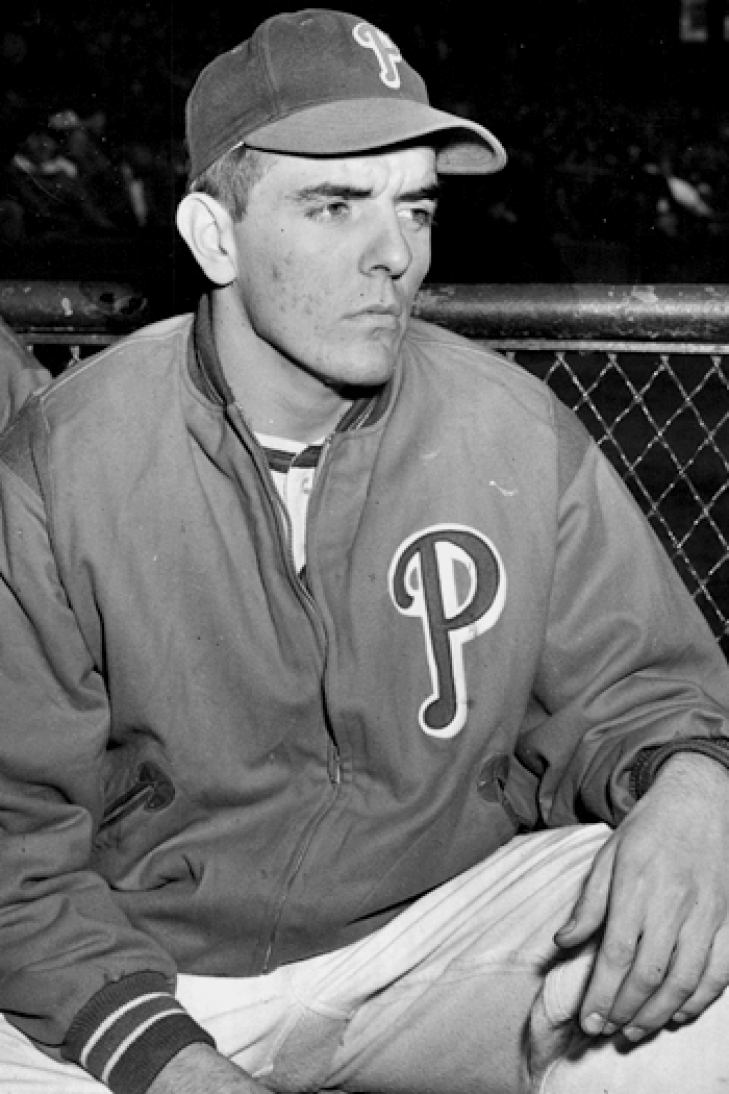
The story of the 1950 "Whiz Kids" often focuses on Robin Roberts's legendary achievements, but a closer look at that iconic era shows that Curtis Thomas Simmons was a crucial and consistent part of the rotation. Coming from a widely publicized amateur bidding war as a local star from Eastern Pennsylvania, this smooth left-hander skipped the typical minor league route to bring fast, reliable pitching directly to Broad Street. For more than ten years, his fluid pitching style and strategic mastery made him a key, high-volume contributor during one of the most celebrated periods in franchise history.
His early-season performance peaked dramatically during the 1950 pennant race. At only 21, Simmons demonstrated exceptional mound skill, finishing with a 17-8 record and a 3.40 ERA, leading the young team toward the National League title. Just as his career was on the rise, a year-long military deployment to Korea abruptly halted his progress, causing him to miss the 1951 schedule entirely, and the 1950 World Series, since his National Guard unit was activated in September just before the Fall Classic.
When he resumed active duty in 1952, he appeared completely refreshed by his time away, delivering arguably the best personal performance of his career. Simmons finished with a 14-8 record, posted an impressive 2.82 ERA, led Major League Baseball with six shutouts, and topped the National League with an outstanding 2.76 FIP.
While Roberts dominated national headlines as the team's leading workhorse, Simmons was a dependable, steady presence alongside him. He made winning a consistent achievement, reaching 14 or more victories five times with the team and earning three National League All-Star selections in 1952, 1953, and 1957. He was also chosen as the starting pitcher for the Senior Circuit in both the 1952 and 1957 Midsummer Classics. His command on the mound helped him protect the score, and he maintained a high level of efficiency, finishing in the National League's top ten for ERA seven times during his tenure with Philadelphia.
After a difficult period marked by injuries and a disappointing 1960 slump, the Phillies’ management decided to release the veteran southpaw in late May. Instead of ending his career there, Simmons made a remarkable comeback, joining the St. Louis Cardinals. He reinvented his pitching style and played another seven seasons in the major leagues, including a standout 1964 season with 18 wins that finally earned him the World Series ring he missed out on as a young player.
With the Phils, Simmons had a 115-110 record, 109 complete games, and 1,052 strikeouts across 1,939.2 grueling frames in Philadelphia, trailing only Steve Carlton and Chris Short for the most wins by a left-hander in organizational history. The Phillies selected Simmons for the Philadelphia Baseball Wall of Fame in 1992.
35. Jack Clements
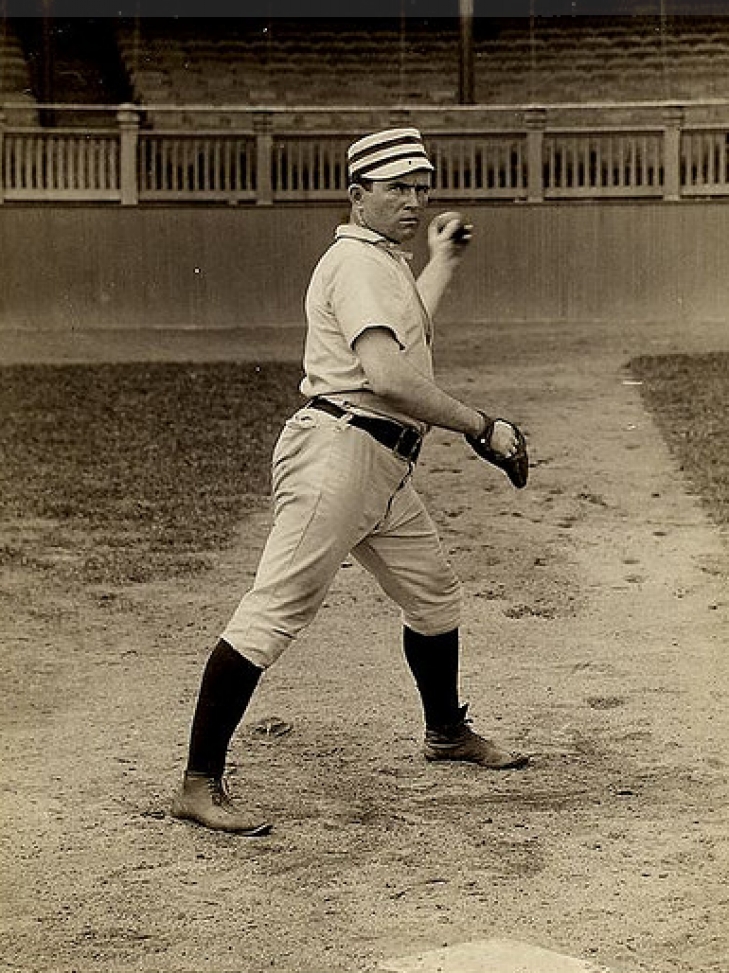
In the tough environment of 19th-century baseball, the catcher’s box was like a collision zone. Jack Clements, known as “Bones," was a striking figure due to his notoriously surly attitude, his thick, low-slung build, and his refusal to follow conventional rules in his career. The Pennsylvania native was a trailblazer behind home plate, among the first catchers to systematically wear a sheepskin chest protector. Even more remarkable for modern fans, Clements is one of the few true left-handed catchers in Major League Baseball history, a rare position that has disappeared in today’s game.
His extensive and high-volume residency in Philadelphia lasted exactly 1,000 games from 1884 to 1897. Although catching without modern equipment was physically demanding and worn down most players of his era, Clements flourished, becoming one of the most outstanding, run-producing hitters of his time.
He didn't just survive at the plate; he excelled. Clements surpassed the elite .300 batting average five times while wearing a Philadelphia uniform, and achieved the impressive .400 on-base percentage three times, solidifying his role at the core of the lineup. The peak of his contact-hitting was during a 1895 offensive clinic, where Clements hit .394 over 85 games, the highest season batting average for a catcher in major league history.
Bones was more than just a singles hitter; he had a powerful, advanced swing that was uncommon for his time. In 1893, a high-scoring year, he hit 13 home runs, and in 1895, he reached a career-best with 17 homers. To put this into perspective, hitting double digits in homers during the 1890s was similar to anchoring a modern team with 40-plus home runs.
When he finally left the organization after fourteen dedicated summers, he left a remarkable localized slash line of .289/.352/426, supported by 1,079 hits and 70 home runs, a substantial offensive contribution that drastically changed team expectations for the catching position.
Although his grumpy attitude and intense exchanges with umpires sometimes annoyed league officials, local fans highly admired the relentless effort needed to pitch thousands of innings as a southpaw. He was a pioneering workhorse whose distinctive playing style and remarkable offensive achievements secure his status as a key figure in Philadelphia baseball history.
