


Site Admin
11. Johnny Robinson
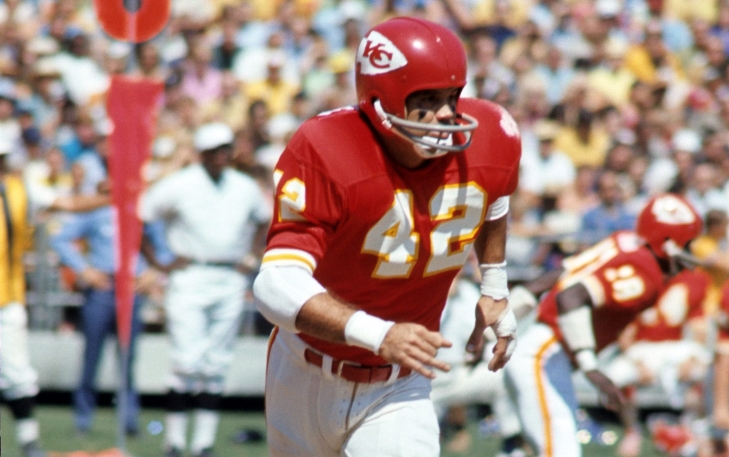
Drafted in the first round (3rd overall) of the 1960 AFL Draft out of LSU, Johnny Robinson arrived in the professional ranks as an offensive weapon. Playing halfback and flanker for the Dallas Texans in his first two seasons, he showcased impressive open-field speed, amassing over 1,800 yards from scrimmage and 15 total touchdowns. But prior to the 1962 season, legendary head coach Hank Stram made a move that altered franchise history, shifting Robinson to safety.
The position change paid immediate dividends. Robinson used his offensive instincts to read opposing quarterbacks, anchoring the secondary as the Texans captured the 1962 AFL Championship. When the franchise relocated to Missouri in 1963 and became the Kansas City Chiefs, Robinson evolved into the ultimate deep-third ballhawk. Between 1965 and 1970, he assembled one of the most dominant individual spans by any defensive back in pro football history, earning six consecutive First-Team All-Pro honors (five AFL, one NFL). He led the AFL with 10 interceptions in 1966 and topped the NFL with 10 more in 1970 following the merger.
Robinson's big-play reputation reached its peak when championship hardware was on the line. Uniquely clutch, he recorded an interception in all three AFL Championship Games he played in (1962, 1966, 1969). His most iconic performance arrived in Super Bowl IV despite playing with three broken ribs. Robinson completely disrupted Minnesota's passing game, recovering a crucial fumble in the first half and picking off a pass in the second to seal Kansas City’s 23–7 victory.
Robinson retired after the 1971 season, and stat-wise, he had 57 interceptions, returned 160 interception yards, scored one pick-six, recovered nine fumbles, and totaled 1,228 rushing yards, 658 receiving yards, and 15 total touchdowns. The organization quickly recognized his contributions, making him one of the earliest Kansas City Chiefs Hall of Fame members in 1974. His Canton induction was delayed for decades, but justice was finally served when the Veterans Committee enshrined him into the Pro Football Hall of Fame in 2019.
10. Jim Tyrer
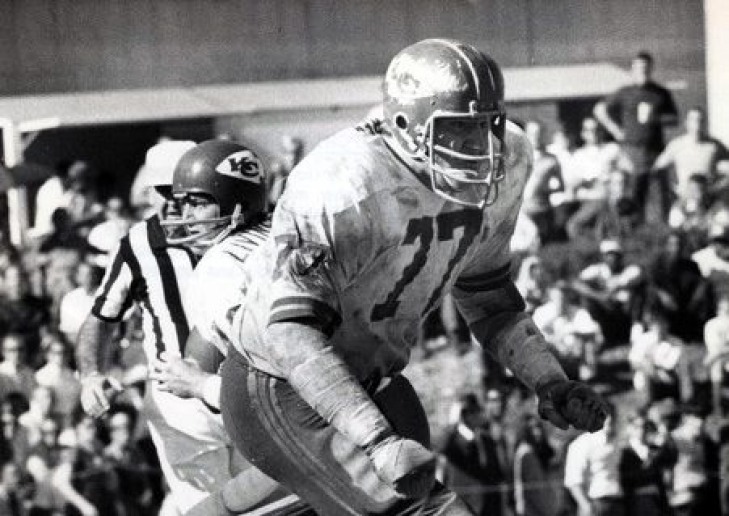
Standing 6-foot-6 and weighing 280 pounds, Ohio State standout Jim Tyrer was an imposing physical marvel who redefined the standards for left tackles throughout the 1960s. Selected in the 1961 AFL Draft by the Dallas Texans before the franchise relocated to Missouri, Tyrer stepped directly into the starting lineup and quickly established himself as an immovable wall protecting Len Dawson’s blind side. His rare combination of massive size, foot quickness, and balance enabled him to neutralize the era's premier edge rushers.
Tyrer operated as the ultimate iron-man anchor for Hank Stram's offense, starting an astonishing 180 consecutive games for the franchise across 13 seasons. His elite edge-blocking powered Kansas City to three AFL Championships and two Super Bowl appearances. The high-water mark of his team success came in Super Bowl IV, where Tyrer and the Kansas City front five completely dominated Minnesota's famed "Purple People Eaters" defensive line, paving the way for 151 rushing yards and granting Dawson ample time to execute a surgical passing attack in a 23–7 upset victory.
Beyond his team achievements, Tyrer built an individual resume that ranked among the best of his generation. He was selected as an AFL All-Star seven times and added two post-merger NFL Pro Bowls, earning a spot on nine total all-star rosters. Tyrer was named a First-Team All-Pro six times (five First-Team All-AFL selections and one First-Team AP All-Pro selection in 1970), including a remarkable streak of five consecutive First-Team selections from 1965 through 1969. His sustained excellence earned him unanimous selection to the AFL All-Time Team as one of the two greatest tackles in the league's decade-long history.
Despite on-field credentials that rivaled the all-time greats in Canton, Tyrer's football legacy remains forever shadowed by tragedy. After retiring following a final season with Washington in 1974, he struggled with severe business failures and deep depression. The tragic arc reached a devastating conclusion in August 1980, when Tyrer committed a murder-suicide, taking his wife Martha's life before ending his own. While that terrible event effectively sealed his exclusion from the Pro Football Hall of Fame, the Chiefs organization recognized his athletic contributions by inducting him into the Kansas City Chiefs Hall of Fame in 1977.
9. Willie Lanier
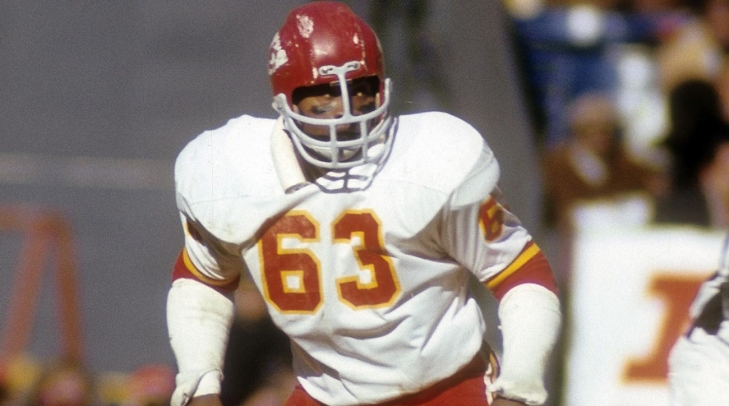
When football historians examine the legendary Kansas City defense of the late 1960s and early 1970s, one man stands squarely at the center of that brutal, championship-caliber unit: Willie Lanier. Selected in the second round (50th overall) out of Morgan State in the 1967 AFL Draft, Lanier made immediate history by becoming the first Black athlete to start at middle linebacker in professional football.
Operating alongside Bobby Bell and Jim Lynch, Lanier formed one-third of arguably the NFL’s most fearsome linebacker trio. Nicknamed "Contact," Lanier played with a ferocious, intimidating style that pushed the physical limits of the era. He attacked ball-carriers headfirst with such staggering, violent force that the Chiefs added extra padding to the outside of his helmet to absorb the impact—a modification meant as much to protect opposing players as to cushion Lanier himself. Beyond his hitting power, Lanier possessed elite instincts and range, diagnosing plays instantly and shutting down opponents’ run games from sideline to sideline.
Lanier's leadership and authority in the middle of the field powered the Chiefs to their crowning achievement in Super Bowl IV. In that iconic 23–7 upset over the Minnesota Vikings, Lanier anchored a defense that stifled Minnesota's offense, recording seven tackles and intercepting a pass from Joe Kapp. His clutch playmaking made him the unquestioned emotional heartbeat of Hank Stram's "Triple-Stack" defense.
The accolades poured in continuously throughout his stellar career. Lanier earned AFL All-Star honors in 1968 and 1969, and once the AFL-NFL merger was finalized, he reeled off six consecutive Pro Bowl selections from 1970 to 1975. A three-time First-Team AP All-Pro (and eight-time total All-Pro choice across both leagues), Lanier was widely regarded as the premier middle linebacker of his generation. Off the field, his character and civic contributions earned him the NFL Walter Payton Man of the Year Award in 1972.
Lanier spent his entire 11-year career in Kansas City, playing in 149 regular-season games before retiring after the 1977 season. He compiled 27 sacks and recovered 18 fumbles. The franchise inducted him into the Chiefs Hall of Fame in 1985 and retired his iconic No. 63 jersey. Enshrined in the Pro Football Hall of Fame in Canton as part of the Class of 1986, Lanier was later selected to both the NFL 75th Anniversary All-Time Team and the NFL 100th Anniversary All-Time Team.
8. Buck Buchanan
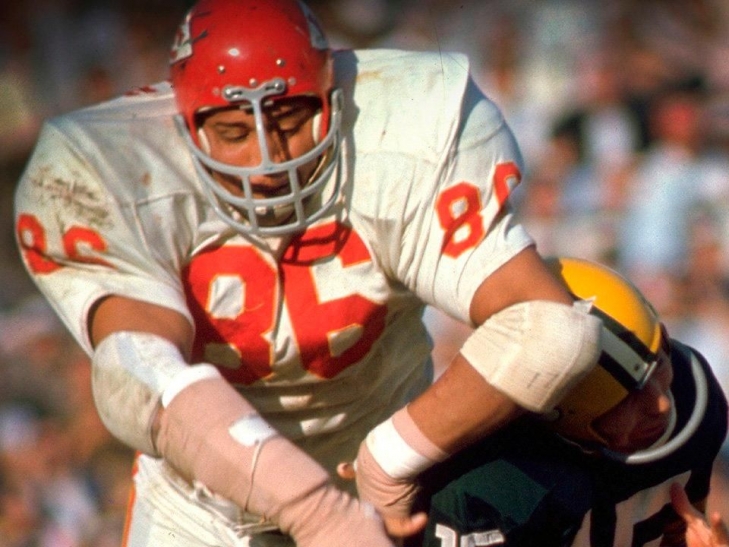
Chosen first overall by the Kansas City Chiefs in the 1963 AFL Draft, Grambling State icon Junious "Buck" Buchanan made history as the first Black player selected with the top overall pick in professional football. While head coach Hank Stram and legendary scout Lloyd Wells recognized Buchanan's exceptional talent, he surpassed all expectations, revolutionizing line play and becoming the formidable force driving Kansas City's defense for more than ten years.
Standing 6-foot-7 and weighing 287 pounds, Buchanan possessed a terrifying blend of size, power, and sprinter-like speed that was unprecedented for a defensive tackle in the 1960s. He used his explosive first step to overwhelm opposing guards and centers, routinely firing into the backfield to blow up plays before they developed. Beyond collapsing pockets, Buchanan used his massive wingspan and leaping ability to swat down passes at the line of scrimmage, highlighted by a staggering 16 batted balls in the 1967 campaign.
Buchanan served as the emotional and physical anchor of Kansas City's famous "Triple-Stack" defense, lining up alongside fellow Hall of Famers Willie Lanier, Bobby Bell, and Emmitt Thomas. His peak performance elevated the franchise onto the game's biggest stages, leading the Chiefs to two AFL Championships and appearances in Super Bowls I and IV. In Super Bowl IV against the heavily favored Minnesota Vikings, Buchanan and the Chiefs’ defense suffocated Minnesota's offense, limiting it to just 67 rushing yards in a decisive 23–7 victory.
His dominance was recognized year in and year out across both leagues. Buchanan was named an AFL All-Star six consecutive times from 1964 through 1969, and following the AFL-NFL merger, he seamlessly continued his elite play by earning Pro Bowl selections in 1970 and 1971. A four-time First-Team All-AFL selection, he was an undeniable selection for the AFL All-Time Team.
In total, Buchanan played 182 regular-season games in red and gold—including a streak of 166 consecutive games—before retiring following the 1975 season. Statistically, Buchanan had 70.5 sacks in his career. His legacy in professional football includes induction into the Kansas City Chiefs Hall of Fame in 1981, the retirement of his No. 86 jersey, enshrinement in the Pro Football Hall of Fame in 1990, and selection to the NFL 100th Anniversary All-Time Team in 2019.
