


Site Admin
49. Otis Armstrong
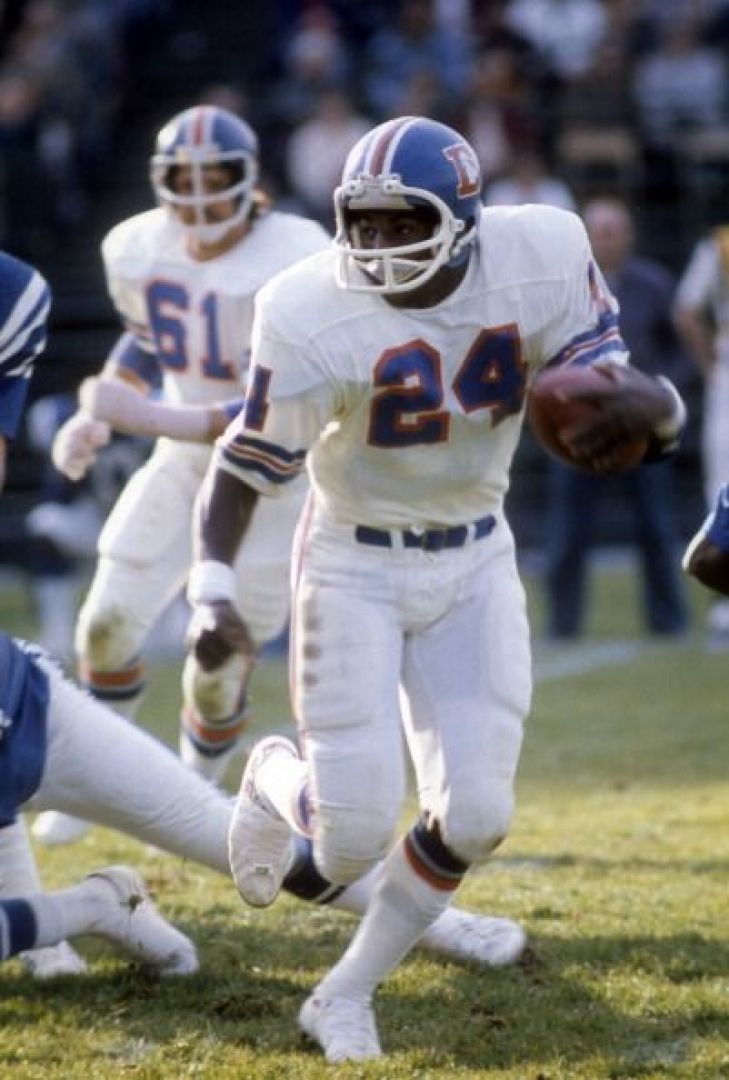
Otis Armstrong, a Big Ten MVP, consensus All-American, and College Football Hall of Famer from Purdue, joined the Mile High City as the ninth overall pick in the first round of the 1973 draft. Initially serving mostly as a backup behind legendary Floyd Little and focusing on kick returns as a rookie, Armstrong dramatically elevated his performance in his second season once he became a full-time starter.
Armstrong's standout 1974 season was one of the most dynamic in the era. He topped the NFL in rushing with 1,407 yards, averaging an impressive 5.3 yards per carry. Additionally, he caught 38 passes for 405 yards, leading the league in yards from scrimmage with 1,812 and earning an Approximate Value of 21. His performance earned him Consensus First-Team All-Pro honors and his first Pro Bowl selection.
A serious injury sidelined nearly all of his 1975 season, allowing him only four games. Nevertheless, Armstrong made a strong comeback in 1976 with his second 1,000-yard season, rushing for 1,008 yards and earning his second Pro Bowl selection. His ability to contribute in multiple ways out of the backfield was vital for Red Miller's team as Denver entered its first successful period.
Although recurring leg and spinal injuries kept him from reaching those statistical heights again, Armstrong remained a vital part of the backfield rotation. He contributed to Denver's historic 1977 AFC Championship run and Super Bowl XII appearance, grinding out tough yards until retiring after the 1980 season.
Over his Denver run, Armstrong had 4,453 rushing yards, 25 rushing touchdowns, 131 receptions, 1,302 receiving yards, and 30 total touchdowns.
48. Craig Morton
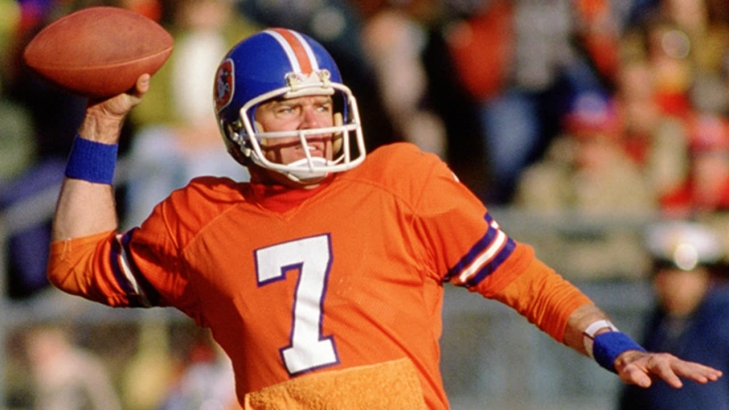
After spending 12 seasons in the NFL between the Dallas Cowboys and New York Giants, 34-year-old Craig Morton landed in Denver in 1977 for what was supposed to be a late-career transition. Instead, the veteran signal-caller produced the most memorable stretch of his pro career, instantly providing the steadying offensive leadership Denver needed to match its powerhouse defense.
Morton's first campaign in Mile High was extraordinary. Coordinating Red Miller’s offense with his main target, Haven Moses—the famous "M&M Connection"—Morton threw 14 touchdown passes and led Denver to a 12-2 regular-season record. He dominated the awards circuit, earning PFWA Comeback Player of the Year, UPI AFC Offensive and Defensive honors, and was the NFL MVP runner-up. Despite a severe hip injury that hospitalized him before the playoffs, he energized Denver's home victories over Pittsburgh and Oakland, guiding the franchise to its first Super Bowl appearance in Super Bowl XII.
That historic run made Morton the first quarterback in NFL history to start a Super Bowl for two different franchises. Over the next five seasons, he remained a steady hand under center, leading Denver to two AFC West division titles and three playoff appearances.
Even as he approached 40, his accuracy remained sharp. Morton finished in the top three league-wide in completion percentage in both 1980 and 1981, and in 1981 he recorded his first career 3,000-yard passing season, with a career-high 3,195 yards and an NFL-leading 8.5 yards per pass attempt. When he hung up his cleats after the 1982 season, he retired as the franchise's all-time leader in passing yards and touchdowns.
He had 11,895 passing yards, 74 passing touchdowns, and a 41-23 regular-season starting record with Denver.
40. Rulon Jones
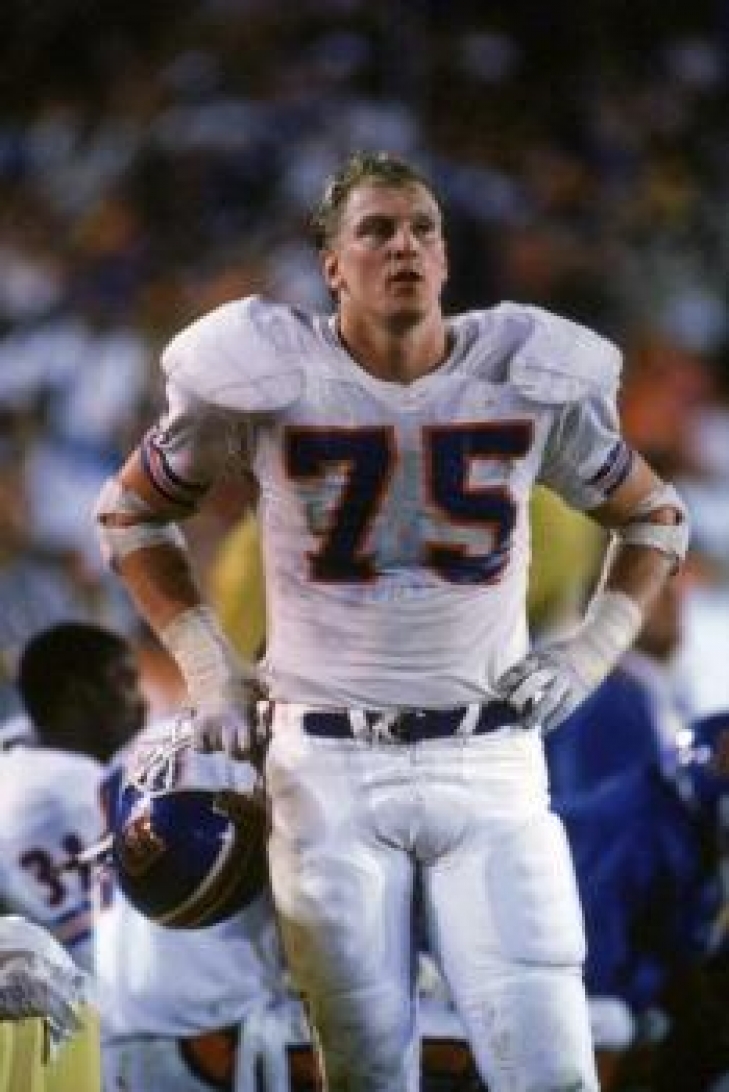
Selected in the second round (42nd overall) out of Utah State in 1980, Rulon Jones stayed in the Rocky Mountain region to begin his pro career and immediately stepped up as a pass-rushing threat. Standing 6-foot-6 and weighing 260 pounds, Jones possessed a rare combination of length, explosive speed, and high motor off the edge that allowed him to make an immediate impact in Denver's 3-4 front as a rookie.
Jones took over the starting right defensive end position in his second season in 1981 and held it down through 1987. Operating in Joe Collier’s defensive scheme, he developed into one of the premier interior and edge disruptors in the AFC. His peak stretch came in the mid-1980s, when he logged back-to-back double-digit sack campaigns in 1985 (10.0 sacks) and 1986 (13.5 sacks).
His dominant 1986 season earned him UPI AFC Defensive Player of the Year honors, a First-Team All-Pro selection, and his second straight Pro Bowl appearance. That season, Jones served as the pass-rushing centerpiece for a defense that propelled Denver to the AFC Championship and a berth in Super Bowl XXI, followed by a second consecutive AFC title and Super Bowl XXII appearance the very next year.
Jones is officially credited with 52.5 sacks. However, including his pre-1982 totals (11.5 as a rookie in 1980 and 9.5 in 1981), his true tally stands at 73.5 total sacks.
47. Jake Plummer
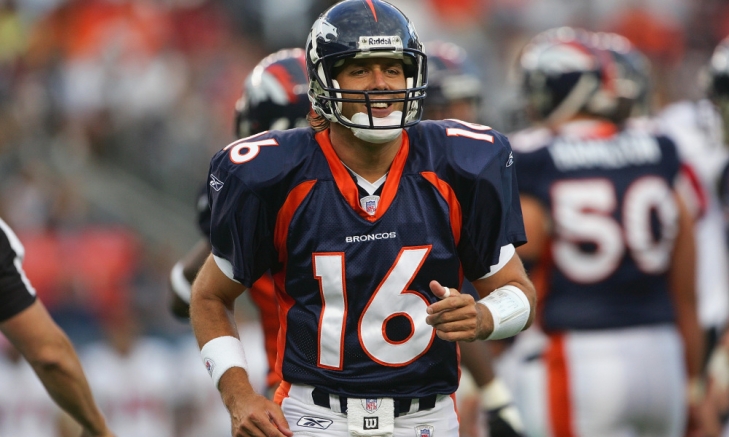
After rising to national stardom at Arizona State, Jake "The Snake" Plummer began his NFL career as an erratic, high-volatility passer for the Arizona Cardinals. Joining Mike Shanahan’s Denver Broncos as an unrestricted free agent in 2003, Plummer found the ideal scheme to unlock his full potential. Shanahan’s bootleg-heavy, zone-stretch offense played seamlessly into Plummer’s athleticism on the move and lethal accuracy on the roll-out.
Plummer’s decision-making transformed rapidly in Mile High. After throwing 90 touchdowns against 114 interceptions in Arizona, he dramatically flipped his script in Colorado, tossing 71 touchdowns to just 47 interceptions. His poise behind center delivered immediate results, leading Denver to playoff appearances in three of his four seasons as the starter.
His best season in the NFL arrived in 2005. Plummer orchestrated a blistering 13-3 regular season while setting a franchise record by throwing 229 consecutive passes without an interception. He earned his lone career Pro Bowl selection that year and guided Denver past the defending champion New England Patriots in the Divisional Round, taking the Broncos to the AFC Championship Game.
Despite boasting a remarkable 39-15 regular-season starting record in Denver (41-18 including the postseason), Plummer was replaced midway through the 2006 season by rookie Jay Cutler. Traded to the Tampa Bay Buccaneers in March 2007, Plummer chose to walk away from pro football on his own terms rather than play elsewhere, retiring to pursue business and life outside the game.
With Denver, Plummer played in 59 games and accumulated 11,631 passing yards, 71 passing touchdowns, 47 interceptions, 131 rushing carries, 687 rushing yards, and seven rushing touchdowns, while winning 72.2 percent of his games.
