


Site Admin
43. George Earnshaw
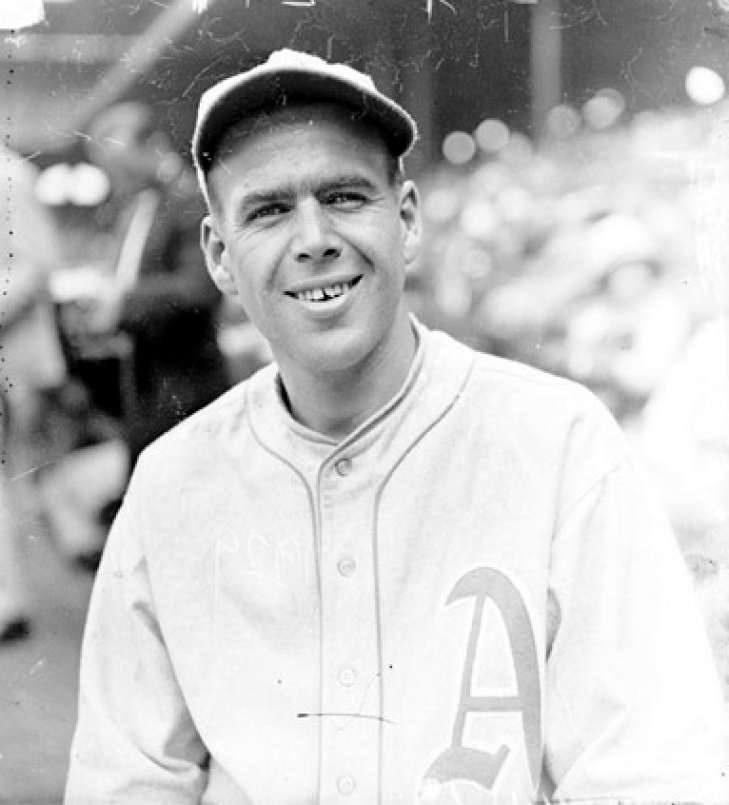
George Earnshaw took an unconventional path to major-league stardom. Because he prioritized finishing his college education and then spent several years refining his arsenal in the minor leagues, he didn't officially debut in the big leagues until he was 28 years old. But once the towering 6-foot-4 right-hander finally stepped onto a big-league mound, he wasted no time proving he belonged at the front of a rotation.
Connie Mack had personally scouted Earnshaw dominating hitters for the legendary Baltimore Orioles of the International League, and he aggressively pulled the trigger to secure his contract. Earning the nickname "Moose" due to his massive physical frame, Earnshaw joined the Philadelphia Athletics mid-season on June 1, 1928, turning in a respectable 7-7 introduction that merely hinted at the absolute dominance to come.
By the 1929 campaign, Mack had assembled an incredibly talented roster, with Earnshaw serving as its powerful, high-velocity engine. That summer, he dominated junior circuit lineups, leading the American League with an impressive 24-8 record and 21 complete games. He served as the key frontline pitcher alongside Lefty Grove, guiding the Athletics to the American League pennant and maintaining his strong performance into October, ultimately helping Philadelphia win the 1929 World Series against the Chicago Cubs.
Far from a single-season wonder, "Moose" proved to be an absolute workhorse over the next two individual campaigns, racking up 22 wins in 1930 and 21 victories in 1931 to form arguably the greatest one-two pitching punch of the era. The absolute peak of his baseball journey arrived during the 1930 postseason defense.
Earnshaw delivered an outstanding performance in the 1930 Fall Classic against the St. Louis Cardinals, participating in three games and pitching 25 impressive innings. He dominated the Cardinals' lineup, earning two complete-game wins, including a five-hit shutout in the pivotal Game 6, and achieved a remarkable 0.72 ERA to help secure consecutive world championships.
He pushed through to achieve yet another prolific 19-win season in 1932, but the heavy, continuous workload of innings eventually severely strained his right arm. Earnshaw experienced a sharp and sudden decline in 1933, finishing with a disappointing 5-10 record as his ERA rose to 5.97.
Due to the financial strain of the Great Depression, Mack had to break up his famous core team. After a tough 1933 season, Earnshaw was sold to the Chicago White Sox as a way to cut costs. As an Athletic, he had a 98-58 record and was later selected for the Philadelphia Baseball Wall of Fame in 2000.
41. Terry Steinbach
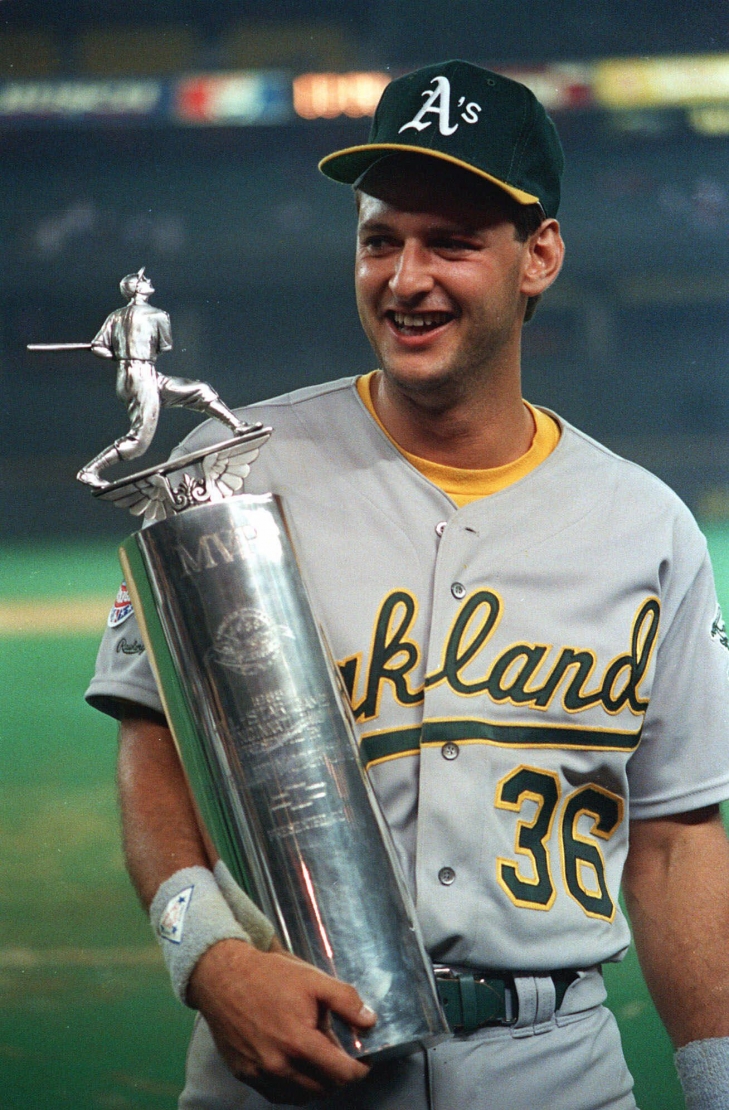
When looking back at the incredible rosters of the late 1980s and early 1990s Oakland Athletics, it’s natural to be drawn to the dazzling superstars, the thunderous home runs of the "Bash Brothers,” or Rickey Henderson’s exciting base running. But behind the scenes of those tense pennant races, manager Tony La Russa needed a smart, steady presence behind the plate. He found that in Terry Steinbach, a former infielder who proved over many years to be one of the most reliable, clutch-hitting catchers of his era.
Originally starting out as a third baseman from the University of Minnesota, Steinbach spent his early days in the minor leagues working on perfecting his swing. Thanks to the thoughtful efforts of the Oakland front office, he was then surprisingly switched to catcher. Transitioning to this new defensive role wasn't easy, but when he finally made his major league debut late in the 1986 season, and even hit a home run in his very first at-bat, it was obvious that his football-player build was ideal for the physical demands of catching. By 1987, he had taken on most of the catching responsibilities, balancing excellent game-calling skills with a strong arm to help stabilize a young and promising pitching staff.
Steinbach quickly developed into a leading offensive asset at a position typically low in offensive output. He recorded four seasons with at least 120 hits and demonstrated credible power in the middle of the lineup by surpassing ten home runs on six occasions in the green and gold.
His unwavering consistency garnered him extensive national recognition through three All-Star selections (1988, 1989, and 1993). He notably secured the Most Valuable Player (MVP) award at the 1988 Midsummer Classic by driving in both American League runs with a home run and a sacrifice fly, thereby establishing his reputation as a premier frontline athlete.
His true value, however, was established during the period when the autumn leaves began to change. Steinbach served as a crucial tactical component during Oakland's remarkable sequence of reaching three consecutive American League pennants from 1988 to 1990. He demonstrated consistent performance with minimal variance at the sport's most prestigious level, achieving a commendable batting average of .281 over 25 high-stakes postseason games. During the historic 1989 World Series sweep against the rival San Francisco Giants, Steinbach delivered an exemplary performance, driving in seven runs—including a decisive, game-changing three-run homer in Game 3—to contribute significantly to securing the world championship.
While the championship nucleus began to splinter, he saved his most explosive offensive performance for his final summer in Northern California. During 1996, a rejuvenated Steinbach terrorized American League pitching staffs, hitting a career-high 35 home runs and 100 RBIs to lead all major league catchers in power. After that peak, he tested free agency and returned home to finish with the Minnesota Twins.
With the A’s, Steinbach amassed 1,144 hits, 205 doubles, and 132 home runs over 1,199 games behind the plate.
That was his last season in Oakland, as he signed with the Minnesota Twins as a Free Agent afterward. He would have 132 Home Runs with 1,144 Hits with Oakland.
44. Stuffy McInnis
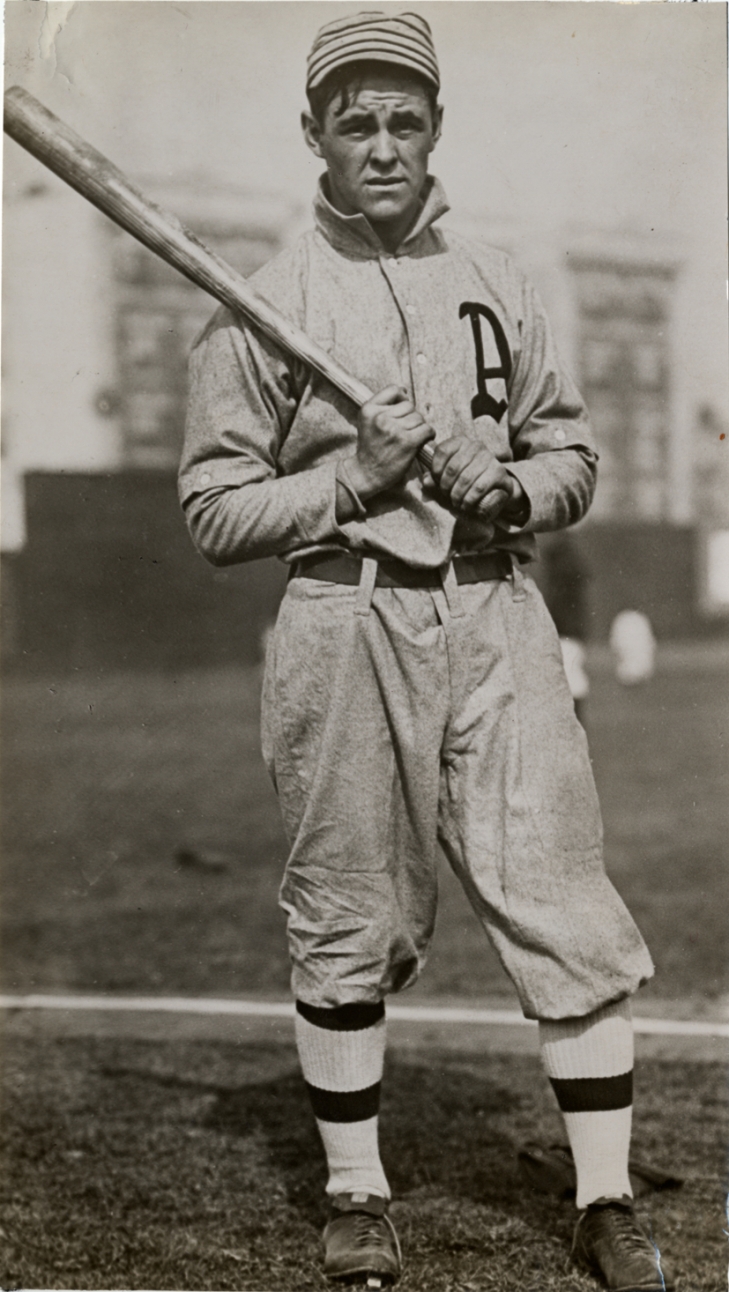
“Stuffy” McInnis first signed with the Philadelphia Athletics prior to the 1909 season, but his immediate path to the lineup was completely blocked. Connie Mack’s legendary infield was already crystallizing, forcing the versatile teenager to bide his time as a utility player, primarily logging reps at shortstop off the bench during his first two major league summers.
Mack saw a unique blend of contact ability and defensive instinct in the young player. When a vacancy at first base appeared before the 1911 season, McInnis quickly claimed the role, becoming the youngest and fiercest member of Philadelphia's renowned "$100,000 Infield,” joining Eddie Collins, Jack Barry, and Home Run Baker.
The structural shift transformed the Athletics into a buzzsaw. Standing just 5-foot-9, McInnis redefined dead-ball-era hitting mechanics by choking up significantly on his bat, wielding a short, compact swing that made him nearly strikeout-proof. He put on an offensive clinic from the moment he took over the bag, batting a spectacular .321 in 1911 and driving in 95 runs.
That breakout summer led to a remarkable, high-volume peak; McInnis would later surpass the .300 batting average in six of his seven seasons as Philadelphia's regular starter through 1917, just missing a perfect score when he posted a solid .295 in 1915.
Nevertheless, his lethal bat only conveyed half the narrative. On the baseball field, McInnis converted first base into an absolute vacuum, integrating exceptional agility with a distinctive, backhanded sweeping technique for fielding low throws from the dirt. He complemented his superior defensive range with rapid instincts on the basepaths, consistently stealing double-digit bases to exert continual pressure on opposing pitching staffs.
This relentless, multidimensional excellence was a vital cornerstone of the franchise's first golden era. McInnis anchored the infield, guiding the Athletics to three American League pennants in four years (1911, 1913, and 1914) and serving as a central catalyst for the historic World Series championships in 1911 and 1913.
When financial pressures eventually forced Mack to famously dismantle his high-priced powerhouse following the 1914 pennant, McInnis remained behind as the steady, veteran heartbeat of the rebuilding club, grinding through several tough seasons before finally being traded to the Boston Red Sox before the 1918 season.
McInnis would later win two more World Series Titles, one with Boston (1918) and another with Pittsburgh (1925). With the Athletics, he would accumulate 1,192 hits with a .313 batting average.
40. Eddie Joost
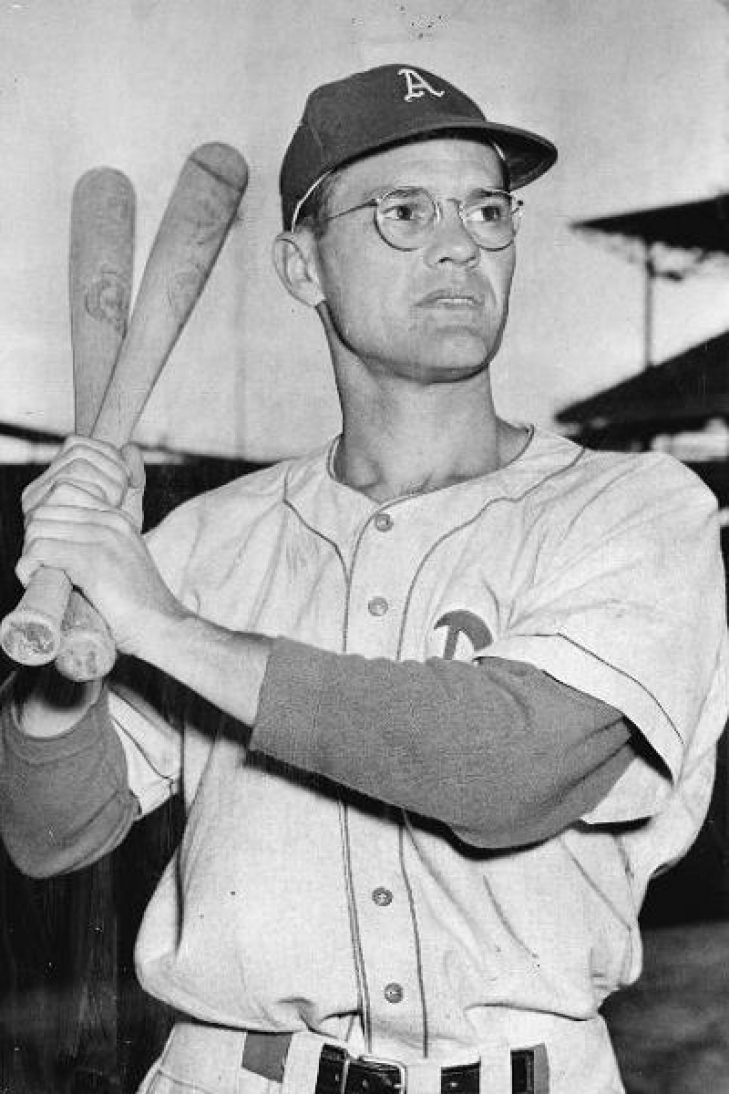
By the end of the 1946 season, the general consensus about Edwin Donald Joost was essentially settled. After a serious disagreement with Boston Braves management, the veteran infielder was banished to the minor leagues within the St. Louis Cardinals organization. At 31, his career seemed headed for a quiet conclusion. Most believed his best years were behind him, but Connie Mack dismissed this idea, offering Joost a chance to revive his career. This opportunity triggered an impressive late-career resurgence in Philadelphia.
When Joost first entered the Shibe Park infield in 1947, he appeared to be a textbook example of a glove-first, light-hitting shortstop. He demonstrated exceptional defensive skills, anchoring the middle of the diamond by leading all American League shortstops in both Range Factor per Game and total putouts.
On the other hand, his traditional offensive stats were disappointing; he posted a low .206 batting average and led the league with 110 strikeouts. However, behind that low average was a valuable asset aligned with Mack’s offensive approach: an exceptional, highly disciplined eye that resulted in 96 walks and boosted his on-base percentage to a solid .348.
That initial summer set the stage for a remarkable five-year peak from 1948 to 1952, during which Joost fully reinvented his hitting approach. He notably reduced his strikeouts and improved his contact rate, which boosted his batting average to much higher levels, reaching a career-high .289 in 1951.
He became a leading expert in driving traffic at the top of the lineup, finishing in the American League’s top ten for on-base percentage four times over five years, twice surpassing the elite .400 OBP mark. His impressive development gained him widespread national peer recognition, earning starting All-Star selections for the junior circuit in 1949 and 1952.
The inevitable effects of aging and accumulated physical wear ultimately impacted his performance during the 1953 season. After a significant decline in productivity, the front office entrusted him with managing the team for its final, bittersweet season in Philadelphia in 1954, before releasing him as the organization prepared to move to Kansas City.
Joost concluded his highly impactful eight-year stay with the Athletics, having collected 840 hits, 116 home runs, and a magnificent .392 on-base percentage. In 1995, he was inducted into the Philadelphia Baseball Wall of Fame.
