


Site Admin
45. Tom Paciorek
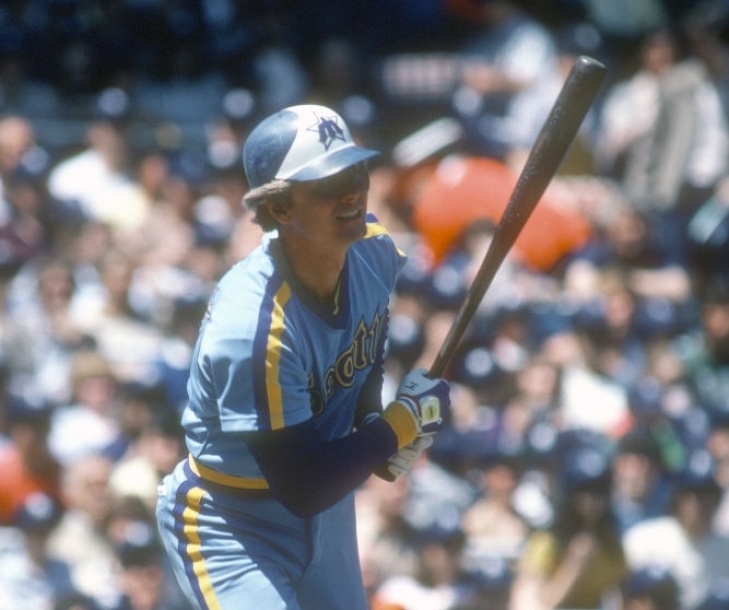
Some baseball careers span decades of consistent, predictable play, while others are remembered for a single, spectacular moment of brilliance. Tom "Wimpy" Paciorek’s first ten years in the majors fall into the latter category. Drafted in the fifth round by the Los Angeles Dodgers in 1968, this tall (6’4") outfielder and first baseman was often stuck on the fringes of Hollywood, unable to secure a spot on a crowded, star-studded roster. After a short platoon role with the Atlanta Braves ended in May 1978 with his release, 31-year-old Paciorek signed with the Seattle Mariners, then a second-year team, looking for a new opportunity to keep playing professional baseball.
During Paciorek’s early seasons playing under the Kingdome’s roof, he proved to be a highly skilled and adaptable bench player for the young franchise. He adapted seamlessly to the Pacific Northwest environment, covering multiple outfield positions and first base, and posted a commendable .299 batting average over 70 games in 1978. By 1980, his role expanded as he became a more regular part of the lineup, amassing 114 hits and hitting a career-high 15 home runs. Although these totals marked him as a reliable major-league player, nothing in his decade-long career hinted at the extraordinary individual achievement he was about to deliver.
The 1981 season, shortened by a strike, was a remarkable showcase of hitting. At 34, Paciorek played full-time and became a scientific wonder at the plate, tallying a career-high 132 hits and 14 home runs in just 104 games. His impressive .326 batting average was no fluke; it ranked him second in the American League, behind only Carney Lansford. Demonstrating an unexpected mix of power and agility, Paciorek slugged.509 and stole a career-high 13 bases. This performance put him at the top of the league's Power-Speed number (13.5), earning him his only All-Star appearance and finishing tenth in the American League MVP voting.
Instead of signing the veteran to a long-term extension after his career year, the Mariners' front office opted to capitalize on his peak trade value. In December 1981, they traded Paciorek to the Chicago White Sox for a three-player package. Although none of the players became long-term contributors for Seattle, Paciorek proved his worth with two consecutive .300 seasons in Chicago. He ended his four-year stint with Seattle with 410 hits, 40 home runs, 173 RBIs, and a.296 batting average.
47. Edwin Diaz
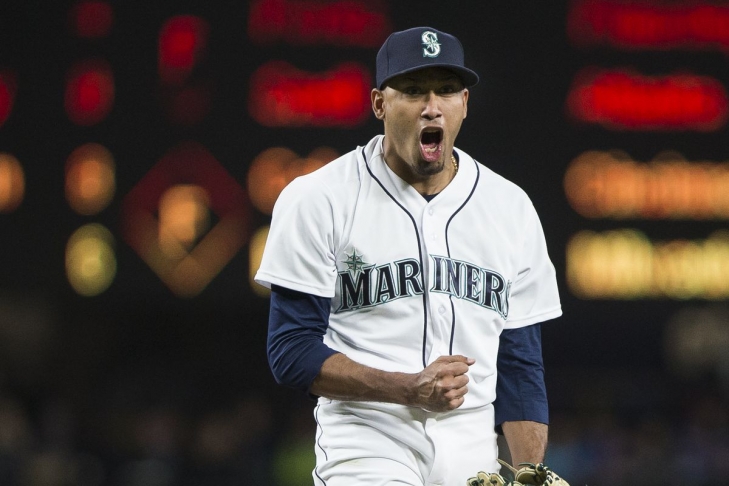
The discussion regarding who owns the greatest overall closing career in Pacific Northwest history remains a compelling debate for baseball historians, with compelling cases to be made for the sustained durability of Kazuhiro Sasaki or J.J. Putz. However, when evaluating the single most dominant, high-efficiency peak ever constructed by a relief pitcher in a Seattle Mariners uniform, the conversation begins and ends with Edwin "Sugar" Díaz. Originally drafted as a starting pitcher in the third round of the 2012 draft, the slender right-hander from Naguabo, Puerto Rico, transformed into an absolute late-inning cheat code the moment the front office moved him to the bullpen.
Díaz burst onto the major-league stage midway through the 2016 campaign, immediately electrifying Safeco Field with an overwhelming, upper-90s four-seam fastball and a devastating slider. He locked down 18 saves over just 51.2 frames, averaging a blistering 15.3 strikeouts per nine innings to secure a fifth-place finish in the American League Rookie of the Year voting. He seamlessly backed up his initial splash by securing the full-time closer role in 2017, converting 34 saves to establish himself as a premier tier-one weapon. Yet, nothing in his early track record could have prepared the sport for the historic, regular-season hurricane he unleashed upon the American League the following summer.
The 2018 campaign stands as one of the most statistically overwhelming exhibitions of relief dominance in the history of Major League Baseball. Operating as manager Scott Servais' ultimate late-inning firewall, Díaz served as a regular-season metronome for a highly competitive Mariners squad, leading all of baseball with 65 games finished and a historic, mind-boggling 57 saves. His 57 conversions tied him with Bobby Thigpen for the second-highest single-season save volume in major-league history, trailing only Francisco Rodríguez's all-time record of 62. True to form, he was completely untouchable. Over 73.1 high-leverage innings of work, Díaz racked up 124 strikeouts while surrendering a mere 41 hits and 17 walks. This suffocating era dominance yielded a microscopic 1.96 ERA and a brilliant 0.79 WHIP, earning him his very first career All-Star selection, the AL Reliever of the Month honors in three separate months, and the prestigious Mariano Rivera American League Reliever of the Year Award.
Recognizing that his trade value would never be higher, general manager Jerry Dipoto utilized his young closer as the ultimate premium chip to kickstart an organizational reset. In December 2018, the Mariners packaged Díaz alongside veteran Robinson Canó in a blockbuster trade with the New York Mets, bringing back a significant haul of young talent centered around top outfield prospect Jarred Kelenic.
Díaz finished his three-year Seattle residency with 109 saves, 140 games finished, and 301 strikeouts against 64 walks over 206 relief appearances.
49. Kazuhiro Sasaki
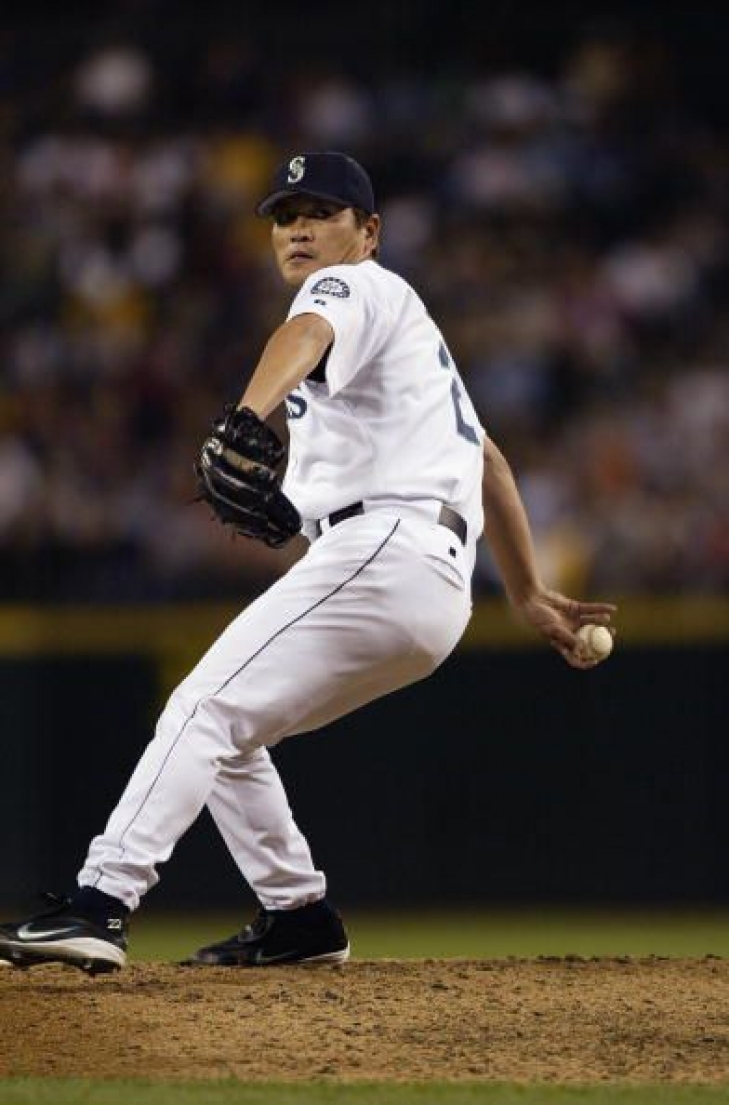
After playing a decade in Japan with Yokohama, Kazuhiro Sasaki was a 32-year old rookie in Seattle, and with a decade of real experience, he easily won the 2000 American League Rookie of the Year Award. The former Central League MVP would finish third in the AL with 37 Saves.
30. Mitch Haniger
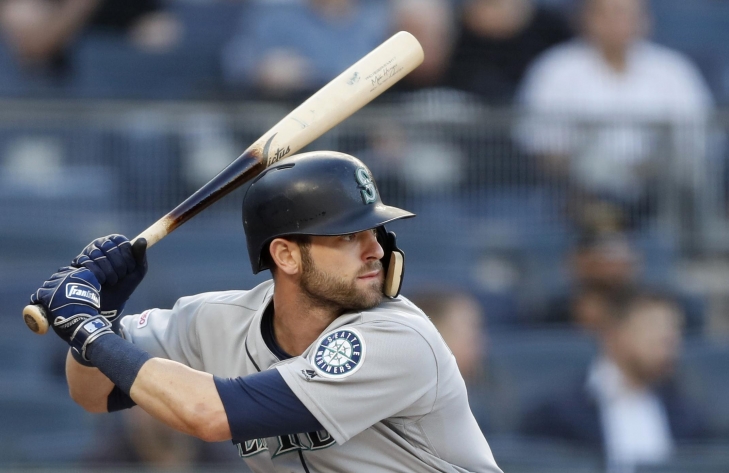
When Mitch Haniger arrived in the Pacific Northwest in November 2016, it seemed like just another typical roster adjustment. The Seattle Mariners’ general manager, Jerry Dipoto, traded shortstop Jean Segura to the Arizona Diamondbacks in a five-player deal. However, it was Haniger—a former promising outfield prospect who had difficulty securing regular playing time in Arizona—who proved to have the greatest potential. After being named the starting right fielder at Safeco Field, the determined outfielder quickly took advantage of his new role, turning his powerful swing into a key asset for the team.
His outstanding breakout came during the historic 2018 season, a summer when Haniger played at a top-tier superstar level. He established himself as a relentless offensive threat and the emotional leader of manager Scott Servais' team, hitting against opposing pitchers with a .285 average, 170 hits, 38 doubles, 26 home runs, and 93 RBIs. His ability to consistently deliver clutch, high-pressure hits earned him his first selection to the American League All-Star Game and an impressive 11th-place finish in MVP voting. Defensively, he showcased a powerful throwing arm, leading the majors with 12 outfield assists and cementing his status as one of the best right fielders in the league.
Haniger was expected to lead the organization through a transitional youth movement, but his rapid rise was tragically halted by a series of severe and painful injuries. In June 2019, he was struck by a sharp fastball that ruptured his testicle, leading to a difficult chain of core muscle tears and back surgeries. These intense physical issues sidelined him for the rest of 2019 and caused him to miss the entire 2020 season, which was shortened by the pandemic. This two-year gap posed a serious threat to his playing career.
Haniger demonstrated his remarkable mental resilience with an impressive comeback in the unforgettable 2021 season. Although his batting average fell to .253 and he became more prone to strikes, his power surged to new heights. Leading as a seasoned veteran on a young team that reached deep into September, he set personal records with a team-leading 39 home runs and 100 RBIs. His successful return won over local fans and earned him a spot in the top 20 of the American League MVP race, confirming the success of his lengthy physical rehab.
After an ankle injury limited his 2022 season to 57 games, Haniger provided veteran leadership to help Seattle end a 21-year playoff drought. He then signed a lucrative free-agent deal with the Giants. In 651 games in a Mariners uniform, he amassed 619 hits, 119 home runs, and a. 786 OPS.
