


Site Admin
The Buck Stops Here -- Season 1 Episode 19
The Buck Stops Here -- Hall of Fame News -- Season 1 Episode 18
46. Toby Hall
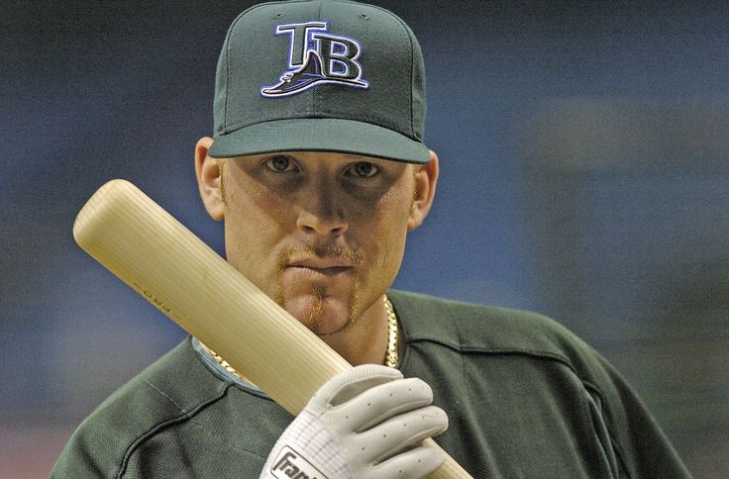
Toby Hall was drafted by the franchise in the ninth round of the 1997 amateur draft. He spent years progressing through the minor leagues and made his major league debut with a four-game stint in September 2000. During a time when the expansion franchise was trying to establish itself and needed a reliable catcher, Hall's consistent development provided a promising, homegrown solution at one of baseball’s most demanding roles.
After two seasons of gradually increasing platoon duties, Hall secured the regular starting role in 2003. Over the next three summers, he established himself as a dependable workhorse, appearing in at least 119 games annually. Offensively, his strategy was hindered by a strong dislike of drawing walks, making it tough to raise his on-base percentage near .300. Despite this, he consistently made solid contact and occasionally hit double-digit home runs, with a career-high batting average of .287 and 124 hits in 2005.
His true value was rooted solely in his exceptional defensive instincts. During a time when the young Devil Rays' pitching staff often struggled, Hall was a top-tier defender against runs. He had a quick release and a strong arm, frequently ranking among the American League leaders in runners caught stealing. His defensive skills peaked in 2003, when he caught 44.3% of base stealers, the highest in the majors, and again in 2005, leading all of Major League Baseball with an outstanding 2.7 defensive bWAR.
Hall's extended stay in St. Petersburg concluded in June 2006 when the front office traded the veteran catcher to the Los Angeles Dodgers, along with pitcher Mark Hendrickson, in exchange for Dioner Navarro and Jae Weong Seo. During his time in Tampa, Hall played in 586 games, achieving 538 hits, 44 home runs, and 229 RBIs.
44. Akinori Iwamura
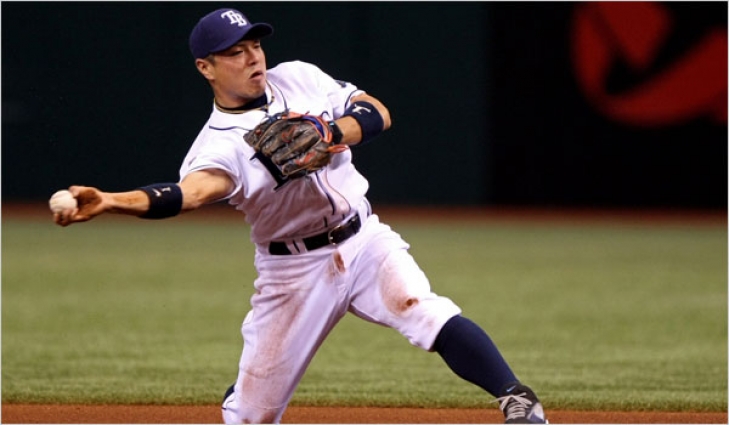
Before winning over baseball fans in St. Petersburg, Akinori Iwamura was already a celebrated star in Japan, recognized as a multi-time All-Star and Gold Glove third baseman for the Tokyo Yakult Swallows. When he signed with the Tampa Bay Devil Rays before the 2007 season, he faced the difficult task of adapting to a new country and style of play. He managed the transition exceptionally well, quickly demonstrating a disciplined, line-drive hitting approach that led to 140 hits and 10 triples in his impressive 2007 rookie season.
In 2008, Iwamura selflessly moved to second base full-time to make room for top prospect Evan Longoria, a position he had rarely played professionally. His transition was highly successful, establishing a benchmark for foreign-born players’ adaptability, while he also served as the everyday leadoff hitter at the top of the batting order. Iwamura delivered an outstanding offensive season, leading the team with a career-high 172 hits, 30 doubles, and 91 runs scored.
The 2008 campaign reached its peak with a memorable moment that forever engraved Iwamura’s name in franchise history. During Game 7 of the American League Championship Series against the defending champion Boston Red Sox, rookie David Price induced a sharp groundball up the middle in the ninth inning. Iwamura quickley moved to his right, caught the ball, and hurried to second base, confidently stepping on the bag for the final out. This electrifying play led to the Rays' first-ever American League pennant and became an iconic image so meaningful that the team later commemorated it with a bronze statue outside Tropicana Field.
With Rampa Bay, Iwamura appeared in 344 games, accumulating exactly 379 hits, 14 home runs, and 104 RBIs.
