


Site Admin
The Buck Stops Here -- Interview with Evelyn McDonnell
The Buck Stops Here -- Hall of Fame News -- Season 1 Episode 22
14. Manny Ramirez
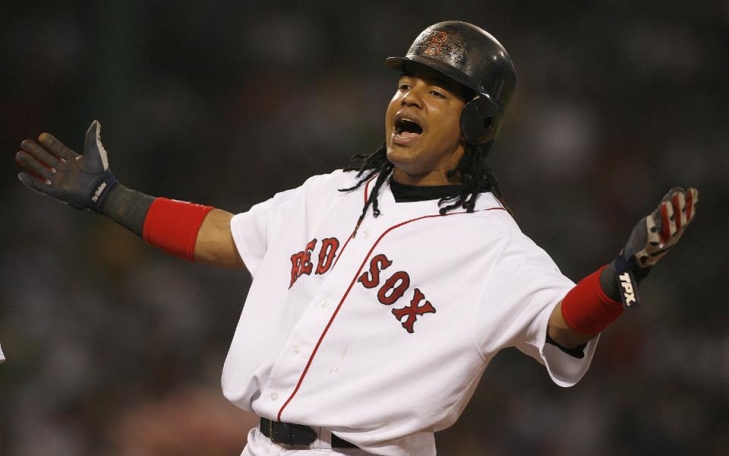
"Manny being Manny" was a phrase that captured the enigmatic, often brilliant, and occasionally baffling nature of Manny Ramirez. While he arrived in Boston in 2001 as an established star from Cleveland, it was at Fenway Park where he became a global icon. Ramirez was a Red Sox All-Star in every one of his eight seasons, serving as the surgical right-handed counterpart to David Ortiz’s left-handed power. Together, they formed a middle-of-the-order tandem that redefined the power game for the BoSox.
Ramirez’s statistical consistency in Boston was staggering. In each of his seven full seasons with the Red Sox, he launched at least 33 home runs, peaking with an American League Home Run Title (43) in 2004. He won the AL Batting Title in 2002 (.349) and securing three OBP titles. His ability to control the strike zone was elite; he never finished a season in Boston with an On-Base Percentage lower than .388. This sustained excellence made him a fixture in the MVP conversation, finishing in the top ten in five consecutive seasons (2001–2005).
While his regular-season numbers were Hall of Fame-caliber, his postseason impact cemented his legend. Ramirez was the engine of the 2004 and 2007 World Series championships, notably earning 2004 World Series MVP honors after batting .412 in the sweep of St. Louis. He retired from the Red Sox with 11 postseason home runs and 38 RBIs, numbers that highlight his status as one of the greatest high-leverage hitters to ever wear the uniform.
However, the "Manny being Manny" era ended in a storm of controversy. By 2008, his behavior began to overshadow his production. A dugout brawl with teammate Kevin Youkilis and a physical altercation with 64-year-old traveling secretary Jack McCormick over complimentary tickets created an untenable environment. When he began to "dog it" on the field, the front office made the difficult decision to trade him to Los Angeles. His legacy was further complicated by two subsequent PED suspensions, which effectively ended his chances at a first-ballot Cooperstown induction.
Ramirez finished his Boston career with 1,232 hits, 274 home runs, and a massive .312/.411/.588 slash line. Despite the turbulent exit, his on-field contribution was undeniable; without him, the "Curse of the Bambino" might still be intact. Recognizing this impact, the Red Sox inducted Ramirez into the Red Sox Hall of Fame in 2020.
11. Dustin Pedroia
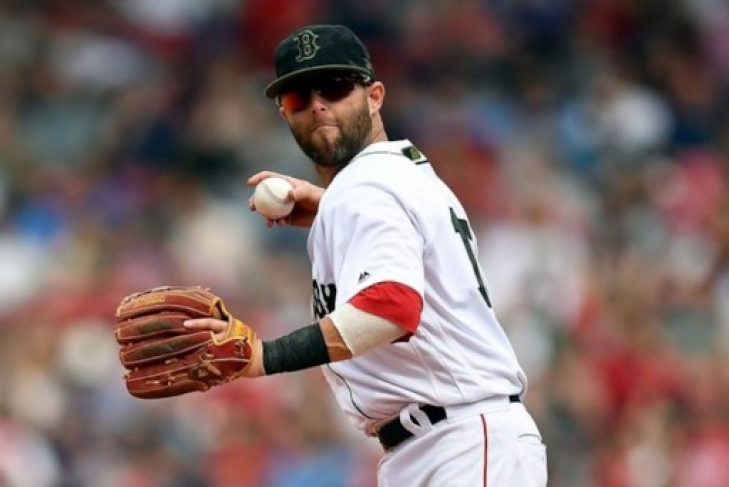
Dustin Pedroia arrived in Boston in 2006 and immediately shattered every expectation regarding his size. By 2007, the "Laser Show" was in full effect as he secured the American League Rookie of the Year award with a .317 average and 165 hits. He punctuated his rookie campaign in legendary fashion, becoming the first rookie in MLB history to lead off a World Series with a home run (Game 1, 2007), setting the tone for the first of his three World Series rings in a Red Sox uniform.
If 2007 was the introduction, 2008 was the takeover. In one of the most decorated single seasons for a second baseman, Pedroia won the AL MVP, led the league in Runs Scored (118), Hits (213), and Doubles (54), and swept the Gold Glove and Silver Slugger awards. He became only the third player in history to win ROY and MVP in consecutive seasons, proving that his high-intensity approach was a sustainable, elite-level weapon.
Pedroia’s impact extended far beyond the box score. A four-time Gold Glove winner and four-time All-Star, he was the defensive and emotional anchor of the infield for over a decade. He combined surprising power—recording five seasons of 15+ home runs—with elite baserunning, stealing 20 bases on four different occasions. He was also defined by his leadership during the "Boston Strong" 2013 championship run, where he played 160 games and served as the dugout's unwavering heartbeat.
Tragically, a severe knee injury in 2017 effectively cut his career short in its prime. Despite his relentless efforts to return, he was limited to just nine games across the 2018 and 2019 seasons. He officially retired after the 2020 season, finishing with 1,805 hits and a career .299 batting average—falling just a fraction short of the .300 mark due to his final injury-plagued at-bats. He remains a "Lifer" in every sense of the word, having spent all 14 seasons of his career in the Red Sox organization.
Inducted into the Red Sox Hall of Fame in 2024, Pedroia’s legacy as the quintessential "Grinder" is set in stone.
