


Site Admin
20. Thornton Lee
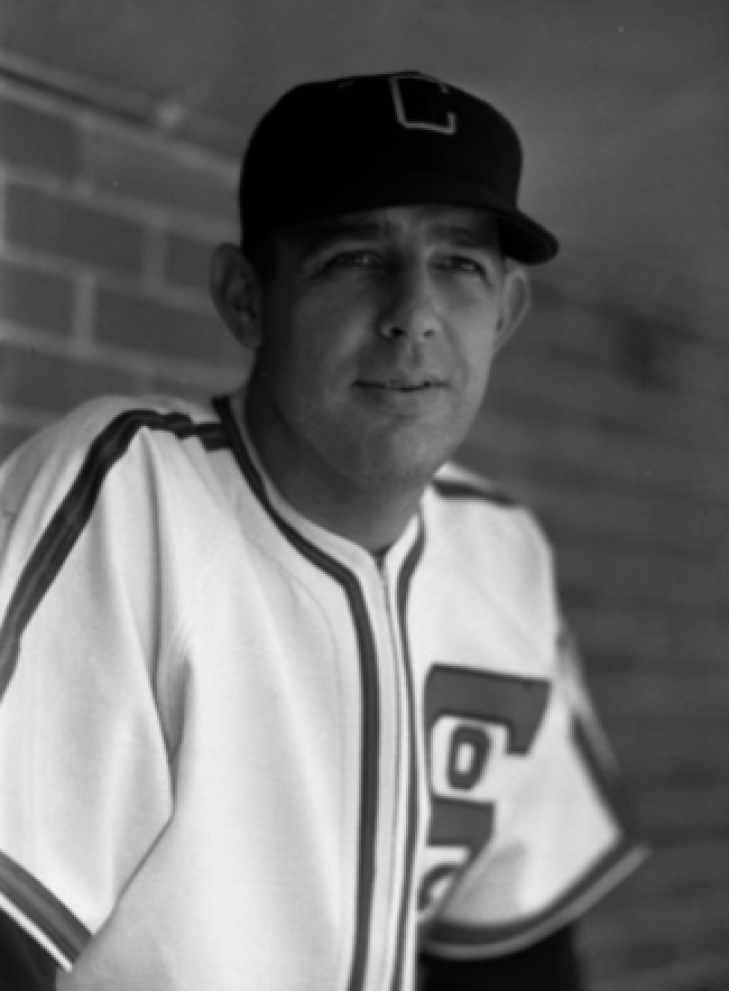
When Thornton Lee arrived in Chicago via a trade with Cleveland in 1937, he was already 30 years old and carried the label of a journeyman. His time with the Tribe had been largely forgettable, but the change of scenery to the "Pale Hose" acted as a catalyst for a mid-career evolution. He didn't just find a spot in the rotation; he became its primary engine. In his first full season in the Windy City, he posted a 12-10 record, and by 1938, his underlying value began to surface. While his traditional stats were respectable, he led all major league pitchers in bWAR (5.5) that season, proving he was doing more with less than any other arm in the game.
The peak of his residency, and one of the most dominant individual seasons in franchise history, arrived in 1941. At the age of 34, Lee staged a masterclass in efficiency that defied his age. He was an All-Star who once again paced the American League in bWAR with a staggering 8.6 mark, while capturing the ERA title (2.37) and leading the league in ERA+ (174) and WHIP (1.165). He finished fourth in the MVP voting and established himself as the premier left-hander in the junior circuit. He arrived as a cast-off and transformed into the most dangerous weapon in the Chicago arsenal.
However, the middle chapter of his journey was hampered by the onset of World War II and a mounting list of physical ailments. While Lee remained stateside during the conflict, his body began to betray the heavy workload of his peak years. He struggled with ineffectiveness for much of the early 40s, though he managed one final gasp of brilliance in 1945, grinding out a 15-win season at the age of 39. It was a final display that had made him so valuable, showing that even with diminished velocity, his tactical mind could still navigate a big-league lineup.
The final walk toward the exit came after the 1947 season. At the age of 41, the White Sox made the difficult decision to cut ties and release the veteran southpaw. He left Chicago with an even 104-104 record, a stat that serves as a reminder of how often he pitched brilliantly for teams that struggled to provide him with run support.
17. Paul Konerko
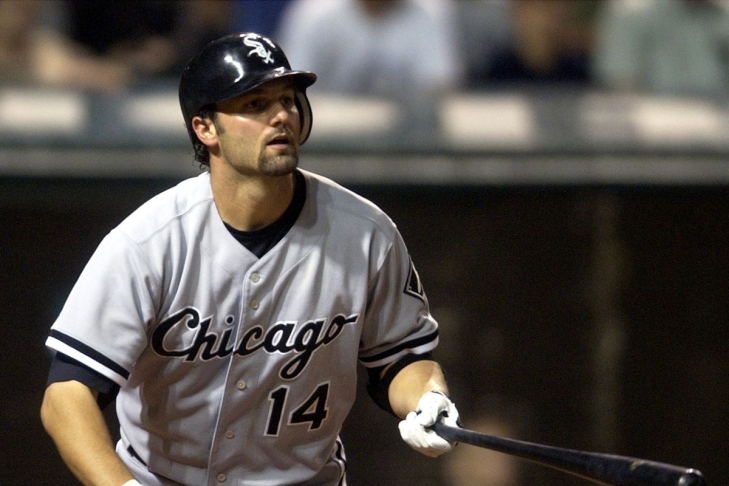
When Paul Konerko arrived in Chicago in 1999 via a trade with the Cincinnati Reds, he was a young hitter searching for a permanent home. The White Sox sent away a dynamic talent in Mike Cameron to get him, a move that initially raised eyebrows but quickly proved to be a stroke of genius. Konerko didn't waste time establishing his residency at first base, launching 24 home runs in his debut season and proving that his compact, powerful swing was perfectly suited for the South Side. He arrived as a promising trade piece and immediately began his transformation into the team’s identity that would define the organization for the next sixteen years.
The middle of his journey was highlighted by a level of power that peaked during the legendary 2004 and 2005 campaigns. Konerko rattled off back-to-back 40-home run seasons, earning his place among the elite power threats in the American League. The 2005 season, however, elevated him to the status of a permanent icon. Not only did he lead the team back to the postseason, but he also captured the ALCS MVP and provided the signature moment of the World Series with a thunderous grand slam in Game 2. He was the stoic leader of a squad that brought Chicago its first title since 1917, and carried the weight of a century-long wait on his shoulders.
However, calling a spade a spade requires acknowledging the limitations that came with his high-volume power. While he was a six-time All-Star, Konerko was often hindered by a lack of speed and a tendency to ground into double plays. His defensive range was limited, and he was never considered a threat on the basepaths. Yet, these negative attributes were largely overshadowed by his staggering moon shots from the plate. He amassed four more 30-home run seasons after the championship run and maintained a career slash line of .281/.356/.491 in a White Sox uniform. Fans were more than happy to overlook a few double plays in exchange for 432 home runs and 2,292 hits.
The final walk toward the exit came in 2014, concluding a nearly two-decade-long residency that had made him the emotional heartbeat of the franchise. He retired as one of the most beloved figures in Chicago sports history, a man whose number 14 was swiftly hoisted to the rafters. The organization further immortalized his impact by erecting a statue in his likeness outside the stadium, a permanent tribute to the man who hit the most important home runs in the history of the South Side.
14. Doc White
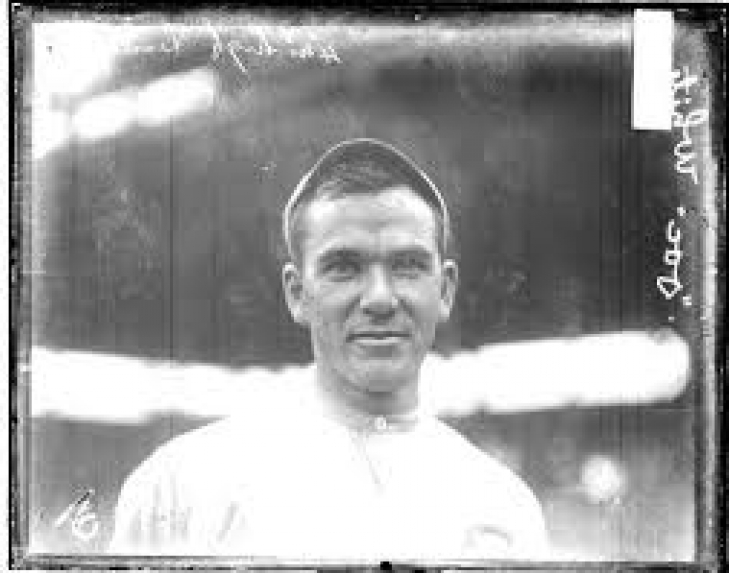
Doc White arrived on the South Side in 1903 following a brief but brilliant stint with the Philadelphia Phillies. A graduate of Georgetown’s dental school, White brought a clinical precision to the mound that immediately translated to the American League. While he lacked the overwhelming power of some of his contemporaries, he was a master of the sinker, the curve, and the spitball, utilizing a cerebral approach to keep hitters off-balance. His residency in Chicago began with a literal bang; in 1904, he set a Major League record by tossing five consecutive shutouts, a feat of durability and dominance that stood for 64 years until it was eclipsed by Don Drysdale.
The pinnacle of his career arrived in 1906, when he served as a primary architect of the White Sox's first World Series championship. That season, White was nearly untouchable, leading the American League with a microscopic 1.52 ERA and a league-best WHIP. During the historic crosstown World Series against the 116-win Cubs, White etched his name into the record books twice: first by recording the first save in World Series history (retroactively calculated) and then by winning the clinching Game 6. He was the high-efficiency engine of a staff that had to be perfect to compensate for the team's anemic offense.
The momentum of the championship season carried directly into 1907, which stands as the statistical masterpiece of his tenure. White led the league with 27 wins and displayed a level of control that bordered on the impossible, issuing only 38 walks in 291 innings. He even authored an American League record by pitching over 65 consecutive innings without allowing a single walk. He was a master of the "short game," working quickly and efficiently, often finishing games in under 90 minutes. At this apex, he was widely considered the premier left-hander in the game, a technician who had turned pitching into a science.
However, the bill for those high-workload seasons eventually came due. Following a solid 18-win campaign in 1908, White began a gradual, painful descent. By 1909, the junk that had frustrated hitters for years started to lose its bite, and his ERA began a steady climb. While he managed one final 15-win season in 1910, the remainder of his journey was marked by a struggle to regain the elite form of his youth. The transition from superstar to veteran mentor was difficult, and by 1913, his arm had finally reached its limit.
Doc White’s walk toward the exit came after the 1913 season, concluding an eleven-year residency that saw him accumulate 159 wins in a White Sox uniform. He left the organization as a World Series hero and a statistical outlier whose records for shutouts and control would stand for generations. He arrived as a young dentist with a nasty sinker and left as a permanent fixture of South Side lore, the man who proved that sometimes, the smartest player on the field is the most dangerous one.
15. Luis Aparicio
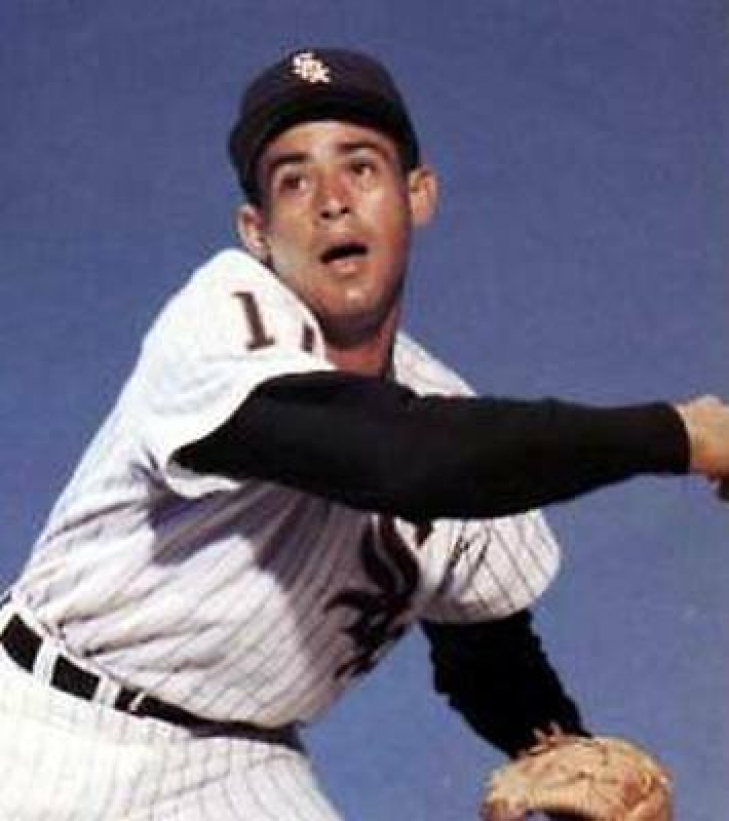
When Luis Aparicio arrived on the South Side in 1956, he didn't just fill a hole at shortstop; he ignited a revolution. As the first Latin American player to be named Rookie of the Year, he immediately signaled that the game was changing. He led the American League with 21 stolen bases in his debut season, a feat he would repeat for the next eight consecutive years. In an era where many teams were content to station stationary power hitters on the corners, Aparicio was a blur of motion, forcing pitchers into mistakes simply by his presence on the bag. He was the kinetic energy that powered the White Sox’s aggressive identity throughout the late 50s.
The middle of his Chicago residency was defined by a defensive masterclass that ranks among the very few in the history of the sport. Aparicio was a human highlight reel at shortstop, a six-time Gold Glove winner during his first stint with the Sox. His defensive bWAR of 20.7 in Chicago alone is a staggering figure, dwarfing those of contemporaries often cited for their gloves. He wasn't just flash; he was fundamental, leading the league in putouts, assists, and double plays turned with a regularity that became monotonous for opposing hitters. If the ball was hit toward the left side of the infield, the result was almost always an out.
However, calling a spade a spade requires looking at the other side of the ledger. While his glove and legs were elite, his bat lived in a different reality. Aparicio struggled to draw walks or drive the ball, posting a modest .319 on-base percentage and a .348 slugging clip during his peak Sox years. He was a high-volume hitter who relied on contact and speed to generate value, and while his 1,576 hits for the franchise are impressive, his lack of traditional statistical dominance at the plate is the reason his ranking often hits a ceiling. He was a specialist, perhaps the greatest defensive specialist of his generation, but he was never a middle-of-the-order threat.
The trajectory of his career took him to Baltimore in 1963, but the South Side wasn't finished with him. In a rare "return of the king" moment, he was traded back to Chicago in 1968 for three more seasons. While he wasn't as quick as the rookie who had taken the city by storm twelve years earlier, he remained an elite fielder and a cerebral leader, earning one final All-Star nod in 1970 before being dealt to Boston to finish his legendary career.
Luis Aparicio’s walk toward the exit concluded as the most decorated Venezuelan player in history. In 1984, the same year the White Sox hoisted his number 11 to the rafters, he became the first of his countrymen to be inducted into Cooperstown. He arrived as a skinny kid from Maracaibo and left as a global icon, the man who proved that a shortstop’s greatest weapon wasn't his bat, but his ability to make the field feel smaller for the opponent and larger for himself.
