


Site Admin
9. Stan Hack
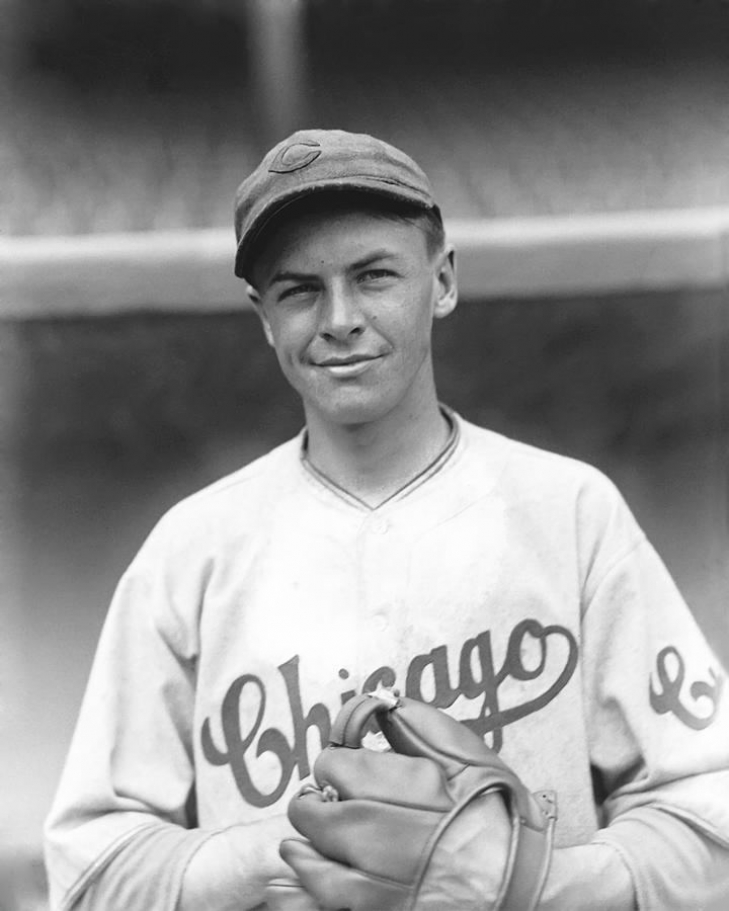
In an era of baseball defined by rugged toughness and loud personalities, Stan Hack was a different kind of weapon. He arrived in Chicago in 1932 and quickly made the "hot corner" his permanent residence, but it wasn't just his glove that made him indispensable. As the Cubs' permanent leadoff man, Hack brought a scientific approach to the top of the order. While others were swinging for the fences, Hack was busy mastering the art of the professional plate appearance. He didn't just hit his way on base; he haunted pitchers by working the count, finishing his career with a .394 On-Base Percentage, a number that would make a modern sabermetrician weep with joy.
His run with the team was defined by a metronomic, "smiling" consistency. From 1934 until his final game in 1947, Hack was the engine that powered the Chicago offense. He was a two-time hits leader and a perennial .300 hitter, but his true value emerged when the lights were brightest. Hack helped lead the Cubs to four National League pennants, and while the franchise famously fell short in those World Series appearances, it was never for a lack of effort from their third baseman. Hack was a postseason revelation, batting a scorching .348 in October and proving that his patient approach was immune to the pressure of the Fall Classic.
Hack was the rare superstar who never felt the need to raise his voice or change his uniform. He played all 1,938 of his Major League games in a Cubs jersey, amassing 2,193 hits and serving as the bridge between the glory days of the late 20s and the post-war era. He was the "Lifer" before the term was even popularized, a man whose loyalty to the North Side was as unwavering as his batting eye.
The story reached its formal acknowledgement in 2021 when the Cubs inaugurated their own Hall of Fame. Hack was an easy, unanimous choice for the first class, a permanent tribute to the man who proved that you could dominate a game with a smile and a walk as easily as a home run. He arrived as a young prospect and left as a franchise institution, the gold standard for what a leadoff man should be.
10. Gabby Hartnett
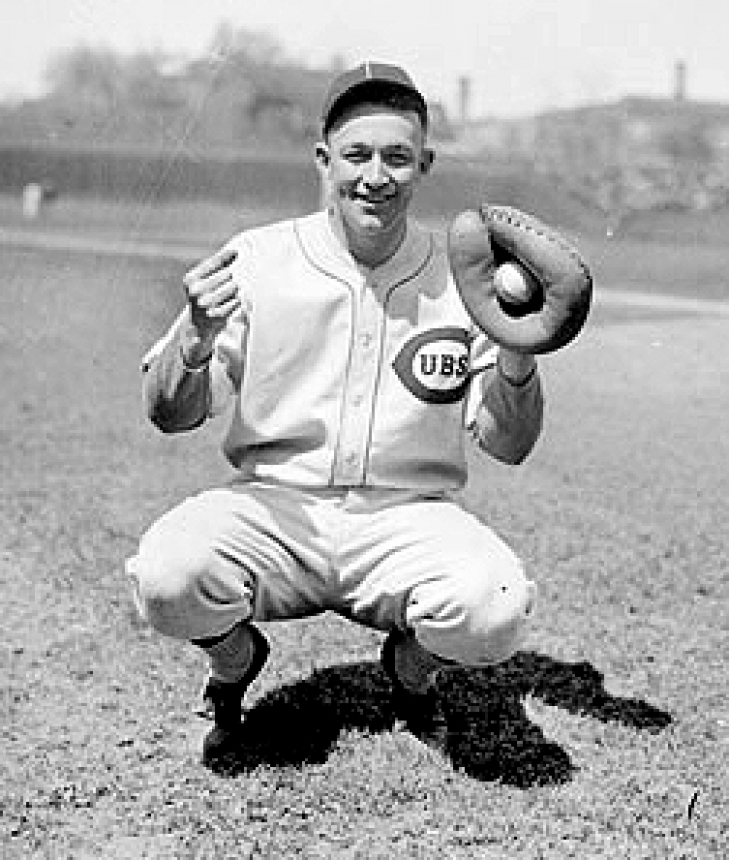
For nearly two decades, the heartbeat of the Chicago Cubs lived behind a chest protector. Gabby Hartnett didn’t just play catcher; he revolutionized it. Arriving in Chicago in 1922, he spent the next 19 seasons proving that the man calling the game could also be the one to end it. In 1925, he became the first catcher in baseball history to launch 20 home runs in a season, a feat that, at the time, felt like a glitch in the game’s logic. By the time he hung up the mask, his 236 home runs stood as a record for the position, a benchmark that would last for decades.
Hartnett’s run was a perfect marriage of offensive thunder and defensive authority. While he hit for a career .297 average, including a career-high .344 that secured him the 1935 National League MVP, he was just as dangerous with his right arm. He led the league in Caught Stealing Percentage six times, effectively shutting down the running games of every rival in the circuit. He was the field general for four different pennant-winning teams, a consistent, vocal leader whose durability at the most grueling position in sports became the stuff of legend.
But the defining chapter of Hartnett's Chicago story arrived in the fading light of September 28, 1938. In a neck-and-neck pennant race against the Pittsburgh Pirates, with the game tied in the bottom of the ninth and darkness literally swallowing Wrigley Field, Hartnett stepped to the plate. In what became known as the "Homer in the Gloamin’," he launched a ball into the shadows that didn't just win the game; it broke the Pirates' spirits and delivered the pennant to Chicago. It remains the most cinematic moment in the franchise's history.
The story of "Old Tomato Face" concluded with a series of well-earned honors. Inducted into Cooperstown in 1955, Hartnett’s status as the premier catcher of the pre-war era was set in stone. When the Cubs finally launched their own Hall of Fame in 2021, he was an automatic inaugural inductee. He arrived as a young backstop in a different era of baseball and left as a franchise titan, the man who proved that a catcher could be the greatest hitter on the field.
7. Mordecai Brown
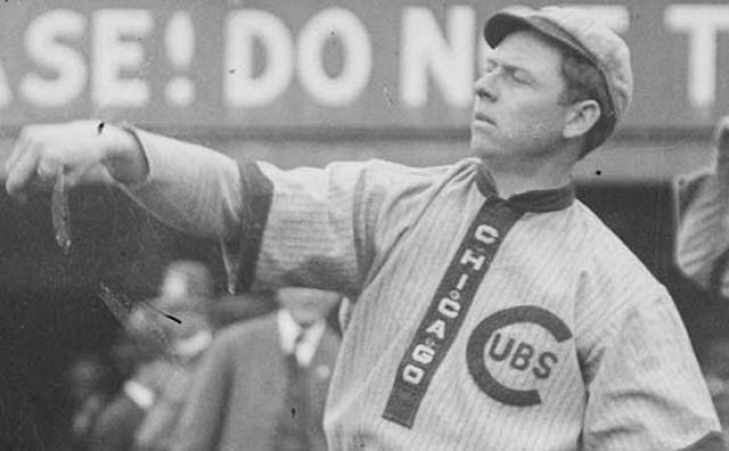
In the early 1900s, the Chicago Cubs weren't just a team; they were a dynasty, and at the center of that whirlwind was a man with a mangled hand and a heart of iron. Mordecai Brown arrived in Chicago in 1904 via a trade with the Cardinals, carrying the physical scars of a childhood farm machinery accident that had cost him parts of two fingers. To any other man, it would have been a career-ending tragedy. To Brown, it was a secret weapon. He learned to grip the ball in the gaps of his remaining digits, creating a "wicked" downward break that defied the laws of physics and the eyes of the era's greatest hitters.
His six-year peak from 1906 to 1911 remains one of the most statistically absurd stretches in the history of the mound. He arrived in the upper echelon of hurlers in 1906 with a 26-win season and a microscopic 1.04 ERA, a number that looks like a typo but was the terrifying reality for National League batters. But Brown wasn't just a regular-season workhorse; he was the ultimate big-game hunter. He pitched the Cubs to back-to-back World Series titles in 1907 and 1908, delivering 20 innings of scoreless baseball on the sport's biggest stage. When the pressure was highest, "Three Finger" was at his most precise.
Brown’s run with the Cubs was defined by a relentless, metronomic excellence. He was a perennial 20-game winner who finished his Chicago tenure with a 1.80 ERA, a mark of consistency that anchored the "Tinker-to-Evers-to-Chance" era. He wasn't just a pitcher; he was the stability that allowed the rest of the dynasty to flourish.
The story reached its formal conclusion long after he threw his last pitch. Elected to Cooperstown by the Old Timers Committee in 1949, Brown’s legacy as the greatest pitcher of the Deadball Era was secure. Decades later, when the Cubs finally established their own Hall of Fame in 2021, Brown was an inaugural inductee, a permanent reminder that greatness isn't about what you’ve lost, but what you do with what you have left. He arrived as a trade-market curiosity and left as the golden arm of the franchise’s most successful era.
8. Ferguson Jenkins
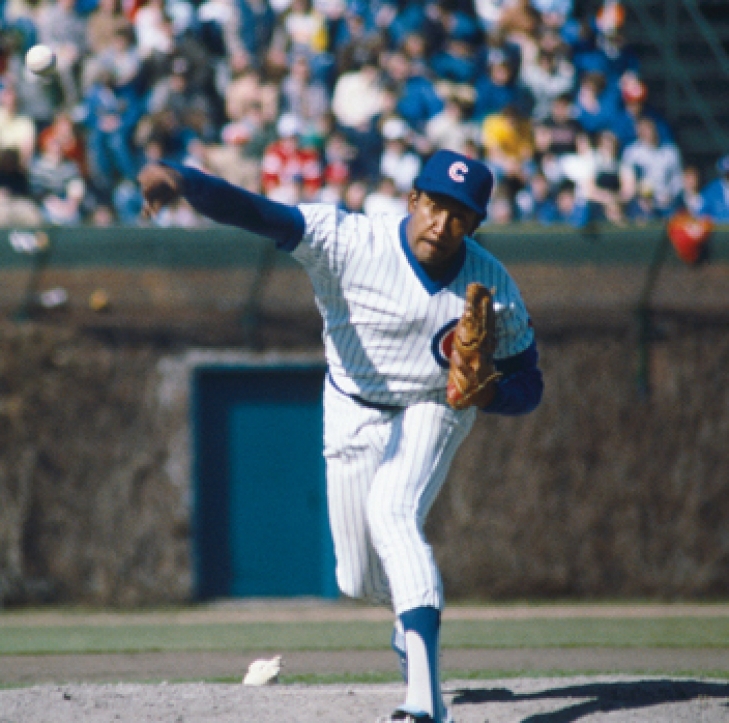
When Ferguson Jenkins arrived in Chicago in 1966, the Philadelphia Phillies thought they were trading away a spare part. Instead, they handed the Cubs the greatest pitcher in the history of the franchise. Jenkins didn’t just break out in 1967; he detonated, winning 20 games and signaling the start of a six-year reign of durability that has few parallels in the modern game. For a generation of Cubs fans, a Jenkins start meant one thing: the bullpen could take the afternoon off.
His run was defined by a surgical, almost defiant precision. In an era of flamethrowers, Fergie was a master of command. From 1967 to 1972, he rattled off six consecutive 20-win seasons, a feat of pure stamina that seems impossible by today’s standards. The apex of this "Workhorse Era" arrived in 1971, a season in which he led the league with 24 wins and 30 complete games, capturing the National League Cy Young Award. He wasn't just winning; he was embarrassing hitters with his control, leading the league in strikeout-to-walk ratio for three straight years. While he was occasionally susceptible to the long ball at Wrigley, it was a byproduct of his aggression; he challenged every hitter, every time, and more often than not, he won.
After a productive detour in Texas and Boston, the story came full circle in 1982. Jenkins returned to the North Side for a two-season encore, a veteran "statesman" run that allowed a new generation of fans to witness the tail end of his brilliance. He retired in 1983 as the franchise leader in strikeouts (2,038) and WHIP (1.123), a testament to his refusal to give away free passes.
The final chapters of the Jenkins epic were written in gold. He became the first Canadian-born player inducted into Cooperstown in 1991, and in 2009, the Cubs finally hoisted his number 31 to the foul pole, sharing the honor with fellow legend Greg Maddux. When the team unveiled a statue of him outside Wrigley Field in 2022, it was the final, permanent acknowledgement of what the record books already showed: Ferguson Jenkins was the standard by which all other Chicago hurlers are measured. He arrived as a trade-market afterthought and left as onr the finest hurlers in club history.