

8. Willie McCovey
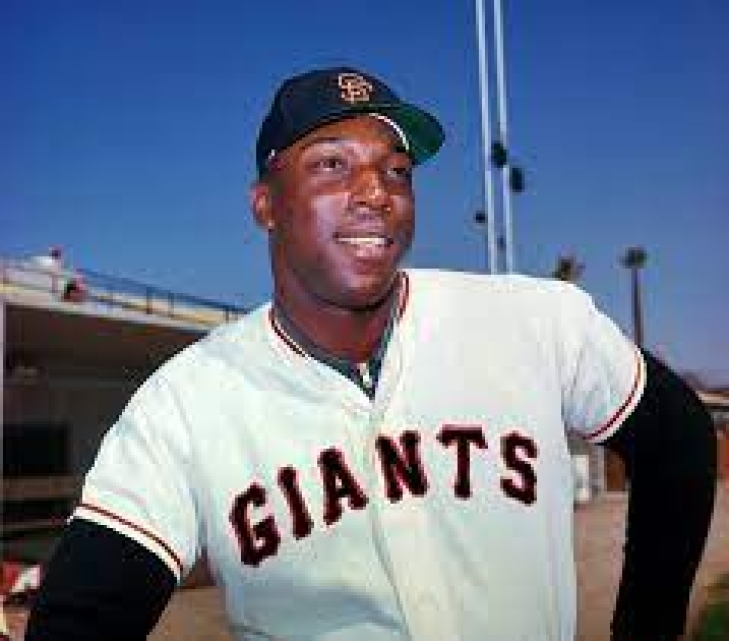
Having a marquee figure like Willie Mays at the center field might be enough for many teams, but the San Francisco Giants proved that a truly legendary lineup can include two Willies. Signed as an amateur free agent in 1955, Willie McCovey spent four years in the minors before making a spectacular debut. When he arrived in San Francisco on July 30, 1959, the tall left-handed first baseman dominated National League pitchers in the last two months of the season, hitting .354 with 13 home runs in just 52 games. Despite only 219 plate appearances in a relatively weak rookie class, his impressive 1.085 OPS earned him unanimous National League Rookie of the Year honors.
To be fair, McCovey's quick rise to fame was soon followed by a tough sophomore year. Opponents’ scouting reports adapted in 1960, dropping his batting average below .240 and leading to a temporary demotion to the minors to refine his mechanics. During the early 1960s, he showed enormous raw power but struggled with consistent performance, sometimes appearing as a mere platoon player rather than an elite middle-of-the-order hitter.
The major evolutionary breakthrough occurred in 1963 when McCovey unlocked his full potential, hitting a league-high 44 home runs and earning his first All-Star selection. After a short decline due to injury in 1964, he bounced back strongly, dominating the National League by hitting at least 30 home runs for six straight summers.
He secured consecutive home run titles, hitting 36 in 1968 and a personal best of 45 in 1969. During those dominant seasons, McCovey consistently led the Senior Circuit in RBIs, slugging percentage, and OPS. His exceptional 1969 performance earned him the National League Most Valuable Player Award, confirming his status as one of the top hitters globally. He kept his elite form into 1970, winning his third consecutive titles in slugging and OPS.
While his heavy, thunderous bat remained a dangerous weapon into the early 1970s, the franchise’s financial and competitive fortunes began to sour. Seeking to shed payroll and pivot toward a youthful roster, the front office engineered an emotional trade, shipping their veteran icon south to the San Diego Padres after the 1973 season.
Yet, true legends often find their way back home. McCovey executed a poetic final arc by returning to the Bay Area as a free agent in 1977.
Though his physical tools were facing a natural, age-related decline, the beloved first baseman provided four final summers of crucial veteran leadership and occasional power before officially walking away from the diamond in 1980.
The slugger blasted 521 Home Runs, 469 with the Giants, while also collecting 1,974 Hits and 1,388 RBI for the team. The Baseball Hall of Fame inducted McCovey in his first year on the ballot in 1986. The Giants also retired his number 44 in 1980, and he was chosen for the inaugural class of the Giants Wall of Fame in 2008.
RIP: Willie McCovey
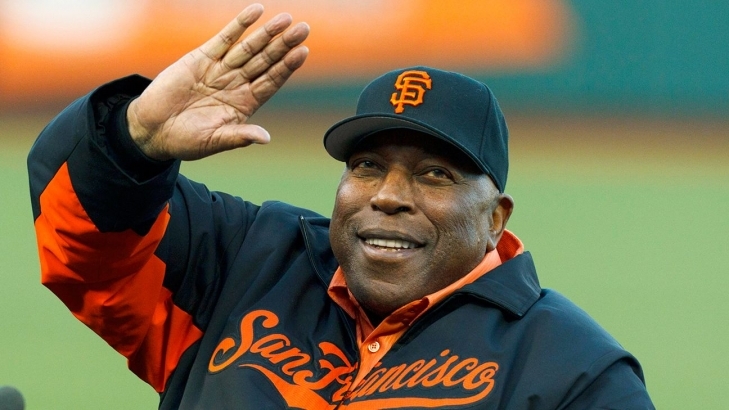
It is a sad day for baseball and the city of San Francisco as Willie McCovey passed away at the age of 80. It is not known at this time as to how he passed away.
Debuting for the San Francisco Giants in 1959, he would make an immediate impact going four for four his first game, against future Hall of Famer, Robin Roberts. Amazingly, that game was on July 30, and he was so dominant the rest of the year that he was the 1959 Rookie of the Year. So much was expected of McCovey but over the next few seasons it appeared the man they called “Stretch” was going to be a fluke. McCovey was a First Baseman, but Orlando Cepeda played there and was hesitant to move positions and McCovey was moved to the Outfield where he struggled. His bat also left him and he never seemed to have his groove again until 1963. Saying all of this, he was just a great power hitter that in 1962 he hit 20 Home Runs in just 262 Plate Appearances and he was a help to the Giants in winning the National League Pennant.
1963 would see him have a good season, as he would be chosen for the first of six All Star Games and led the NL in Home Runs. 1964 saw another regression, but from 1965 to 1970 he would never have less than 30 Home Runs and his second and third Home Run Title highlighted this where in 1968 and 1969 he blasted 36 and 45 dingers respectively. He would also win the RBI Titles those seasons and he was the leader in Slugging and OPS from 1968 to 1970. 1969 was by far the best of the lot as not only did he have those incredible power numbers he batted .320 and had a league leading .453 OBP en route to being named the National League MVP.
Willie McCovey would play for the Giants until he was traded to the San Diego Padres in 1973. He would later play in Oakland before signing back with the Giants where he would finish out his career in 1980.
He would enter the Baseball Hall of Fame in 1986 on the first ballot.
We here at Notinhalloffame.com would like to extend our condolences to the friends and family of Willie McCovey at this time.
