

The Pro Football Hall of Fame Revisited Project: 2002 Final VOTE
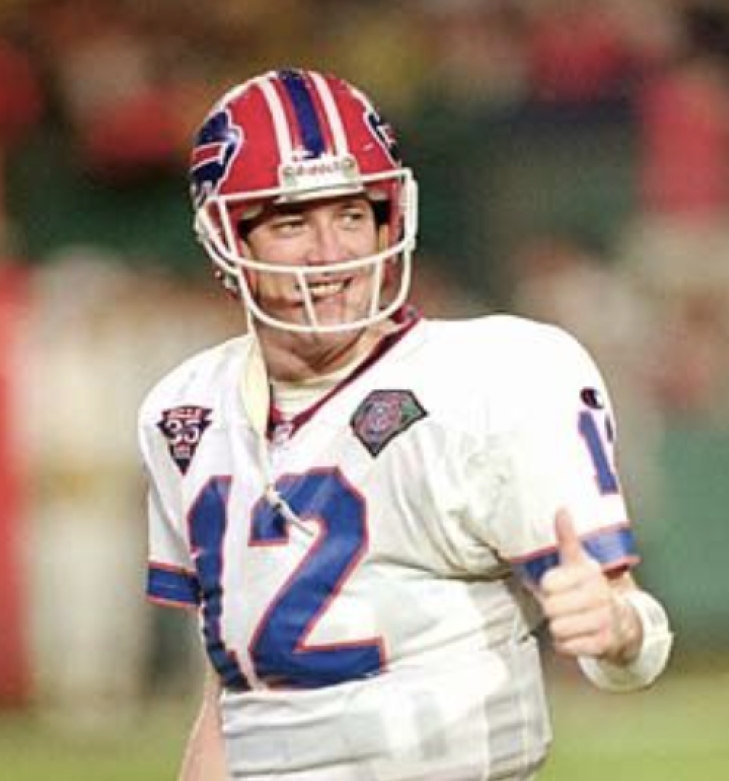
2002 Pro Football Hall of Fame Revisited Project Class.
Here we are! Again!!
If you have been following our Pro Football Hall of Fame Revisited Project, you know we have asked the question: What if the PFHOF had begun in January 1946?
After soliciting and obtaining a passionate group of football fans and historians, we sent out a ballot for a Preliminary Vote, in which each voter selected 25 names as their semi-finalists and five names for the Senior Pool.
We then asked the group to vote for their 15 Finalists in the Modern Era and 3 in the Senior Category. The final stage was to vote for their five Modern Era inductee and one Senior inductee.
These are the results of the 57th official class.
Below are the final results of this project based on 38 votes.
Remember that we have reverted back to the top five candidates entering the Hall in the Modern Era
This is for the “Modern Era”
*Bold indicates they have been elected to the Pro Football Hall of Fame Revisited Class of 2002:
|
Player |
Year of Eligibility |
Vote Total |
|
Jim Kelly QB |
1 |
18 |
|
Joe Jacoby T |
4 |
15 |
|
Cliff Harris DB |
18 |
13 |
|
Billy “White Shoes” Johnson |
9 |
11 |
|
Ken Stabler QB |
13 |
9 |
|
Rickey Jackson LB-DE |
2 |
9 |
|
Winston Hill T |
20 |
8 |
|
Curley Culp DT-NT |
16 |
8 |
|
Ken Anderson QB |
11 |
8 |
|
Joe Klecko DE-NT |
9 |
7 |
|
George Kunz T |
17 |
6 |
|
Drew Pearson WR |
14 |
6 |
|
Ken Riley DB |
14 |
6 |
|
Harry Carson LB |
9 |
6 |
|
Todd Christensen TE |
9 |
4 |
|
Mark Gastineau DE |
9 |
3 |
|
Deron Cherry DB |
6 |
3 |
|
Karl Mecklenburg LB |
3 |
3 |
This is for the “Senior Era.”,
*Bold indicates they have been elected to the Pro Football Hall of Fame Revisited Class of 2002.
|
Floyd Little RB |
2 |
13 |
|
Arch Ward CONTRIBUTOR |
13 |
9 |
|
Walt Sweeney G |
2 |
6 |
|
None of the Above |
N/A |
2 |
This is for the “Coaches/Contributors.”,
*Bold indicates they have been elected to the Pro Football Hall of Fame Revisited Class of 2002.
|
Ron Wolf (Executive) |
4 |
11 |
|
Jimmy Johnson (Coach) |
1 |
10 |
|
Jim Finks (Executive) |
14 |
6 |
|
None of the Above |
N/A |
3 |
About the 2002 Inductees:
Jim Kelly, QB, BUF 1986-96: Inducted in the Pro Football Hall of Fame Revisited Project in 2002 on his 1st Ballot. Inducted into the actual Pro Football Hall of Fame in 2002.
After a stellar collegiate career at the University of Miami, Kelly was selected 14th overall by the Bills in the historic 1983 NFL Draft alongside legends like John Elway and Dan Marino. Seeking a different path, he chose to begin his professional career in the upstart United States Football League (USFL) with the Houston Gamblers. In his two seasons there, Kelly completely electrified football by running a dynamic, fast-paced "run-and-shoot" offense. He threw for a massive 5,219 yards and 44 touchdowns in 1984 alone, claiming the league's Most Valuable Player award and proving immediately that his style could dominate the pro ranks.
When the USFL folded, Kelly arrived in Buffalo in 1986 and immediately rejuvenated a struggling franchise. Under head coach Marv Levy and offensive coordinator Ted Marchibroda, Kelly became the masterful architect of the revolutionary "K-Gun" offense. This pioneering, no-huddle system pressured opposing defenses by moving at a blistering pace and preventing personnel substitutions. Orchestrated by Kelly’s sharp decision-making and lightning-fast release, the Bills blossomed into an absolute powerhouse. The offense completely overwhelmed the AFC, culminating in an unprecedented run where they captured four consecutive conference championships from 1990 to 1993.
While the Bills famously fell short on Super Bowl Sunday in all four of those appearances, Kelly's leadership during that era cemented his legacy of toughness and gridiron excellence. Surrounded by high-caliber weapons like Hall of Fame running back Thurman Thomas and wide receiver Andre Reed, Kelly operated as the undisputed general on the field. He consistently showed what many called a "linebacker's mentality," playing through severe injuries and refusing to back down from the era’s physical, intimidating defenses. His ability to lift his team and rally them to the championship game year after year, despite heartbreak, earned him immense respect across the sports world.
Kelly retired after the 1996 season, leaving behind a legacy that placed him among the true passing elite of his generation. Over his 11 NFL seasons, he threw for 35,467 yards, threw 237 touchdowns, and earned five Pro Bowl selections. Including his explosive USFL years, his total professional football output exceeds 45,000 passing yards and 300 touchdowns.
Joe Jacoby, T-G, WAS 1981-93: Inducted in the Pro Football Hall of Fame Revisited Project in 2002 on his 4th Ballot. Was never inducted into the actual Pro Football Hall of Fame.
Joe Jacoby began his professional career as an overlooked underdog, signing with the Washington Redskins as an undrafted free agent in 1981 after playing college football at the University of Louisville. Standing 6-foot-7 and weighing 305 pounds, he was initially mistaken for a defensive lineman by head coach Joe Gibbs and entered training camp as the last offensive lineman on the depth chart. However, Jacoby’s exceptional work ethic, quick footwork, and immense physical power quickly won over the coaching staff, allowing him to defy the odds and earn a starting role by just his second career game.
Once established in the starting lineup, Jacoby became a founding member and the anchor of “The Hogs,” Washington’s renowned offensive line of the 1980s and early 1990s. Alongside teammates like Russ Grimm, Jeff Bostic, Mark May, and George Starke, Jacoby formed the heart and soul of a dominant front five that redefined physical, power-running football in the NFL. This legendary unit paved the way for Hall of Fame running back John Riggins and protected a rotating cast of championship quarterbacks, establishing Washington as a premier powerhouse of the era.
Over his 13-year career, Jacoby reached the pinnacle of team success by helping lead the franchise to four Super Bowl appearances and capturing three championship rings (Super Bowls XVII, XXII, and XXVI). He played an iconic role in Washington's first championship victory in Super Bowl XVII, serving as the lead blocker on John Riggins’ famous 43-yard fourth-down touchdown run that sealed the game against the Miami Dolphins. His versatility shone throughout these championship runs, as he locked down opposing pass rushers while starting three Super Bowls at left tackle and one at right tackle.
Jacoby's individual accolades firmly cemented his legacy as one of the elite linemen of his generation. He was selected to four consecutive Pro Bowls from 1983 to 1986 and earned First-Team All-Pro honors. His dominance throughout the decade earned him a coveted spot on the 1980s All-Decade Team.
Cliff Harris, S, DAL 1970-79. Inducted in the Pro Football Hall of Fame Revisited Project in 2002 on his 18th Ballot. Inducted into the actual Pro Football Hall of Fame in 2020.
Legendary Dallas Cowboys scout Gil Brandt recognized Cliff Harris's raw talent at the small NAIA school of Ouachita Baptist University and offered him a free-agent contract. Defying the odds, Harris won a starting safety job as a rookie. Though a mandatory tour of duty in the U.S. Army briefly interrupted his debut season, he returned to training camp in 1971, immediately reclaimed his starting role, and remained an immovable anchor in the Dallas secondary for the rest of the decade.
Once established, Harris became the feared centerpiece of Dallas's legendary “Doomsday Defense,” entirely redefining how the free safety position was played in the NFL. Known for his relentless aggression and bone-rattling hits, he earned the iconic nickname “Captain Crash”. Opposing coaches and players deeply respected his physical dominance; former Washington coach George Allen once described Harris as a "rolling ball of butcher knives." He paired this ferocity with an analytical mind, using his college background in physics to master angles and leverage, which let him bait quarterbacks into costly mistakes.
Throughout his 10-year career, Harris was synonymous with postseason success, helping lead the Cowboys to five Super Bowl appearances and two world championships (Super Bowls VI and XII). He was a rare, complete athlete who refused to leave the field, serving as one of the league's premier kick and punt returners alongside his defensive duties—notably averaging an elite 28.4 yards per kick return in 1971. Across 141 regular-season games, his ball-hawking instincts led to 29 career interceptions and 16 fumble recoveries, making him a constant threat to flip field position.
Harris’s individual accolades cemented his legacy as one of the most dominant defensive players of his generation. He was selected to six consecutive Pro Bowls from 1974 to 1979 and earned first-team All-Pro honors four times. He was named to the NFL 1970s All-Decade Team and was inducted into the Dallas Cowboys Ring of Honor in 2004.
Billy “White Shoes” Johnson, WR-ST, HOU 1974-80, ATL 1982-87 & WAS 1988. Inducted in the Pro Football Hall of Fame Revisited Project in 2002 on his 9th Ballot. Was never inducted into the actual Pro Football Hall of Fame.
Billy “White Shoes” Johnson entered the NFL as a massive longshot, selected by the Houston Oilers 365th overall in the 1974 draft. Standing just 5-foot-9 and weighing 170 pounds, scouts largely dismissed him due to his small stature and the fact that he played at Widener University, a tiny Division III school. However, Johnson possessed blazing speed and dynamic field vision that quickly translated to the professional level. He instantly became a focal point of Houston’s special teams, leading the NFL in total return yards with 1,194 as a rookie and cementing his place as an elite weapon.
Beyond his electric speed, Johnson reshaped professional football's cultural fabric by pioneering the modern touchdown celebration. After making a dare in high school to dye his cleats white—which gave rise to his famous moniker—he brought that flair to the NFL gridiron. Whenever he crossed the goal line, Johnson broke into an elaborate, knee-shaking dance known as the "Funky Chicken" or the "White Shoes Shuffle." At a time when the league heavily discouraged showmanship, his eccentric, crowd-pleasing end zone celebrations captivated fans and laid the groundwork for future generations of player celebrations.
On the field, Johnson was far more than an entertainer; he was one of the most productive and feared weapon configurations of his era. After establishing himself as a multi-time Pro Bowler with the Oilers, devastating knee injuries in 1978 and 1979 threatened to derail his career. Following a brief stint in the Canadian Football League, he made a triumphant return to the NFL with the Atlanta Falcons in 1982. His resurgence culminated in a spectacular 1983 season where he caught a career-high 64 passes for 709 yards, earned NFL Comeback Player of the Year honors, and secured his final Pro Bowl selection.
By the time he finished his 14-season career in 1988 with the Washington Redskins, Johnson had amassed 10,785 all-purpose yards and 33 total touchdowns. His remarkable consistency across multiple eras earned him a rare spot on both the NFL 1970s and 1980s All-Decade Teams, and he is in the Tennessee Titans Ring of Honor.
Ken Stabler, QB, OAK 1970-79, HOU 1980-81 & NOR 1982-84. Inducted in the Pro Football Hall of Fame Revisited Project in 2002 on his 13th Ballot. Inducted into the actual Pro Football Hall of Fame in 2016.
Ken “The Snake” Stabler began his pro career as a patient understudy after the Oakland Raiders selected him in the second round of the 1968 draft. Coming out of the University of Alabama, the left-handed quarterback didn't see his first game action until 1970 and spent his early years backing up established veterans Daryle Lamonica and George Blanda. Stabler finally seized the starting job in 1973. His cool demeanor under pressure, exceptional accuracy, and distinctively rebellious swagger captured the renegade spirit of Al Davis's Raiders, quickly making him the focal point of their offense.
Once established at the helm, Stabler orchestrated one of the most dominant eras in franchise history under legendary head coach John Madden. He famously guided the Silver and Black to five consecutive AFC Championship Game appearances from 1973 to 1977. The pinnacle of his individual success came in 1974 when he was named the NFL Most Valuable Player and AP Offensive Player of the Year after leading the league in passing touchdowns. His peak collective achievement came two seasons later, when he led the 1976 Raiders to a dominant 13-1 regular-season record and a Super Bowl XI title with a 32-14 victory over the Minnesota Vikings.
Stabler's career was defined by his uncanny ability to deliver in clutch moments, serving as the signal-caller for some of the most iconic, lore-heavy plays in NFL history. He threw the game-winning touchdown pass in the famous 1974 "Sea of Hands" playoff game against the Miami Dolphins, executed the legendary "Ghost to the Post" pass to Dave Casper in 1977, and was at the center of the chaotic 1978 "Holy Roller" play against San Diego. After a decade in Oakland—where he solidified his status as the franchise's all-time leader in quarterback wins—he was traded to the Houston Oilers in 1980 and later completed his 15-season playing career with the New Orleans Saints, retiring in 1984.
By the time he stepped away from the gridiron, Stabler had completed 2,270 passes for 27,938 yards and 194 touchdowns, leaving the game with a 59.8% completion percentage that trailed only Joe Montana at the time. A four-time Pro Bowler and member of the NFL 1970s All-Decade Team, Stabler’s gruff exterior epitomized 1970s football.
Rickey Jackson, LB, NOR 1981-93 & SFO 1994-95. Inducted in the Pro Football Hall of Fame Revisited Project in 2002 on his 2nd Ballot. Inducted into the actual Pro Football Hall of Fame in 2010.
Rickey Jackson began his pro career as a trailblazing cornerstone for a franchise desperately seeking an identity, selected by the New Orleans Saints (51st overall) in 1981. Coming out of the University of Pittsburgh—where he anchored a defense that ranked number one in the nation—the imposing 6-foot-2 linebacker made an immediate, undeniable impact in the pros. In his rookie season, Jackson led the Saints with 125 tackles and eight sacks, flashing the combination of brute strength, sideline-to-sideline speed, and relentless edge-rushing ability that would define his Hall of Fame career.
As his career progressed, Jackson became the undisputed linchpin and heart of "The Dome Patrol," widely regarded as the greatest linebacking corps in NFL history. Alongside teammates Sam Mills, Vaughan Johnson, and Pat Swilling, Jackson terrorized opposing offenses throughout the late 1980s and early 1990s under head coach Jim Mora. This vaunted defensive unit reached a historic pinnacle in 1992 when all four starting linebackers were voted to the Pro Bowl together—an unprecedented feat that has never been duplicated in NFL history. Known for his ferocious toughness, Jackson missed only two games across his 13-year tenure in New Orleans, even playing a significant portion of the 1989 season with his jaw wired shut after an automobile accident.
Jackson’s relentless, ball-hawking defense successfully transformed the Saints from perennial underdogs into true playoff contenders. Before his arrival, the franchise had never achieved a winning season; with Jackson leading the way, New Orleans posted seven straight winning seasons, capturing its first-ever division title in 1991. Looking for a championship ring to cement his legacy, Jackson joined the San Francisco 49ers for his final two seasons in 1994, transitioning into a specialist role on the defensive line. The move paid off immediately as he started at defensive end and hoisted the Lombardi Trophy following a commanding 49-26 victory over the San Diego Chargers in Super Bowl XXIX
By the time he retired after the 1995 season, Jackson had compiled one of the most prolific defensive stat lines in league history, registering 227 regular-season games, eight interceptions, 44 forced fumbles, and 28 opponent fumble recoveries—a total that ranked second all time at the time of his departure. He amassed 128 official career sacks (and 136 total, including his 1981 rookie season before it became an official stat). A six-time Pro Bowler and four-time first-team All-Pro, he was the first player who spent the bulk of his career in New Orleans to enter Canton…and this project!
Floyd Little, RB, DEN 1967-75. Inducted in the Pro Football Hall of Fame Revisited Project in 2002 on his 2nd Senior Ballot. Inducted into the actual Pro Football Hall of Fame in 2010.
Floyd Little began his legendary professional career as a highly coveted trailblazer, selected sixth overall in the 1967 AFL-NFL Common Draft by the Denver Broncos. Following a stellar career at Syracuse University—where he famously inherited the iconic No. 44 jersey previously worn by Jim Brown and Ernie Davis—Little made history by becoming the very first first-round draft pick to sign with the Broncos. His decision instantly injected credibility into the struggling American Football League (AFL) franchise, and he was named a team captain during his rookie season, a leadership mantle he held for all nine years of his career.
In his early professional seasons, Little’s multi-dimensional talents were primarily utilized to supercharge Denver's special teams and return game. As a rookie in 1967, he led the AFL in punt returns with an electric 16.9-yard average, highlighted by a spectacular 72-yard touchdown return against the New York Jets. He also led the league in combined yards during his first two seasons, establishing himself as one of the most dangerous and explosive weapons in the open field. As he masterfully adjusted to the professional level, the Broncos coaching staff steadily shifted him into a traditional workhorse role out of the backfield.
Once cemented as the offensive focal point, Little became the premier running back of his generation despite playing on chronically short-handed Broncos teams that failed to reach the postseason. He led Denver in rushing for seven consecutive seasons—the longest streak in franchise history—and captured the NFL rushing title in 1971 by racking up 1,133 yards and six touchdowns. His peak scoring year arrived in 1973, when he tied for the NFL lead in rushing touchdowns. Beyond the stat sheet, Little was widely credited with saving the franchise; his immense popularity and electrifying play single-handedly energized the fan base, leading directly to the expansion of Mile High Stadium and preventing the team from relocating.
By the time he retired after the 1975 season, Little had compiled 6,323 rushing yards, 2,418 receiving yards, and 54 total touchdowns. Over his nine-season career, he amassed 12,157 all-purpose yards, making him one of only a handful of players in NFL history to average over 100 all-purpose yards per game. A five-time Pro Bowler and a first-team All-Pro, Little was part of the inaugural class inducted into the Denver Broncos Ring of Fame in 1984, alongside the retirement of his No. 44 jersey
Ron Wolf, Executive, OAK 1963-74 & 1979-89 (Scout), TB 1976-78 (VP), NYJ (Personnel Director) & GNB 1991-2000 (General Manager). Inducted in the Pro Football Hall of Fame Revisited Project in 2002 on his 1st Coaches/Conrtibutors Ballot. Inducted into the actual Pro Football Hall of Fame in 2014.
Ron Wolf began his legendary professional football career in 1963 when he was hired as a talent scout by Al Davis for the Oakland Raiders. Under Davis's mentorship, Wolf learned the art of player evaluation from the ground up, developing a keen eye for premium talent. Over two separate tenures spanning 23 years with the Raiders, he climbed the ranks to become the team’s player personnel director. His draft selections and personnel acumen laid the foundation for the franchise's fiercest rosters, contributing heavily to nine division titles, three Super Bowl appearances, and world championships in Super Bowls XV and XVIII.
In 1975, Wolf's stellar reputation earned him the opportunity to build a franchise from scratch when he was named the first Vice President of Operations and General Manager for the expansion Tampa Bay Buccaneers. Tasked with an incredibly difficult expansion draft layout, Wolf systematically drafted core players—including Hall of Fame defensive end Lee Roy Selmon—who formed the bedrock of the young team. Though he returned to the Raiders before seeing the ultimate payoff, his foundational blueprint famously culminated in the Buccaneers reaching the NFC Championship Game by just their fourth season of existence.
The true crowning achievement of Wolf’s career began in late 1991 when he was hired as the Executive Vice President and General Manager of the Green Bay Packers, a storied franchise that had suffered through 24 years of losing and mediocrity. Wolf immediately set out to completely dismantle the team's losing culture. Within his first few months on the job, he made two franchise-altering moves: hiring San Francisco 49ers offensive coordinator Mike Holmgren as head coach and executing a bold trade with the Atlanta Falcons for an unproven, backup quarterback named Brett Favre. Shortly after, Wolf shook the landscape of the entire NFL by signing premier Reggie White in free agency, proving that even small-market Green Bay could attract elite talent.
Wolf's masterful roster configuration completely resurrected the Packers, leading them to a spectacular 92-52 record during his nine-season tenure. Under his guidance, the team never recorded a single losing season, won three consecutive NFC Central titles, and made back-to-back Super Bowl appearances, highlighted by a victory over the New England Patriots in Super Bowl XXXI. Beyond his team's success, Wolf established an executive coaching tree that produced six future NFL general managers.
