

Our All Time Top 50 St. Louis Cardinals have been revised to reflect the 2025 Season

Yes, we know that this is taking a while!
As many of you know, we at Notinhalloffame.com are slowly generating the top 50 of each major North American sports team. That being said, we maintain and update our existing Top 50 lists annually. We are pleased to present our pre-2026 revision of our top 50 St. Louis Cardinals.
As for all of our top 50 players in baseball, we look at the following:
1. Duration and Impact.
2. Traditional statistics and how they finished in Major League Baseball.
3. Advanced Statistics.
4. Playoff performance.
5. Their respective legacy on the team.
6. How successful the team was when he was there.
7. Respecting the era in which they played.
Criteria 1-4 will make up the lion’s share of the algorithm. Please note that we have implemented this for the first time. This has changed the rankings all throughout the board.
Last year, the Cardinals had a losing record of 78-84 and limped to a fourth-place finish in the National League Central. As a team with a century-plus history and in a rebuilding state, there were no new entrants and no active players; however, the new algorithm showed fluctuations in the list.
As always, we present our top five, which saw no changes.
1. Stan Musial
2. Albert Pujols
3. Rogers Hornsby
4. Bob Gibson
5. Ozzie Smith
You can find the entire list here.
We thank you for your continued support of our lists on Notinhalloffame.com.
Our All Time Top 50 St. Louis Cardinals have been revised to reflect the 2024 Season

Yes, we know that this is taking a while!
As many of you know, we at Notinhalloffame.com are slowly generating the top 50 of each major North American sports team. That being said, we have existing Top 50 lists and consistently look to update them when necessary and based on necessity. As such, we are delighted to present our post-2024 revision of our top 50 St. Louis Cardinals.
As for all of our top 50 players in baseball, we look at the following:
1. Advanced Statistics.
2. Traditional statistics and how they finished in the National League.
3. Playoff accomplishments.
4. Their overall impact on the team and other intangibles that are not reflected in a stat sheet.
Please note that our algorithm has changed, which yielded minor changes throughout the baseball lists.
Last year, the Cardinals won 83 Games, but did not make the playoffs. The rebuilding squad saw minimal movement in the top 50, and the only new entrant was based on the new algorithm.
As always, we present our top five, which saw no changes
1. Stan Musial
2. Albert Pujols
3. Rogers Hornsby
4. Bob Gibson
5. Ozzie Smith
You can find the entire list here.
The only new addition was Ripper Collins, who as discussed above, enters via the new system.
We thank you for your continued support of our lists on Notinhalloffame.com.
Our All-Time Top 50 St. Louis Cardinals Have Been Revised to Reflect the 2023 Season
Yes, we know that this is taking a while!
As many of you know, we here at Notinhalloffame.com are slowly generating the top 50 of each major North American sports team. That being said, we have existing Top 50 lists out, and we always consistently look to update them when we can and based on necessity. As such, we are very happy to present our post-2023 revision of our top 50 St. Louis Cardinals.
As for all of our top 50 players in baseball, we look at the following:
1. Advanced Statistics.
2. Traditional statistics and how they finished in Major League Baseball.
3. Playoff accomplishments.
4. Their overall impact on the team and other intangibles that are not reflected in a stat sheet.
Last year, St. Louis had a very disappointing season, and were nowhere close to the playoffs. Regardless, there was one new entrant and one change.
As always, we present our top five, which saw no changes:
1. Stan Musial
4. Bob Gibson
5. Ozzie Smith
You can find the entire list here.
Adam Wainwright reached 200 Wins last year, but bluntly, he was not very good. He had an ERA near 8 and a bWAR of -2.0. As such, he dropped a spot, going from #10 to #11.
The only new entrant was Paul Goldschmidt. The 2022 National League MVP debuts at #46.
We thank you for your continued support of our lists on Notinhalloffame.com.
Our All-Time Top 50 St. Louis Cardinals have been revised to reflect the 2022 Season

Yes, we know that this is taking a while!
As many of you know, we here at Notinhalloffame.com are slowly generating the 50 of each major North American sports team. That being said, we have existing Top 50 lists out and we always consistently look to update them when we can and based on necessity. As such, we are very happy to present our post 2022 revision of our top 50 St. Louis Cardinals.
As for all of our top 50 players in baseball we look at the following:
1. Advanced Statistics.
2. Traditional statistics and how they finished in the National League.
3. Playoff accomplishments.
4. Their overall impact on the team and other intangibles not reflected in a stat sheet.
Last year, the storied history of the Cardinals saw another playoff appearance, but with the 100 years more of existence, it is hard to crack into the top 50. There are noe new entrants into the top 50, with only one elevation.
As always, we present our top five, which had no changes.
1. Stan Musial
3. Bob Gibson
5. Ozzie Smith
You can find the entire list here.
Please note that Pujols, who returned to St. Louis for one final season, was not able to overtake Musial for the top spot.
The only change was Starting Pitcher, Adam Wainwright, who inched up one rank to #10.
We welcome your input and comments and as always, we thank you for your support.
3. Rogers Hornsby
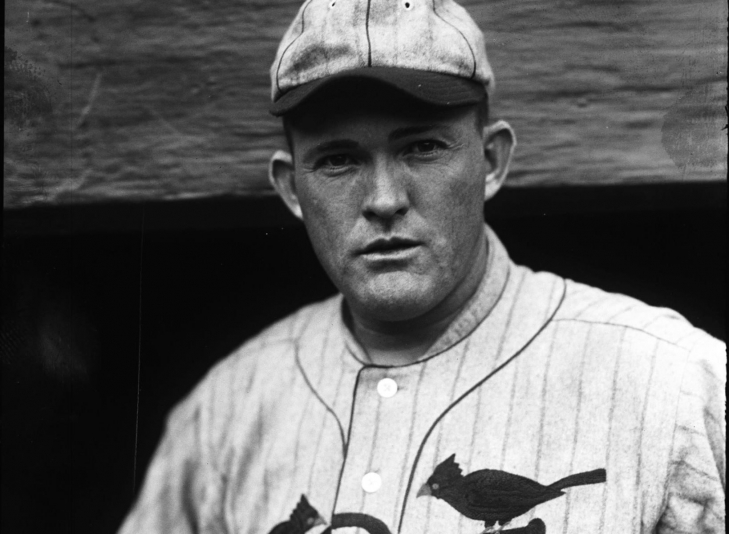
Although debates regarding the definitive placement of contemporary baseball giants relative to historic icons can incite endless discussions across stadium concourses, the sheer mathematical improbability of the accomplishments in the batter's box during the 1920s in St. Louis remains entirely unmatched. Rogers Hornsby not only accumulated hits but also manipulated the physics of right-handed batting to an unparalleled extent in the century since. Upon his arrival in St. Louis in 1915, "Rajah" combined a fierce, resolute personality with a wide, deep-in-the-box batting stance that enabled him to cover the outer half of the plate with formidable leverage. By the advent of the live-ball era, he had established an offensive baseline so overwhelmingly dominant that it fundamentally redefined the scoring ceiling for the entire National League.
His legendary tenure with the Cardinals was characterized by an unprecedented six-year dominance, representing the highest level of sustained offensive output. From 1920 to 1925, Hornsby secured six consecutive National League batting titles, effectively treating the league's pitching staff as a personal testing ground. During this breathtaking stretch, his average mark across more than 3,300 plate appearances was a mind-boggling .402. He systematically commanded every single efficiency filter available, leading the league in on-base percentage and slugging percentage in all six of those magnificent summers.
The crown jewel of this run erupted during a magnificent 1924 regular-season masterpiece, where he terrorized the league to post a spectacular .424 batting average—the highest single-season mark recorded in the modern era of Major League history.
Hornsby was a truly remarkable player, not just a singles hitter who relied on quick, precise hits into the grass. He combined incredible bat control with powerful, high-leverage strength. During his Career, he won two National League home run titles. In the exciting summers of 1922 and 1925, he achieved the prestigious feat of the National League Triple Crown, showcasing his outstanding all-around talent. His 1922 showcase was an unadulterated clinic in run production, as he clobbered 42 home runs and drove in 152 runs while racking up 250 hits.
His advanced analytical anchors are staggering; he finished second all-time in batting average (.358), eighth in on-base percentage (.434), and tenth in slugging (.577), showing unmatched skill in deep counts. Hornsby’s hardware-certified authority directly translated into historic franchise leadership when the front office named him player-manager midway through the 1925 schedule. The following autumn, Hornsby orchestrated the ultimate pinnacle of team success when he guided St. Louis to a World Series Championship.
His combative nature led to a sudden career exit after a contract dispute with Sam Breadon over exhibition games. Traded to the Giants in the offseason, he ended his peak years in St. Louis. He played as a hired gun, earning MVP with the Cubs and excelling with the Giants and Braves, ending as player-manager for the Browns.
Across his 13 active seasons with the franchise, Hornsby accumulated 2,110 hits, 367 doubles, 169 triples, and 143 home runs alongside a spectacular .359 batting average in 1,580 games. He was elected to the Baseball Hall of Fame in 1942, and the Cardinals named him as one of the members of their franchise Hall of Fame in 2014. The Redbirds also honored him on the left field wall in 1997 with a logo and his name.
