

1. Rickey Henderson
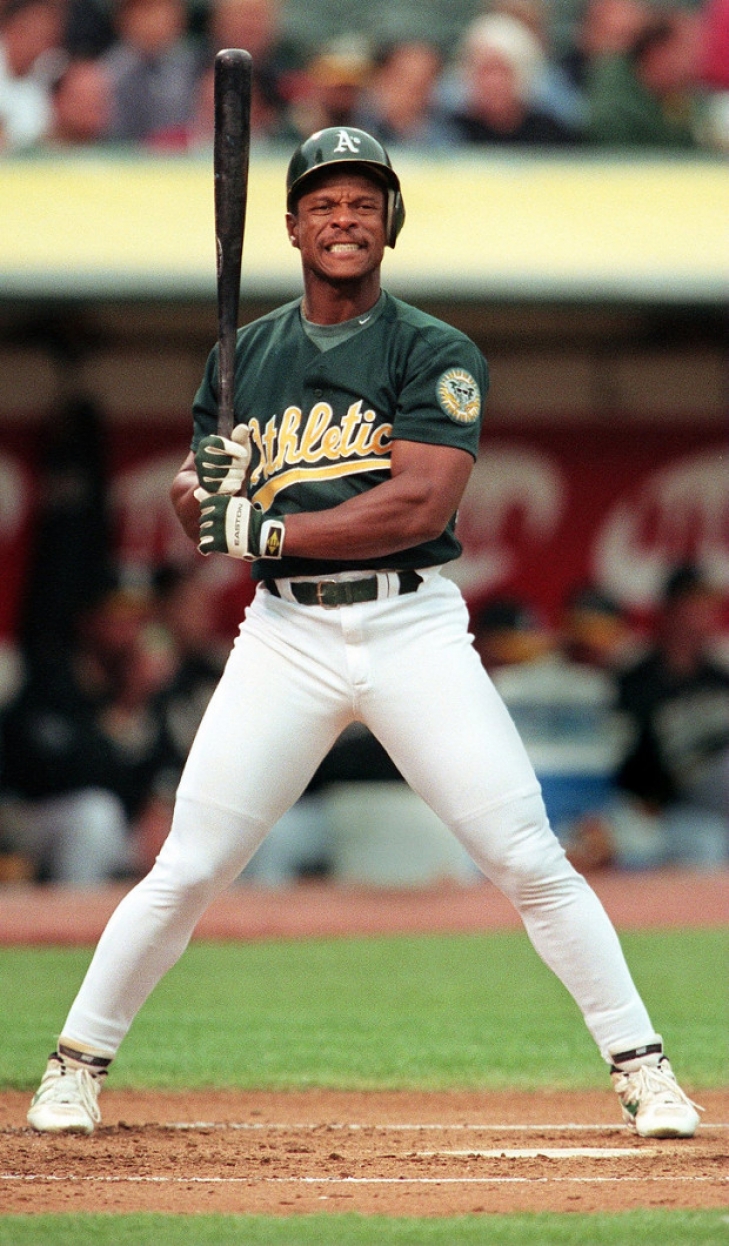
Rickey Henderson is a lot of things. He is eccentric. He often refers to himself in the third person. He is the greatest leadoff hitter ever. He is the ultimate base stealer. He was a first ballot Hall of Famer.
He is all of those things.
Despite all of the other teams he played for (New York Yankees, Toronto, San Diego, Anaheim, New York Mets, Seattle, Boston, and Los Angeles), he is one other thing: an Oakland Athletic.
Henderson debuted for Oakland in 1979, and in 1980 he would set the American League Stolen Base Record with 100 while going to his first All-Star Game. The following season was strike-shortened, but Henderson was again the Stolen Base leader (56) and would lead the AL in Runs Scored (89), Hits (135), and he was the runner-up for the American League MVP. He would also earn his only Gold Glove this year and received his first Silver Slugger Award.
The fleet-footed Outfielder would break the AL record for Stolen Bases that he set in 1980 with a 130 SB season that set the standard regardless of the league. He would have another 108 Stolen Bases in 1983 and 66 in 1984, both of which were league leading. Henderson also established himself as a solid hitter who, in his first five full seasons (1980-84, not counting 1979), never had an On Base Percentage under .398. This was an impressive run, but it ended when he was traded to the New York Yankees before the 1985 season. This was still the beginning and not the end.
Henderson was traded back to Oakland during the 1989 season, and the A’s, who were already loaded with talent, were going for it all. Henderson helped Oakland win the World Series that year, which would be the only one he would capture as an Athletic. He would have his best season ever in 1990, where he won the MVP by hitting a career-high 28 Home Runs and leading the AL in Runs Scored (119), OBP (.439), OPS (1.016), and batting .325. The Athletics went to the World Series that year but were shocked by the Cincinnati Reds, who swept them in four games. Henderson remained strong for Oakland but was traded to the Toronto Blue Jays midway through the 1993 season, and he would help them win the World Series. In the off-season, he resigned with Oakland.
This period would begin his nomadic run, as he was with A's for only two seasons and would sign with the Padres as a Free Agent after. He came back in 2008 for his fourth run, which lasted only one season, though it was a good one that yielded his last Stolen Base title.
When it was all said and done, Rickey Henderson would accumulate 1,270 runs and 1,768 Hits. 167 Home Runs, 867 Stolen Bases with a Slash Line of .288/.409/.430 as an Athletic.
As of this writing, he is the all-time leader in Runs Scored (2,295) and Stolen Bases (1,406), much of which was accumulated in Oakland, which, as you saw above, was an awful lot!
2. Lefty Grove
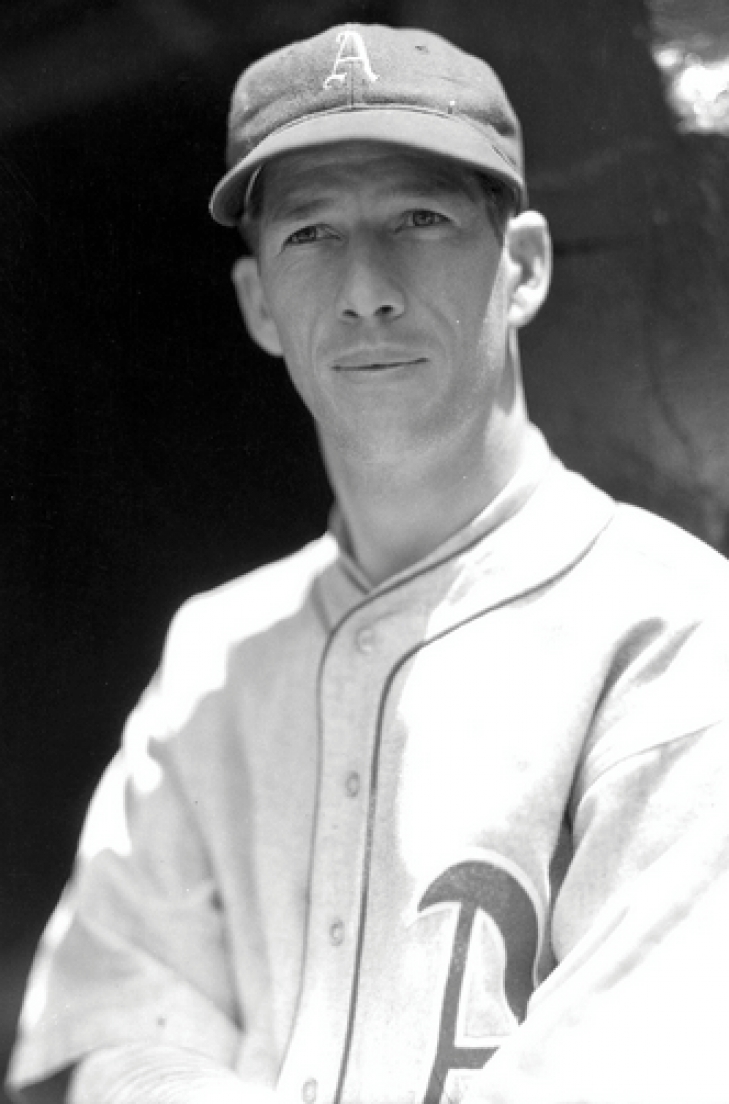
There were a lot of different players to consider when we were looking at the greatest Athletic of all-time.
8. Rube Waddell
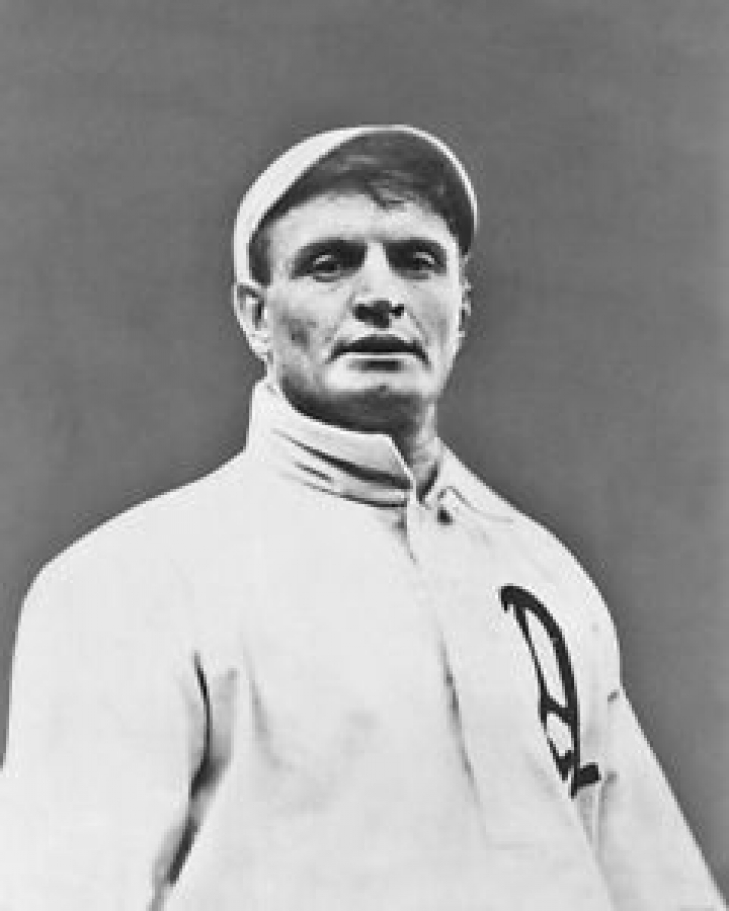
George Edward “Rube” Waddell arrived in Philadelphia in June 1902 under the patient, paternal watch of manager Connie Mack, who had previously managed the brilliant left-hander in the minor leagues. The Athletics were well aware of his reputation as an unpredictable eccentric, but Mack also recognized that beneath the erratic behavior lived a southpaw with unparalleled talent.
His time in Philadelphia was marked by an extraordinary ability to strike out batters, even in an era when contact was prioritized. Waddell set a historic standard by leading the American League in strikeouts during all six of his seasons with the team, including a remarkable 349-strikeout season in 1904 that remained a modern major league record for over sixty years. The 1905 season was his peak, as he achieved the rare AL pitching Triple Crown by leading the league in wins (27), strikeouts (287), and posting a 1.48 ERA. He was a dominant force on the mound, winning at least 20 games in his first four seasons with the team and leading the league in FIP four times.
His extraordinary talent was consistently overshadowed by a chaotic off-field life that often challenged the organization. Waddell's lack of emotional maturity, combined with a serious struggle with alcoholism, frequently distracted from his brilliance; he was known to abandon his team to chase fire engines, play marbles with kids under the stands, or go fishing unexpectedly. The conflict reached a critical point during the 1905 pennant race. After nearly single-handedly leading the Athletics to the World Series, he was sidelined for the entire Fall Classic due to a strange shoulder injury from a locker-room scuffle over a teammate's straw hat, fueling rumors that gamblers had paid him to sit out.
By the end of the 1907 campaign, his high-maintenance lifestyle and deteriorating relationships with his teammates forced Connie Mack’s hand. The Athletics sold the veteran star to the St. Louis Browns before the 1908 season. His personal demons quickly caught up to him, and he was out of the major leagues by 1910. He spent his final years drifting through the minors before his health collapsed, and he tragically passed away at just 37 from complications of tuberculosis and pneumonia.
With the Athletics, Waddell had a 131-82 record, 1,576 strikeouts, and a brilliant 1.97 ERA. Waddell was chosen for the Baseball Hall of Fame in 1946, and forty years later, his name was etched on the Philadelphia Baseball Wall of Fame. The Athletics would also select Waddell for their franchise Hall of Fame in 2021.
10. Chief Bender
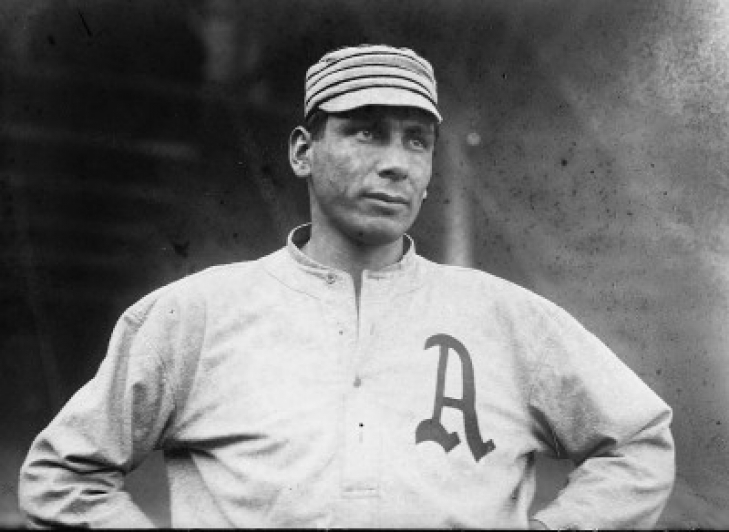
When Charles Albert Bender arrived in Philadelphia before the 1903 season, he brought to the American League one of the most remarkable strategic minds of the Deadball Era. Signed from semipro baseball at just 19, this young Ojibwe right-hander quickly secured a spot on a team already forming a dominant franchise. Under the careful guidance of Connie Mack, Bender quickly gained a reputation as a calm and thoughtful pitcher, using a sweeping breaking ball often recognized as the first slider.
His early seasons established a standard of reliable and precise performance. As a teenager in 1903, he pitched 270 innings, recording 17 wins while maintaining an impressively low walk rate for his age. By 1905, he played a crucial role in the Athletics' pursuit of the pennant, ending the season with a dominant shutout against the New York Giants in the World Series, the only win Philadelphia managed in that Fall Classic.
Over the next five seasons, his performance steadily improved. Instead of just relying on fast pitches, Bender skillfully broke down lineups, gradually lowering his ERA in each season until reaching an exceptional high point. This development peaked in a legendary 1910 season, when he led the league with a remarkable .821 winning percentage, recording a 23-5 record and an impressive 1.58 ERA. In May, he threw a no-hitter against Cleveland, cementing his reputation as the top money pitcher in the game.
As the 1910s began, Bender established himself as the key pitcher in baseball’s first major twentieth-century dynasty. Although Connie Mack often rotated other starters during regular play, he made it clear that Bender would pitch in crucial moments. He led the Athletics to victory in three World Series—1910, 1911, and 1913. His ability to perform under pressure in October became legendary; he consistently completed what he started, once tying the record by pitching three complete games in a single Fall Classic.
The final chapter in Philadelphia saw one more dominant regular-season run in 1914, where he went 17-3 to help secure another pennant. However, a surprising defeat in the World Series, coupled with the financial arrival of the Federal League, prompted Mack to dismantle the roster, ending Bender's twelve-year run in the City of Brotherly Love with a 193-102 record in an A's uniform.
Bender was chosen for the Baseball Hall of Fame in 1953, but he sadly passed away in between when he was elected and the induction ceremony. Bender would later be named to the Philadelphia Baseball Wall of Fame in 1991, and the Athletics Hall of Fame in 2021.
4. Jimmie Foxx
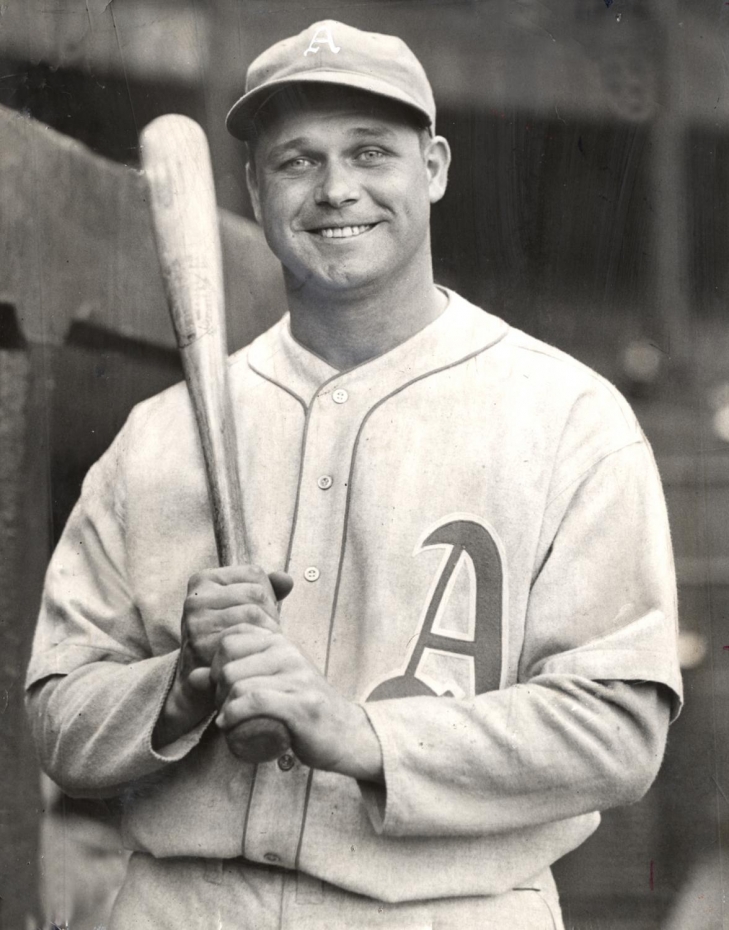
Jimmie Foxx came to Philadelphia in 1925 as a 17-year-old farm boy. He was signed by Connie Mack after being recognized as a local sensation in Maryland. Renowned for his extraordinary physical strength and a swing that generated legendary distance, he was considered the most formidable right-handed hitter of his time. During his 11 seasons with the Athletics, he functioned as the primary source of power for the concluding significant Philadelphia dynasty.
In 1929, Foxx achieved a historic milestone by hitting 33 home runs and leading the league with a .463 on-base percentage. His clutch performance drove the Athletics to their first World Series win in fifteen years, notably batting .350 in the Fall Classic against Chicago. Throughout the franchise's two consecutive championships, he demonstrated complete command of the postseason, finishing with a .344 World Series batting average with the A’s.
In 1932, Foxx achieved a peak of personal productivity, delivering one of the most statistically impressive seasons in sports history. He topped the American League in home runs with a career-best 58, just missing the single-season all-time record, while also leading in RBIs (169), slugging percentage (.749), and OPS (1.218). This exceptional display earned him his first MVP Award, an honor he secured again in 1933 after achieving a Triple Crown with a .356 batting average, 48 home runs, and 163 RBIs. At this height, he was a formidable power hitter, combining raw strength with a strategic approach that enabled him to lead the league in both batting and slugging.
If there was a weakness with Foxx, it was that he struck out a lot and led the league in that less-than-desirable metric five times as an Athletic.
Due to budgetary reasons, the First Baseman was traded to the Boston Red Sox after the 1935 season, and he would continue to be a great player, winning the AL MVP for the third time in 1938. As an Athletic, Foxx would post a sick Slash Line of .339/.440/.640 with 1,492 Hits and 302 Home Runs.
Foxx would enter the Baseball Hall of Fame in 1951, and was chosen for the Philadelphia Baseball Wall of Fame in 1979. Decades later, in 2021, Foxx was elected into the Athletics Hall of Fame.
The Oakland Athletics to retire Dave Stewart's number
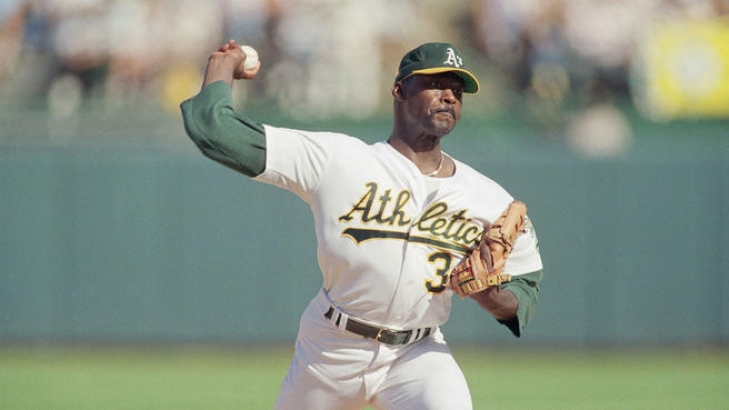
Regular visitors of Notinhalloffame.com know that we are slowly working on the top 50 of every major team in the NHL, NBA, NFL and MLB. Once that is done, we intend to look at how each team honor their past players and executive. As such, it is news to us that the Oakland Athletics have announced that Dave Stewart will have his #34 retired by the team.
This announcement concluded the 30thanniversary celebration of their 1989 World Series Championship.
Stewart was signed early in the 1986 season after being released by the Philadelphia Phillies and prior to that he had unremarkable statistics over five seasons with the Lod Angeles Dodgers and the Texas Rangers. Very few fans of the A’s had reason to think that Stewart would do much with Oakland, and frankly most of them likely never noticed he was signed at all, but it was in Oakland where he would live up to everything that the Dodgers originally envisioned when they converted him to a pitcher almost a decade before.
He would finish the season going 9-5, but in 1987 as a fixture in the A’s rotation, he would go on one of the best four-year runs for a Pitcher in franchise history.
Stewart finished 1987 by leading the AL in Wins (20) and finishing third in Cy Young voting. He was without a doubt the ace of the Oakland staff and in 1988 he would win 21 Games while leading the league in Innings Pitched (275.2). More importantly, Stewart took Oakland to the World Series, though they would lose to the Los Angeles Dodgers. 1989 would again see Stewart win 21 Games and he was the runner-up for the Cy Young. The A’s returned to the World Series (this time winning) where he won two Games in both the ALCS and the World Series winning the MVP in both. In 1990, he would win a career high 22 Games, with a third place Cy Young finish. The A’s returned to the World Series and though they lost to Cincinnati, Stewart was the ALCS MVP on the road to get there.
He would remain with Oakland until he signed with the Toronto Blue Jays after the 1992 Season. As an Athletic, he would post a record of 119-78 and 1,152 Strikeouts.
Stewart becomes the sixth former Athletic to have his number retired as he joins Denis Eckersley, Rollie Fingers, Catfish Hunter, Rickey Henderson and Reggie Jackson.
We here at Notinhalloffame.com would like to congratulate Dave Stewart for earning this prestigious honor.
The Oakland Athletics announce their 2019 HOF Class
Regular visitors of Notinhalloffame.com know that we are slowly working on the top 50 of every major team in the NHL, NBA, NFL and MLB. Once that is done, we intend to look at how each team honor their past players and executive. As such it is news to us that the Oakland Athletics have announced their franchise Hall of Fame Class of 2019.
The six-member class is:
Ron Bergman: Bergman becomes the first journalist to enter the Hall and going forward there will be the Ron Bergman Award, which will be given annually to the journalist for “contributions to the coverage of Athletics”.
Vida Blue: Blue was a member of the A’s three straight World Series wins in the 70s where he was a three-time All-Star. Blue would win the MVP and Cy Young in 1971 when he went 24 and 8 with a 1.82 ERA and 0.952 WHIP. He would win 124 Games with 1,315 Strikeouts.
Bert Campaneris: The Shortstop played for the Athletics from 1964 to 1976 and like Blue was part of A’s dynasty of the early 70s. As an Athletic, Campaneris went to five All-Star Games, would lead the AL in Stolen Bases six times and would accumulate 1,882 Hits.
Walter Hass: Haas bought the team in 1980 and is credited with keeping the team in Oakland. Under his watch, Oakland won the World Series in 1989.
Tony La Russa: La Russa managed Oakland from 1986 to 1995 and had a record of 798 and 673. He would win three American League Pennants (1988-90) with a World Series Title in 1989.
Mark McGwire: McGwire won the Rookie of the Year in 1987 and he would go to nine All-Star Games as an Athletic. He would win the Home Run title twice with Oakland and blasted 363 with an OPS of .931 for the team.
This group joins Dennis Eckersley, Rollie Fingers, Charlie Finlay, Rickey Henderson, Catfish Hunter, Reggie Jackson and Dave Stewart who were in the inaugural class.
The 2019 class will be honored in a pregame ceremony on September 21.
We here at Notinhalloffame.com would like to newest members of Oakland Athletics Hall of Fame.
116. Tim Hudson
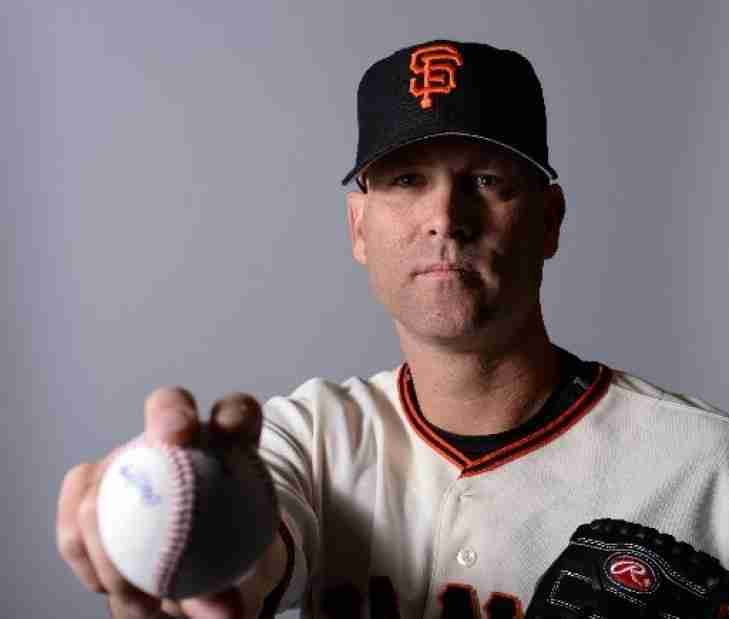
Bill King to enter the Baseball Hall of Fame
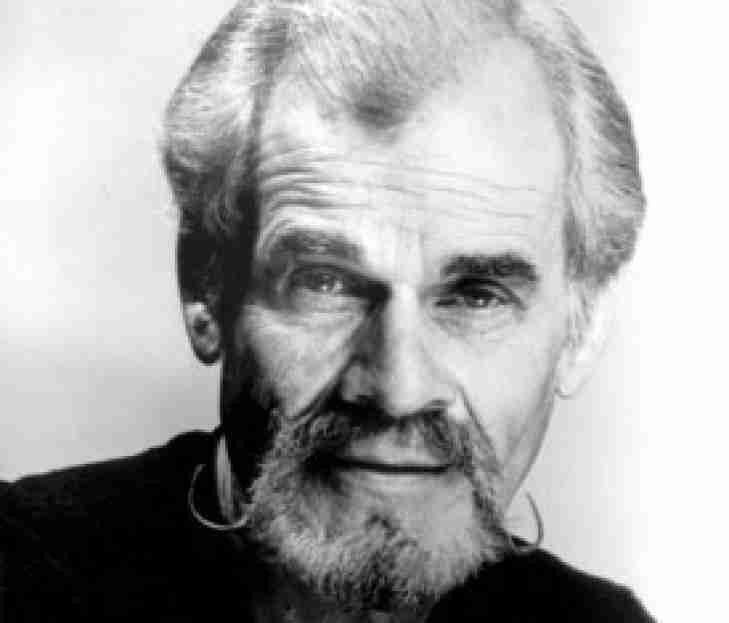
Annually, the winner of the Ford C. Frick Award gains entry into Cooperstown. This year, it is the late Bill King, who was the voice of the Oakland Athletics for years.
King, who had been a finalist six times, also served as the play-by-play voice for the Oakland Raiders and the Golden State Warriors. Basically, he was the voice of the city of Oakland.
The Athletics job was his third major role in the city, taking over the full radio broadcasting duties in 1981. It was his voice that called the A’s World Series win in 1988 and his “Holy Toledo” catch phrase rang throughout the Bay Area.
This is a posthumous induction as King passed away in 2005.
158. Jason Giambi
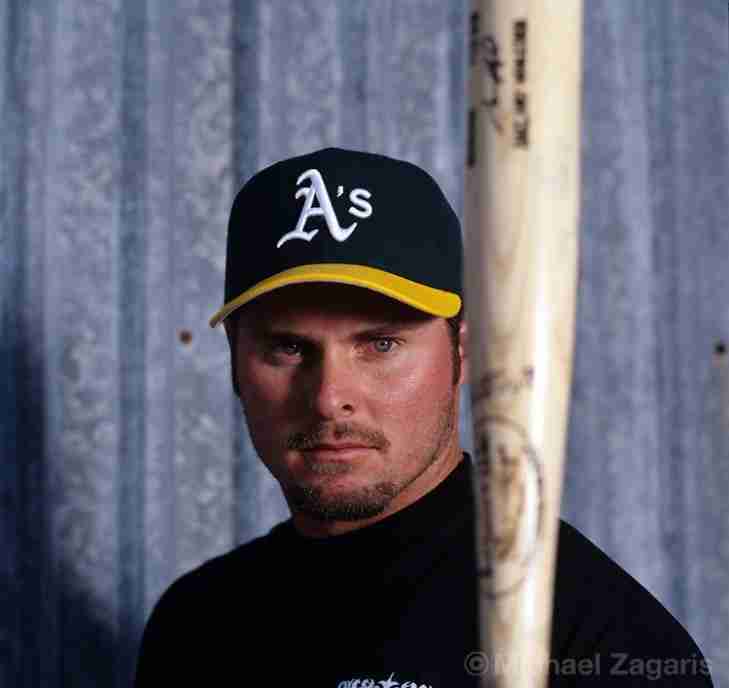
While Jason Giambi is better known as an inflated PED user, the fact remains that he was a very good hitter and a former American League MVP. Giambi would go to five consecutive All-Star Games and blast 440 Home Runs with a .516 career Slugging Percentage over a twenty-year career. He would also show solid plate discipline with three On Base Percentage Titles and retired with a very good 50.4 bWAR.
As we predicted, Giambi did not escape the first ballot. That is a shame, as he had a career worthy of a second look from Cooperstown.
Barry Zito officially retires
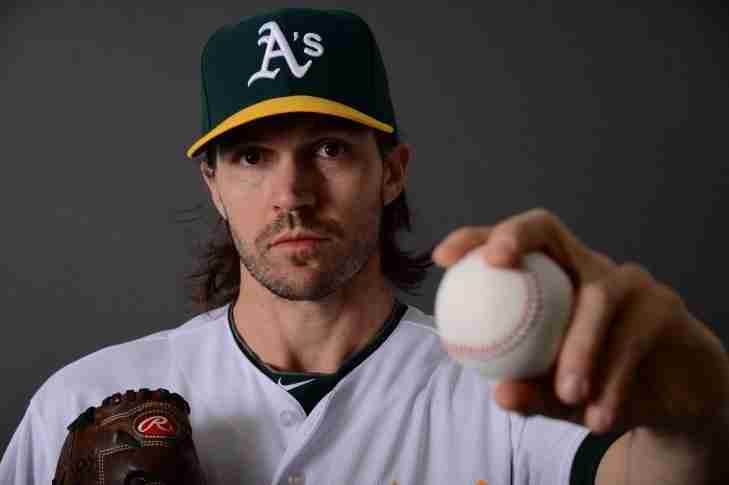
"My baseball career has been a mirror to my life off the field, full of euphoric highs and devastating lows. I've been at the top of a rotation and the 25th man on a roster. I've started Game 1 of a World Series in one year, and I've been left off of a postseason roster in another. I've been labeled as both drastically underpaid and severely overpaid. I've been praised as a savior and deemed a curse."
Pretty self-aware wouldn’t you say?
Over his fourteen year career, Zito spent it all in the Bay Area dividing his time between the Oakland Athletics and the San Francisco Giants. Zito was a three time All Star who won the American League Cy Young Award in 2002. He finishes his career with a 165 and 143 record with 1,885 Strikeouts and a bWAR of 33.5.
Early in his career, Zito seemed to be on a Hall of Fame path, but realistically he will struggle to get more than ten votes and will be a one and done player.
Still, anytime a former Cy Young winner announces his retirement it is big news and we here at Notinhalloffame.com wish Barry Zito the best in his post-baseball career.
Tim Hudson to retire. HOFer?
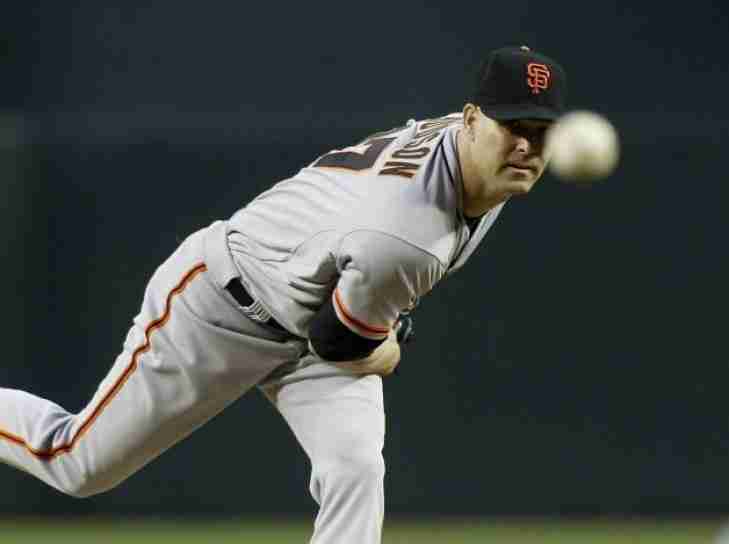
The 40 year old San Francisco Giants Pitcher cited that “it was time” and he is currently holds the most Wins (222) of any active Pitcher. Hudson balances that out with only 132 Losses and currently has well over 2,000 career Strikeouts with a healthy 57.4 career bWAR.
Hudson broke in with the Oakland Athletics in 1999 and would have a very productive year in 2000 where he went 20 and 6, leading the American League in Wins and was the runner up for the Cy Young. He would continue to be a large part of the A’s success for the next few years and while he was not necessarily considered the elite, he was considered consistent and a high level second tier Pitcher.
Following his run in Oakland, he was traded to the Atlanta Braves prior to the 2005 season. Hudson would have some injury issues, but would rebound in 2009 and make his third All Star game.
Two years ago, Hudson signed with the San Francisco Giants and would make history as the oldest Pitcher to start a game in the World Series. He would also earn his first and only World Series Ring.
The impending retirement of Hudson raises the usual Hall of Fame question and if he is to get inducted it would have to be based on his strong bWAR, which is currently 66th overall for Pitchers and is higher than many existing Hall of Famers.
Hudson will be eligible for the Baseball Hall of Fame in 2021 and will be added when he add that section on Notinhalloffame.com.
In our eyes, Tim Hudson is a borderline Hall of Famer (perhaps closer to the wrong side) but will likely be on the Notinhalloffame Baseball list.
We here at Notinhalloffame.com look forward to see what will be next in the career of Tim Hudson.
112. Miguel Tejada
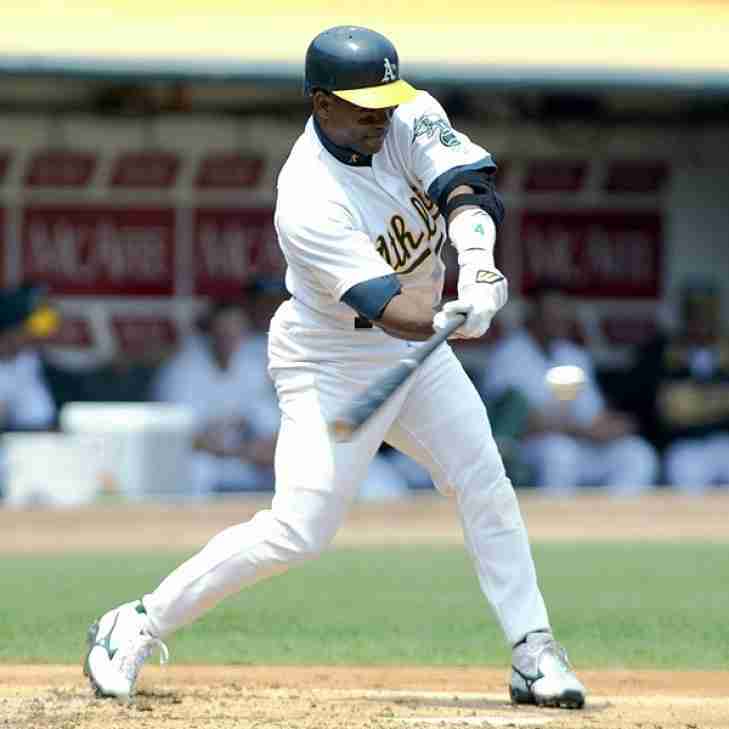
While Miguel Tejada is a former MVP in Major League Baseball, he is also known as a PED user, a label that has kept PED users out of the Hall of Fame.
Forgetting that, Tejada is a man with a 46.9 bWAR and a multi-time Silver Slugger Award winner, and retired with close to 2,500 Hits. The Dominican has numbers that are very good, but realistically were not Hall of Fame level, regardless of his PED use. Still, this is a former MVP, an accolade that can not be taken away.
16. Mark McGwire
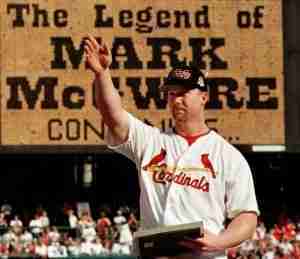
It is possible that this candidate is shrouded with more controversy than our top three candidates combined?
