

Our All Time Top 50 Los Angeles Dodgers have been revised to reflect the 2025 Season

Yes, we know that this is taking a while!
As many of you know, we at Notinhalloffame.com are slowly generating the top 50 of each major North American sports team. That being said, we maintain and update our existing Top 50 lists annually. We are pleased to present our pre-2026 revision of our top 50 Los Angeles Dodgers.
As for all of our top 50 players in baseball, we look at the following:
1. Duration and Impact.
2. Traditional statistics and how they finished in the Major League Baseball.
3. Advanced Statistics.
4. Playoff performance.
5. Their respective legacy on the team.
6. How successful the team was when he was there.
7. Respecting the era in which they played.
Criteria 1-4 will make up the lion’s share of the algorithm. Please note that we have implemented this for the first time. This has changed the rankings all throughout the board.
Last year, the Dodgers did exactly what many predicted. They won the 2025 World Series in a thrilling seven-game series against the Toronto Blue Jays. Despite the Dodgers’ lengthy tenure, there were three new entrants and one significant rise. There was actually a fourth new entrant, who rose due to the new algorithm.
As always, we present our top five, which saw no changes.
1. Clayton Kershaw
2. Sandy Koufax
3. Jackie Robinson
4. Don Drysdale
5. Duke Snider
You can find the entire list here.
Mookie Betts, who came off another good season, jumped to #21 from #31.
Freddie Freeman, who is a former MVP, joins the list at #39.
Debuting on the list is Shohei Ohtani, who may only have been a Dodger for two years, but won MVPs and World Series rings in both of them. He is ranked #47.
Also notable, Kevin Brown returns to the list due to the new algorithm. He is ranked at #48.
The last new entrant is Max Muncy. He debuts at #50.
Ramon Martinez, Matt Kemp, Babe Herman, and Andre Ethier fell off the Top 50.
We thank you for your continued support of our lists on Notinhalloffame.com.
Our All Time Top 50 Los Angeles Dodgers have been revised to reflect the 2024 Season
Yes, we know that this is taking a while!
As many of you know, we at Notinhalloffame.com are slowly generating the top 50 of each major North American sports team. That being said, we have existing Top 50 lists and consistently look to update them when necessary and based on necessity. As such, we are delighted to present our post-2024 revision of our top 50 Los Angeles Dodgers.
As for all of our top 50 players in baseball, we look at the following:
1. Advanced Statistics.
2. Traditional statistics and how they finished in the National League.
3. Playoff accomplishments.
4. Their overall impact on the team and other intangibles that are not reflected in a stat sheet.
Please note that our algorithm has changed, which yielded minor changes throughout the baseball lists.
Last year, the Dodgers went all in on Shohei Ohtani, and it paid off immediately with the Los Angeles winning the World Series, by defeating the New York Yankees. Amazingly, there were no new entrants based on 2024, though Max Muncy and Freddie Freeman were close. Despite winning the MVP, on a team as old and as successful as the Dodgers, Ohtani is not ranked.
As always, we present our top five, which saw two changes based on the new algorithm.
3. Sandy Koufax
4. Don Drysdale
5. Duke Snider
You can find the entire list here.
Within the top five, Robinson rockets up to #2 from #6. His importance in the game could easily place him at the top, but that is another list completely.
Mookie Betts shot up from #46 to #31 and with the new algorithm, Outfielder Andre Ethier comes in at #50.
We thank you for your continued support of our lists on Notinhalloffame.com.
Our All-Time Top 50 Los Angeles Dodgers have been revised to reflect the 2023 Season
Yes, we know that this is taking a while!
As many of you know, we here at Notinhalloffame.com are slowly generating the 50 of each major North American sports team. That being said, we have existing Top 50 lists out and we always consistently look to update them when we can and based on necessity. As such, we are very happy to present our post 2022/23 revision of our top 50 Los Angeles Dodgers.
As for all of our top 50 players in baseball we look at the following:
1. Advanced Statistics.
2. Traditional statistics and how they finished in Major League Baseball.
3. Playoff accomplishments.
4. Their overall impact on the team and other intangibles not reflected in a stat sheet.
Last year, the Dodgers had another great year, with a playoff run, but in their current state, anything other than a World Series Championship is a failure. The 2023 season gave us one new entry.
As always, we present our top five, which saw no changes.
2. Sandy Koufax
3. Duke Snider
4. Don Drysdale
5. Dazzy Vance
You can find the entire list here.
This is one of the hardest lists to do, and we know positioning Kershaw at the top is controversial considering the legends that he beat out. Statistically, we can defend it, but in terms of overall legacy, it would be different.
The lone new entrant was last year’s National League runner-up, Mookie Betts, who debuts at #44.
As always, we thank you for your support, and look for more revisions in the future.
4. Don Drysdale
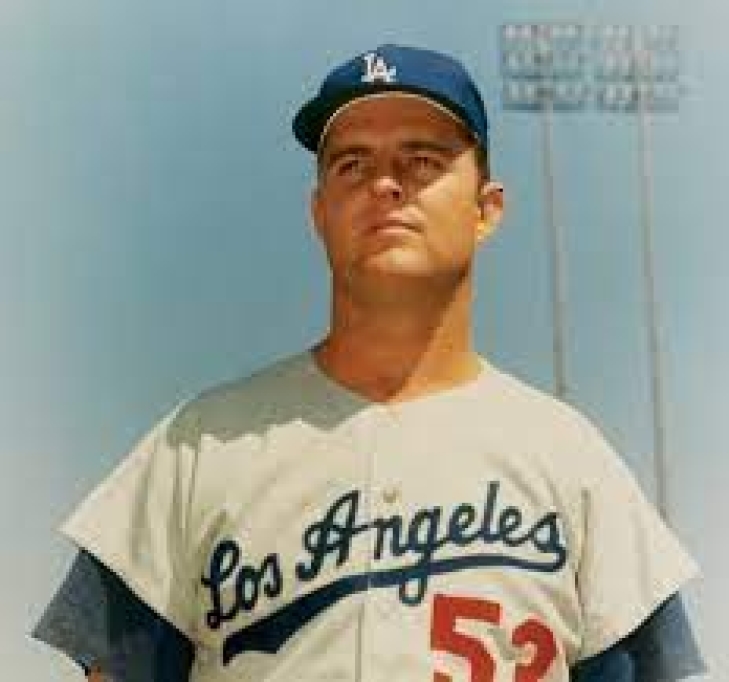
Don Drysdale arrived in Brooklyn in 1956 as a towering presence from Van Nuys, a local product who traded a promising basketball future for a seat on the Dodgers' flight to Los Angeles. While he spent much of the 1960s as a formidable counterpart to Sandy Koufax, he carved out a legacy defined by an aggressive, sidearm delivery and a refusal to yield even an inch of the inner half of the plate.
The initial chapter of his tenure saw him secure a rotation spot at just 20 years old, navigating the pressure of a championship-caliber clubhouse with veteran poise. He earned a World Series ring as a rookie in 1956 and solidified his status as a permanent fixture by the time the club moved to Southern California in 1958. By 1959, he had become a premier arm in the National League, earning his first All-Star selection and helping the Dodgers capture their first title in Los Angeles. This early success established a baseline of reliability that would allow the franchise to build a pitching-centric dynasty over the next decade.
Drysdale reached a peak of individual recognition during the 1962 campaign, a season where he emerged from the pack as the game's elite right-hander. That summer, he led the National League in wins (25), innings pitched (314.1), and strikeouts (232), a performance that earned him both the Cy Young Award and Major League Player of the Year honors. He followed this with a dominant 1963, anchoring the staff alongside Koufax to sweep the Yankees in the World Series. His ability to chew up massive amounts of innings, averaging over 300 frames a year during the early sixties, gave the Dodgers a steady floor of excellence that few rotations in history could match.
The middle of the decade featured a continued run of hardware and high-stakes success, including another World Series championship in 1965. Between 1961 and 1965, he was an annual fixture at the All-Star Game, providing a fierce competitiveness that perfectly complemented the quiet dominance of his southpaw teammate. While his strikeout totals were often overshadowed by the "Left Arm of God," his command and willingness to challenge hitters inside made him one of the most intimidating pitchers of his era. He remained a high-quality starter as the decade progressed, rarely missing a turn and consistently keeping his ERA below the league average.
Everything culminated in a historic swan song during the 1968 season, where he authored one of the most legendary streaks in baseball history. That summer, he set a then-Major League record by tossing 58.2 consecutive scoreless innings, a stretch that included six straight shutouts. It was a masterpiece of control and mental toughness that reminded the league he was still a top-tier threat even as he entered his thirties. Though he walked away from the game just a year later due to shoulder issues, that scoreless streak remains the definitive punctuation mark on a career built on stubborn excellence.
He retired with 209 wins, a 2.95 ERA, and 2,486 strikeouts, figures that represent a lifelong commitment to the same organization. He remained a professional icon long after his final pitch, eventually being inducted into the Baseball Hall of Fame in 1984, the same year the Dodgers raised his number 53 to the rafters.
