

The College Football Hall of Fame names the Class of 2023
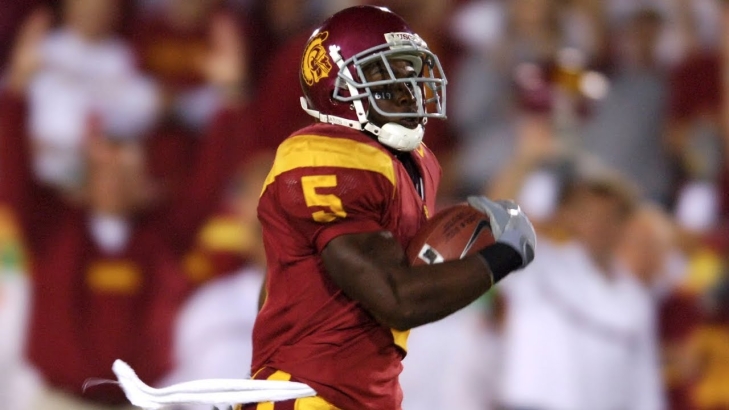
Last night, TCU was destroyed by Georgia in the National Championship Game, but for us at Notinhalloffame.com, the true story was the announcement of 18 new members chosen for the College Football Hall of Fame.
The inducted players are:
Eric Berry, Tennessee, 2007-09, Defensive Back: Berry was a two-time All-American with the Volunteers, winning two Jack Tatum Awards as the nation’s top DB. He also won the 2008 SEC Defensive Player of the Year and the 2009 Jim Thorpe Award. Berry accumulated 241 Tackles and 14 Interceptions in his three college seasons, and he would professionally go to five Pro Bowls and collect three First Team All-Pros as a Kansas City Chief.
Michael Bishop, Blinn Junior College 1995-96 & Kansas State, 1997-98, Quarterback: Bishop led Blinn to two consecutive NJCAA National Championships and he was given a chance at QB with the Wildcats. With Kansas State, Bishop threw for 4,401 Yards and 36 Touchdowns and rushed for 1,314 and 23 TDs, and was the 1998 Heisman runner-up. He won the Davey O’Brien Award as a Senior, and as a pro led the Toronto Argonauts to a Grey Cup win.
Reggie Bush, USC, 2003-05, Running Back: Bush may have had his 2005 Heisman taken away due to his family receiving gifts during his time as a Trojan, but he is now a College Football Hall of Famer. Bush had 6,890 All-Purpose Yards. Leading USC to a now-vacated BCS National Championship in 2004, Bush not only won the Heisman, but also captured that year’s Doak Walker Award and Walter Camp Award, and was named the AP College Football Player of the Year. Bush would all go on to win a Super Bowl with the New Orleans Saints and had 58 Touchdowns with nearly 9,000 Yards From Scrimmage.
Dwight Freeney, Syracuse, 1998-01, Linebacker: Freeney recorded 36 Sacks and 104 Tackles with the Orange and was a two-time All-Big East Selection. He played most of his pro career with the Indianapolis Colts, where he went to seven Pro Bowls and was the leader in Sacks in 2004.
Robert Gallery, Iowa, 1999-01, Offensive Lineman: Gallery won the Outland Trophy and the Big Ten Offensive Lineman of the Year in 2003, and he was later taken second overall by Oakland and had an eight-year NFL career.
LaMichael James, Oregon, 2009-11, Running Back: James won the Doak Walker Award in 2010 as the nation’s top Running Back and was third in Heisman voting. In his three years as a Duck, James rushed for 5,082 Yards and 53 Touchdowns. He would only rush for 193 Yards as a pro.
Derrick Johnson, Texas, 2001-04, Linebacker. As a senior, Johnson won the Big 12 Defensive Player of the Year, Dick Butkus Award, Bronko Nagurski Trophy and Jack Lambert Trophy, and had 10.5 Sacks, 9 Interceptions and 458 Tackles over his four-year career. Later, with the Kansas City Chiefs, he went to four Pro Bowls.
Luke Kuechly, Boston College, 2009-11, Linebacker. Kuechly was the ACC Defensive Rookie of the Year in 2009, and the two-time All-American won the ACC Defensive Player of the Year in 2011. It was a monster season for Kuechly, who also won the Bronko Nagurski Trophy, Lombardi Award, Lott Trophy, Butkus Award and Jack Lambert Award. He went to be a five-time First Team All-Pro, a seven-time Pro Bowl and was the NFL Defensive Player of the Year in 2013.
Terance Mathis, New Mexico, 1986-89, Wide Receiver. Mathis accumulated 4,524 Receiving Yards and 36 Touchdowns for the Lobos.
Bryant McKinnie, Miami, 1998-2001, Offensive Lineman. McKinnie was a member of Miami’s 2001 BCS National Championship Team, and would win the Outland Trophy and Jim Parker Award that year. He later won a Super Bowl with the Ravens.
Corey Moore, Virginia Tech, 1996-99, Defensive Lineman. In Moore’s senior year, he won the Big East Defensive Player of the Year (he also won it as a junior), Bronko Nagurski Award and Vince Lombardi Award.
Michael Stonebreaker, Notre Dame, 1986-90, Linebacker. Stonebreaker was a two-time All-American and a key member of the 1988 undefeated NCAA Championship Team.
Tim Tebow, Florida, 2006-09, Quarterback: Tebow was a phenom with the Gators, leading Florida to two BCS Championships (2006 & 2008), while also winning the 2007 Heisman. The two-time All-American also added two Maxwell Awards (2007 & 2008), the Davey O’Brien Award (2007), Manning Award (2008), and the AP and Sporting News also named Tebow their 2007 Player of the Year. He passed for 9,286 Yards and 88 Touchdowns while rushing for 2,947 Yards and 57 Touchdowns. Tebow’s NFL career was not good, but there are few in his league collegiately.
Troy Vincent, Wisconsin, 1988-91, Defensive Back: Vincent was the co-winner of the Big 10 Defensive Player of the Year in 1991, and would enjoy a long NFL career, that included the 2002 Walter Payton Man of the Year.
DeAngelo Williams, Memphis, Running Back, 2002-05. Williams was a three-time Conference USA Offensive Player of the Year, and won the MVP in the 2005 Music City Bowl. Rushing for 6,026 Yards and 55 Touchdowns as a Tiger, Williams was a two-time NFL leader in Rushing TDs.
The Inducted Coaches are:
Monte Cater, Lakeland 1981-86 & Shepherd 1987-2017. Cater won 19 Conference Championships (3 IBFC, 12 WVIAC, 4 MEC) and was also a 12-time Conference Coach of the Year. He had an overall record of 275-117-2.
Paul Johnson, Georgia Tech 1997-2001, Navy 2002-07 & Georgia Tech 2008-18. Johnson had an overall record of 189-100, and he led Georgia Southern to back-to-back NCAA D-I-AA Titles in 1999 and 2000. He was a seven-time Conference Coach of the Year.
Roy Kramer, Vanderbilt 1978-90, SEC Commissioner 1990-2002. Kramer had a record of 83-32-2 with the Commodores but was more instrumental in his work as the SEC Commissioner where he elevated the conference.
Mark Richt, Georgia 2001-15 & Miami (FL) 2016-18. Richt won three conference Coach of the Year Awards (SEC 2002 & 2005, ACC 2017), and was also named the 2017 Walter Camp Coach of the Year. He had a 10-7 record in Bowls, including two Sugar Bowl wins, and Richt’s overall record was 171-64.
We here at Notinhalloffame.com would like congratulate the newest members of the College Football Hall of Fame.
15. DeAngelo Williams
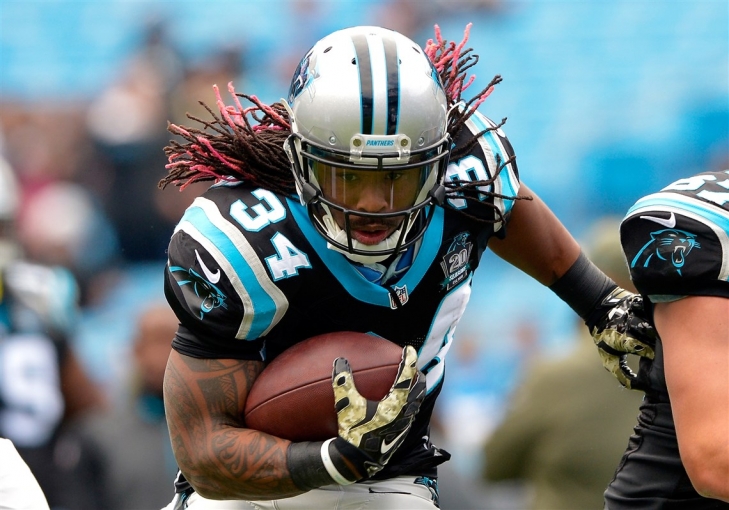
With the 27th overall pick in the first round of the 2006 NFL Draft, DeAngelo Williams arrived in Charlotte as an explosive, home-run-hitting playmaker. Pairing with heavy-hitting rookie Jonathan Stewart in 2008, Williams anchored the backfield half of Carolina's famous "Double Trouble" duo—one of the most lethal two-headed backfield tandems in modern pro football history.
Williams had exceptional acceleration, a low center of gravity for contact balance, and a powerful second gear on the open field. Playing in John Fox's run-focused system, he excelled at setting up blocks on zone stretches before swiftly cutting back into the secondary. Once past the initial tackles, Williams seldom got caught from behind, often turning what looked like simple gap plays into long touchdown runs.
Williams continued his initial two-year development, but his performance truly skyrocketed in 2008, establishing himself as a superstar. With exceptional efficiency, he totaled a franchise-high 1,515 rushing yards, averaged 5.5 yards per carry, and led the NFL with 18 rushing touchdowns. Despite having one of the best seasons ever by a running back that year, he was surprisingly omitted from the Pro Bowl but was later recognized as a Second-Team All-Pro to correct the mistake.
He demonstrated that his breakout season in 2009 was no coincidence. Sharing duties with Stewart in a historic backfield—the first in NFL history to have two 1,100-yard rushers in a single season—Williams accumulated 1,117 yards and scored seven touchdowns over 13 games. This achievement earned him his first Pro Bowl selection, a well-deserved recognition.
Although injuries and shared backfield duties prevented him from reaching 1,000 yards again in Charlotte, Williams stayed a consistent part of the Panthers' offense through 2014. He was a reliable veteran presence, frequently making significant plays during crucial moments, especially after Cam Newton's arrival.
Following nine seasons with the Carolina Panthers, the veteran running back was released in March 2015. Williams subsequently signed with the Pittsburgh Steelers, where he experienced a resurgence in his career by stepping in during Le'Veon Bell's absences—culminating in tying the NFL lead with 11 rushing touchdowns in 2015—before retiring after the 2016 season. During his tenure with the Panthers, Williams participated in 117 regular-season games (starting 62), amassing 6,846 rushing yards and 46 rushing touchdowns. Additionally, he recorded 1,621 receiving yards and seven receiving touchdowns. His total of 8,467 yards from scrimmage and 53 touchdowns ranks among the highest in franchise history at the time of his departure.
DeAngelo Williams
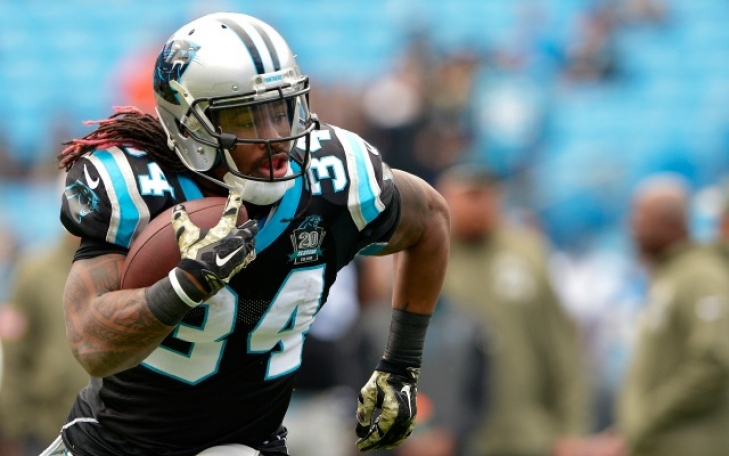
DeAngelo Williams played 11 years in the National Football League, the first nine of which were with the Carolina Panthers. A Pro Bowl Selection in 2009 when he rushed for 1,117 Yards, Williams would actually have a better 2008 where had a career high 1,515 Rushing Yards (third overall in the NFL) and was the league leader in Touchdowns with 20. That season he was a Second Team All Pro, though he was not chosen for the Pro Bowl.
