

Our United States Athletic Hall of Fame announces the 2025 Class

This will now be our most prominent announcement every year.
When we began Notinhalloffame in 2009, the slow goal was to rank those who were not in major Halls of Fame, but once you climb one hill, you want to climb another, and then another again. The natural perception when you cover Halls is to think you can come up with one of your own…so we did.
While looking at other sporting nations, we noticed that many had Halls of Fame dedicated to their sporting accomplishments across multiple disciplines. Yet, the United States of America, the country with the most (and most important) athletic Halls of Fame, does not have one that covers it all.
We changed that four years ago.
Admittedly, this has been an enormous learning process for us, and we continue to figure things out as we go. Mistakes were made, discoveries were uncovered, and we have completed three years of work and voting on the United States Athletic Hall of Fame.
For those discovering the USAHOF, here is how it works:
We have formed a committee to identify the nominees. This committee, which has grown in numbers and prestige annually, contains former athletes, writers, bloggers, and others in sports-related fields.
This group voted on athletes to place on the ballot.
Those athletes are then placed in a months-long public vote, where you help decide who enters the United States Athletic Hall of Fame. Anyone can vote, and all we do at the USAHOF is ensure that you are voting for qualified candidates.
Qualifying is simple, with only two rules in place:
- Be American
- Be at least 50 Years old.
For the first four years, we wanted to play “catch-up”. Considering the plethora of legendary American athletes who qualify, we wanted to induct at least 25 Athletes, five Coaches, and five Contributors to the first four classes. This will be significantly reduced from year five onward.
Let’s get into it!
Here are the newest inductees to the United States Athletic Hall of Fame:
Contributors (5).
Seymour Siwoff (Statistician) Finished First in the Online Vote:
In 1952, Seymour Siwoff bought the Elias Sports Bureau, which had been compiling baseball statistics since 1913. Siwoff, like many others, was enamored of statistics and appreciated the phenomenal work of Elias, but felt it could be much more.
Under Siwoff, his company provided stats that appeared obscure at the time, such as day/night splits, lefty vs. righty, and home/away splits. It would be the vaulting point for advanced statistics and an entirely new way of looking at the game.
Siwoff, who ran the company until he passed away in 2019, expanded the organization to cover statistical support for the National Football League, National Basketball Association, Major League Soccer, and multiple television and radio stations.
Seywoff becomes the first statistician to enter the United States Athletic Hall of Fame.
Bucko Kilroy (Football Executive) Finished Second in the Online Vote:
Frank “Bucko” Kilroy played 13 seasons in the NFL, all for the Philadelphia Eagles, where he won two NFL Championships and was a three-time Pro Bowl Selection. When his career ended in 1956, Kilroy became an assistant coach for the Eagles before moving into scouting. After two years as a scout for Philadelphia, he moved on to similar roles with Washington and Dallas. With the Cowboys, Kilroy helped convince ownership that drafting Roger Staubach would be well worth it, despite the years that the quarterback would have to miss due to military commitments.
Kilroy left the Cowboys for the New England Patriots as their director of player personnel in 1971, where he built the team into a fringe contender by the mid-to-late 70s. Kilroy then moved higher up the executive ladder to the general manager position in 1979, again acquiring talent. Three years later, he moved up to the vice president's role, and with his help, the Patriots made their first Super Bowl, though the Chicago Bears thumped them.
In 1994, Kilroy moved to a different role, back to scouting as a consultant, and he was instrumental in advising the Patriots on the acquisition of key players that helped them win their first three Super Bowls. Kilroy worked until 2007, passing away at age 86.
Jack Kent Cooke (Basketball, Football & Hockey Owner) Finished Third in the Online Vote:
Jack Kent Cooke is one of the few owners to have won championships in more than one of the big four of North American sports.
A Canadian, Cooke’s first foray into sports ownership was in Toronto, where he bought the minor league Toronto Maple Leafs baseball team and was named the minor league executive of the year by the Sporting News. Cooke had designs on bigger and better things, and the media mogul moved to the United States.
Cooke bought 25% of the Washington Redskins in 1961 and was the majority owner in 1974. By 1984, Washington was the sole owner, and he won three Super Bowls.
Cooke purchased the Los Angeles Lakers in 1965, where his teams went to seven NBA Finals and won the 1972 NBA Championship. The Lakers moved to The Forum, which he also bought. In L.A., Cooke was also the first owner of the Los Angeles Kings, one of the six expansion NHL teams that began operation in 1967. Cooke would sell the Forum, the Kings, and the Lakers to Jerry Buss in 1979.
Cooke is arguably the most successful sports franchise owner not to be in any major sports hall of fame, but you have voted him into the USAHOF.
Rube Foster (Baseball Team Owner and Visionary) Finished Fourth in the Online Vote:
Rube Foster is one of the rare nominees who could be looked at in our three main categories: player, coach, and contributor.
Baseball historians have claimed that Foster was the best black pitcher in the early 1900s, and he would later serve as a manager, most notably for the Chicago American Giants, a team he also owned. In 1920, along with six other owners, Foster formed the Negro Leagues, with Foster as its president.
While Foster had been accused of favoring his own team in league decisions, his work was instrumental in keeping the Negro Leagues viable. By the late 1920s, Foster struggled mentally, suffering from delusions, and would literally lose his sanity. He died in 1930.
In 1981, Foster became the first Negro League Executive inducted into the Baseball Hall of Fame, and this year, he becomes the first Negro League representative to enter the United States Athletic Hall of Fame.
Bert Bell (NFL Commissioner) Finished Fifth in the Online Vote:
Bert Bell was the owner of the Philadelphia Eagles (1933-40) and later the co-owner (1941-46), but this nomination is primarily based on his role as the NFL Commissioner.
Bell took on that role in 1946 and oversaw his league in its rivalry against the AAFC. He would broker the merger of the two leagues at the end of the 1949 Season (adding the Cleveland Browns, San Francisco 49ers, and Baltimore Colts), and he was vehemently against gambling, ensuring that anyone who might tarnish the game would face repercussions for tarnishing the game's integrity. Bell's most significant contribution was his foresight regarding the new medium of television.
To ensure fans would go to the games, he initiated televised blackouts and pioneered television "timeouts." He recognized the NFL Players' Union, despite the owners' opposition, realizing that it was for the betterment of the game. He remained the NFL Commissioner until he died in 1959.
Under Bell, the game grew astronomically. Following his passing, the Maxwell Football Club (which was founded by Bell) awards its version of the MVP, which is named after Bell. He becomes the NFL Commissioner to enter the USAHOF.
These five legends join Bill France Sr. (Auto Racing), Branch Rickey (Baseball), James Naismith, David Stern (Basketball), Al Davis, Lamar Hunt, Pete Rozelle, Ron Wolf (Football), Frank Zamboni (Hockey), Dr. James Andrews (Sports Medicine), and Dana White (Mixed Martial Arts) into the Contribtors Wing of the United States Athletic Hall of Fame.
Coaches (5):
Tony Dungy (Football) Finished First in the Online Vote:
Tony Dungy won a Super Bowl as a defensive back with Pittsburgh, and a few years later, he was their defensive back and then their defensive coordinator. After a three-year stint as the Minnesota Vikings' defensive coordinator, he was hired as the Tampa Bay Buccaneers' head coach in 1996.
Dungy fostered a conservative offense with a potent defense that would build the Buccaneers' defense. He left the year before they won the Super Bowl, but it was his scheme that brought Tampa their first title. The team that Dungy left for, Indianapolis, would play in its first Super Bowl under Dungy (XLI).
It is worth noting that Tony Dungy was the first head coach to beat all 32 teams, and he was the first African-American head coach to win the Super Bowl. He would later broadcast for NBC.
Bob Johnson (Hockey) Finished Second in the Online Vote:
Bob Johnson was one of the top college hockey coaches in the 1970s, where his school, Wisconsin, won three National Championships and six WCHA Tournaments. Like his rival, Herb Brooks, who coached Minnesota, Johnson also coached the U.S. at the Olympics (1976), and he was also the head coach for the Americans at the 1981, 1984, and 1987 Canada Cups.
At the NHL level, Johnson coached the Calgary Flames, bringing them to the Stanley Cup Finals in 1986, where they lost to Montreal. Let go in 1987; Johnson came back to the NHL in 1990 with the ascending Pittsburgh Penguins, whom he coached to a Stanley Cup win. This turned out to be his last run as a coach.
After his greatest triumph, Johnson prepared to coach the U.S. for the 1991 Canada Cup. Before the tournament started, he suffered a brain aneurysm, which resulted in a brain cancer diagnosis. Johnson died only a few months later, at the age of 60.
Lou Holtz (Football) Finished Third in the Online Vote:
Lou Holtz’s first head coaching job was in 1969 when he was hired at the College of William & Mary. He did well, bringing his squad to the Tangerine Bowl, and Holtz then moved to North Carolina State, where he won the ACC Championship in 1973. Staying with the Wolfpack for four seasons, Holtz never missed going to a bowl game, winning two (Peach 1972 and Liberty 1973).
After a disastrous one-year turn as the New York Jets head coach, Holtz returned to Division I, this time with Arkansas. Holtz never had a losing record with the Razorbacks, and he went to six bowls in seven years. He went to Minnesota for two years, and his next move, Notre Dame, is what puts Holtz in this Hall of Fame conversation.
With the Fighting Irish, Holtz won the National Championship in 1988, with a Fiesta Bowl win. Notre Dame won the 1989 Orange Bowl, 1991 Sugar Bowl, and 1992 and 1993 Cotton Bowls. Holtz had five top-six postseason rankings at Notre Dame.
Holtz walked away from Notre Dame in 1996 but returned to South Carolina for six years, turning a down-and-out team into SEC respectability.
Eddie Robinson (Football) Finished Fourth in the Online Vote:
One of the most effortless statements to make in football coaching is that Eddie Robinson was the most successful coach in the history of historically black colleges. You can (and we will) go a step further and say that he was among the best.
At age 22, Robinson was hired to coach at Grambling, and he remained in that role until 1997. Robinson turned the school from a forgotten institution into a SWAC power, winning nine black college national titles and 17 SWAC titles. At the time of his retirement, Robinson’s 408 wins were third all-time.
Notably, Robinson was also Grambling’s men’s head basketball coach from 1943 to 1956.
Robinson becomes the first HBCU Coach to enter the United States Athlete Hall of Fame.
Pat Summitt (Basketball) Finished Fifth in the Online Vote:
After playing four years at Tennessee-Martin, Pat Summitt became a graduate student at Tennessee. The Lady Vols coach suddenly retired, and at age 22, Summitt stepped in to fulfill the vacancy.
In those first few years, Summitt was still playing, representing the United States, most notably at the 1976 Olympics, where she won a Silver Medal. In 1982, the NCAA created its National Tournament, and every single one of Summitt’s players who were with her for four years would reach the Elite Eight.
Summitt took the Lady Vols to the Final Four 18 times, winning it all on eight occasions. Winning 1,098 games, she won another 112 in tournament action. She was named the Naismith Coach of the Year five times, and that number should have been higher.
Internationally, she coached the Americans to Gold Medals at the 1979 FIBA World Championship and the 1984 Olympics. By winning it all in Los Angeles, Summitt became the first person to win an Olympic medal as both a player and coach.
Summitt stepped down after the 2011-12 season after having revealed that she had early-onset Alzheimer's. She died four years later.
Under Summitt, Tennessee never had a losing record. Not only was she an incredible coach, but her legacy extended beyond the hardwood. Every one of her players who completed her eligibility at Tennessee under Summitt graduated with a degree.
Every single one.
Summitt becomes the first female Coach to enter the USAHOF.
These five legends join Red Auerbach, John Wooden (Basketball), Bill Belichick, Paul Brown, Walter Camp, Joe Gibbs, George Halas, Curly Lambeau, Vince Lombardi, Amos Alonzo Stagg (Football), and Herb Brooks (Hockey) into the Coaches Wing of the United States Athletic Hall of Fame.
Athletes: (25)
Arthur Ashe (Tennis) Finished First in the Online Vote:
Arthur Ashe was the first African-American male to become a star in the world of tennis, facing many of the racial obstacles that Althea Gibson had dealt with years earlier. Ashe became the first African-American male to win a Grand Slam title, the first to represent the United States in the Davis Cup (he won four), and the first to reach the number one ranking.
One of the classiest players ever to grace the court, Ashe won 76 Titles and three Grand Slams over his long career. Ashe was also active in the Civil Rights movement and among those who fought against Apartheid in South Africa.
Tragically, he died at age 49 from AIDS-related pneumonia in 1993. It is believed that he contracted the disease from a blood transfusion, and he dedicated the last part of his life to AIDS awareness. ESPN would create the Arthur Ashe Courage Award, given annually to a member of the sports world who exhibits courage in the face of adversity.
Eric Heiden (Speed Skating) Finished Second in the Online Vote:
Eric Heiden had already dominated speed skating in the three years leading up to the 1980 Lake Placid Olympics, but what he accomplished at that event has never been duplicated.
Heiden won the Gold Medal in the 500 m, 1,000 m, 1,500 m, 5,000 m, and 10,000 m, a clean sweep of the five categories that were available at the time. Over his career, Heiden set 15 records, and despite competing for a relatively brief time, he can claim to be the greatest speed skater of all time. If that is not the case, his 1980 Olympic performance is without question the best in his sport. To date, he remains the most decorated athlete at a single Winter Olympics.
He retired from speed skating after the 1980 World Allround and would become a doctor. Heiden becomes the first male speed skater to enter the United States Athletic Hall of Fame.
Jimmy Connors (Tennis) Finished Third in the Online Vote:
Arguably the top male tennis star of the 1970s, Jimmy Connors was ranked #1 for 160 consecutive weeks from 1974 to 1978 and held that rank another 108 weeks on top of that.
Winning a male record of 109 singles titles, Connors was an influential player in the development of the flat backhand. When he was on the court, regardless of the opponent, there was no doubt that Connors wanted it more, and his determination to win was evident from the second he walked on to the court. This made him a fan favorite, though he had no problem avoiding relationships with other tennis players.
In the Grand Slams, Connors was the first to capture one on three different surfaces (grass, clay, and hard), and he won eight in total. His rivalries with John McEnroe and Ivan Lendl are legendary.
Walter Payton (Football) Finished Fourth in the Online Vote:
A Chicago Bear for his entire professional playing career, Walter Payton would be the one to eclipse Jim Brown’s rushing record, and for a time, he was the all-time leader in rushing yards (16,726) and all-purpose yards (21,264).
Payton would rush for at least 1,200 yards nine times, making both the 1970s and 1980s All-Decade Teams. A beloved player, Payton always gave back to the community, winning the Man of the Year Award in 1977, the same season he won the MVP.
He died young at 45, falling victim to a rare liver disease. The NFL would rename an accolade he once won, the Man of the Year Award, the Walter Payton Man of the Year.
Perhaps the best way to describe Payton is with a quote from his former coach, Mike Ditka, who said, "the greatest player he had ever seen, but even greater as a human being.”
Billie Jean King (Tennis) Finished Fifth in the Online Vote:
In 1973, Billie Jean King defeated Bobby Riggs, a 55-year-old former men's champion, in the "Battle of the Sexes," a televised event that drew more eyeballs to tennis and made her a household name. Of course, she was so much more than that.
On the court, King won 129 titles, including 11 majors. A six-time Wimbledon winner, King was also an accomplished doubles competitor, winning every possible Grand Slam doubles event except the Australian Open. However, she was a finalist in that tournament twice
King's most significant contribution to women's tennis was her push for equality and pay equity. She co-founded the Women's Sports Foundation and was instrumental in convincing Virginia Slims to sponsor a separate women's tour. Because of the work she did at the U.S. Open, the men's and women's championship prizes were the same.
It is no misnomer to say that King was ahead of her time and a champion of equality.
Reggie White (Football) Finished Sixth in the Online Vote:
An All-American at Tennessee, Reggie White’s pro career began in the USFL with the Memphis Showboats. He landed in Philadelphia when the USFL folded, and he quickly became the franchise's best defensive player. White was a Defensive Player of the Year in 1987 and was chosen to six straight first-team All-Pros.
White shocked the football world by signing with the Green Bay Packers, and on his back, the team returned to power in the NFL. Along with quarterback Brett Favre, White took the Packers to a Super Bowl XXXI win, Green Bay's first since Super Bowl II. As a Packer, "The Minister of Defence" won his second Defensive Player of the Year Award 11 years after he won his first.
White retired in 2000 with 198.0 sacks, second all-time behind Bruce Smith. With this induction, the USAHOF, finally adds a defensive NFL player.
Jackie Joyner-Kersee (Track & Field) Finished Seventh in the Online Vote:
Considered one of the greatest female athletes regardless of sport or nationality, Jackie Joyner-Kersee won medals in four different Olympic Games, placing her in rare company.
Competing for UCLA in track and basketball, Joyner-Kersee made the U.S. Olympic Team in 1984 in the heptathlon, winning the Silver Medal in her familiar city of Los Angeles. Joyner-Kersee truly arrived in 1987, winning the heptathlon and long jump at the Rome World Championships, and she repeated that success by winning both disciplines at the 1988 Seoul Olympics.
She wasn’t done. In 1992 in Barcelona, she retained her heptathlon gold, won Bronze in the long jump, and achieved Bronze again in the long jump at the 1996 Atlanta games. Amidst all this success, Joyner-Kersee was a four-time gold medalist in the heptathlon at the Goodwill Games.
Sports Illustrated would name her the greatest female athlete of all time, an honor that tells you all you need to know about her accomplishments.
Barry Sanders (Football) Finished Eighth in the Online Vote:
Barry Sanders won the Heisman as a member of the Oklahoma State Cowboys, and the elusive running back immediately became one of the most explosive offensive players in the National Football League.
Sanders won the Offensive Rookie of the Year and was named to the Pro Bowl, an accolade he earned every year he played. A Detroit Lion for his entire professional career, Sanders was the reason for any success the team had. He would lead the league in rushing four times, and in the years he didn't, he was never lower than fifth overall.
Known for his elusiveness and durability, Sanders was on track to pass Walter Payton as the NFL’s all-time leading rusher, but he retired abruptly after the 1998 Season, while he was still at the top of his game, and only a year removed from a 2,000-yard season.
Ken Griffey Jr. (Baseball) Finished Ninth in the Online Vote:
The 1990s had their share of superstars, controversies, and up-and-down times, but there was one smile that lit up every ballpark he entered, and it belonged to Ken Griffey Jr.
The son of former Cincinnati Reds star Ken Griffey Sr, Griffey dominated the 1990s, winning four American League Home Run Titles, ten Gold Gloves, and was a perennial All-Star. While unable to lead the Seattle Mariners to a World Series Championship, his five-tool skills made him baseball’s most-watched player.
Despite still being active, Griffey Jr. was named to the Major League Baseball All-Century Team.
Rickey Henderson (Baseball) Finished Tenth in the Online Vote:
One of the more eccentric baseball players, Rickey Henderson, was also one of the quickest, swiping 1,406 bases and shattering the previous record from Lou Brock. The master of the base paths was an expert hitter who was a member of the 3,000-hit club. Known primarily for his time with the Oakland Athletics, Henderson is considered the greatest leadoff hitter in baseball.
In addition to his all-time stolen base record, Henderson is also the Majors' all-time leader in runs scored (2,295) and leadoff home runs (81).
Dale Earnhardt (Auto Racing) Finished Eleventh in the Online Vote:
Dale Earnhardt did not cast an imposing figure, but when he was in his stock car, clad in black, the "Intimidator" had no problem bullying anyone on the track.
Earnhardt’s driving style made him a fan favorite and a consistent winner throughout the 1980s and 90s. Winning 76 races in NASCAR, Earnhardt matched Richard Petty’s seven Winston Cup championships, signifying that he was the best NASCAR racer of the year. Earnhardt only won the Daytona 500 once, but he secured the checkered flag in the Southern 500 and Coca-Cola 600 three times.
Sadly, Earnhardt died in a fiery car crash on the last lap of the 2001 Daytona 500, sending shockwaves throughout the sport. While Earnhardt’s death was tragic, it did lead to increased safety measures in the sport.
Kristi Yamaguchi (Figure Skating) Finished Twelfth in the Online Vote:
Initially a pairs skater, Kristi Yamaguchi elected to focus on a singles career, which proved to be the correct decision.
Yamaguchi quickly rose through the ranks, winning Silver at the 1991 U.S. Nationals and winning the Worlds that year. She continued her upward momentum, winning Olympic Gold in Albertville and retaining her World Title a month later. Yamaguchi’s blend of athleticism and artistry was among the best the sport has ever seen.
Yamaguchi becomes the first Asian-American to be inducted into the USAHOF.
Jerry Rice (Football) Finished Thirteenth in the Online Vote:
With all due respect to every other Wide Receiver in pro football, there is no other greater player at that position than Jerry Rice.
Rice, a three-time Super Bowl Champion with the San Francisco 49ers, holds every receiving record, and it isn't even close. His records include 1,549 receptions, 22,895 receiving yards, 197 receiving touchdowns, 208 touchdowns, and 23,546 all-purpose yards. Rice was so good for so long that it was considered automatic for nearly two decades that he would be a pivotal contributor to the offense, and his last 1,000-yard year happened 16 years after his first.
Can anyone ever do that again?
Bob Cousy (Basketball) Finished Fourteenth in the Online Vote:
An All-American at Holy Cross, Bob Cousy was dubbed the “Houdini of the Hardcourt” for his playmaking skills and evolution of basketball passing. Cousy became a legend with the Boston Celtics, which is fascinating considering that Celtics coach Red Auerbach and Celtics owner Walter A. Brown never wanted Cousy at all.
They passed on him in the 1950 Draft, and when the team that took him, Tri-Cities, folded, the Celtics brass were upset that he was assigned to Boston. As both Auerbach and Brown would later admit, they were wrong.
Cousy would become the best guard in the sport and the cornerstone of which the dynasty was built. Auerbach continued to add stars, and Cousy, the man Boston did not want, won an MVP and led the Celtics to their first NBA Championship in 1957. The 13-time All-Star and 10-time First Team All-NBA Selection led the Celtics to five more NBA titles.
George Mikan (Basketball) Finished Fifteenth in the Online Vote:
Basketball was a different game when George Mikan began playing in the early 1940s, so much so that it was believed his 6’ 10” frame was a liability rather than an asset.
Seriously, that was the belief.
Mikan began as a clumsy kid and ended his career in the game as one of the best. A star at DePaul, Mikan joined Chicago of the NBL, taking them to a championship, and then did so for the Minneapolis Lakers shortly after. As they joined the NBA, Mikan took them to four more titles, using his size on both ends of the basket to dominate the league's early years, and was their biggest star (both literally and figuratively).
Pete Rose (Baseball) Finished Sixteenth in the Online Vote:
When Ty Cobb retired with 4,191 Hits, it seemed to be an unbreakable mark. Pete Rose had other ideas.
Staying injury-free and producing hits at a high rate for two decades, Rose was not a player who compiled; he excelled. Rose led the "Big Red Machine" to two World Series championships in the 1970s and won the coveted MVP and three batting titles along the way.
He not only holds the hit record (4,256) but is the Majors' all-time leader in singles (3,215), games played (3,562), at-bats (14,053), and plate appearances (15,890).
Rose was banned from baseball when it was discovered that he bet on games, including his own. This kept him from entering the Baseball Hall of Fame, but you decided that he belongs in the United States Athletic Hall of Fame.
Honus Wagner (Baseball) Finished Seventeenth in the Online Vote:
Inducted into the Baseball Hall of Fame in the first-ever class in 1936, Honus Wagner was not just the best shortstop of his era but has been called by many as the best at that position.
Wagner, who was nicknamed "The Flying Dutchman," is considered to be the best Pittsburgh Pirate of the first half of the 1900s is still thought of as one of the best baseball players ever, and his eight National League Batting Titles help attest to that.
The shortstop put forth 3,430 hits with a lifetime batting average of .329 with 722 stolen bases, and perhaps you are the lucky one who owns that valuable baseball card!
Dale Earnhardt Jr. (Auto Racing) Finished Eighteenth in the Online Vote:
The son of the legendary Dale Earnhardt, Dale Earnhardt Jr., was born to race on the NASCAR circuit…and dominate it.
Earnhardt Jr. had some big shoes to fill, and he accomplished that with a pair of Busch Series Championships and Daytona 500s, and because of his lineage, the NASCAR fans were behind him every step of the way. It can be argued that Earnhardt Jr. is the most popular driver in history, as he was named the Most Popular Driver 15 years in a row (2003-17).
Can you think of anyone in their respective sport who could win that award if it existed for 15 straight years?
With the selection of both Earnhardt and Earnhardt Jr., the United States Athletic Hall of Fame now has its first father and son inducted.
Mike Schmidt (Baseball) Finished Nineteenth in the Online Vote:
From the mid-1970s to the mid-1980s, Mike Schmidt was the most dominant Third Baseman in the Majors. Nobody else was even close.
A power hitter who won eight Home Run Titles, Schmidt also excelled with his glove, capturing ten Gold Gloves. It was through his leadership and skill that the Philadelphia Phillies finally broke through and won their first World Series in 1980. Without him, there was no way that he would have even contended for Baseball’s greatest prize.
Dan Gable (Wrestling) Finished Twentieth in the Online Vote:
From the state of Iowa, Dan Gable stayed home early in his athletic career, going to Iowa State, where he was the most successful wrestler in school history. Gable won two national championships (1968 and 1969), but a third one escaped him, as he lost to Larry Owings of the University of Washington in the 142 lb final. This was the only loss of Gable’s college career against 117 wins.
When a fighter in any discipline loses for the first time, doubt can creep into their mind, leading them to second-guess everything and become vulnerable. Gable instead got better, easily winning the World Wrestling Championship in Bulgaria that summer, and at the 1972 Munich Olympics, he won Gold in the 68 kg class without surrendering a point.
Gable later became a successful wrestling coach at Iowa State, where from 1976 to 1997, he had a record of 355-21-5 and won 15 NCAA national wrestling team championships.
Gable’s selection brings the USAHOF its first Wrestler.
Randy Couture (Mixed Martial Arts) Finished Twenty-first in the Online Vote:
One of the first elite Mixed Martial Arts fighters in the UFC, Randy Couture is the first fighter to have won World Titles in multiple weight classes.
A three-time All-American wrestler at Oklahoma State, Couture debuted at UFC 13 as a late substitution and surprised everyone by winning the tournament. Couture would later beat Maurice Smith for the UFC heavyweight championship, only to relinquish it over a contract dispute. He came back at UFC 28 to beat Kevin Randleman, and he defended his title twice before losing to Josh Barnett.
Couture continued to fight, winning the UFC Light Heavyweight Title three times (one interim) and engaging in classic battles with Chuck Liddell. He won the heavyweight title for a third time in 2007, when he was 45 years old, making him the oldest person to win a title in the UFC (and still is). After successfully defending his title, he lost it to Brock Lesnar.
As of this writing, Couture holds the records for the most UFC title reigns (6) and UFC championship matches (15).
Couture becomes the first Mixed Martial Arts practitioner to enter the United States Athletic Hall of Fame.
Jack Johnson (Boxing) Finished Twenty-second in the Online Vote:
We can't imagine the racism that Jack Johnson endured during his lifetime. Nobody should have to.
Jack Johnson fought for the first time in 1897, and years later, it was evident that he was the best heavyweight in the game. The problem was that as an African-American, James J. Jeffries, the reigning heavyweight champion, refused to fight him, and with no sanctioning body, there was no way to force the fight.
Jeffries retired, and Johnson defeated Tommy Burns, a Canadian, to win the title in 1908. Johnson was not a shy figure, and he embraced his notoriety, which pressured Jeffries out of retirement as the "Great White Hope" to fight Johnson, but in the "Fight of the Century," it was Johnson who emerged as the winner.
Johnson was hated by a large segment of the population, even more so because he married a white woman. He would eventually lose the belt to Jess Willard (he may or may not have thrown the fight), but what Johnson accomplished for African-Americans, regardless of how his demeanor was perceived, is undeniable.
Gale Sayers (Football) Finished Twenty-third in the Online Vote:
One of the most explosive running backs in NFL history, Gale Sayers was a two-time All-American at Kansas who still boasts the rookie record for Touchdowns (22). A two-time Rushing Champion, Sayers received MVP votes in his first five seasons with the Chicago Bears and was considered the best RB in the game following Jim Brown's retirement. Sayers's ability to change speeds at a dime made it difficult for him to grab, and once he had an open field, it was lights out. As he was the Bears' only significant offensive weapon, all attention was on Sayers, making his accomplishments more impressive.
A devastating knee injury in the 1970 pre-season was the catalyst for the Running Back playing only four more games over the rest of his career. Still, his prime was so potent that he entered the Pro Football Hall of Fame on his first ballot, and remains the youngest to do so at 34.
Bob Gibson (Baseball) Finished Twenty-fourth in the Online Vote:
One of the most intimidating men ever to stand on a pitcher's mound, Bob Gibson played his entire 17-year career with the St. Louis Cardinals, where he won two World Series rings, and it is not a stretch to say that St. Louis would not have those titles without him.
The second player after Walter Johnson to fan 3,000 batters, Gibson was the World Series MVP in both the Cardinals’ 1964 and 1967 wins. In Gibson's 1968 Cy Young and MVP-winning season, he went 1.12 in ERA, the lowest in the live-ball era, and is, without question, the greatest pitcher in Cardinals history.
Jack Dempsey (Boxing) Finished Twenty-fifth in the Online Vote:
If Babe Ruth was the most important American athlete of the 1920s, was Jack Dempsey far behind?
Dempsey was good-looking, talented, and one of the most entertaining pugilists ever to step through the ropes. Dempsey beat Jess Willard for the heavyweight title in 1919 and would defend the championship multiple times in the 1920s, drawing large crowds eager to see Dempsey win. Dempsey was the man who set the first “million-dollar gate” record when he fought French war hero Georges Carpentier, and his bouts helped draw interest in broadcasting live sporting events.
These 25 legends join Mario Andretti, A.J. Foyt, Richard Petty (Auto Racing), Hank Aaron, Roberto Clemente, Ty Cobb, Joe DiMaggio, Lou Gehrig, Rogers Hornsby, Willie Mays, Jackie Robinson, Babe Ruth, Nolan Ryan, Ted Williams, Cy Young (Baseball), Kareem Abdul-Jabbar, Larry Bird, Wilt Chamberlain, Julius Erving, Michael Jordan, Magic Johnson, Oscar Robertson, Bill Russell (Basketball), Muhammad Ali, Joe Frazier, Joe Louis, Mike Tyson (Boxing), Peggy Fleming, Dorothy Hamill (Figure Skating), Sammy Baugh, Jim Brown, Otto Graham, Red Grange, Don Hutson, Joe Montana, Johnny Unitas (Football), Jack Nicklau, Arnold Palmer (Golf), Bonnie Blair (Speed Skating), Matt Biondi, Mark Spitz (Swimming), Chris Evert, Martina Navratilova, John McEnroe (Tennis), Florence Griffith-Joyner, Carl Lewis, Edwin Moses, Jesse Owens (Track & Field), Babe Didrickson-Zaharias (Track & Field & Golf) and Jim Thorpe (Track & Field, Football & Baseball) into the United States Athletic Hall of Fame.
In the interest of transparency, we always announce the remaining vote getters in order of finish.
Contributors:
6. Ed Sabol (Football Filmmaker )
7. Ralph Hay (NFL Founder)
8. Walter A. Brown (NHL & NBA Team Owner)
9. Mike Ilitch (NHL & MLB Team Owner)
10. Ed Barrow (MLB Team Executive)
11. Wayne Embry (NBA Team Executive)
12. Larry O’Brien (NBA Commissioner)
13. Walter O’Malley (MLB Team Owner)
14. Jerry Buss (NBA Team Owner)
15. Ralph Wilson (NFL Team Owner)
16. Bud Adams (NFL Team Owner)
17. Bill James (Baseball Statistician)
18. Ford Frick (MLB Commissioner)
19. Weston Adams (NHL Team Executive)
20. Roone Arledge (Television Executive)
21. James E. Sullivan (Amateur Sports Executive)
22. George Weiss (MLB Team Executive)
23. James E. Norris (NHL Team Owner)
24. Joe Carr (NFL President)
25. Bill Nunn (NFL Scout)
26. Amy Trask (NFL Team Executive)
27. Jeremy Jacobs (NHL & NBA Team Executive)
28. Dick Ebersol (Television Executive)
29. Art Rooney (NFL Team Owner)
30. Charles Bidwill (NFL Team Owner)
31. Robert Kraft (NFL Team Owner)
32. Bill Veeck (MLB Team Owner)
33. Bobby Beathard (NFL Team Executive)
34. Peter Ueberroth (MLB Commissioner & Olympic Organizer)
35. Tim Nugent (Wheelchair Basketball Creator)
36. Al Spalding (Sports Equipment Manufacturer)
37. George Steinbrenner (MLB Team Owner)
38. Arthur Wirtz (NHL Team Owner)
39. Tim Mara (NFL Team Owner)
40. George Young (NFL Team Executive)
41. Don King (Boxing Promoter)
42. Larry MacPhail (MLB Team Executive and Owner)
43. Gil Brandt (MLB Team Scout)
44. Pat Bowlen (NFL Team Owner)
45. Bud Greenspan (Sports Filmmaker)
46. Steve Sabol (NFL Filmmaker)
47. Tex Schramm (NFL Team Executive)
48. Bob Arum (Boxing Promoter)
49. Marvin Miller (MLB Union Lawyer)
50. Frederic McLaughlin (NHL Team Owner)
51. Clint Murchison (NFL Team Owner)
52. Leroy T. Walker (Olympic Executive)
53. Maurice Podoloff (NBA Commissioner)
54. Pat Gillick (MLB Executive)
55. Lou Lamoriello (NHL Team Executive)
56. Wellington Mara (NFL Team Owner)
57. Jerry Jones (NFL Team Owner)
58. Paul Allen (NFL, NBA, and MLS Team Owner)
59. Billy Beane (MLB Executive)
60. Mark Cuban (NBA Team Owner)
61. Clark Griffith (MLB Team Owner)
62. Art McNally (NFL Supervisor of Officials)
63. Bud Selig (MLB Team Owner and MLB Commissioner)
64. Lorenzo and Frank Fertitta (UFC Owners)
65. Jerry Reinsdorf (MLB and NBA Team Owner)
66. Ted Turner (MLB Team Owner, Goodwill Games creator, and Television Executive
67. Max Winter (NFL and NBA Team Owner)
68. Avery Brundage (Olympic Executive and IOC President)
69. Jerry Colangelo (NBA Team Executive)
70. Ned Irish (NBA Team Owner)
71. Craig Patrick (NHL Team Executive)
72. Roger Goodell (NFL Commissioner)
73. Jim Finks (NFL Team Executive)
74. Ban Johnson (American League Executive)
75. Jerry Krause (NBA Team Executive)
76. Lee MacPhail (MLB Team Executive and American League President)
77. Effa Manley (Negro League Executive)
78. Bill Polian (NFL Team Executive)
79. Dan Reeves (NFL Team Owner)
80. Dan Rooney (NFL Team Owner)
81. Eddie DeBartolo Jr. (NFL Team Owner)
82. Tim Finchem (PGA Tour Commissioner)
83. Warren Giles (MLB Team Executive and National League President)
84. Will Harridge (American League President)
85. Paul Tagliabue (NFL Commissioner)
86. Gary Bettman (NHL Commissioner)
87. Joe Dey (PGA Commissioner)
88. Peter Holt (NBA Team Owner)
89. J. Walter Kennedy (NBA Commissioner)
90. Mitch Kupchak (NBA Team Executive)
91. Jack McClosky (NBA Team Executive)
92. Tex Rickard (Sports Promoter)
93. Deane Beman (PGA Commissioner)
Coaches:
6. Phil Jackson (Basketball)
7. Paul “Bear” Bryant (Football)
8. Pat Riley (Basketball)
9. Ara Parseghian (Football)
10. Pop Warner (Football)
11. Sid Gillman (Football)
12. John Heisman (Football)
13. Connie Mack (Baseball)
14. John Madden (Football)
15. Chuck Noll (Football)
16. Bobby Knight (Basketball)
17. Weeb Ewbank (Football)
18. Knute Rockne (Football)
19. Phog Allen (Football and Basketball)
20. Don Shula (Football)
21. Fielding Yost (Football)
22. Cus D’Amato (Boxing)
23. Adolph Rupp (Basketball)
24. Joe McCarthy (Baseball)
25. Frank Leahy (Football)
26. Hayden Fry (Football)
27. Bud Grant (Football)
28. Bernie Bierman (Football)
29. Howard Jones (Football)
30. Bill Walsh (Football)
31. Mike Krzyzewski (Basketball)
32. Henry Iba (Basketball)
33. Pete Newell (Basketball)
34. Bobby Bowden (Football)
35. Jim Valvano (Basketball)
36. Sparky Anderson (Baseball)
37. Tom Landry (Football)
38. Bobby Cox (Baseball)
39. Chuck Daly (Basketball)
40. Geno Auriemma (Basketball)
41. Carlo Fassi (Figure Skating)
42. Don Nelson (Basketball)
43. Ed Temple (Track & Field)
44. John Kundla (Football)
45. George Allen (Football)
46. Frank Beamer (Football)
47. Gregg Popovich (Basketball)
48. Casey Stengel (Baseball)
49. Bill Fitch (Basketball)
50. Tommy Lasorda (Baseball)
51. Joe Paterno (Football)
52. Dean Smith (Basketball)
53. Bud Wilkinson (Football)
54. Ron O’Brien (Diving)
55. Emmanuel Steward (Boxing)
56. Freddie Roach (Boxing)
57. Leo Durocher (Baseball)
58. Abie Grossfeld (Gymnastics)
59. Marv Levy (Football)
60. John McGraw (Baseball)
61. Candy Jim Taylor (Baseball)
62. Darrel Royal (Football)
63. Dusty Baker (Baseball)
64. Bo Schembechler (Football)
65. Bill Snyder (Football)
66. Barry Switzer (Football)
67. Walter Alston (Baseball)
68. Tom Osborne (Football)
69. Nick Saban (Football)
70. Lenny Wilkens (Basketball)
71. Bruce Bochy (Baseball)
72. Peter Laviolette (Hockey)
73. Jimmy Johnson (Football)
74. Frank Selee (Baseball)
75. Eddie Sutton (Basketball)
76. Jarry Tarkanian (Basketball)
77. Terry Francona (Baseball)
78. Woody Hayes (Football)
79. Whitey Herzog (Baseball)
80. Red Holzman (Basketball)
81. Tony LaRussa (Baseball)
82. John McKay (Football)
83. Bill Cowher (Football)
84. Bill Parcells (Football)
85. Tom Flores (Football)
86. Eddie Futch (Boxing)
87. Wilbert Robinson (Baseball)
88. John Thompson (Basketball)
89. Joe Torre (Baseball)
90. Tara VanDerveer (Basketball)
91. Earl Weaver (Baseball)
92, Jim Boeheim (Basketball)
93. Larry Brown (Basketball)
94. Andy Reid (Football)
95. Tom Heinsohn (Basketball)
96. Miller Huggins (Baseball)
97. Urban Meyer (Football)
98. Bo Ryan (Football)
99. C. Vivian Stringer (Basketball)
100. John Tortorella (Hockey)
101. Dick Williams (Baseball)
102. Roy Williams (Basketball)
103. Mack Brown (Football)
104. Jim Calhoun (Basketball)
105. John Chaney (Basketball)
106. Cheryl Reave (Basketball)
107. Clair Bee (Basketball)
108. Lou Duva (Boxing)
109. Bill Self (Basketball)
110. Bill Sharman (Basketball)
111. Billy Southworth (Baseball)
112. Rudy Tomjanovich (Basketball)
113. Jim Tressel (Football)
114. Jody Conradt (Basketball)
115. Lefty Driesell (Basketball)
116. Jim Leyland (Baseball)
117. Pete Carroll (Football)
118. Ned Hanlon (Baseball)
119. Bucky Harris (Baseball)
120. Bob Huggins (Basketball)
121. George Karl (Basketball)
122. Al Lopez (Baseball)
123. Bill McKenchie (Baseball)
124. Lute Olson (Basketball)
125. Rick Pitino (Basketball)
126. Jack Ramsay (Basketball)
127. Jerry Sloan (Basketball)
128. Steve Spurrier (Football)
Athletes:
26. Walter Johnson (Baseball)
27. Mary Lou Retton (Gymnastics)
28. Jeff Gordon (Auto Racing)
29. George Foreman (Boxing)
30. Wilma Rudolph (Track & Field)
31. Warren Spahn (Baseball)
32. Joan Benoit (Track & Field)
33. Yogi Berra (Baseball)
34. Brett Hull (Hockey)
35. Caitlyn (Bruce) Jenner (Track & Field)
36. Pete Sampras (Tennis)
37. Gail Devers (Track & Field)
38. Jimmie Foxx (Baseball)
39. Sandy Koufax (Baseball)
40. Maureen Connolly (Tennis)
41. Greg Maddux (Baseball)
42. Stan Musial (Baseball)
43. John Elway (Football)
44. Shaquille O’Neal (Basketball)
45. Rocky Marciano (Boxing)
46. Evelyn Ashford (Track & Field)
47. Earl Anthony (Bowling)
48. Althea Gibson (Tennis)
49. Bruce Smith (Football)
50. Helen Wills (Tennis)
51. Dara Torres (Swimming)
52. Hakeem Olajuwon (Basketball)
53. Dick Butkus (Football)
54. Andre Agassi (Tennis)
55. Lawrence Taylor (Football)
56. Scott Hamilton (Figure Skating)
57. Sam Snead (Golf)
58. Tony Hawk (Skateboarding)
59. Jerry West (Basketball)
60. Sugar Ray Leonard (Boxing)
61. Dan Marino (Football)
62. Elgin Baylor (Basketball)
63. Sugar Ray Robinson (Boxing)
64. Mike Modano (Hockey)
65. Joe Greene (Football)
66. Patty Berg (Golf)
67. Mia Hamm (Soccer)
68. Bob Feller (Baseball)
69. Wyomia Tyus (Track & Field)
70. Bo Jackson (Football & Baseball)
71. Jenny Thompson (Swimming)
72. Mickey Mantle (Baseball)
73. Johnny Bench (Baseball)
74. Tom Seaver (Baseball)
75. Greg LeMond (Cycling)
76. Mickey Wright (Golf)
77. Alan Page (Football)
78. Dick Button (Figure Skating)
79. Phil Mahre (Skiing)
80. Christy Mathewson (Baseball)
81. Monica Seles (Tennis)
82. Rafer Johnson (Track & Field)
83. Kathy Whitworth (Golf)
84. Dick “Night Train” Lane (Football)
85. Ray Ewry (Track & Field)
86. Bobby Jones (Golf)
87. Michelle Akers (Soccer)
88. Cal Ripken Jr. (Baseball)
89. Chuck Lidell (Mixed Martial Arts)
90. Willie Mosconi (Billiards)
91. George Blanda (Football)
92. Barry Bonds (Football)
93. Randy Johnson (Football)
94. Frank Robinson (Baseball)
95. Michael Johnson (Track & Field)
96. Bill Shoemaker (Horse Racing)
97. Henry Armstrong (Boxing)
98. Al Oerter (Track & Field)
99. Josh Gibson (Baseball)
100. Ben Hogan (Golf)
101. Dennis Conner (Sailing)
102. Bob Mathias (Track & Field)
103. Tracie Ruiz (Synchronized Swimming)
104. Mark Allen (Triathlete)
105. Debbie Meyer (Swimming)
106. Satchel Paige (Baseball)
107. Eddie Arcaro (Horse Racing)
108. Bob Beamon (Track & Field)
109. Deion Sanders (Football & Baseball)
110. Cynthia Cooper (Basketball)
111. Sheryl Swoopes (Basketball)
112. Chris Chelios (Hockey)
113. Lisa Leslie (Basketball)
114. “Bullet” Bob Hayes (Football & Track & Field)
115. Evander Holyfield (Boxing)
116. Dawn Staley (Basketball)
117. Emmitt Smith (Football)
118. Don Budge (Tennis)
119. Cheryl Miller (Basketball)
120. Nancy Lopez (Golf)
121. Greg Loganis (Diving)
122. Tracy Caulkins (Swimming)
123. Dave Scott (Triathlete)
124. Bill Tilden (Tennis)
Thank you all again!
The 2026 Ballot will be out next March.
The Pro Football Hall of Fame Revisited Project: 1971 Final VOTE
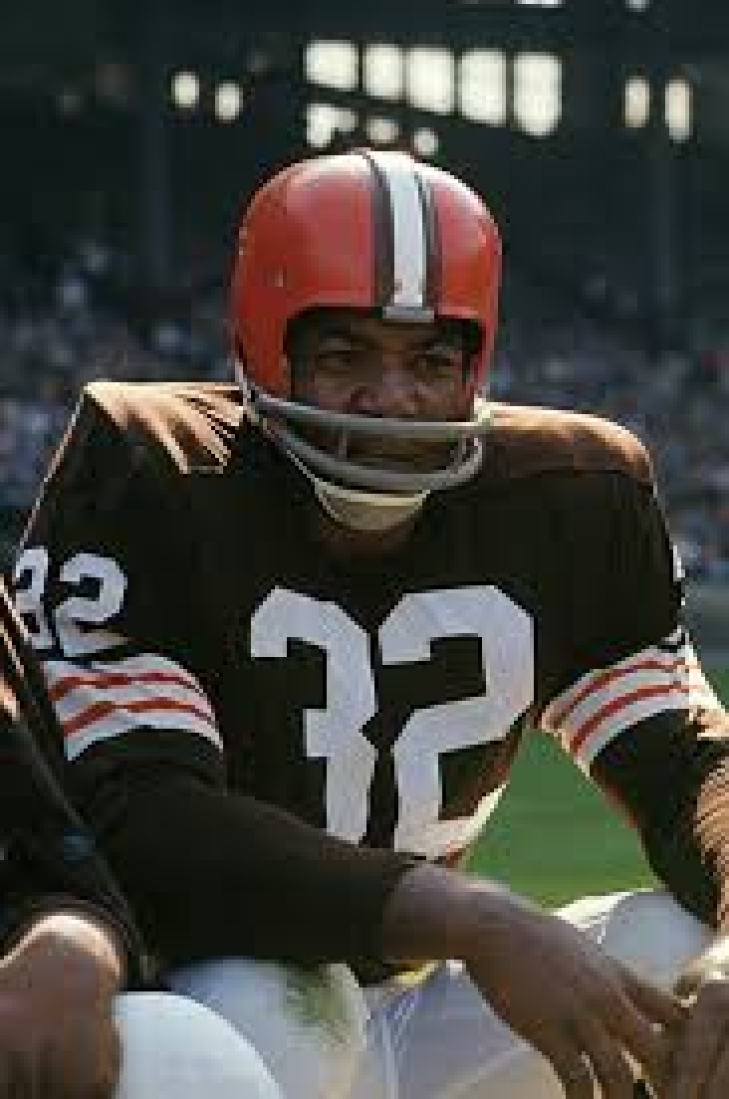
1971 Pro Football Hall of Fame Revisited Project Class.
Here we are! Again!!
If you have been following our Pro Football Hall of Fame Revisited Project, you know we have asked the rhetorical question: What if the PFHOF began in January 1946?
After soliciting and obtaining a passionate group of football fans and historians, we sent out a ballot for a Preliminary Vote, in which we asked each voter to give us 25 names as their semi-finalists and 5 in the Senior Pool. We then asked the group to vote for their 15 Finalists in the Modern Era and 3 in the Senior Category. The final stage was to vote for their five Modern Era inductee and one Senior inductee.
This is the result of the 26th official class;
Below are the final results of this project based on 31 votes.
Remember that the group took a vote in “1970”, and we have reverted to the top five candidates entering the Hall, PROVIDING THEY MAKE 50% of the vote. This will be put to a vote again in “1973”.
This is for the “Modern Era”
*Bold indicates they have been elected to the Pro Football Hall of Fame Revisited Class of 1971:
|
Player |
Year of Eligibility |
Vote Total |
|
Jim Brown FB |
1 |
31 |
|
Dick “Night Train” Lane DB |
1 |
28 |
|
Joe Schmidt LB |
1 |
23 |
|
Hugh McElhenney HB |
2 |
17 |
|
Rosey Brown T |
1 |
16 |
|
Mike McCormack T-G |
4 |
6 |
|
Pat Harder FB |
13 |
5 |
|
Alan Ameche FB |
6 |
5 |
|
Marshall Goldberg FB |
18 |
4 |
|
Charlie Conerly QB |
5 |
4 |
|
Billy Howton E-FL |
3 |
4 |
|
Bucko Kilroy G-MG-T-DT |
11 |
3 |
|
Ward Cuff WB-QB-HB |
19 |
2 |
|
Bill Osmanski FB |
19 |
2 |
|
Gene Lipscomb DT |
4 |
2 |
This is for the “Senior Era”,
*Bold indicates they have been elected to the Pro Football Hall of Fame Revisited Class of 1971.
|
Buckets Goldenberg |
1 |
11 |
|
Joe Kopcha |
10 |
9 |
|
Whizzer White |
5 |
8 |
|
None of the Above |
N/A |
3 |
This is for the “Coaches/Contributors”,
*Bold indicates they have been elected to the Pro Football Hall of Fame Revisited Class of 1971.
|
Bert Bell |
2 |
25 |
|
Clark Shaughnessy |
2 |
4 |
|
Tim Mara |
2 |
2 |
About the 1971 Inductees:
Jim Brown FB, CLE 1957-65: Inducted in the Pro Football Hall of Fame Revisited Project in 1971 on his 1st Ballot. Inducted into the actual Pro Football Hall of Fame in 1971.
Jim Brown is a football god.
We could end it here, but out of deference to the man we think is not only the greatest rusher in the history of game but the best offensive player ever, we will go through all the reasons why Brown is the best player period.
An absolute beast at Syracuse, Cleveland was fortunate that Brown was still available with their Sixth Overall Pick in the 1957 Draft. Brown was an instant star in the National Football League, winning the Rushing Title as a rookie, the Offensive Rookie of the Year and MVP. Brown had a signature moment, rushing for a then record 237 Yards, which stood tall for 14 years.
As Brown’s second year approached, expectations were high, and the Fullback not only met them, he shattered them. Brown rushed for 1,527 Yards, destroying the record, and remember, and this was done in a 12-gae season. He also had a career-high 17 Touchdowns.
Brown played until 1965, and every single year was his gridiron world; everyone else was just living in it. Playing nine seasons (all with Cleveland), Brown was a Pro Bowl in all of them and an eight-time First Team All-Pro and eight-time Rushing Title winner. Even in the season he did not win the Rushing Title (1962), he had career bests in Receiving Yards (517) and Receiving Touchdowns (5). It is not a miscalculation to say that Brown’s ability and playing style changed the game of football forever.
In addition to his MVP as a rookie, Brown won two more (1958 & 1965), and arguably could have won more. While the Browns only one NFL Championship when he was there (1964), Cleveland went to two more Title Games (1957 & 1965), and his mere presence made the Browns an annual contender.
Perhaps the most impressive stat is that Brown had a career Approximate Value of 121 in 118 Games. Only an elite player can average more than one AV/Game, but remember that Approximate Value was not calculable until 1960, meaning that his 121 AV is only through 82 of his Games!
Brown easily could have continued his career, as he was not yet 30 and was coming off another MVP, but he retired after the ’65 campaign, and sought a career in Hollywood. He had 12,313 career Rushing Yards, which at the time, was easily the most ever. Several players have surpassed Brown since them, but all of them needed many more games to do it.
Dick “Night Train” Lane, DB, RAM 1952-53, CRD 1954-59 & DET 1960-65. Inducted in the Pro Football Hall of Fame Revisited Project in 1971 on his 1st Ballot. Inducted into the actual Pro Football Hall of Fame in 1974.
The college experience of Dick “Night Train” Lane was only a year in small Scottsbluff Junior College, a small school in Nebraska. Lane joined the army afterward, and four years later, he asked the Los Angeles Rams for a tryout. Despite the unlikeliness of a man making the team after not playing any competitive game in four years making the NFL, Lane did just that, and would become one of the best Defensive Backs that the gridiron ever saw.
As a rookie, Lane led the NFL in Interceptions (14), a number that still stands today. Lane was inexplicably quick, a devastating tackler, and an absolute phenom who had his story happened in the age of social media, would have become a household name.
The Rams traded Lane to the Chicago Cardinals in his third year, and Lane again led the NFL in picks (12). Lane remained one of the most revered ballhawks, staying with the Cards until he joined Detroit in 1960. Lane retired with 68 Interceptions, and will likely stay in the top ten in that statistic for decades to come.
Joe Schmidt, LB, DET 1953-65: Inducted in the Pro Football Hall of Fame Revisited Project in 1971 on his first Ballot. Inducted into the actual Pro Football Hall of Fame in 1973.
Easily the best defensive player the Detroit Lions have ever had, Joe Schmidt was a dominating Middle Linebacker who would become the defensive captain of the team in 1956 and continue in that role for nine years.
Never leaving Detroit as a player, Schmidt was regarded for his unequalled toughness and was a major part of the last two NFL titles that the Lions won. The 1973 Pro Football Hall of Fame inductee was an eight-time First Team All-Pro and was named the league MVP by United Press.
Hugh McElhenny, HB, SFO 1952-60, MIN 1961-62, NYG 1963 & DET 1964. Inducted in the Pro Football Hall of Fame Revisited Project in 1971 on his 2nd Ballot. Inducted into the actual Pro Football Hall of Fame in 1970.
A First Round Pick from Washington, Hugh McElhenny traveled down the Interstate-5 to begin his professional football career.
McElhenny was the Ninth Overall Draft Pick in 1952, and he was the starting Right Halfback as a rookie. That season, and the one after, were First Team All-Pro and Pro Bowl worthy, and as he was also used as a returner, he led the NFL in All-Purpose Yards (1,731) as a rookie.
While McElhenny's rookie season was not duplicated, he had two other 1,400 APY years with San Francisco, and was a Pro Bowler on three different occasions, giving him five in total as a 49er. McElhenny's run with San Francisco ended after the 1960 season when the Minnesota Vikings chose him in the Expansion Draft. He had 9,100 All-Purpose Yards with 51 Touchdowns with the Niners.
Rosey Brown T, NYG 1953-65. Inducted in the Pro Football Hall of Fame Revisited Project in 1971 on his 1st Ballot. Inducted into the actual Pro Football Hall of Fame in 1975.
Rosey Brown played at Morgan State, a historically black college in Baltimore. The NFL was in the infancy of scouting HBCUs, and the New York Giants landed him in the 27thRound. This selection resulted in the greatest value pick in franchise history.
Early in his career, Brown was one of two African-American players on the Giants, and he helped break racial barriers in the NFL. Brown played his entirety at Left Tackle, and he was among the best in the business. He went to the Pro Bowl for the first time in 1955, beginning a six-year streak of selections. Brown earned First Team All-Pro honors four years in a row, and he was a vital component in New York’s 1956 NFL Championship Team.
Brown continued to be a force in the 1960s, earning three more Pro Bowls and two First Team All-Pros. He retired in 1965 and was considered one of the greatest Lineman in the history of the game.
Bert Bell: Commissioner. Inducted in the Pro Football Hall of Fame Revisited Project in 1971 on his 2nd Coach/Contributors Ballot. Inducted into the actual Pro Football Hall of Fame in 1963.
Bert Bell was the owner of the Philadelphia Eagles (1933-40), and later the co-owner of the Philadelphia Eagles (1941-46), but his induction was based on his role as the NFL Commissioner.
Bell took on that role in 1946, and oversaw his league in their rivalry against the AAFC. He would broker the merger of the two leagues at the end of the 1949 Season (adding the Cleveland Browns, San Francisco 49ers and Baltimore Colts) and he was vehemently against gambling, ensuring repercussions to anyone who might tarnish the game by keeping the game’s integrity. Bell’s biggest contribution was his foresight in regards to the new medium of television.
To ensure fans would go to the games, he initiated televised blackouts, and pioneered television “timeouts.” He recognized the NFL Player’s Union, against the will of the owners, realizing that it was for the betterment of the game. He remained the NFL Commissioner until he died in 1959.
Under Bell, the game grew astronomically. Following his passing, the Maxwell Football Club (which was founded by Bell) awards their version of the MVP, which is named after Bell.
The Pro Football Hall of Fame Revisited Project: 1950 FINAL VOTE
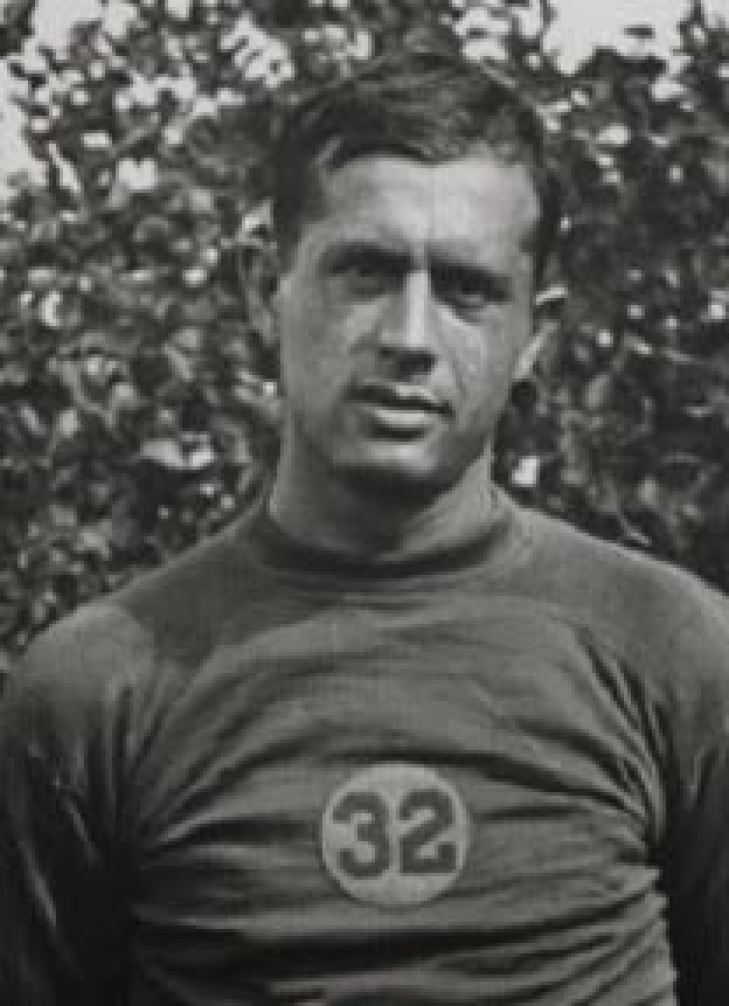
1950 Pro Football Hall of Fame Revisited Project Class.
Here we are! Again!!
If you have been following our Pro Football Hall of Fame Revisited Project, you know that we have asked the rhetorical question…what if the PFHOF began in January of 1946?
After soliciting and obtaining a passionate group of football fans and historians, we sent out a ballot for a Preliminary Vote, which we asked each voter to give us 25 names as their semi-finalists, and 5 in the Senior Pool. Following that, we asked the group to vote for their 15 Finalists in the Modern Era, and 3 in the Senior Category. The final stage was to vote for their five Modern Era inductee, one Senior inductee and one Coaches/Contributor inductee.
This is the result of the fifth official class;
Below, are the final results of this project based on 31 votes:
This is for the “Modern Era”
*Bold indicates they have been elected to the Pro Football Hall of Fame Revisited Class of 1950:
|
Player |
Year of Eligibility |
Vote Total |
|
Clark Hinkle FB-LB-HB-DB |
4 |
22 |
|
Verne Llewellen B |
13 |
17 |
|
Mike Michalske G-T-LB-BB |
8 |
15 |
|
Cliff Battles TB-FB-WB-DB |
8 |
14 |
|
Joe Guyon WB-TB-BB-FB |
18 |
13 |
|
Dutch Sternaman HB-QB-FB |
18 |
12 |
|
Ray Flaherty E-DE |
10 |
9 |
|
Bill Hewitt E-DE |
2 |
9 |
|
Ox Emerson G-C |
7 |
8 |
|
Jimmy Conzelman HB-TB-BB-E |
16 |
7 |
|
Tuffy Leemans FB-TB-DB-QB |
2 |
7 |
|
Red Badgro E-DE |
9 |
6 |
|
George Musso G-T |
1 |
5 |
|
Steve Owen T-G |
12 |
4 |
|
Walt Kiesling G-T |
7 |
3 |
This is for the “Senior Era”
As none of the Senior Candidates obtained 50 percent of the vote, no Senior Candidate was chosen. This is the first year where this rule was instituted. Please note that voters could also opt out of this vote, as per the request of members of the voting body.
|
Blondy Wallace |
5 |
11 |
|
Henry McDonald |
5 |
7 |
|
Gull Falcon |
5 |
4 |
This is for the Coaches/Contributors
*Bold indicates they have been elected to the Pro Football Hall of Fame Revisited Class of 1950:
|
Bert Bell |
1 |
15 |
|
Ralph Hay |
1 |
9 |
|
Joseph Carr |
1 |
6 |
About the 1950 Inductees:
Clark Hinkle FB-LB-HB-DB, GNB 1932-41: Inducted in 1950 on his 4th Ballot. Was inducted into the actual Pro Football Hall of Fame in 1964.
Clark Hinkle played all ten of his NFL seasons with the Green Bay Packers where his hard-nosed running style made him an indispensable part of the Packers offense. Often dueling with Chicago’s Bronko Nagurski, their battles were what Football in the upper mid-west was made of. Hinkle rushed for 3,860 Yards and 35 Touchdowns and was a First Team All-Pro four times. He also played at Linebacker, and was also Green Bay’s Punter and Kicker.
Verne Lewellen B, GNB 1924-27 & 1928-32, NYY 1927: Inducted in 1950 on his 5th Ballot (technically his 13th year of eligibility). Was never inducted into the actual Pro Football Hall of Fame.
One of the early stars of the Green Bay Packers, Verne Lewellen, was an all-purpose Back who did it all for Green Bay. The product of Nebraska (the state and the University) would be named to four straight First Team All-Pro squads (1926 to 1929) and was a large part of their three consecutive NFL Championships (1929 to 1931). While there is no video of Lewellen's lay to draw from, legendary figures like Art Rooney and George Halas extolled his virtues, and while stats were not well kept, it is believed he would have done well in box scores. We do know that he scored 37 Touchdowns, an incredible number for his day.
Mike Michalske G-T-LB-BB, NYY 1927-28, GNB 1929-35 & 1937: Inducted in 1950 on his 5th Ballot (technically his 8th year of eligibility). Was inducted into the actual Pro Football Hall of Fame in 1964.
Mike Michalske began his career with the New York Yankees, where the Penn State alumni was a First Team All-Pro in both of his seasons there. Michalske joined the Green Bay Packers where he revolutionized the Guard position by suggesting the Packers Coach, Curly Lambeau, that Fullbacks could be used in that role. An excellent blocker and hole producer, Michalske earned three more First Team All-Pros in Green Bay, and he won three straight NFL Championships (1929-31).
Cliff Battles TB-FB-WB-DB, BOS-WAS 1932-37: Inducted in 1950 on his 5th Ballot (technically his 8th year of eligibility). Was inducted into the actual Pro Football Hall of Fame in 1968.
Cliff Battles was an original member of the Washington Commanders (then-named Boston Braves), joining the team in their first year of existence, 1932, after the Akron native joined following college at West Virginia Wesleyan. Battles led the NFL in Rushing with 578 Yards as a rookie and was second in his sophomore year with 737. A First Team All-Pro in 1933 and 1934, Battles saved his best year for last. That was 1937, the first of the teams' relocation to Washington, and Battles won his second Rushing Title (874 Yards) and had the most Rushing Touchdowns with five. A substantial weapon in Sammy Baugh's offense, Battles helped lead Washington to the NFL Championship, and he was a First Team All-Pro for the third time.
Joe Guyon WB-TB-BB-FB, CAN 1920, CLE 1921, WAS 1921, OOR 1922-23, RII 1924, KAN 1925, NYG 1927: Inducted in 1950 on his 5th Ballot (technically his 18th year of eligibility). Was inducted into the actual Pro Football Hall of Fame in 1965.
A teammate of Jim Thorpe at Carlisle, Joe Guyon would be named to the 1920’s All-Decade Team after an eight-year career that saw him play for seven different NFL Teams. The Back helped the New York Giants win the NFL Championship in 1927.
Bert Bell: Inducted in 1950 on the 1st Coaches/Contributor Ballot. Was inducted into the actual Pro Football Hall of Fame in 1965.
Bert Bell was the owner of the Philadelphia Eagles (1933-40), and later the co-owner of the Philadelphia Eagles (1941-46), but his induction was based on his role as the NFL Commissioner. Bell took on that role in 1946, and oversaw his league in their rivalry against the AAFC. He would broker the merger of the two leagues at the end of the 1949 Season (adding the Cleveland Browns, San Francisco 49ers and Baltimore Colts) and he was vehemently against gambling, ensuring repercussions to anyone who might tarnish the game by keeping the game’s integrity. Bell’s biggest contribution was his foresight in regards to the new medium of television. To ensure fans would go to the games, he initiated televised blackouts, and pioneered television “timeouts.” He recognized the NFL Player’s Union, against the will of the owners, realizing that it was for the betterment of the game. He remained the NFL Commissioner until he died in 1959. Under Bell, the game grew astronomically. Following his passing, the Maxwell Football Club (which was founded by Bell) awards their version of the MVP, which is named after Bell.
The Pro Football Hall of Fame Revisited Project: 1950 PRELIMINARY VOTE
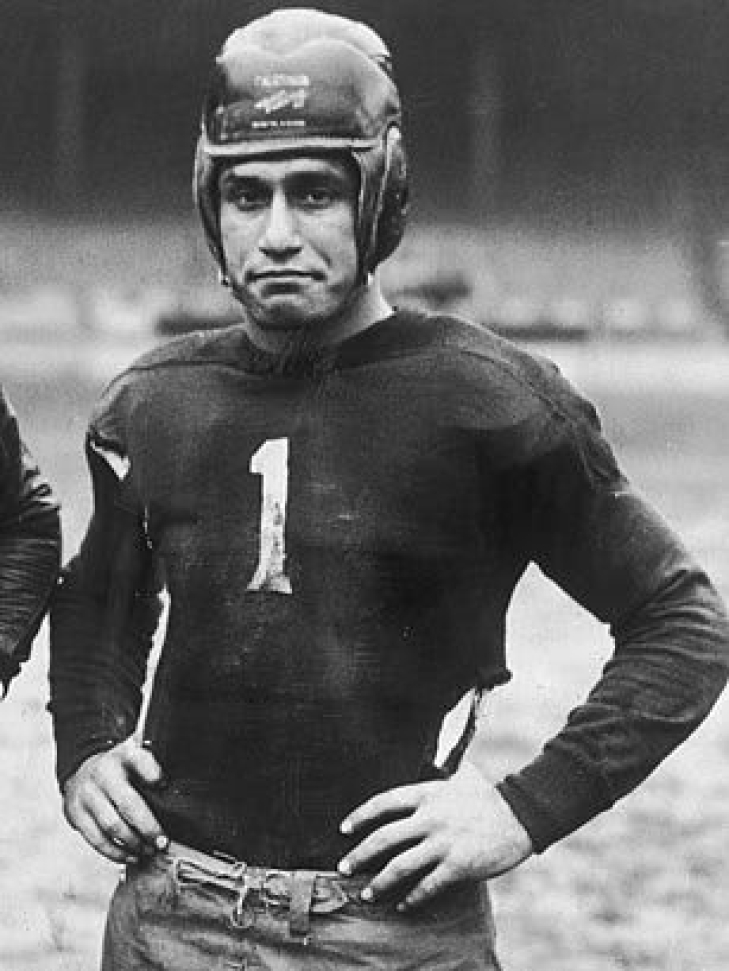
1950 PRELIMINARY RESULTS:
Thank you for all of you who have participated in the Pro Football Hall of Fame Revisited Project, and if you are unaware of what that is, simply, we acted as if the PFHOF had their first class in January of 1946?
We have completed the first two years, where a Preliminary, Semi-Final and Final vote for the 1946 Class, which inducted two full classes
For “1950” a Preliminary Vote with 130 players whose playing career ended by 1943. We are also following the structure in that players have 20 years of eligibility, and if they do not make it into the Hall, they are relegated to the Senior Pool.
Each voter was asked to select 25 names from the preliminary list, with the top 25 vote getters named as Semi-Finalists.
A week later, the voters will be asked to pick 15 names from the 25 Semi-Finalists, and next after, they will pick five from the remaining 15. We will continue this process weekly until we catch up to the current year.
30 Votes took place
This is for the “Modern Era”
Bold indicates they advanced to the Semi-Finals:
|
Player |
Year of Eligibility |
Vote Total |
|
Ray Flaherty E-DE |
10 |
28 |
|
Mike Michalske G-T-LB-BB |
8 |
27 |
|
Clark Hinkle FB-LB-HB-DB |
4 |
27 |
|
Cliff Battles TB-FB-WB-DB |
8 |
26 |
|
Jimmy Conzelman HB-TB-BB-E |
16 |
25 |
|
Swede Youngstrom G-T-E-C |
18 |
25 |
|
Joe Guyon WB-TB-BB-FB |
18 |
24 |
|
Dutch Sternaman HB-QB-FB |
18 |
24 |
|
Verne Llewellen B |
13 |
24 |
|
Red Badgro E-DE |
9 |
24 |
|
Walt Kiesling G-T |
7 |
24 |
|
Steve Owen T-G |
12 |
23 |
|
Ox Emerson G-C |
6 |
23 |
|
Beattie Feathers HB-WB |
5 |
22 |
|
Turk Edwards T |
5 |
21 |
|
Cecil Isbell TB-HB |
3 |
20 |
|
George Musso G-T |
1 |
20 |
|
Hunk Anderson G-C |
20 |
19 |
|
Tuffy Leemans FB-TB-DB-QB |
2 |
17 |
|
Bill Hewitt E-DE |
2 |
15 |
|
Cub Buck T |
20 |
14 |
|
Tony Latone B |
15 |
9 |
|
Whizzer White TB-HB |
4 |
9 |
|
Pete Stinchcomb HB |
19 |
8 |
|
Doc Alexander C-T-G-E |
18 |
8 |
|
Al Nesser G-E-C |
14 |
7 |
|
George Christensen T-G |
7 |
7 |
|
Rip King B |
20 |
6 |
|
Lou Smyth B |
19 |
6 |
|
Gus Sonnenberg T-FB-TB |
15 |
6 |
|
Joey Sternaman QB-BB |
15 |
6 |
|
Joe Kopcha G |
9 |
6 |
|
Ben Jones FB-BB-WB |
17 |
5 |
|
Duke Osborne G-C |
16 |
5 |
|
Doc Elliott B |
14 |
5 |
|
Glenn Presnell T-B |
9 |
5 |
|
Bob Koehler FB |
19 |
4 |
|
Dinger Doane FB |
18 |
4 |
|
Tex Grigg B |
18 |
4 |
|
Jim McMillen G |
17 |
4 |
|
Wildcat Wilson TB |
16 |
4 |
|
Two-Bits Honan B |
15 |
4 |
|
Jug Earp C-T-G |
13 |
4 |
|
Russ Hathaway T-G |
18 |
3 |
|
Fred Gillies T |
17 |
3 |
|
Herb Stein C-G |
17 |
3 |
|
Tillie Voss E-T |
16 |
3 |
|
Red Dunn BB-TB |
14 |
3 |
|
Joe Lillard HB |
12 |
3 |
|
Nate Barragar C-G |
10 |
3 |
|
Luke Johnsos E |
9 |
3 |
|
Gaynell Tinsley E |
5 |
3 |
|
Ray Nolting HB |
2 |
3 |
|
Willis Brennan G-T |
18 |
2 |
|
Tex Hamer B |
18 |
2 |
|
Bub Weller T-E |
17 |
2 |
|
Bull Behman T-E |
14 |
2 |
|
Rudy Comstrock G-T |
12 |
2 |
|
Chuck Kassel E |
12 |
2 |
|
Tom Nash |
11 |
2 |
|
Father Lumpkin BB |
8 |
2 |
|
Swede Hanson B |
7 |
2 |
|
Ace Gutkowski FB-TB |
6 |
2 |
|
Ozzie Simmons HB |
6 |
2 |
|
George Svendesn C |
4 |
2 |
|
Clyde Smith C |
17 |
1 |
|
Duke Hanny E-T-G-FB |
15 |
1 |
|
Curly Oden BB |
13 |
1 |
|
Jack Spellman T-B |
13 |
1 |
|
Ray Kemp T |
12 |
1 |
|
Hap Moran B |
12 |
1 |
|
Dick Stahlman T-G |
12 |
1 |
|
Doug Wycoff B |
11 |
1 |
|
George Kenneally E |
10 |
1 |
|
Zuck Carlson G-T-C-LB |
9 |
1 |
|
Bill Morgan T |
9 |
1 |
|
Bill Owen T-G |
9 |
1 |
|
Stumpy Thomason WB-TB-BB-HB |
9 |
1 |
|
Keith Molesworth HB-QB |
8 |
1 |
|
Carl Brumbaugh B |
7 |
1 |
|
Potsy Jones G |
6 |
1 |
|
Ralph Kerchaval WB |
5 |
1 |
|
Jack Manders |
5 |
1 |
|
Eggs Manske E |
5 |
1 |
|
Bernie Masterson QB |
5 |
1 |
|
Jim Barber T |
4 |
1 |
|
Frank Bausch C |
4 |
1 |
|
Tony Blazine T |
4 |
1 |
|
Dick Farman G |
2 |
1 |
|
Al Blozis T |
1 |
1 |
|
Clyde Shugart G |
1 |
1 |
|
Hec Garvey G-E-T-C |
14 |
0 |
|
Jim Laird B-G-T |
14 |
0 |
|
Dick O'Donnell E |
14 |
0 |
|
Frank Racis G-T-E |
13 |
0 |
|
Don Murry T-E-G |
13 |
0 |
|
Milt Rehnquist G-C-T |
13 |
0 |
|
Al Graham G |
12 |
0 |
|
Les Caywood G-T |
11 |
0 |
|
Butch Gibson G-T |
11 |
0 |
|
Jack McBride FB |
11 |
0 |
|
Bill Senn B |
11 |
0 |
|
Bo Molenda FB-HB-BB |
10 |
0 |
|
Bert Pearson |
9 |
0 |
|
Clare Randolph C |
9 |
0 |
|
Al Rose E |
9 |
0 |
|
Harry Ebding E |
8 |
0 |
|
Lon Evans G-T |
8 |
0 |
|
Len Grant T |
8 |
0 |
|
Buster Mitchell E-T |
8 |
0 |
|
Ernie Caddell WB-TB-BB-FB |
7 |
0 |
|
Bill Karr E |
7 |
0 |
|
Ookie Miller C-G-LB |
7 |
0 |
|
Joe Zeller G-E |
7 |
0 |
|
Bree Cuppoletti G |
6 |
0 |
|
Kink Richards B |
6 |
0 |
|
Bill Smith E |
6 |
0 |
|
Ernie Smith T |
6 |
0 |
|
Johnny Dell Isola G |
5 |
0 |
|
Milt Gantenbein E |
5 |
0 |
|
Jack Johnson T |
5 |
0 |
|
Ed Danowski B |
4 |
0 |
|
Johnny Drake B |
4 |
0 |
|
Armand Niccolai T-G |
3 |
0 |
|
Lloyd Cardwell WR-DB-FB |
3 |
0 |
|
Bull Karcis FB-BB-HB |
2 |
0 |
|
Steve Slivinski G-LB |
2 |
0 |
This is for the “Senior Era”
*Bold indicates they advanced to the Finals:
|
Blondy Wallace |
5 |
20 |
|
Gull Falcon |
5 |
17 |
|
Henry McDonald |
5 |
17 |
|
Sol Butler |
5 |
14 |
|
Steamer Horning |
2 |
13 |
|
Herman Kerchoff |
5 |
12 |
|
Harry Robb |
2 |
12 |
|
Bob Shiring |
5 |
12 |
|
Tam Rose |
5 |
2 |
This is for the Coaches/Contributors
*Bold indicates they advanced to the Finals:
|
Bert Bell |
1 |
26 |
|
Ralph Hay |
1 |
23 |
|
Joseph Carr |
1 |
21 |
|
Jimmy Conzelman |
1 |
18 |
|
Charles Bidwell |
1 |
16 |
|
Elmer Layden |
1 |
8 |
|
Art Rooney |
1 |
6 |
|
LeRoy Andrews |
1 |
3 |
|
Carl Strock |
1 |
3 |
|
George Clark |
1 |
2 |
|
Tommy Hughitt |
1 |
2 |
|
Christopher O’Brien |
1 |
2 |
|
Dick Rauch |
1 |
2 |
|
Frank Nied |
1 |
1 |
|
Cooney Checkeye |
1 |
0 |
Next Saturday, we will be posting the results of the 1949 Finalists of the Pro Football Hall of Fame Revisited Project.
Thank you to all who contributed, and if you want to be a part of this project, please let us know!
