

RIP: Abner Haynes

Kansas City Football lost one of its early stars, Abner Haynes, who passed away at the age of 86.
Haynes was with the Chiefs from their inception, dating back to 1960 when they were the Dallas Texans. Winning the AFL Rookie of the Year, Haynes would also win the UPI and The Sporting News Player of the Year off of his league-leading 875 Rushing Yards and 9 TDs. A dual-threat Halfback, Haynes led the AFL in Rushing Touchdowns the next two seasons and was a vital part of the team’s AFL Championship in 1962.
With the Texans/Chiefs, Haynes rushed for 3,814 Yards and caught 199 passes for 2,739 Yards with 56 Touchdowns from scrimmage. The man who was the franchise’s first superstar was inducted to their Hall of Honor in 1991.
We at Notinhalloffame.com would like to extend our condolences to Abner Haynes's fans, friends, and family.
320. E.J. Holub

E.J. Holub was an All-American at Texas Tech, where he was such a great player that the Red Raiders would later retire his number. Drafted 6th overall by the Dallas Texans in 1961, Holub played linebacker, and in the first five of his six years, he was an AFL All-Star and was named a First Team All-Pro in both 1962 and 1963. In those two seasons, he finished sixth and third, respectively, in Approximate Value, a testament to his skill.
A member of the AFL Championship Team in 1962 with Dallas and 1966 in Kansas City, when the franchise relocated, Holub’s mounting knee issues saw him move to center, where he would play the last half of his career until he retired after 1970. He won a third AFL Title in 1969 and a Super Bowl that year.
103. Abner Haynes
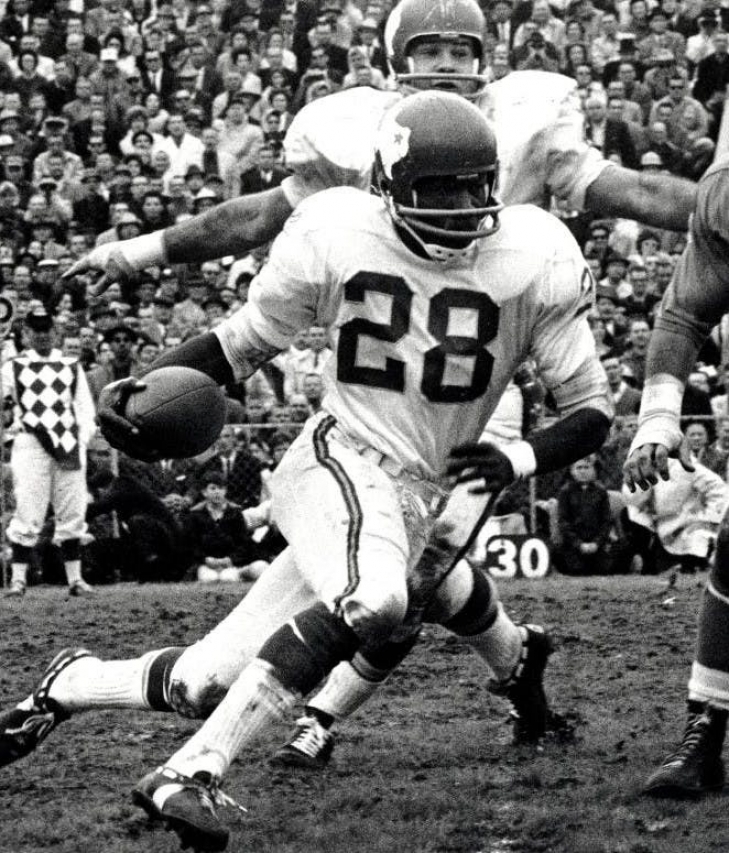
Playing college ball at the University of North Texas, Abner Haynes chose to stay in his home state and signed with the Dallas Texans of the AFL rather than the Pittsburgh Steelers, who selected him in the 5th Round in 1960. Haynes was the first breakout star of the new league, winning their inaugural Rushing Title while being named the AP and UPI MVP. Haynes, who would also lead the league in Rushing Touchdowns, would do so again in the next two seasons and would accrue over 1,700 All-Purpose Yards in all of his first three seasons, the last of which was an AFL Championship.
Haynes was never that dominant again, but he would have two more 1,400-yard seasons in All-Purpose Yards with the now-named Kansas City Chiefs. He finished his career with the Denver Broncos, Miami Dolphins, and New York Jets, where he won a Super Bowl Ring. Haynes would record 12,065 All-Purpose Yards over his eight-year career.
21. Abner Haynes
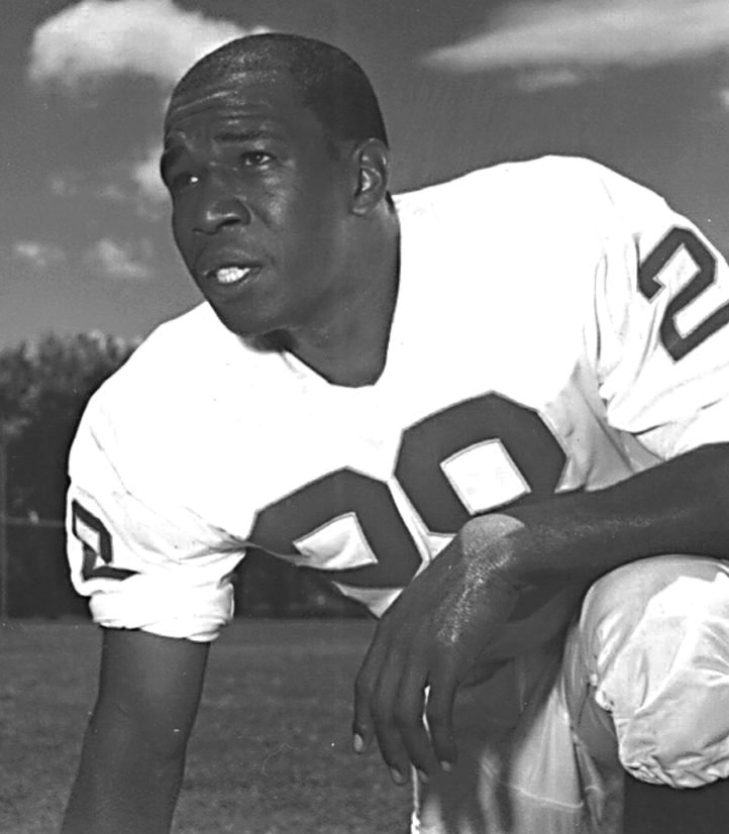
In terms of sheer games played in professional football, Abner Haynes does not rank among the top 50 on the franchise's all-time leaderboard. Yet few players in gridiron history ever made a more explosive, immediate impact than the North Texas product did at the birth of the American Football League. Joining Lamar Hunt’s Dallas Texans in 1960, Haynes immediately became the young league's signature draw, unleashing a dynamic style of play that defined Hank Stram’s high-flying offense from the very first snap.
Haynes immediately orchestrated one of the most remarkable debut seasons in professional football history. A multidimensional threat from the backfield, he captured the inaugural AFL rushing title with 875 yards, led the league with nine rushing touchdowns, and added 576 receiving yards, earning both AFL Rookie of the Year and AFL Player of the Year honors. He was not merely an elite open-field runner; his exceptional lateral agility and immediate acceleration enabled Stram to deploy him simultaneously as a flanker, a screen target, and a dangerous return specialist.
That record-setting inaugural campaign established a three-year stretch of unprecedented offensive dominance. Haynes topped the AFL in rushing touchdowns in each of the league’s first three seasons (1960, 1961, and 1962), routinely turning broken plays into runaway highlights. His personal peak came in 1962, when he racked up 1,049 rushing yards, 573 receiving yards, and 19 total scrimmage touchdowns, earning consensus First-Team All-AFL honors for the third straight year while propelling the Texans to an AFL Championship victory over the Houston Oilers.
When the franchise relocated to Missouri in 1963 to become the Kansas City Chiefs, Haynes remained the featured weapon in the offense. His versatility proved to be the ultimate cheat code for Len Dawson, giving Kansas City an explosive tailback who could stretch defenses horizontally on sweep plays or sprint past linebackers down the seam on passing downs. Over his five seasons with the franchise, he accumulated 9,734 all-purpose yards and 67 touchdowns, serving as the organization's first superstar before being traded to Denver in 1965.
In 1991, the Chiefs inducted Haynes into their Hall of Fame.
14. Jim Tyrer
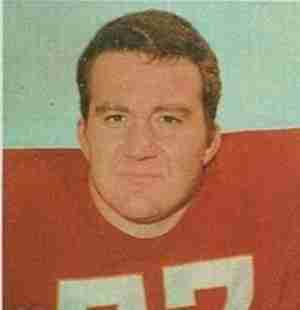
Out of all the people on this list, we will say up front that there is zero chance that Jim Tyrer will get into the Football Hall of Fame. Killing your wife and committing suicide thereafter is sadly what Tyrer is best known for, and this has led to him being ostracized by the NFL.
Had Tyrer not broken down in his personal life, his on-field accomplishments may have been enough to get him into Canton. He was arguably the best offensive lineman in the AFL and was a multiple-time AFL All-Star. He was voted to the all-time AFL team and was a big part of opening holes for Chiefs runners for years. Tyrer may very well be the best lineman that Kansas City ever had.
Again, his off-field circumstances will prevent him from enshrinement, though with what we now know about CTE, we have to wonder if he might have had that. He was a finalist once in his first year of eligibility, but was left off afterward until he made a shock return as a Senior Finalist in 2025. He won’t be back.
