


Committee Chairman
43. E.J. Junior
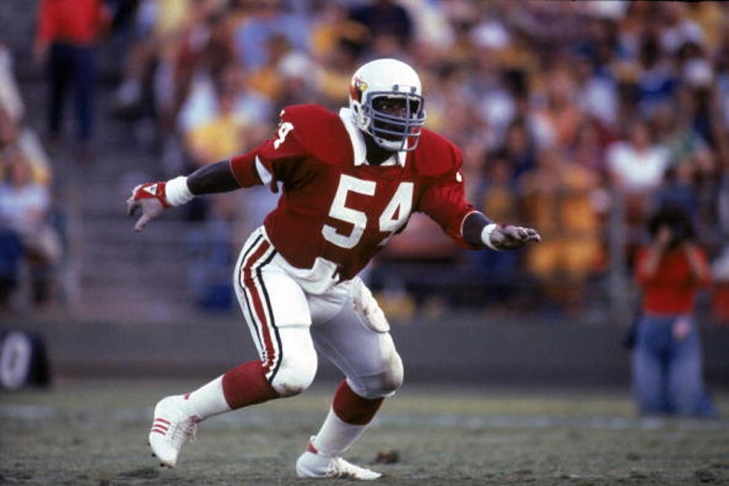
With the Fifth Overall Pick in the 1981 Draft, the St. Louis Cardinals selected E.J. Junior, who was the second Linebacker taken behind someone you may have heard of; Lawrence Taylor. Junior did not have Taylor’s career (who could?) but the Cardinals got a lot of good football from the eventual College Football Hall of Fame inductee.
Junior won the starting job during the season and, by the mid-80s, was one of the best interior Linebackers in the NFC. His best season was in 1984 when he was a First Team All-Pro and began a two-year run of Pro Bowls. From 183 to 1985, Junior had eight Interceptions and 19.0 Sacks, and though he tailed off afterward, he was still a solid NFL player.
He left the Cardinals behind in 1988, joining Miami as a Free Agent. The Cardinals were not significant in the 1980s, but this does not detract from Junior's work in St.Louis/Phoenix.
42. Carson Palmer
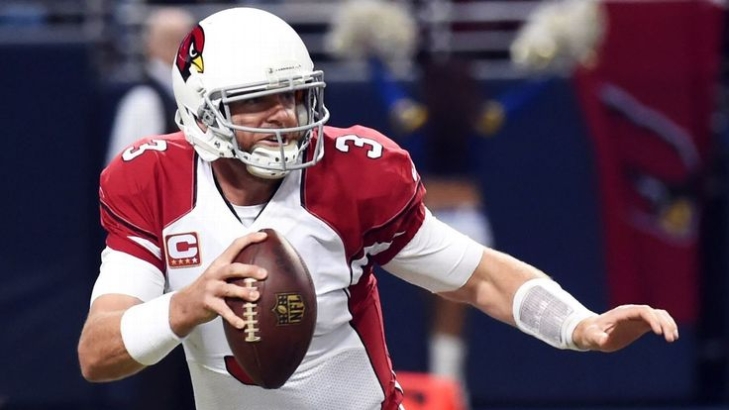
When Carson Palmer arrived in Arizona via a trade with Oakland in 2013, the Heisman Trophy winner and former No. 1 overall pick was widely regarded as a player in the twilight of his career. Yet, under the tutelage of head coach Bruce Arians, Palmer orchestrated one of the most remarkable late-career revivals in modern NFL history, elevating the Cardinals offense into a downfield powerhouse.
Palmer was the archetypal pocket passer, possessing rare arm strength, field vision, and the willingness to take hits while standing tall in the pocket. In Arians’ "no risk, no biscuit" system, Palmer excelled at pushing the football into high-degree-of-difficulty windows, driving outer-third boundary routes and vertical seams with exceptional velocity and touch.
His debut season in 2013 saw him pass for 4,274 yards and 24 touchdowns, making him the first quarterback in NFL history to post a 4,000-yard passing season for three different franchises. Though a torn ACL cut short a promising 6-0 start in 2014, Palmer returned in 2015 to put together a single-season masterpiece.
At 36 years old, Palmer set single-season franchise records with 4,671 passing yards and 35 touchdown passes. He led the entire NFL in total QBR (76.4), yards per attempt (8.7), and yards per completion (13.7) while guiding Arizona to a 13–3 record and an NFC Championship Game appearance. That performance earned him a Pro Bowl selection, Second-Team All-Pro honors, and a top finish in AP NFL MVP voting behind winner Cam Newton. Palmer's 2015 campaign remains the golden standard for Cardinals quarterbacks, setting untouched franchise records with 4,671 passing yards, 35 touchdowns, and a 104.6 passer rating.
Palmer backed up his MVP candidate campaign with another heavy-volume year in 2016, throwing for 4,233 yards and 26 touchdowns. After a broken arm prematurely ended his 2017 season in Week 7, he officially announced his retirement in early 2018. Across 60 games in an Arizona uniform, Palmer posted a 38-21-1 record—the highest winning percentage by any starting quarterback in franchise history.
He finished his desert tenure with 16,782 passing yards and 105 touchdown passes, earning induction into the Arizona Cardinals Ring of Honor in September 2019.
40. Bill Koman
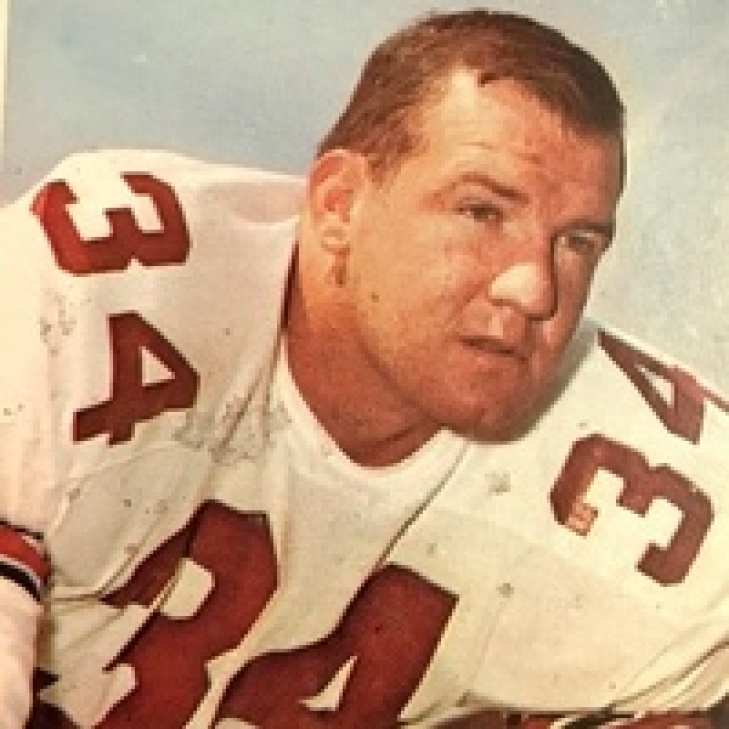
Acquired in a 1959 trade with the Philadelphia Eagles after an earlier stint in Baltimore, Bill Koman entered the Cardinals organization with little fanfare. What the franchise received in return was the physical heartbeat of their defense for nearly a decade. Sliding in at outside linebacker, the University of North Carolina product spent nine seasons with the Big Red (1959–1967), establishing a standard of hitting and durability that set the defensive tone throughout the 1960s.
Koman was an aggressive, downhill defender who relied on raw power, violent shed-and-tackle mechanics, and exceptional durability. Operating through bad knees that required constant wrap and treatment, Koman rarely missed action; he played in 120 consecutive regular-season games for the Cardinals, missing just a single contest over his nine-year tenure with the team.
Following the team’s move from Chicago to St. Louis in 1960, Koman's relentless tackling earned him widespread recognition. He reached his individual peak during the 1962 season, earning his first Pro Bowl invitation after recording 3.5 sacks, two interceptions, and three fumble recoveries.
He repeated that elite standard in 1964, garnering a second Pro Bowl selection as the operational leader of an aggressive front seven. In 1965, he was awarded the Old Pro Award by the St. Louis Quarterback Club, cementing his status as one of the most respected figures in the locker room. Battling through constant knee issues, Koman suited up for 120 consecutive games for the Cardinals, missing only one game across his entire nine-year run with the organization.
Koman retired following the 1967 season. In a Cardinals uniform, he appeared in 121 games, making 121 starts, while accumulating 24.5 unofficial sacks, 6 interceptions, and 16 fumble recoveries.
38. Terry Metcalf
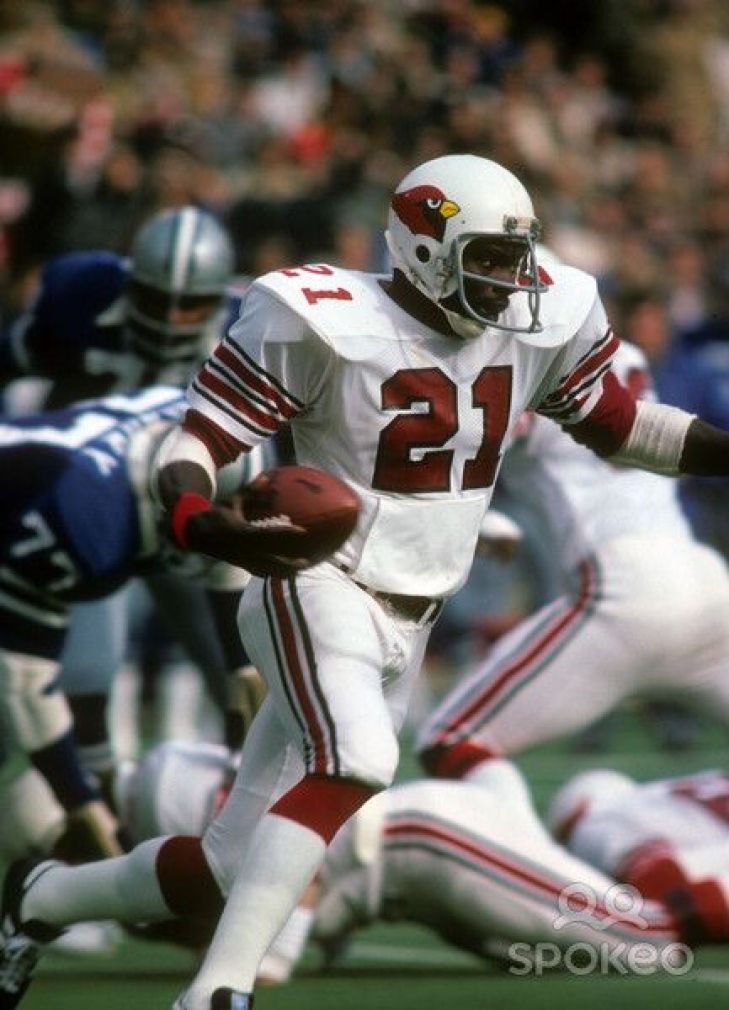
Long Beach State was hardly known as a hotbed for NFL superstars, but when the St. Louis Cardinals selected Terry Metcalf in the third round of the 1973 NFL Draft, they landed one of the most explosive, dynamic playmakers in football history. Nicknamed "The Franchise," Metcalf arrived in St. Louis and immediately revolutionized the all-purpose running back role under head coach Don Coryell.
Metcalf depended on his quick lateral movements, explosive speed, and a distinctive jump-cut running style that made him almost impossible to stop in the open field. He was a versatile threat before the term was even common, lining up in the backfield, playing wide receiver, and always poised to score on kickoff or punt returns.
After making brief appearances as a rookie in 1973, Metcalf dramatically improved in 1974, accumulating over 2,000 all-purpose yards. He averaged an impressive 31.2 yards per kickoff return and 13.1 yards per punt return. His outstanding performance earned him his first Pro Bowl selection and a second-place finish for the NFL Most Valuable Player award.
His 1975 campaign was his masterpiece. Metcalf set an NFL single-season record with 2,462 all-purpose yards over a 14-game season, a remarkable achievement that included 816 rushing yards, 378 receiving yards, 960 kickoff return yards, and 285 punt return yards. He scored 13 total touchdowns, including a pass, a run, a catch, a punt return, and a kickoff return, finishing third in NFL MVP voting and earning his second Pro Bowl selection. His 2,462 all-purpose yards that year remained an NFL record for nearly a decade, highlighting an exceptional workload in rushing, receiving, and returning.
However, Metcalf’s dynamic playing style was marred by a significant weakness: ball security. His tendency to carry the ball loosely in the open field led to a high number of fumbles, with him leading the league twice: 14 fumbles in 1974 and 15 in 1976.
Following his third Pro Bowl selection in 1977, contractual disputes and frustration with the local fanbase led Metcalf to make a shockwave decision: he jumped to the Canadian Football League, signing a lucrative deal with the Toronto Argonauts in 1978. Though his NFL peak was brief, his five years in St. Louis produced 9,048 all-purpose yards and 36 total touchdowns.
