


Committee Chairman
NIHOF MLB 2025 Cup Standings: Week 9, JUNE 2
It is with great pleasure that we have brought back the Notinhalloffame MLB Regular Cup, and let us explain how this works:
For every regular-season game, we anointed the best five players with descending points, 5-4-3-2-1.
We know the following:
- The top players for the MLB NIHOF Cup are not always the best in the league, as injuries keep players out of games, and a premium on staying healthy can help pile up points. It also does not hurt to be a top player on an average or mediocre team, as they can amass Cup points more easily than elite players on loaded squads.
- In Baseball, it is more common than in Basketball and Hockey for a player to accrue points with a single Home Run in a game, which favors position players. Starting Pitchers have a hard time with approximately 30-35 Starts and throwing fewer innings than previous generations. This is also true for closers not made for this process.
- Please remember that this is NOT necessarily who we think were the best players this year and does not reflect overall consistency. Treat this the way we did: as a fun process and more of a compilation of temporary statistical domination.
Here is the current top ten after games concluded on June 2.
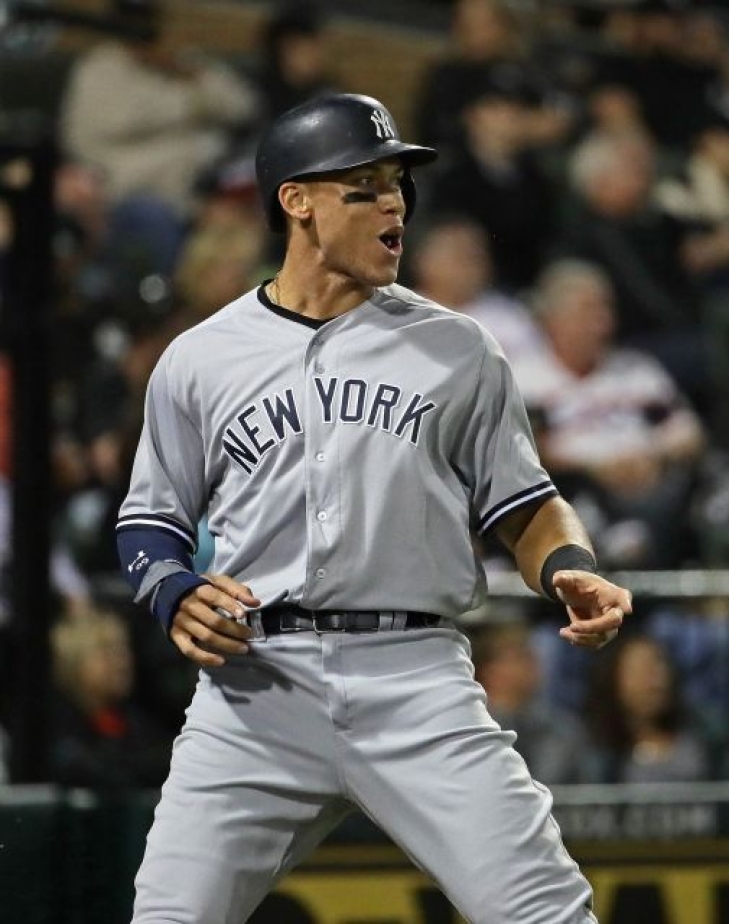
1. Aaron Judge, New York Yankees: 100 Cup Points in 58 Games. (#1 Last Week). 4.7 bWAR, 55 Runs, 86 Hits, 21 Home Runs, 50 Runs Batted In, .391/.485/.764 Slash Line, 1.248 OPS & 248 OPS+.
2. Pete Alonso, New York Mets: 82 Cup Points in 60 Games. (#2 Last Week). 1.9 bWAR, 32 Runs, 63 Hits, 12 Home Runs, 46 Runs Batted In, .284/.384/.536 Slash Line, .920 OPS & 162 OPS+.
3. Francisco Lindor, New York Mets: 81 Cup Points in 59 Games. (#4 Last Week). 2.1 bWAR, 39 Runs, 68 Hits, 14 Home Runs, 36 Runs Batted In, .285/.355/.502 Slash Line, .857 OPS & 147 OPS+
4. Shohei Ohtani, Los Angeles Dodgers: 79 Cup Points in 58 Games. (#5 Last Week). 3.0 bWAR, 64 Runs, 68 Hits, 23 Home Runs, 39 Runs Batted In, .292/.386/.661 Slash Line, 1.047 OPS & 192 OPS+.
5. Rafael Devers, Boston Red Sox: 77 Cup Points in 62 Games. (#2 Last Week). 2.3 bWAR, 38 Runs, 66 Hits, 12 Home Runs, 53 Runs Batted In, .286/.408/.515 Slash Line, .923 OPS & 157 OPS+.
6. (TIE) Bobby Witt Jr., Kansas City Royals: 67 Cup Points in 60 Games. (#6 Last Week). 2.7 bWAR, 30 Runs, 66 Hits, 6 Home Runs, 31 Runs Batted In, .283/.341/.481 Slash Line, .822 OPS & 129 OPS+.
6. (TIE) Cal Raleigh, Seattle Mariners: 67 Cup Points in 58 Games. (Not in the Top Ten Last Week). 3.4 bWAR, 39 Runs, 56 Hits, 23 Home Runs, 45 Runs Batted In, .264/.379/.637 Slash Line, 1.016 OPS & 194 OPS+.
8. James Wood, Washington Nationals: 66 Cup Points in 59 Games. (Not in the Top Ten Last Week). 2.8 bWAR, 38 Runs, 64 Hits, 16 Home Runs, 44 Runs Batted In, .286/.385/.567 Slash Line, .952 OPS & 168 OPS+.
9. (TIE) Spencer Torkelson, Detroit Tigers: 64 Cup Points in 58 Games. (#7 Last Week). 1.4 bWAR, 35 Runs, 48 Hits, 14 Home Runs, 42 Runs Batted In, .235/.346/.510 Slash Line, .855 OPS & 140 OPS+.
9. (TIE) Freddie Freeman, Los Angeles Dodgers: 64 Cup Points in 49 Games. (#10 Last Week). 2.4 bWAR, 33 Runs, 67 Hits, 9 Home Runs, 38 Runs Batted In, .368/.435/.621 Slash Line, 1.056 OPS & 198 OPS+.
Arizona’s Corbin Carroll, Houston's Isaac Paredes, and Philadelphia’s Bryce Harper fell off the top ten.
Notably, 857 baseball players have earned at least 1 point, up from 829 last week.
How Direct Access to Slot Games Improves Player Satisfaction
In the realm of internet amusement, many people have a particular place for slot games. Their straightforward guidelines and captivating images help them to be a preferred choice for short entertainment. Players' enjoyment of their time may change significantly when they can enter these games straightforwardly without any disturbance. Less waiting and more playing resulting from this simple access helps to smooth out and delight the experience. Let's investigate why a player's enjoyment can be much enhanced by being able to start straight into slot games.
Play everywhere
A player's enjoyment is much enhanced by their freedom to play slot games on the go without requiring particular apps or excessive loading times. Direct access means your preferred games are always just a few taps away on your phone or computer, whether you're on a break is short, commuting, or just relaxing at home.
This adaptability lets one have natural fun times appropriate for hectic schedules without interruption. It's about bringing to you, wherever and whenever you choose, the thrill of the game. Try playing slots (ทดลองเล่นสล็อต) no matter your location, as this convenience makes the experience simple and easily accessible.
Instant Pleasure, Without Delay
The instant fun and direct access to slot machines it provides are among its best features. Direct access allows you to start spinning straight away, unlike older methods of playing where you might have to download specific apps or register using multiple procedures.
Less time is spent on setup, so more time is spent enjoying the game. This instant access is rather beneficial for gamers who seek quick enjoyment since it fits the fast speed of the internet environment of today.
In a couple of minutes, you could be engaged in your preferred game without any bothersome waits.
More Options, More Fun
When you play slots directly online, you typically gain access to a much wider variety of games. Whether you prefer simple, classic designs or slots with rich storylines and exciting bonus features, there’s something to suit every taste. The ability to seamlessly switch between different titles keeps the experience engaging and allows you to discover new favorites with ease.
Rich choices inspire players to investigate fresh ideas and methods of winning, as well as help avoid monotony. This wide range guarantees that your gaming experience stays interesting and surprising.
Simple and easily navigable
Direct access usually translates into a quite straightforward and convenient experience. Usually meant to be simple, the websites let you find games fast and learn how to play without any doubt.
This flawless interaction reduces discomfort and improves the whole process's enjoyment. A more pleasant and relaxed gaming session results from players concentrating on the enjoyment of the game itself when everything is easily found and understood.
Attempting Games Without Demand
Many websites that provide immediate access also include a means of trying before you play. This allows you to, without really paying any real money, play a demonstration version of a slot game. Before you commit, this is a great method to learn how a game operates, view its unique elements, and determine whether you enjoy it.
When gamers do decide to play for real, it makes them feel more confident and releases any pressure to spend money immediately. Try playing slots for fun first, as learning the rules becomes much easier when you can experience the game without pressure.
Making gamers satisfied mostly depends on easy access to slot games. These platforms provide a much more fun environment by providing instant fun, flexibility to play anywhere, a larger range of games, the possibility to try before you play, and a basic experience. Players' pleasure increases and the excitement is maintained when they can enter their preferred games straightforwardly without any obstacles. The key is to make the trip fun as seamless and pleasant as possible.
The College Football Hall of Fame tweaks its coaching requirements
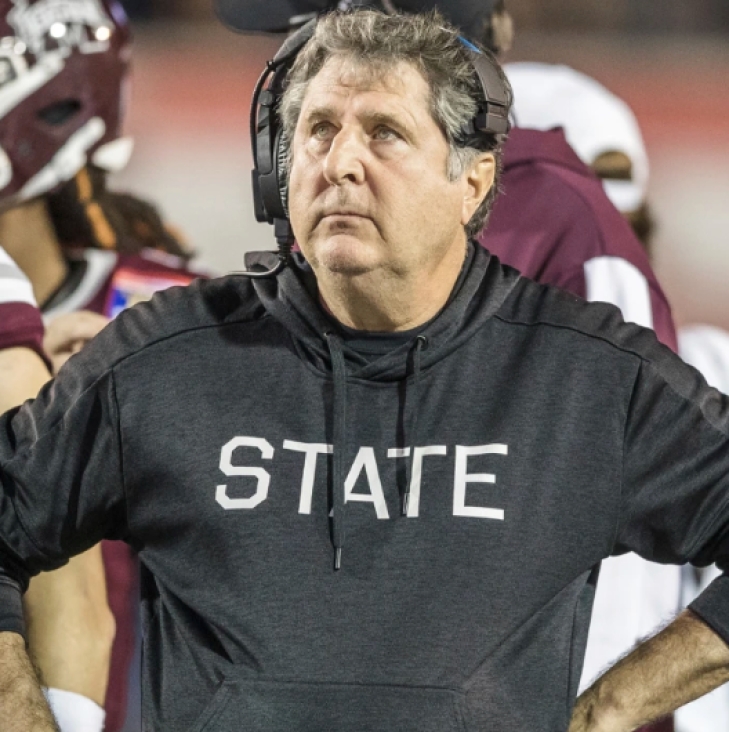
The College Football Hall of Fame has made a minor change to its eligibility requirements for Coaches, and while it seems like a minor one, it could see a major addition. The Hall announced that it is reducing the winning percentage for Coaches from .600 to .595 starting in 2027. That may not seem like it would have much of an impact, but this appears to target one man in particular: Mike Leach, who had a winning percentage of .596 (158-107) over his tenure at Texas Tech, Washington State, and Mississippi State. He passed away in 2022 at the age of 61 following complications from a heart condition.
Leach may not have the “.600 Winning Percentage,” but his dynamic offensive schemes, which feature a blitzing “Air Raid” style that has influenced many other coaches and levels of football, show a Hall of Fame resume. He is not the only man who could benefit from the new rules.
Les Miles, who coached LSU to the 2007 National Championship, saw 37 of his wins vacated due to a recruiting violation, causing his winning percentage to drop from .665 (145-73) to .597 (108-73).
We would not be surprised to see both of them nominated for the 2027 Class.
Demaryius Thomas named to the Denver Broncos Ring of Fame

Regular visitors of Notinhalloffame.com know that we are slowly working on the top 50 of every major team in the NHL, NBA, NFL, and MLB. Once that is done, we will examine how each team honors its past players, coaches, and executives. As such, it is important to us that the Denver Broncos will induct Demaryius Thomas into their Ring of Fame.
The event will take place on October 19 during Denver’s home game against the New York Giants. Sadly, this will be a posthumous induction as Thomas passed away in 2021.
Thomas was Denver’s 22nd Overall Pick in 2010, and the Wide Receiver played for the Broncos until 2018. With the team, he tallied 665 Receptions for 9,055 Yards and 60 Touchdowns and boasted a five-year streak of Pro Bowls (2012-16), and helped Denver win Super Bowl 50
We here at Notinhalloffame.com would like to congratulate the family of Demaryius Thomas on his impending honor.
