

Committee Chairman
42. Abe Gibron
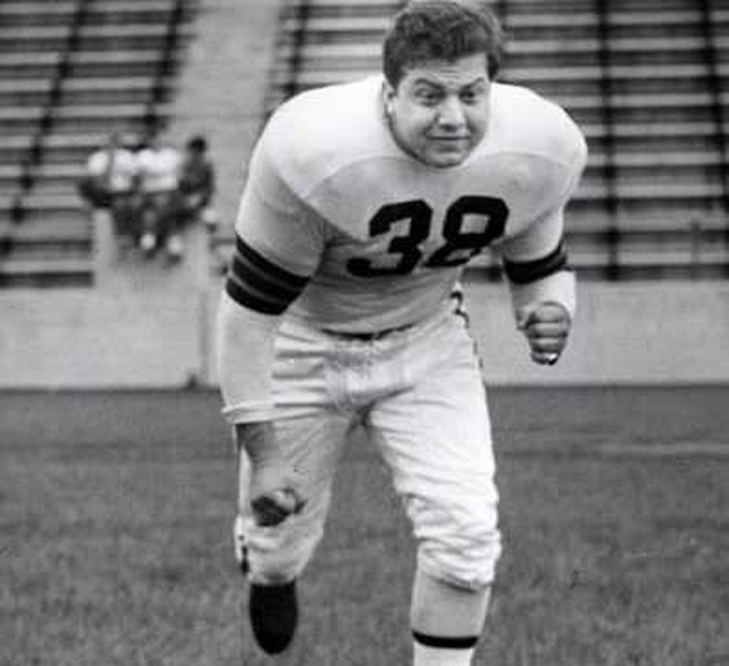
Acquired through a unique transaction following the collapse of the AAFC, Abe Gibron arrived in Cleveland in 1950 after spending his rookie year with the original Buffalo Bills. With the Bills left out of the NFL-AAFC merger, Buffalo ownership traded Gibron and two teammates to Paul Brown in exchange for a minority stake in the Browns franchise—a deal that quickly yielded immense dividends on the field.
Gibron spent his first two years in Cleveland as a high-value backup, learning Paul Brown's system while helping the team capture the 1950 NFL Championship in its inaugural NFL season. By 1952, his rare combination of low-center-of-gravity strength, explosive pull-blocking, and fiery leadership earned him the starting guard spot, instantly elevating the interior of the Browns' offensive line.
What followed was an elite four-year stretch of personal and team dominance. From 1952 through 1955, Gibron earned four consecutive Pro Bowl selections, establishing himself as one of professional football's premier interior blockers. He served as a crucial lead blocker for Otto Graham and the running game, helping power Cleveland to back-to-back NFL Championships in 1954 and 1955. He also earned First-Team All-Pro honors in 1955, cementing his place among the league's elite.
After a decline in playing time led to his release in 1956, Gibron extended his playing career with multi-year stops in Philadelphia and Chicago before later transitioning into a prominent coaching career, including a head coaching tenure with the Bears.
In 2015, Gibron was inducted into the Browns Legends.
41. Mike Pruitt
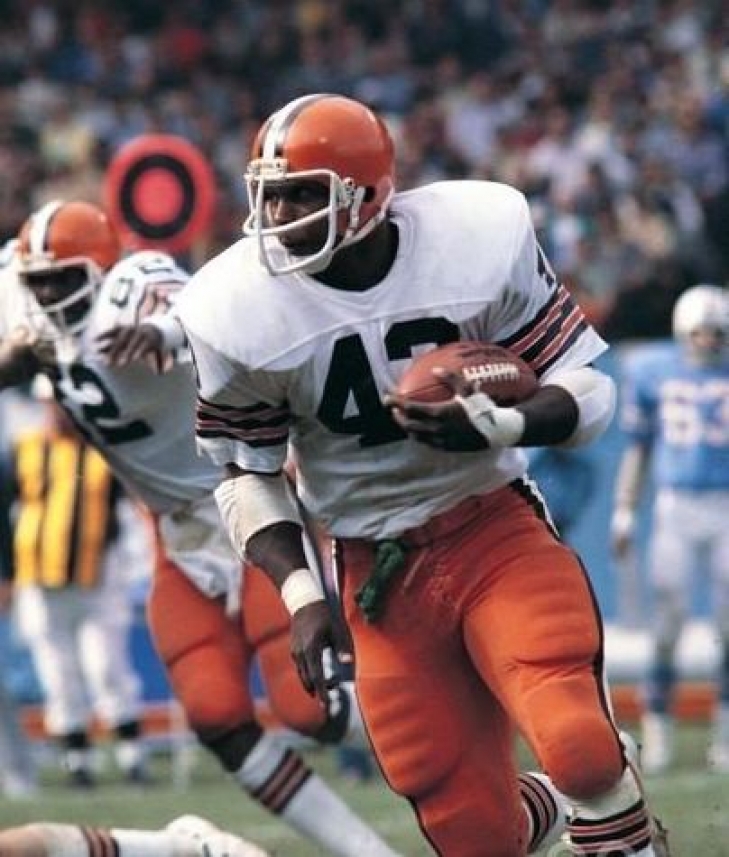
Selected in the second round of the 1976 draft out of Purdue, Mike Pruitt stepped into a Cleveland backfield looking for a new physical identity. The power fullback spent his first two seasons largely stuck on the bench behind established veterans, but when his opportunity expanded in 1978, he showcased a punishing, downhill running style that quickly made him indispensable.
Pruitt smashed through the league in 1979, putting together a breakout campaign for the ages. Operating as the focal point of the offense, he pounded opposing fronts for career highs in rushing yards (1,294) and yards from scrimmage (1,666), scoring nine touchdowns while earning his first Pro Bowl selection. His ability to move the chains on short-yardage downs gave Cleveland a relentless, physical punch that balanced Brian Sipe's passing attack.
He proved that explosive season was no fluke during the historic 1980 "Kardiac Kids" division-winning run. Pruitt racked up 1,034 rushing yards, added 471 receiving yards, and recorded six total touchdowns, earning his second consecutive Pro Bowl nod. He remained a high-volume workhorse over the next several seasons, topping 1,500 yards from scrimmage again in 1981 and logging his fourth career 1,000-yard rushing campaign in 1983.
As injuries and heavy workload mileage caught up to him, Pruitt saw his snap count decline in 1984. Cleveland released the veteran fullback prior to the 1985 season, allowing him to finish his career with short stops in Buffalo and Kansas City.
Over his time with the Browns, Pruitt accumulated 6,540 rushing yards, 1,761 receiving yards, and punched in through the end zone 52 times. The Browns inducted him as one of their legends in 2004.
40. Jim Houston
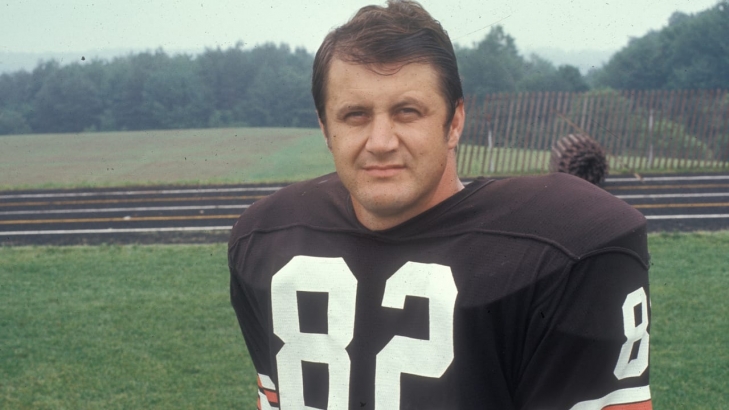
Keeping Ohio State stars in-state was a signature Cleveland Browns strategy, and selecting Jim Houston eighth overall in the 1960 NFL Draft paid off instantly. Coming off an All-American career in Columbus, the rookie immediately locked down a starting job on the outside of Paul Brown’s defense, kicking off a decade-plus of reliable production.
While Cleveland’s 1960s identity was headlined by Jim Brown and an explosive offense, Houston provided the defensive backbone. Billed as "Mr. Dependable," he possessed the athletic versatility to set the edge against the run, blitz off the corner, or drop into deep coverage against running backs and tight ends. His steady play peaked in 1964, when he helped shut out the Baltimore Colts 27–0 in the NFL Championship Game to capture Cleveland's last league title.
His individual honors increased throughout the decade. Houston was selected for four Pro Bowls (1964, 1965, 1969, and 1970), maintaining his status as one of the top linebackers despite a coaching change to Blanton Collier. Known for his relentless play in space, he recorded 14 career interceptions—three of which he returned for touchdowns—and recovered 11 fumbles. Retroactive analysis also attributes 29.5 sacks to him, emphasizing his often overlooked pass-rushing contribution on third downs.
Houston retired after the 1972 campaign, ending a 13-year career spent entirely in Cleveland. The Browns named him as one of its Legends in 2006.
39. Tommy James
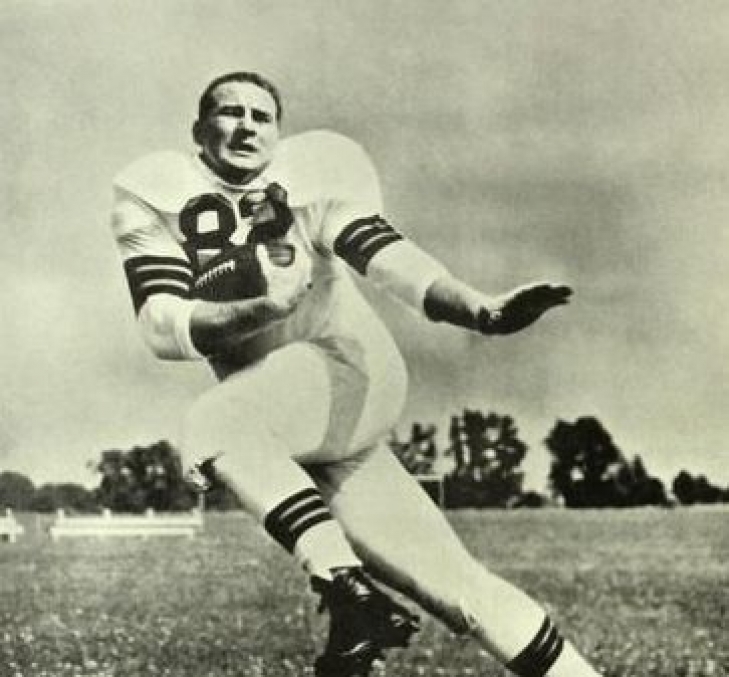
Signing Tommy James after his release from the Detroit Lions turned out to be another masterstroke by Paul Brown. Following an injury-shortened rookie year in Detroit that ended with a broken arm, the former Ohio State defensive back returned to his home state in 1948, quickly earning a starting job in Cleveland's secondary during the final two dominant runs of the All-America Football Conference (AAFC).
James immediately solidified the back end of Paul Brown’s defense. Blending sharp instincts with aggressive, physical coverage, he helped guide Cleveland to back-to-back undefeated and championship AAFC seasons in 1948 and 1949. When the Browns moved to the NFL in 1950, James proved his style translated seamlessly, helping defeat the Los Angeles Rams in the 1950 NFL Championship Game to capture the franchise's third straight league title across two leagues.
His individual production hit its stride in the early 1950s as a focal point of Cleveland’s defense. James earned his lone Pro Bowl selection during the 1953 season, picking off a career-high nine passes and returning them for 164 yards. He went on to help anchor two more championship runs, grabbing back-to-back NFL titles in 1954 and 1955 while regularly shutting down opponents’ downfield passing attacks.
After eight seasons in Cleveland (1948–1955), James spent his final NFL campaign with the Baltimore Colts in 1956 before hanging up his cleats. With the Browns, James played in 94 regular-season games, snatched 34 interceptions, and won five league titles (two AAFC, three NFL). The Browns permanently honored his role as a foundational champion by naming him a Cleveland Browns Legend in 2004.
