


Site Admin
13. Norm Cash
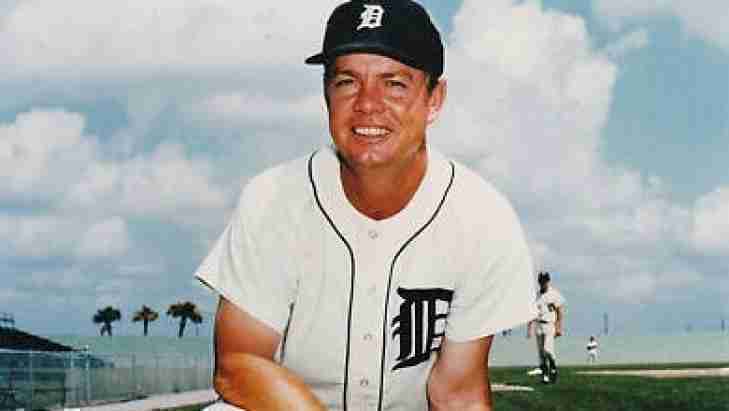
The 1961 baseball season is immortalized by the pinstriped pursuit of Babe Ruth’s ghost, but while the world watched Roger Maris and Mickey Mantle, Norm Cash was quietly putting forth one of the greatest offensive anomalies in the history of the sport.
Arriving in Detroit a year prior in a lopsided trade with Cleveland, "Stormin' Norman" evolved into a left-handed powerhouse whose swing was as distinctive as his colorful personality. Cash spent fifteen seasons as the defensive and emotional heartbeat of the Tigers' infield, blending a Texas-sized sense of humor with a bat that could leave Tiger Stadium in a heartbeat.
Cash’s tenure in the Motor City was highlighted by a 1961 campaign that defies modern logic. That summer, he put together a statistical profile that would look at home in a video game, capturing the American League batting title with a staggering .361 average, a mark that remained the highest by any player in the 1960s. He didn't just hit for contact; he led the league in on-base percentage (.487) and OPS (1.148) while launching 41 home runs and driving in 132. It was a season of such profound efficiency that even a 6.0 bWAR barely does it justice; he simply operated on a different plane than the rest of the league, even if the national spotlight was fixed firmly on the home run chase in New York.
While he never replicated that magical "one-off" peak, Cash remained a model of high-frequency power throughout the next decade. He was the only American League player to belt at least 20 home runs every year from 1961 to 1969, serving as the veteran stabilizer for a Detroit lineup that was consistently among the league's most dangerous. He possessed a specialized athleticism at first base, setting franchise defensive records for putouts and double plays that stood for decades. His professional resilience was never more evident than during the 1968 World Series, where he channeled his 1961 form to hit .385 against the Cardinals. His clutch single in the seventh inning of Game 7 ignited the rally that finally broke a scoreless tie and brought the championship back to Michigan.
His presence in the clubhouse was defined by an infectious energy and a legendary wit that made him a favorite among teammates and fans alike. Whether he was famously trying to use a table leg as a bat against Nolan Ryan or providing the high-leverage hits needed to secure the 1972 division title, he played with a grit that solidified his status as a Detroit institution.
Retiring after the 1974 season, Cash compiled 373 home runs, 1,793 hits, and a World Series ring while winning the 1961 AL Batting Title.
5. Miguel Cabrera
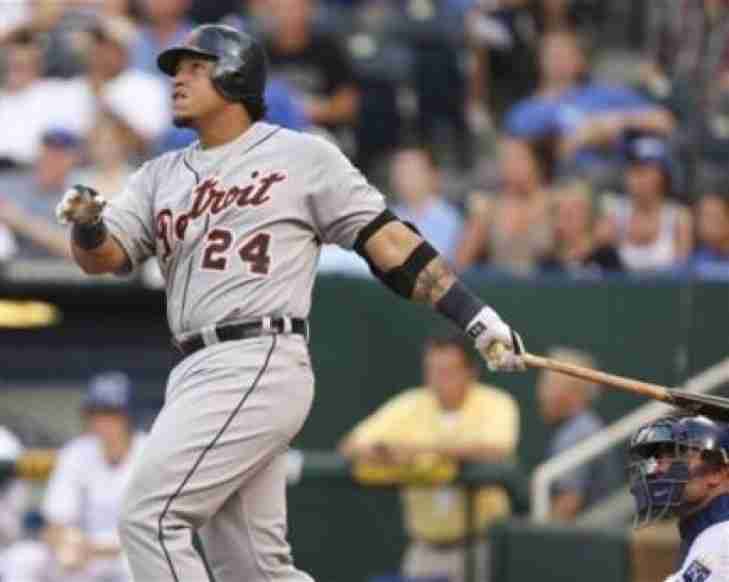
When the Florida Marlins sent Miguel Cabrera to Detroit in late 2007, they didn't just trade a superstar; they gifted the Motor City a generational icon who would go on to rewrite the franchise record books. Already a World Series champion upon arrival, the Venezuelan phenom elevated his game to a level of offensive mastery rarely seen in the modern era.
Cabrera’s transformation into a Detroit immortal began the moment he donned the Old English "D," immediately anchoring a lineup that would become the class of the American League. He established a standard of specialized excellence that few could mirror, collecting MVP votes in each of his first nine years with the club. His production reached a historic zenith in 2012, when he accomplished what many thought was no longer possible: winning the first Triple Crown in forty-five years. By leading the league in batting average, home runs, and RBIs, he secured the first of two consecutive MVP awards and cemented his status as the premier tactical force in baseball.
The sheer breadth of his dominance was staggering, as he collected four batting titles and two slugging crowns during his tenure. Cabrera was a model of high-frequency efficiency, serving as the primary engine for a Tigers squad that captured four straight division titles from 2011 to 2014. Whether he was driving a ball into the opposite-field gap or launching a towering blast to center, his craftsmanship at the plate was a clinic in hitting for both power and average. He wasn't just a volume producer; he was a high-leverage threat who seemed to thrive when the lights were brightest, providing the veteran poise that defined the most successful stretch of Detroit baseball in the 21st century.
His presence in Michigan was defined by a professional resilience that saw him endure through the inevitable physical toll of a long career. Even as his mobility decreased and his power shifted toward a more contact-oriented approach, he continued to chase the sport’s most hallowed benchmarks. The final years of his stay were a celebration of longevity, punctuated by his entry into the 500-home run club in 2021 and the 3,000-hit fraternity in 2022. He competed with a focused intensity that never masked his genuine passion for the dirt and the grass, solidifying a bond with the Detroit faithful that made him a local pillar long before his 2023 farewell tour.
The story in Detroit concluded with 373 home runs and over 1,300 RBIs in a Tigers uniform, leaving behind a legacy that ensures his next stop will be a first-ballot induction in Cooperstown.
4. Hal Newhouser
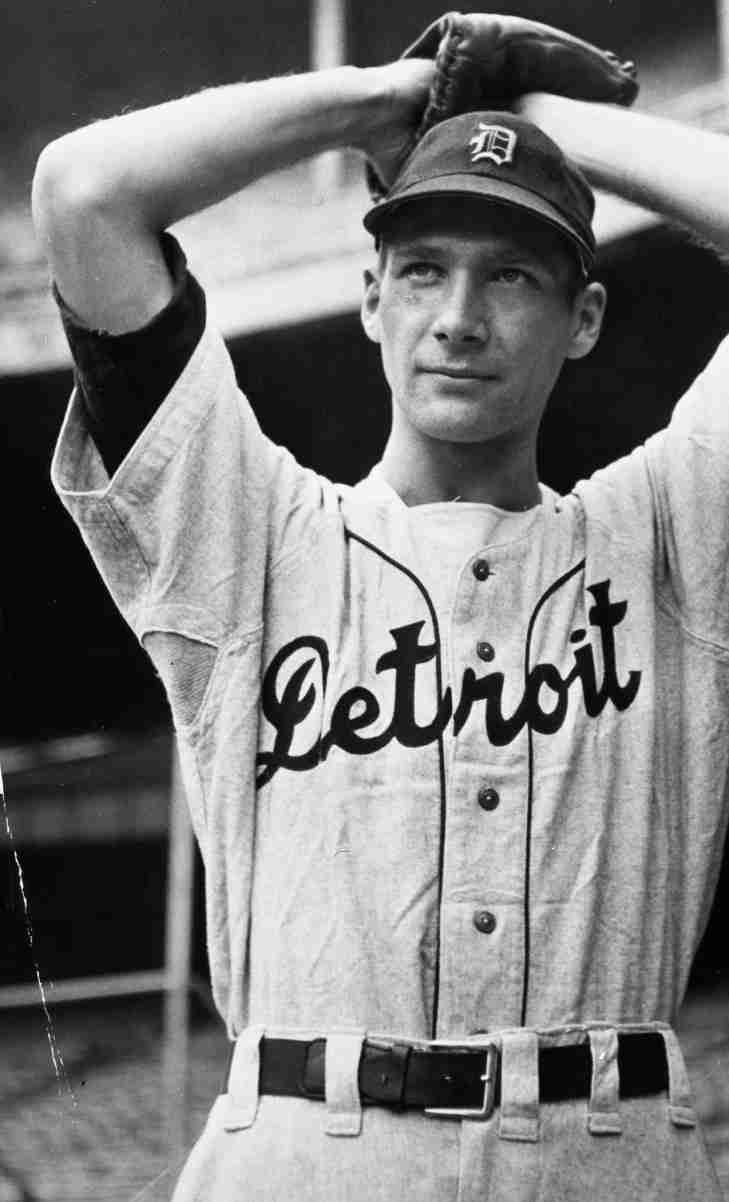
While many pitching legends were carved into the history books during the deadball era, Hal Newhouser’s peak emerged amidst the fires of the 1940s, a period where he stood as the undisputed titan of the mound. Known as "Prince Hal" for his dignified presence—and occasionally "Hurricane Hal" for his fiery competitive streaks—the Detroit native stayed home while others went to war, held back by a heart condition that would paradoxically allow him to lead his hometown team to the absolute summit of the sport. His legacy is etched in a rare back-to-back MVP achievement, a feat that remains the benchmark for pitching dominance in the modern age.
Newhouser’s rise to the rotation was forged as a teenager, but he reached a staggering high-water mark in 1944. That summer, he put together a 29-win campaign that earned him his first American League MVP trophy, a performance he incredibly duplicated in 1945. This second act was the definitive masterpiece of his career; he captured the elusive Pitching Triple Crown by leading the league in wins (25), strikeouts (212), and ERA (1.81). He was a model of specialized endurance, delivering the high-leverage strikes Detroit needed to carry it to a grueling seven-game World Series victory over the Cubs, including a gutsy complete-game win in the finale.
The most profound aspect of his tenure was how he sustained this elite output even as the game’s greatest stars returned from military service. Newhouser was a master of the shifting landscape of the "Live Ball" era, proving that his brilliance was not merely a byproduct of depleted lineups. Between 1946 and 1948, he continued to dominate the Junior Circuit, leading the league in FIP for three consecutive seasons and securing his fourth 20-win season in 1948. He possessed a specialized, high-velocity delivery that made him a high-frequency strikeout artist, concluding the decade with more wins (170) and punchouts (1,579) than any other pitcher in baseball.
With the Tigers, Newhouser compiled 200 wins and 1,770 strikeouts while securing back-to-back MVP awards and the 1945 Triple Crown.
The organization provided the final punctuation on his incredible journey in 1997, five years after his induction into Cooperstown. The Tigers retired his number 16, ensuring that the legacy of the local boy who conquered the 1940s would remain a permanent fixture of Detroit’s baseball soul.
8. Hank Greenberg
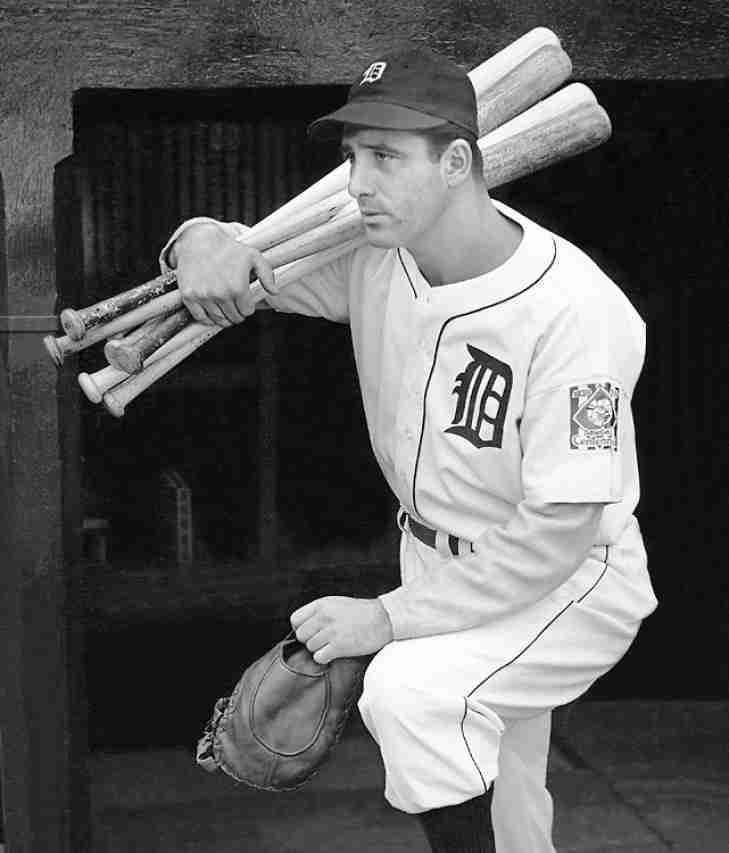
The story of Hank Greenberg is an intriguing "what-if" narrative in the history of the game. For twelve years, he was the heartbeat of the Detroit Tigers, a man whose presence in the lineup guaranteed a level of offensive production that bordered on the surreal. Yet, his legacy is defined as much by his absence as his presence; as the first major star to enlist in the military during World War II, he surrendered 47 months of his absolute athletic prime to the service of his country. Had he not spent those four years in the Army Air Forces, the record books would likely be a much different place today.
Greenberg’s tenure in Detroit was a masterclass in hitting for both power and average. He broke into the everyday lineup in 1933 and immediately set a standard of excellence that never wavered. He reached an early high-water mark in 1935, capturing his first American League MVP after leading the circuit with 36 home runs and a staggering 170 RBIs. His offensive output was a primary driver for the Tigers' first-ever World Series championship that autumn. He was a model of disciplined strength, possessing a unique ability to drive the ball to all fields, culminating in his historic 1938 run, in which he finished with 58 home runs, falling just two shy of Babe Ruth’s then-record.
The middle chapters of his career were defined by a historic transition and a profound commitment to duty. In 1940, at the height of his powers, Greenberg agreed to move from first base to left field to accommodate teammate Rudy York, a selfless adjustment that resulted in his second MVP award. He became the first player in major league history to win the honor at two different positions, hitting .340 and leading the Tigers to another pennant. However, after only 19 games in 1941, he traded his Detroit uniform for a military one. He spent the next four years serving as a captain in the China-Burma-India theater, returning to the club midway through 1945 just in time to hit a pennant-clinching grand slam and lead the Tigers to their second World Series title of his era.
In early 1947, his contract was sold to the Pittsburgh Pirates. With the Tigers, Greenberg compiled 306 home runs and 1,202 RBIs while capturing two MVP awards and two World Series titles.
The organization and the baseball world provided the final punctuation on his legacy when he was inducted into the Baseball Hall of Fame in 1956. In 1983, the Tigers ensured his name would forever be part of the franchise's skyline by retiring his number 5.