


Site Admin
37. Armando Reynoso
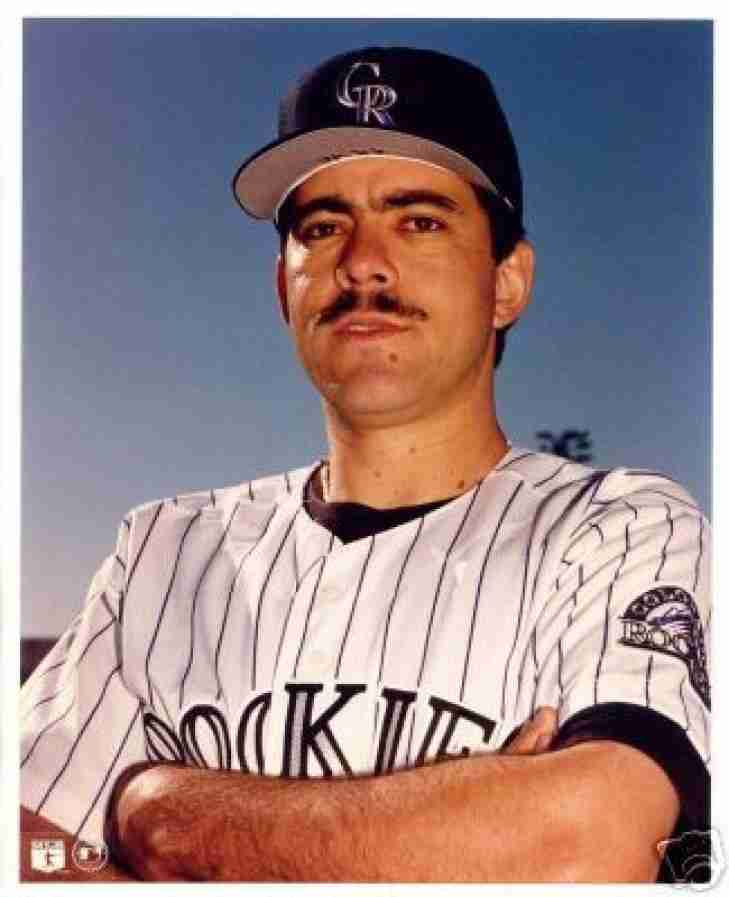
A right-hander from Mexico who had previously struggled to find a permanent home in Atlanta, Reynoso became an original member of the 1993 inaugural rotation.
Reynoso’s time in Denver began with a 1993 season that remains one of the best for a starter in the team's early history. He led the inaugural staff with 12 wins and 189 innings pitched. In an era where a 5.00 ERA was often considered a success at altitude, Reynoso produced a sharp 4.00 mark and struck out 117 batters.
The calling card of his time in purple and black was a professional resilience that allowed him to bounce back from injuries that hampered his 1994 and 1995 campaigns. Despite being limited to just 29 appearances across those two seasons, he remained a high-leverage asset whenever he took the mound, contributing to the club's historic first playoff run in 1995.
Reynoso had a much better 1996, throwing 168.2 innings with an 8-9 record and a 4.96 ERA, but he would be traded to the New York Mets that December. As a member of the Rockies, Reynoso had a 30-31 record with a 4.65 ERA.
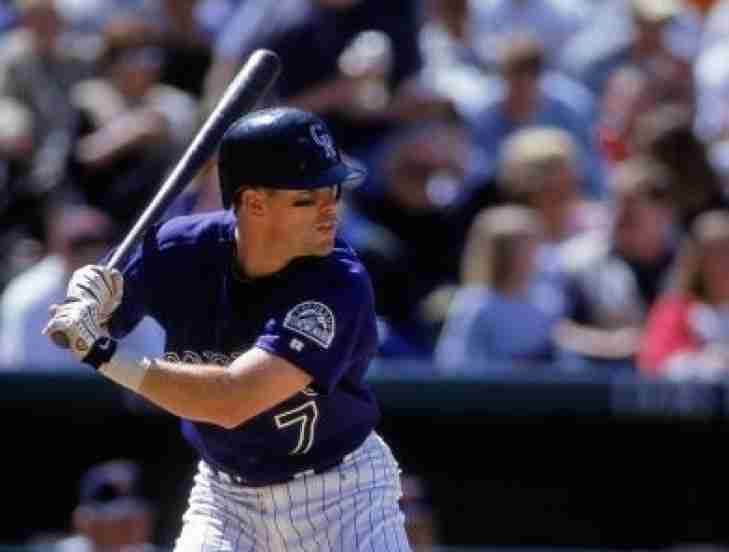
35. Jeff Cirillo
32. Clint Barmes
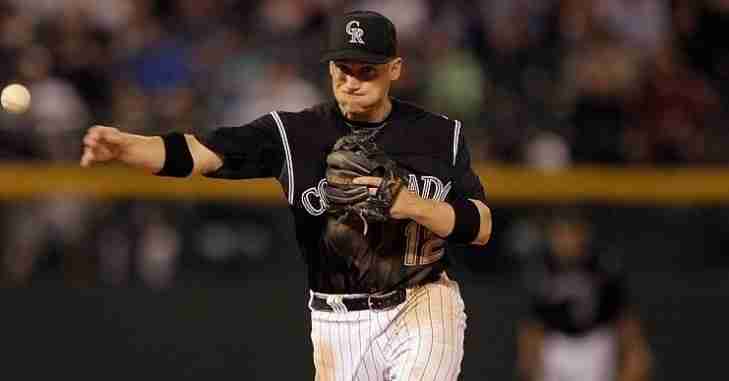
Before Troy Tulowitzki redefined the shortstop position in Denver, Clint Barmes was the athletic, high-energy presence who bridged the gap for the Colorado Rockies. Arriving as a 10th-round pick from Indiana State, Barmes didn't just fill a spot on the roster; he became a vital part of the franchise's mid-2000s identity.
Barmes’ tenure in Colorado began with a sensational 2005 campaign. Through the first six weeks of the season, he led the major leagues in batting average, hitting over .400 and capturing the NL Rookie of the Month honors for April. This stretch was punctuated by a legendary walk-off home run on Opening Day against Trevor Hoffman, a moment that remains etched in Coors Field lore. While a freak off-field injury involving a package of deer meat eventually derailed his Rookie of the Year candidacy, he proved he could provide the spark needed to ignite a lineup.
The hallmark of his time in the Rockies’ infield was defensive efficiency that often outpaced his offensive numbers, especially in 2006, when he recorded a 3.2 defensive bWAR, the second-highest mark in the National League. Despite a difficult year at the plate, Barmes was a model of specialized fielding, utilizing his sprinter-like quickness to inhale ground balls across the diamond. He possessed a versatile skill set that allowed him to transition smoothly to second base later in his tenure, where he eventually set a career high with 23 home runs during the 2009 season, helping lead the club back to the postseason.
While his career was marked by a specialized struggle with on-base percentage, his lifetime .294 OBP remains a significant statistical anchor; his total contributions to the organization are undeniable. He amassed 564 hits and 61 home runs before departing for Houston in 2011.
23. Jason Jennings
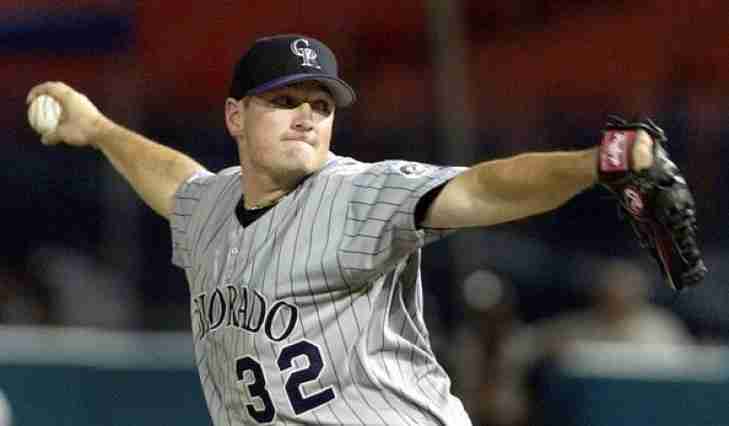
Jason Jennings’ stay in Colorado began with a high-velocity entrance in late 2001, but it was his 2002 campaign that remains a pillar of franchise history. He became the first, and still only, Rockie to capture the National League Rookie of the Year award, navigating a massive workload to secure 16 victories. He was a model of specialized efficiency from the jump, utilizing a heavy sinker and a competitive grit to post a winning record in a season where the league batting average was soaring. He possessed a rare, high-leverage durability, serving as the primary engine for a rotation that was desperate for a frontline anchor.
The most profound aspect of his career was his ability to maintain a professional resilience through the grueling summers of the pre-humidor era. While his win-loss records in subsequent years were often victims of the high-scoring environment, his individual value reached a second peak in 2006. That summer, Jennings authored a masterclass in run prevention, posting a 3.78 ERA, a decent figure for a Coors Field starter at the time, which earned him an eighth-place finish in bWAR among all National League pitchers.
The story in Colorado reached a crossroads following his dominant 2006 campaign. As Jennings entered his final year of salary arbitration and neared free agency, the Rockies faced a difficult financial reality. Rather than risk losing their ace for nothing at the end of the 2007 season, the front office opted for a blockbuster trade in December 2006, sending Jennings to the Houston Astros in a multi-player deal that brought back Willy Taveras, Jason Hirsh, and Taylor Buchholz. It was a bittersweet conclusion; the man who had stabilized the rotation for five years was moved just months before the franchise’s historic "Rocktober" run to the World Series.
With the Rockies, Jennings compiled 58 wins and 622 strikeouts.