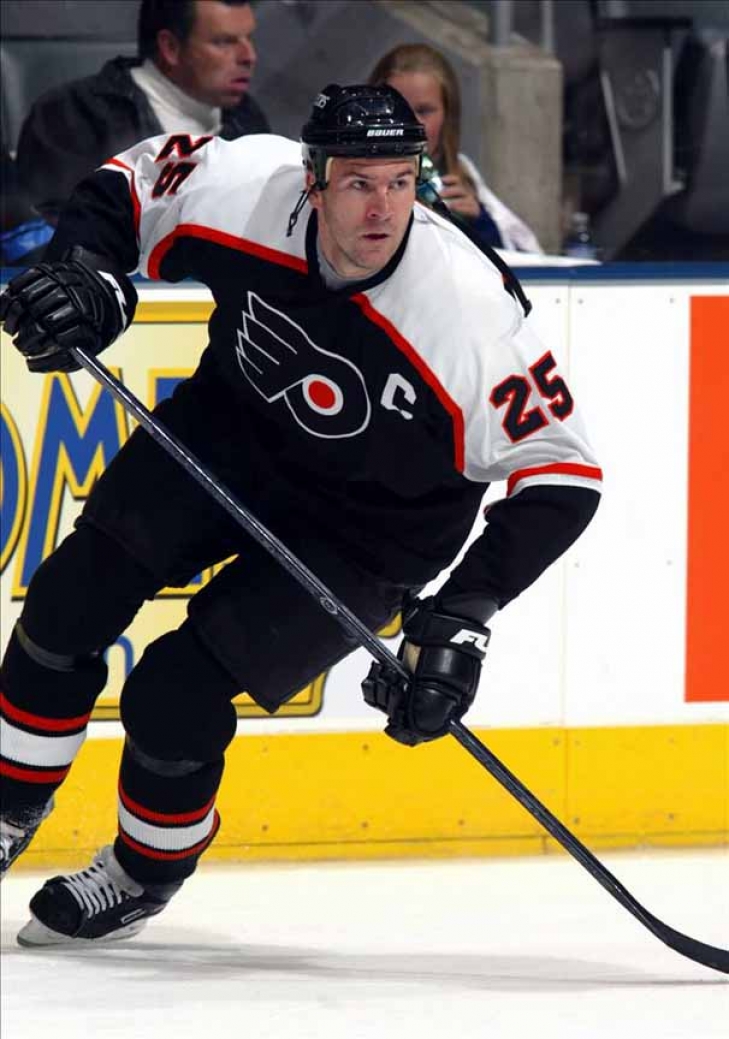

72. Brent Sutter
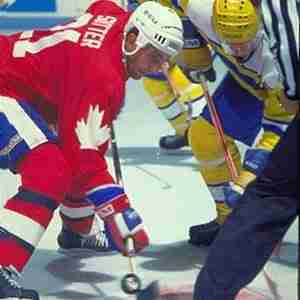
Typically, if you are considered the best hockey player in your family, it isn’t much of an accolade. This was not the case for Brent Sutter, who may have been the most talented of what could be the most storied set of siblings in professional hockey. The Sutters were known for their work ethic, and Brent was no exception. Brent Sutter was known for doing all the small intangibles that made a team successful, and yet he still achieved over 800 points in his career. He likely won’t get in, but should he slip in, it might be a celebration of the Sutter family as a whole.
64. Eric Desjardins
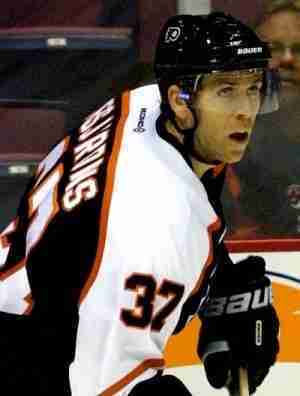
A solid two-way defenseman, Eric Desjardins was one of the better players behind the blue line during the 1990s. Desjardins could help stop the puck as well as help put it in the net. He won a Stanley Cup with the Habs in 1993, and upon being traded to Philadelphia, he was even more productive. He was easily their best defenseman and was good enough to represent Canada on three World Class National teams. Desjardins was a star, and with 575 career points, he could receive a look, but chances are that will be all he will receive.
177. Kevin Dineen
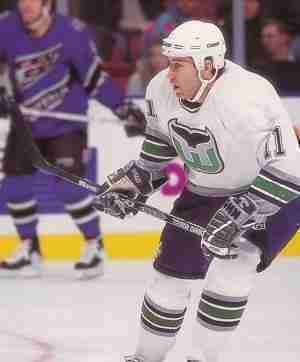
A top player for the Hartford Whalers, Kevin Dineen twice scored 40 goals and was clearly one of the better players in the NHL during the late ’80s. Dineen also had a good run with the Flyers through the following decade. He was clearly a good player who had very good moments, but he was not labeled a great one. Had his run as a very good player lasted longer than his Whalers run, he might have a better shot than he currently does, but considering he had a nineteen-year career with over 700 points, Kevin Dineen had a career to be proud of.
20. Rick Middleton
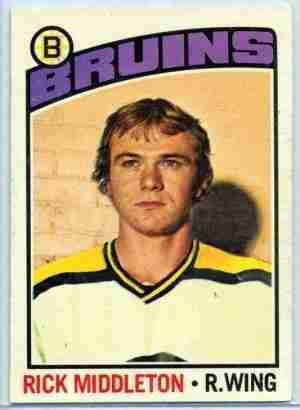
Generally, when General Managers engineer trades, both hope for some sort of accurate equity in return. The New York Rangers certainly did not gain that equity when they traded Rick Middleton to the Boston Bruins for Ken Hodge, who was nearing the end of his career. Middleton, however, was just getting started. The man dubbed “Nifty” scored 898 points for his new team and proved to be the best offensive threat for the Bruins for nearly a decade.
51. Rick Tocchet
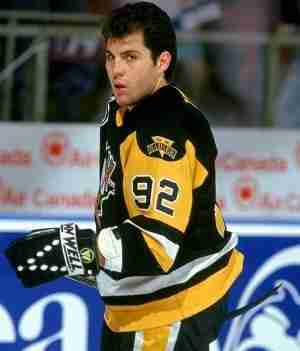
When Rick Tocchet entered the National Hockey League, he seemed to do so with the strength of his fighting skills. Tocchet still fought, but by his fourth season, he emerged as an effective scorer as well. Tocchet was as hard-nosed as they came and was the quintessential power forward of the game. The popular winger won a Stanley Cup with Pittsburgh, and though he played for six different teams throughout his career, he was always among the more popular. Tocchet did score a lot of points, but it may not have been enough to gain entry. Let’s hope that Rick Tocchet isn’t betting on his chances.
44. Brian Propp
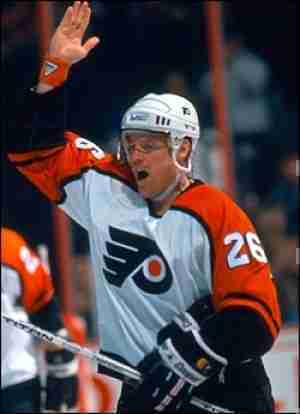
In 1999, Master Card named the entire Canadian Junior Hockey Team. This team featured current Hall of Famers Wayne Gretzky, Mario Lemieux, Guy Lafleur, Denis Potvin, Bobby Orr, and Bernie Parent. It also featured Saskatchewan native Brian Propp, who lit up the lights for the Brandon Wheat Kings. Propp’s first NHL season saw him on a line with Bobby Clarke and Reggie Leach. He held his own, and for the next ten years, he was a consistent offensive threat on Broad Street.
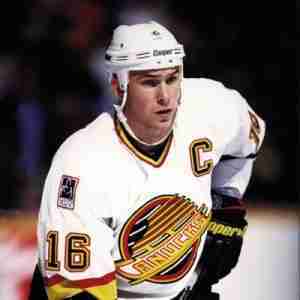
94. Trevor Linden
2. Theoren Fleury
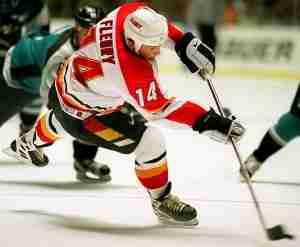
Is it possible to be one of the more inspirational players in hockey history yet have a career that is a somewhat cautionary tale to young players? With Theoren Fleury, the answer appears to be yes.
70. Adam Graves
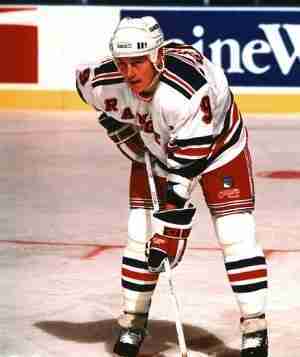
A part of the Edmonton Oilers “Kid Line” (With Joe Murphy and Martin Gelinas), Adam Graves was part of the successful tonic that gave the Oilers their last Stanley Cup in 1990. It was, however, when Graves signed with the Rangers that he was removed from the checking line and was able to show what kind of sniper he could be. Graves was a vital cog in the Rangers' 1994 Stanley Cup run and reached the elusive 50-goal plateau that season. Graves may have been known as one of hockey’s “Good Guys” as his efforts to give back to the community are well-documented. Although Graves was a reliable scorer, he likely lacked the overall points total to make the Hall.
163. Danny Gare
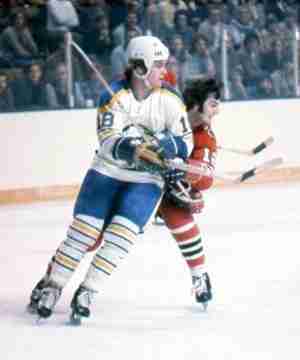
Though the focus on the 1970s Buffalo Sabers lay with the French Connection line, Danny Gare showcased a few seasons that matched what any sniper was doing at the time. Gare enjoyed a pair of 50-goal seasons and was even the co-goal-scoring champion in the 1979-1980 campaign. The scrappy star’s game tailed off after being traded to Detroit, but Gare had enough impact to have his jersey retired in Buffalo. It is unlikely, though, that he can receive a similar accolade in the Hockey Hall of Fame in Toronto.
215. Ryan Smyth

From Banff, Alberta, Ryan Smyth would play for his home province, the Edmonton Oilers, for the first eleven and a half seasons of his career. Smyth would become one of the Oilers’ top scorers, known for his determination and scoring ability. Smyth would have three 30 Goal seasons for the Oilers, and he was regarded by many as the team leader, taking Edmonton to the Stanley Cup Finals, though they would go down to defeat in seven games against the Carolina Hurricanes. Smyth would be traded the following season to the New York Islanders, and afterward he would sign with the Colorado Avalanche as a Free Agent. Smyth would return to Edmonton, where he would finish his career.
62. Shane Doan

119. Dan Boyle
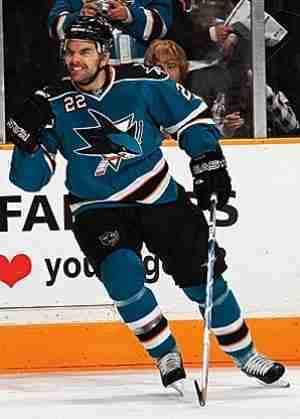
102. Ed Jovanovski
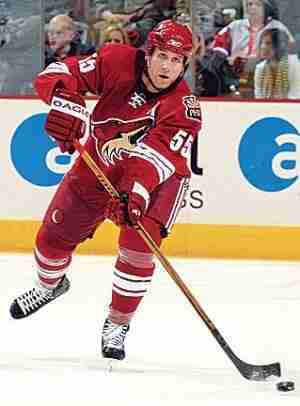
120. Owen Nolan
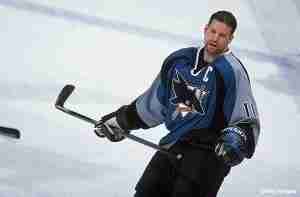
266. Keith Primeau