

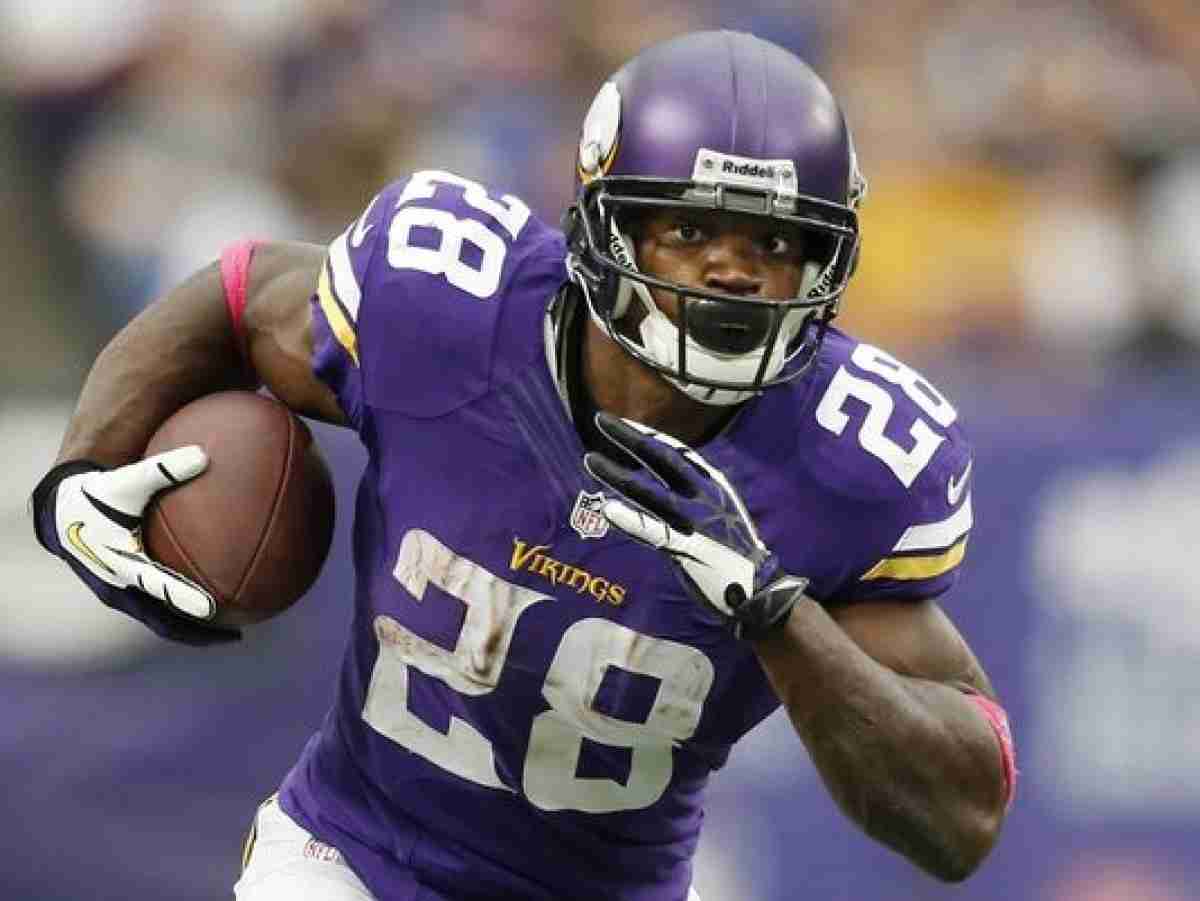
For those who grew up in this generation, it's impossible to think about the Minnesota Vikings without Adrian Peterson as the first player that comes to mind. Peterson came out of the University of Oklahoma and took the NFL by storm, as many knew that he would. The Vikings selected him seventh overall in 2007, and he immediately became the offense's centerpiece.
His rookie season set the tone. Peterson rushed for 1,341 yards and 12 touchdowns in 14 games, including a single-game NFL record of 296 yards against the Chargers. He earned Offensive Rookie of the Year honors and made the Pro Bowl. His physical running style and breakaway speed were evident from the start, and he quickly became one of the league’s most feared backs.
The following year, he led the NFL in rushing with 1,760 yards and 10 touchdowns on 363 carries. That total established a then-franchise single-season record and earned him first-team All-Pro honors. Peterson continued to pile up big games in 2009 with 1,383 yards and a league-leading 18 rushing touchdowns. The production across those early seasons showed both volume and scoring ability.
The 2012 season was his best. Coming off a torn ACL and MCL from the previous year, he returned and rushed for 2,097 yards and 12 touchdowns on 348 carries, finishing just nine yards short of the single-season record. He averaged 6.0 yards per attempt while carrying the Vikings to a playoff berth. Peterson earned consensus MVP and Offensive Player of the Year honors. The comeback and near-record performance made it one of the most remarkable individual seasons in recent NFL history.
He suffered a setback that took him out most of 2014 but returned in 2015 to win the rushing title again with 1,485 yards and 11 touchdowns on 327 carries. That performance earned another first-team All-Pro selection. Injuries limited him again in 2016, and he played only three games. The Vikings did not exercise his option for 2017, ending his decade-long run in Minnesota.
Peterson signed with the New Orleans Saints the following season and continued his career with several other teams. He remained productive in short stints but never matched the sustained dominance of his years in purple. His departure marked the end of an era in which he was the clear face of the Vikings offense.
With the Vikings, he finished with 11,747 rushing yards and 97 rushing touchdowns across 123 games. He also added 1,945 receiving yards and five more touchdowns. Peterson became the third-youngest player to reach 10,000 rushing yards, and all of that production came in Minnesota. The numbers cemented him as the franchise’s all-time leading rusher by a wide margin.
He earned seven Pro Bowl selections and four first-team All-Pro honors, and won three rushing titles during his time with the team. Peterson led the league in rushing three times and in rushing touchdowns twice. His individual awards and team impact left little doubt about his place among the greatest backs the Vikings have ever had.
Peterson looks to be a future Hall of Fame entrant, and his Vikings years form the core of that case. The explosive runs, the MVP season, and the longevity in the face of injuries defined a generation of Minnesota football. For many fans, he remains the first player who comes to mind when they think of the franchise.


Comments powered by CComment