
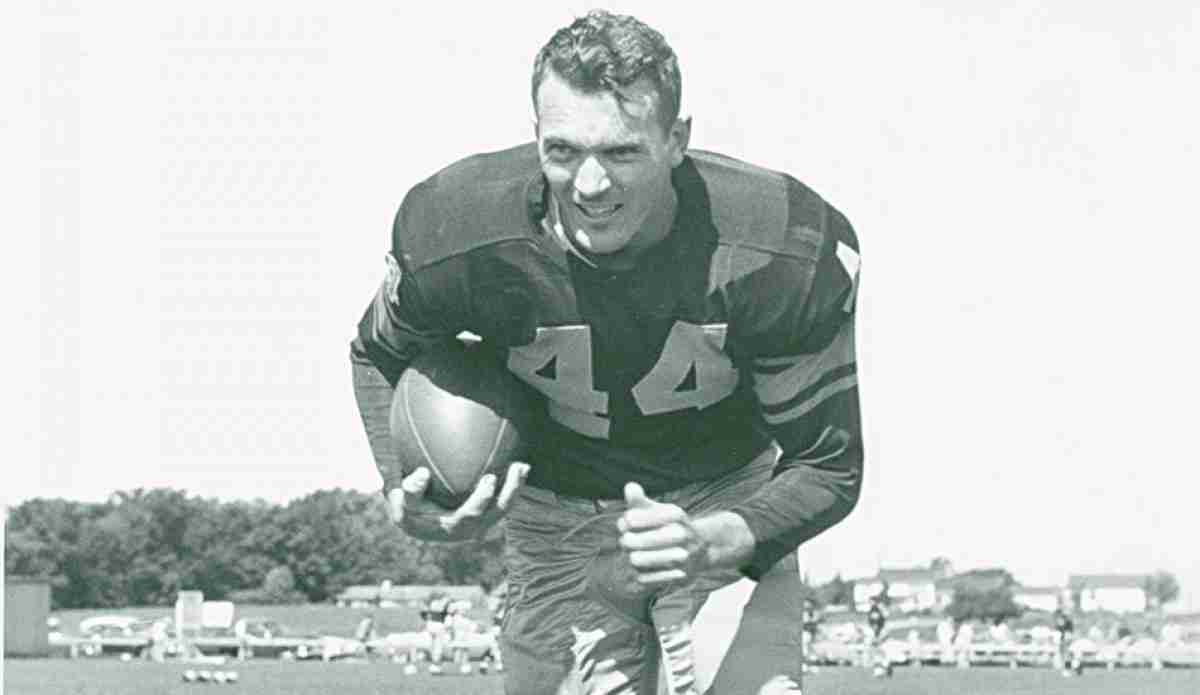
Selected in the third round (28th overall) of the 1952 NFL Draft out of the University of Texas, Bobby Dillon arrived in Green Bay with very little fanfare, but he immediately transformed into a defensive terror. What made his legendary playmaking ability truly astounding was a severe childhood accident that left him with a glass eye; playing his entire career with vision in only one eye, "The Hawk" neutralized passing attacks through sheer anticipation, razor-sharp instincts, and world-class closing speed.
Dillon wasted no time establishing his territory in the Packers' secondary, leading the team with four interceptions as a rookie. That debut performance kicked off an unprecedented seven-year run in which he finished as Green Bay's primary interception leader every season through 1958. He hit the nine-interception threshold on three separate occasions (1953, 1955, and 1957), highlighted by a Thanksgiving Day showcase against Detroit in 1953 where he intercepted four passes in a single game—a feat that remains tied for the NFL single-game record.
Dillon's dominance spanned 1954 to 1958, a five-year stretch in which he established himself as arguably the premier safety in professional football. He was named a First-Team AP All-Pro in four of those five seasons (1954, 1955, 1957, and 1958) while earning four consecutive Pro Bowl selections from 1955 through 1958. Opposing quarterbacks quickly learned that throwing anywhere near his side of the field was an invitation for a game-changing takeaway.
Intending to retire following the 1958 campaign, Dillon was persuaded by first-year head coach Vince Lombardi to return for one final run in 1959. Though injuries curtailed his final season, he helped instill the defensive standard that laid the foundation for Green Bay's 1960s dynasty. Over his eight years in Titletown, Dillon picked off 52 passes and returned them for 976 yards and five touchdowns—a franchise interception record that has stood untouched for nearly seven decades.
Dillon was enshrined in the Green Bay Packers Hall of Fame in 1974. Ultimate national recognition finally arrived in 2020 when he was posthumously elected to the Pro Football Hall of Fame as part of the NFL's Centennial Slate,


Comments powered by CComment