

Site Admin
38. Bob Caruthers
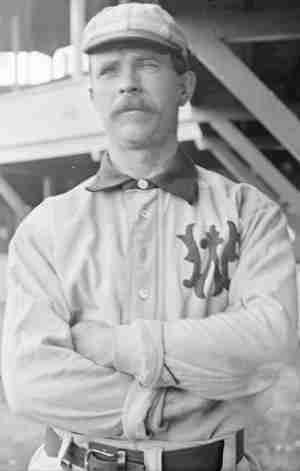
For about six seasons, Bob Caruthers was considered one of the best pitchers in baseball. Sadly, because his career lasted only nine seasons, his impact on the game may not have allowed him to cement himself as one of the great early pitchers.
‘Parisian’ Bob Caruthers was not a flame-throwing Pitcher who relied more on outsmarting batters than powering past them. To this day, he holds one of the top career winning percentages in Baseball (.688) and twice led the American Association in victories. Caruthers was an excellent batter who also posted significant offensive numbers for a few seasons. Caruthers would struggle, though, with arm trouble and could not adjust to the farther pitcher’s mound. As the length of his career was not overly long, the ledger for Bob Caruthers’ Hall of Fame candidacy becomes a little difficult for some to justify, especially if we look at only nine years of service, but again, how tight is that on pre-1900 players?
Should Bob Caruthers be in the Hall of Fame?
24. Tony Mullane
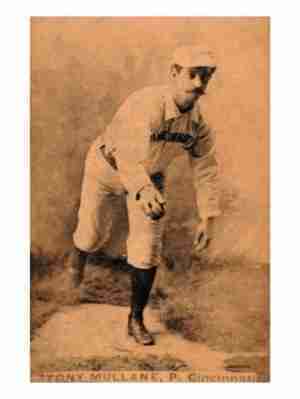
How many people pointed at Bert Blyleven’s 287 career wins year after year and championed his Hall of Fame cause? We don’t know the exact number, but we are sure that it is a lot more than those who created logs extolling the virtues of Tony Mullane’s 284 Major League victories.
Maybe people should marvel at those wins. Mullane was an ambidextrous hurler who could easily baffle batters, as back in his day, pitchers did not wear gloves, thus they had no idea which arm he would throw with. Mullane was an innings-eater who recorded 30 wins on multiple occasions. Like many in his day, Mullane was a very much a free spirit who challenged the reserve clause, was suspended for the 1885 season, and sat out part of the 1892 season in protest over pay cuts. This may have cost him the magical 300-win number, and the fact that he played in the American Association (and not the National League) and had subpar seasons late in his career has made the switch-pitching Tony Mullane a distant afterthought among the folks at Cooperstown.
Should Tony Mullane be in the Hall of Fame?
77. Willie Randolph
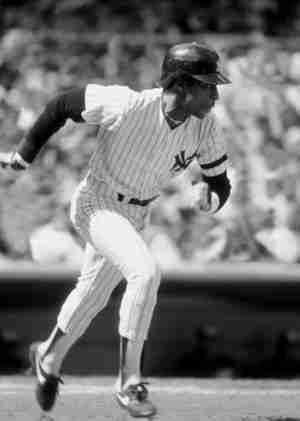
It is strange to say that Willie Randolph played in a bit of a shadow as he was a long-time Yankee, but that is somewhat true. He was in the shadow of other more flamboyant New York stars, and his strong defensive play never got him a Gold Glove as he played at the same time as Lou Whitaker or Frank White. Hell, even his current Coaching career seems to overshadow his accomplishments on the diamond. It shouldn’t, though, as Willie Randolph was a very good ballplayer.
Willie Randolph may have been a multi-time AAll-Star but it was many of the little things that got him there. He showed incredible patience at the plate and drew many free passes to help set the table for his squad’s power hitters. He was an excellent fielder and a clubhouse leader. He may not have been an offensive juggernaut, but he was a consistent performer and often the most reliable.
Randolph did not receive an abundant amount of support for the Hall of Fame, but the Bronx faithful remember him as one of the better players in their history. Considering the New York Yankees' history, this is indeed high praise.
Should Willie Randolph be in the Hall of Fame?
41. Will Clark
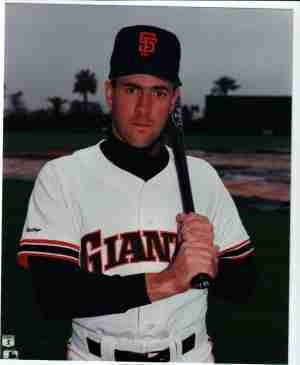
Will Clark is a justifiable member of the Mississippi Sports and College Baseball Hall of Fame, but it looks like the big one in Cooperstown will elude him as he failed to get past his first year of eligibility. A look at his career makes you wonder why he couldn’t get past that elusive first ballot.
Nicknamed “The Thrill”, Will Clark became an instant favorite as he homered on his first at-bat against the legendary Nolan Ryan. Clark would become a major star in the Bay Area, exciting fans with his unequaled competitiveness and solid offensive play. He was ranked among his peers as the top clutch performer in the game, as evidenced by his 1989 NLCS MVP. The six-Time All-Star finished his career with a Batting Average over .300 and solid power numbers. What hurt Will Clark was that the inflated power numbers that came after him (especially from other first basemen) made what he accomplished look less special. It is very possible that “The Thrill” could pop up in a Veterans’ Committee discussion in the future.
