

Site Admin
72. Charlie Buffinton
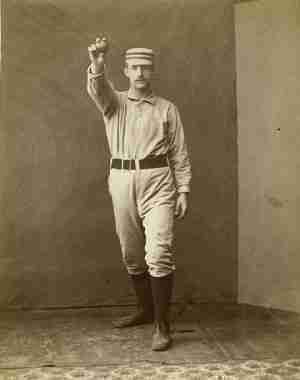
As much as we keep studying Baseball, we can’t help but be amazed by the staggering amount of innings pitched by the pre-1900 hurlers. Would they look at us with a puzzled look if we went back in time and suggested a “pitch count”?
One of those Pitchers we speak of is Charlie Buffinton, who first became a workhorse for the Boston Beaneaters. Throughout his career, Buffinton relied on a particularly effective sinkerball, fanning 1,700 batters and winning 233 games. He also finished with a career WAR of 56.1, which is another impressive career tally. Buffinton retired mid-season in 1892 at the age of 31, when he was asked to take a pay cut. Although he was having the worst season of his career (and the following season would have the mound pushed back ten feet), it is conceivable that Buffinton would have continued to add to his statistics, making him a Hall of Famer. As it stands now, he is one of many enjoying a renewed look at his career, and way back in the long line for a Veterans Committee to consider.
Should Charlie Buffington be in the Hall of Fame?
55. Bernie Williams

We admit we made a mistake not ranking Bernie Williams last year. Were we rebelling against a Yankee bias, or was it that we just considered him just not good enough? Regardless, that is the beauty of Baseball is that you can easily reevaluate what you may have missed the first time. Lord knows it happens all the time during the actual balloting process for the Hall of Fame.
Maybe our initial thought was that the Yankees themselves were confused about Bernie Williams, too. He had some power, but was not a primary threat in that department. He was fast, but did not steal many bases. For years, New York did not know where to bat him in their lineup. Eventually, they knew what they had: a very consistent hitter who had decent enough pop in his bat to place in the cleanup role. He batted over .300 eight consecutive seasons (including a batting title) and had very respectable slash numbers in that period. He won the Gold Glove four times, and his career postseason numbers (remember, he was a Yankee, so there was a lot) were virtually identical to his regular season tallies.
Williams hit near the ten percent mark on his first year of eligibility, which was enough to keep him on the ballot, but not enough to consider him a serious threat for the Hall. Our guess is that the career Yankee will stay at the bottom of the eligible candidates for a while.
Should Bernie Williams be in the Hall of Fame?
10. Curt Schilling
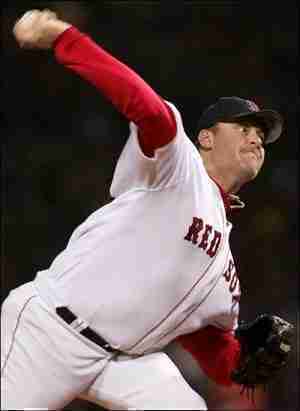
For the record, we love outspoken athletes. They may not always be popular with fans (and other players), but they sure make for far better sound bites than “we gotta go out there and give 100 percent” or other such statements from the “Athlete’s Guide to Dealing with the Media”. Ironically, Schilling is now part of the media, but remains as outspoken as ever.
Schilling attracted attention with his arm, too. Although he has only 216 career Major League victories, he has a career WAR of 69.7, which ranks him in the top thirty all-time for Pitchers. He was a strikeout machine who also rarely walked batters, as shown by his number two career ranking in Strikeouts to Walks Ratio. Schilling also rose to the occasion even more in the postseason, where he posted an 11- 2 record, a World Series and NLCS MVP, three rings, and a WHIP under one.
Curt Schilling’s famous bloody sock from the 2004 Hall of Fame is already in the Baseball Hall of Fame. Logic dictates that there is a solid chance that he will join his famous hosiery, though that would have to come from the Veterans Committee, as his political views and media feuds kept him out via the voters.
Should Curt Schilling be in the Hall of Fame?
30. Sammy Sosa
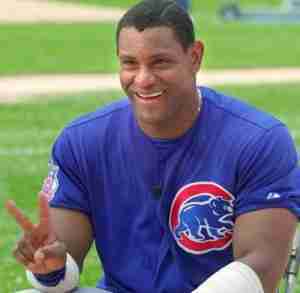
It has to be considered a given that the PED question has hurt many players in their quest for Cooperstown. It is very possible that anyone associated with it will fail to get elected, and the Hall will be devoid of some of the game’s greatest record setters. Yet, of all the people whose careers got tarnished, we can’t help but wonder if Sammy Sosa took the biggest fall of them all.
Barry Bonds may be the man most synonymous with power in the Steroids Era, but it was Sammy Sosa who was the period’s most consistent Home Run Threat. “Slammin” Sammy belted 50-plus homers in four straight seasons and had nine consecutive 100 RBI campaigns. He was popular with the fans and the media, and seemingly never saw a camera he couldn’t smile into.
Things changed drastically upon the Steroids Trial. “Slammin” became “Surly”, and he forgot the English language when questioned by Congress. As fans poured through the inflated statistics, they would notice that, unlike Bonds, McGwire, and Clemens, Sosa did not have the same number or quality of productive seasons prior to allegedly taking PEDs. Sosa became instantly unlikable, and the once media darling became one of its many pariahs.
Like other entries, should Major League Baseball classify the late 90’s/early 00’s as an “era”, Sammy Sosa would have a legitimate shot, as he was one of the game’s top offensive producers. Somehow, we don’t think that will happen, and if it does, Sosa will still struggle to gain Hall of Fame admittance.
