
The Pro Football Hall of Fame Revisited Project: 1988 Final VOTE

1988 Pro Football Hall of Fame Revisited Project Class.
Here we are! Again!!
If you have been following our Pro Football Hall of Fame Revisited Project, you know we have asked the question: What if the PFHOF had begun in January 1946?
After soliciting and obtaining a passionate group of football fans and historians, we sent out a ballot for a Preliminary Vote, in which each voter selected 25 names as their semi-finalists and five names for the Senior Pool. We then asked the group to vote for their 15 Finalists in the Modern Era and 3 in the Senior Category. The final stage was to vote for their five Modern Era inductee and one Senior inductee.
This is the result of the 43rd official class.
Below are the final results of this project based on 31 votes.
Remember that we have reverted back to the top five candidates entering the Hall in the Modern Era
This is for the “Modern Era”
*Bold indicates they have been elected to the Pro Football Hall of Fame Revisited Class of 1988:
|
Player |
Year of Eligibility |
Vote Total |
|
Jack Ham LB |
1 |
25 |
|
Art Shell T |
1 |
17 |
|
Rayfield Wright T-TE |
4 |
13 |
|
Larry Little FB |
3 |
13 |
|
Larry Csonka FB |
4 |
12 |
|
Ron Yary T |
1 |
11 |
|
Ken Houston DB |
3 |
10 |
|
Jim Langer C |
2 |
8 |
|
Dave Wilcox LB |
9 |
7 |
|
Bob Hayes SE-WR |
8 |
7 |
|
Dave Robinson LB |
9 |
6 |
|
Tom Mack G |
5 |
6 |
|
Jackie Smith TE |
5 |
6 |
|
Bob Griese QB |
3 |
6 |
|
Roger Werhli DB |
1 |
5 |
This is for the “Senior Era”,
*Bold indicates they have been elected to the Pro Football Hall of Fame Revisited Class of 1988.
|
Marshall Goldberg FB |
15 |
11 |
|
Gene Lipscomb DT |
1 |
11 |
|
Les Richter LB-C |
1 |
6 |
|
None of the Above |
N/A |
3 |
This is for the “Coaches/Contributors”,
*Bold indicates they have been elected to the Pro Football Hall of Fame Revisited Class of 1988.
|
Ed Sabol (Coach) |
9 |
17 |
|
Bud Grant (Coach) |
1 |
8 |
|
Wellington Mara (Owner) |
2 |
3 |
|
None of the Above |
|
3 |
About the 1988 Inductees:
Jack Ham, LB, PIT 1971-82: Inducted in the Pro Football Hall of Fame Revisited Project in 1988 on his 1st Ballot. Inducted into the actual Pro Football Hall of Fame in 1988.
A 1971 Second Round Pick from Penn State, Jack Ham brought a speed dynamic to the Linebacking corps of the Pittsburgh Steelers.
Ham became a starter at Left Linebacker as a rookie, and in 1973, he began an eight-year streak as a Pro Bowler. The former Penn State Nittany Lion was a nuanced player who was equally great at pass-rushing and playing in the back as well as any Safety. Ham was one of the most explosive players, and if he was ever caught out of position, he had the blazing speed to rectify it.
A six-time First Team All-Pro (1974-79), Ham was a massive part of the Steelers' success in the 1970s, capturing four Super Bowl Rings. Ham also had four years where he was in the top ten in Approximate Value.
Ham played until 1982 and recorded 25 "unofficial" Sacks and 32 Interceptions.
Art Shell, T, OAK/RAI 1968-82: Inducted in the Pro Football Hall of Fame Revisited Project in 1988 on his 1st Ballot. Inducted into the actual Pro Football Hall of Fame in 1989.
A College Football Hall of Fame inductee from his time at Mid-Eastern Shore, Art Shell was taken by the Oakland Raiders in the Third Round in 1968, and that is the team he stayed for the entirety of his 15-year professional career.
Shell became the Raiders' starting Left Guard in his third season, and he established himself as Oakland’s rock of the Offensive Line. Shell’s steady presence was perfect to build around, and he helped the Raiders win two Super Bowls. Individually, he was named to two First Team All-Pro Selections with eight Pro Bowls.
Rayfield Wright, T-TE, DAL 1967-79. Inducted in the Pro Football Hall of Fame Revisited Project in 1988 on his 4th Ballot. Inducted into the actual Pro Football Hall of Fame in 2006.
Rayfield Wright came to Dallas as a seventh round pick in 1967, where in his first three seasons, he was used as an Offensive Tackle, Tight End, and occasional Defensive Tackle. By 1970, he settled in at Right Tackle, and it was there that he became one of the best at that position of all time.
Wright was named to six consecutive Pro Bowls from 1971 to 1976, and in those first three years, he was a First Team All-Pro. His contributions would help Dallas win Super Bowl VI and Super Bowl XII.
Wright left Dallas after being released by the Philadelphia Eagles in 1980, but he never played a game for them, so his entire NFL career was with the Cowboys. He would enter the Pro Football Hall of Fame in 2006, and he is also a member of the 1970s All-Decade Team. Wright was also honored with a place in the Cowboys Ring of Honor in 2004.
Larry Little, G-T, SDG 1967-68 & MIA 1969-80. Inducted in the Pro Football Hall of Fame Revisited Project in 1988 on his 3rd Ballot. Inducted into the actual Pro Football Hall of Fame in 1993.
After two unremarkable seasons as a backup Guard with the San Diego Chargers, Larry Little was traded to the Miami Dolphins for Mack Lamb. Little was not thrilled as the Dolphins were not particularly good at the time, but that feeling would quickly change as Miami was building something special. As for the Chargers, Lamb never played for them.
We know who won this trade.
Now a starting Right Guard, Little was named an AFL All-Star in his first season in Miami, and from 1971 to 1975, he was a First Team All-Pro. Little's work on the right side of the line was a vital cog of the Dolphins' back-to-back Super Bowls in the early '70s, and after his run of dominance ended during the first half of the '70s, he would still secure two Second Team All-Pro Selections in the second half of the decade. Little retired in 1980, and he was named to the 1970s All-Decade Team. Again, who won this trade?
Larry Csonka, FB, MIA 1968-74 & 1979 & NYG 1976-78. Inducted in the Pro Football Hall of Fame Revisited Project in 1988 on his 4th Ballot. Inducted into the actual Pro Football Hall of Fame in 1987.
Larry Csonka was the first Back drafted in 1968, but the first two seasons were a struggle due to poor play and injuries. While the start would not be great, the arrival of Don Shula in 1970 changed all of that.
Csonka got healthy, improved his fundamentals, and, with a powerful lead forearm, hurt people before they could hurt him. His rushes in the first half of the 70s were the stuff of NFL Films legend, and from 1970 to 1974 he was named to the Pro Bowl, with two of those years earning him a place as a First Team All-Pro. From 1971 to 1973, he rushed for over 1,000 Yards, and he was a beast long before Marshawn Lynch and “Beast Mode” existed.
Csonka helped the Dolphins reach three Super Bowls, winning the latter two. In the undefeated Super Bowl VII season, Csonka rushed for 112 Yards. In the Super Bowl VIII win, Csonka set a then-record of 145 Yards in the Super Bowl, and he was named the MVP of the game.
Like many players, Csonka would leave the NFL for the upstart World Football League, but after that folded, he went to the New York Giants. Csonka returned to Miami in 1979, where he had a comeback year, winning the PFWA Comeback Player of the Year Award in an 837-yard year, where he had a career-high 12 Touchdowns. The Fullback decided to retire after that season with 8,901 Yards From Scrimmage.
Ed Sabol, Filmmaker. Inducted in the Pro Football Hall of Fame Revisited Project in 1988 on his 5th Coach/Contributor Ballot. Inducted into the actual Pro Football Hall of Fame in 2011.
Fans of the National Football League can't get enough of NFL Films, video love letters to football. Created by Ed Sabol, NFL Films changed the way we view sports and enhanced the fan experience.
Sabol began his work with the NFL in 1962 and ran NFL Films until he turned it over to his son, Steve, in 1985. He stayed with his creation until 1995, and Sabol's work generated 53 Emmy Awards.
RIP: Rayfield Wright
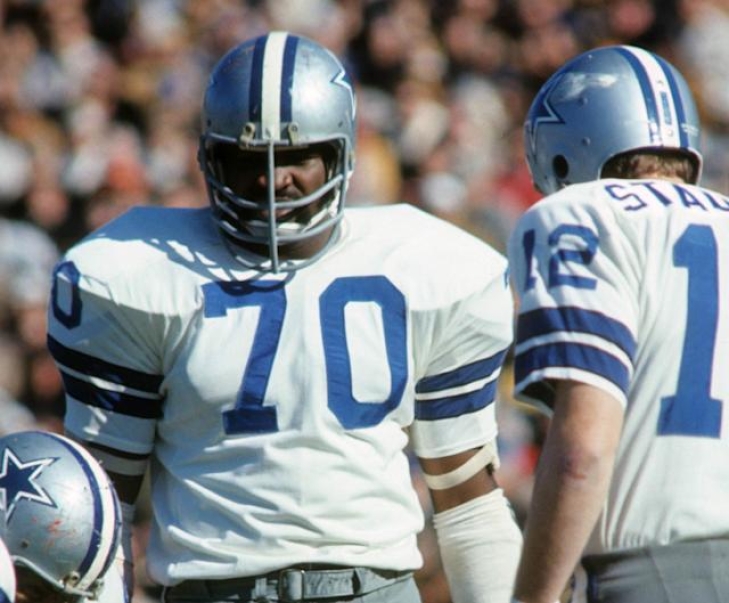
The Football world lost one of the great ones, as it was announced that former Offensive Tackle and former Dallas Cowboy, Rayfield Wright, passed away at the age of 76.
Wright came to Dallas as a seventh round pick in 1967, where in his first three seasons, he was used as an Offensive Tackle, Tight End, and occasional Defensive Tackle. By 1970, he settled in at Right Tackle, and it was there where he became one of the best at that position of all-time.
Wright was named to six consecutive Pro Bowls from 1971 to 1976, and in those first three years, he was a First Team All-Pro. His contributions would help Dallas win Super Bowl VI and Super Bowl XII.
Wright left Dallas after being released for the Philadelphia Eagles in 1980, but he never played a game for them, thus making his entire career in the NFL with the Cowboys. He would enter the Pro Football Hall of Fame in 2006, and he is also a member of the 1970s All-Decade Team. Wright was also honored with a place in the Cowboys Ring of Honor in 2004.
We here at Notinhalloffame.com would like to offer our condolences to the fans, family and friends of Rayfield Wright.
16. Rayfield Wright
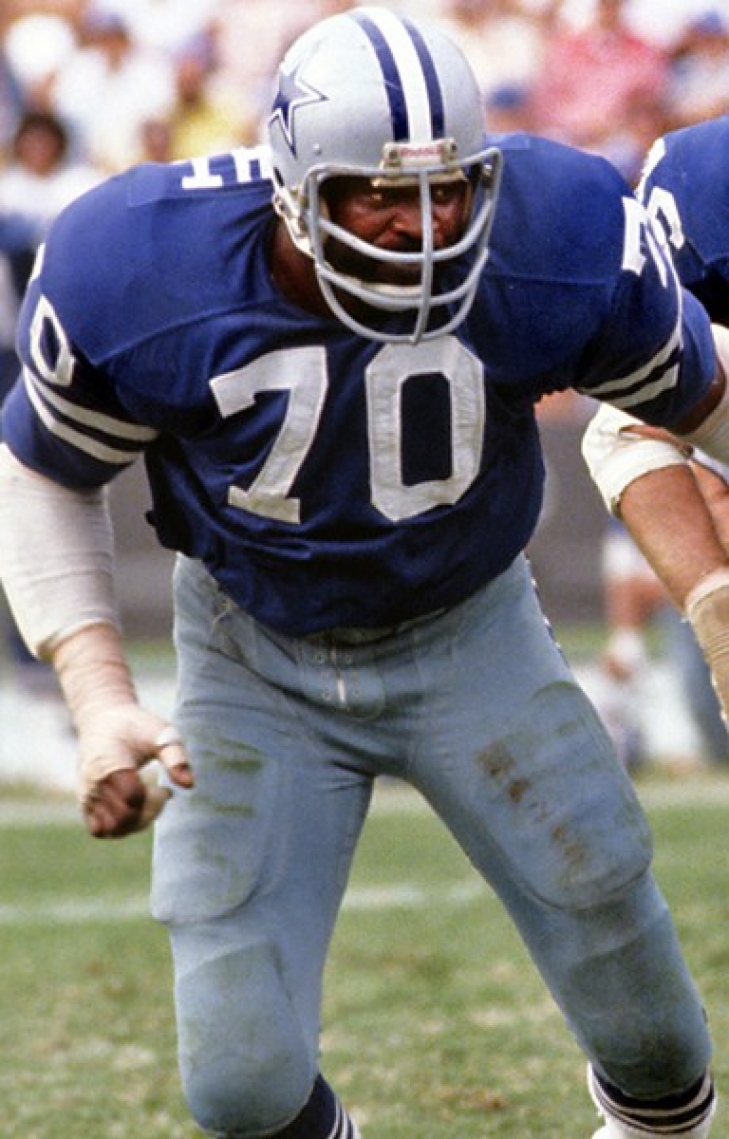
Drafted in the seventh round of the 1967 NFL Draft out of Fort Valley State, Rayfield Wright, the versatile athlete, spent his first three years in Dallas as a utility player—taking snaps at offensive tackle and tight end, and even filling in at defensive tackle. His career trajectory changed in 1970 when Tom Landry permanently installed him as the starting right tackle. "Big Cat" immediately blossomed, using his long arms, nimble footwork, and tight-end athleticism to redefine the standard for modern offensive tackles.
Settling in on the right side of the line, Wright established himself as an elite pass protector and a dominant run blocker. From 1971 through 1976, he earned six consecutive Pro Bowl selections, including three straight First-Team All-Pro nods from 1971 to 1973. Wright became the primary edge protector for Roger Staubach, routinely shutting down the era’s premier defensive ends and opening huge lanes for the Cowboys' multifaceted rushing attack.
His role on the offensive line was fundamental to the franchise's successful decade. Wright played in five Super Bowls, contributing to the Cowboys’ victories in Super Bowl VI and XII. His uncommon agility in open space enabled Landry to design creative sweep plays, and his strong pass-blocking gave the offense the time to execute deep, vertical routes.
Though he signed with the Philadelphia Eagles after his 1980 release, Wright never appeared in a game for them, keeping his entire playing career anchored in Dallas.
Wright played 166 games across 13 seasons in Big D (1967–1979), made the NFL 1970s All-Decade Team, was inducted into the Cowboys Ring of Honor in 2004, and entered the Pro Football Hall of Fame in 2006.
