

44. Charles Romes
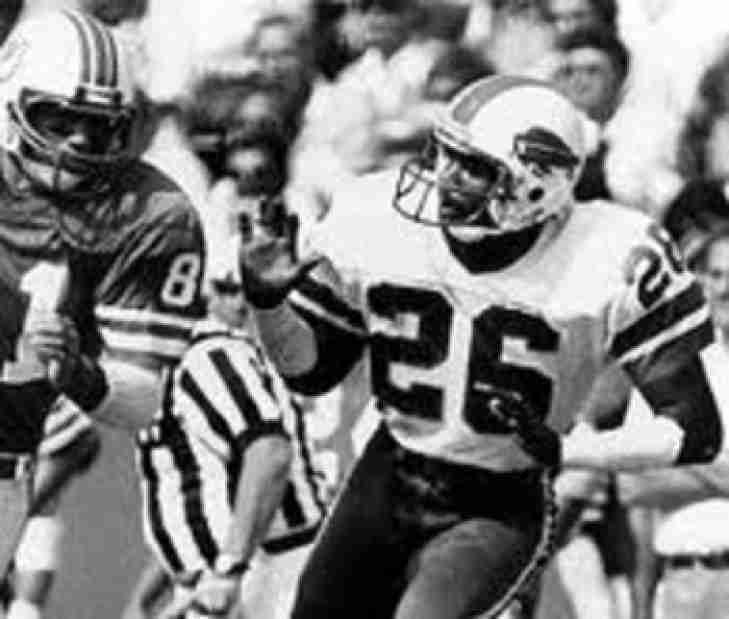
Charles Romes arrived in Buffalo as a late-round flyer (12th round, 309th overall in 1977) and distinguished himself as the first French-born player in NFL history. Stepping into the secondary as a rookie, Romes developed into an iron-man starter at right cornerback, holding down the position across a decade of service.
Romes possessed a typical length for a perimeter cornerback of his era. He primarily operated on the right boundary. His strengths included reading route stems, maintaining position in the hip pocket of outside receivers, and exploiting off-target throws through disciplined ball skills.
Romes’ defining characteristic as a Bill was his remarkable availability. After participating in all 14 games as a rotational defensive back during his rookie season, he assumed the role of the full-time right cornerback in 1978 and commenced every game for Buffalo over the subsequent nine seasons.
During his decade-long tenure in Buffalo (1977–1986), Romes participated in 151 consecutive regular-season games, including 137 consecutive starts—ranking as the eighth-most starts in the franchise's history. He functioned as a primary secondary anchor during Chuck Knox’s division-winning team in 1980 and their subsequent playoff campaign in 1981.
Romes logged at least one interception in nine consecutive seasons with the Bills (1978–1986). His individual peak came in 1985, when he recorded a career-high 7 interceptions. He also set a career-best mark the previous season, in 1984, with 5 interceptions.
In total, Romes recorded 28 interceptions for 493 return yards, eight fumble recoveries, and one defensive touchdown as a Bill, placing him fourth on Buffalo's all-time career interception leaderboard.
40. Elbert Dubenion
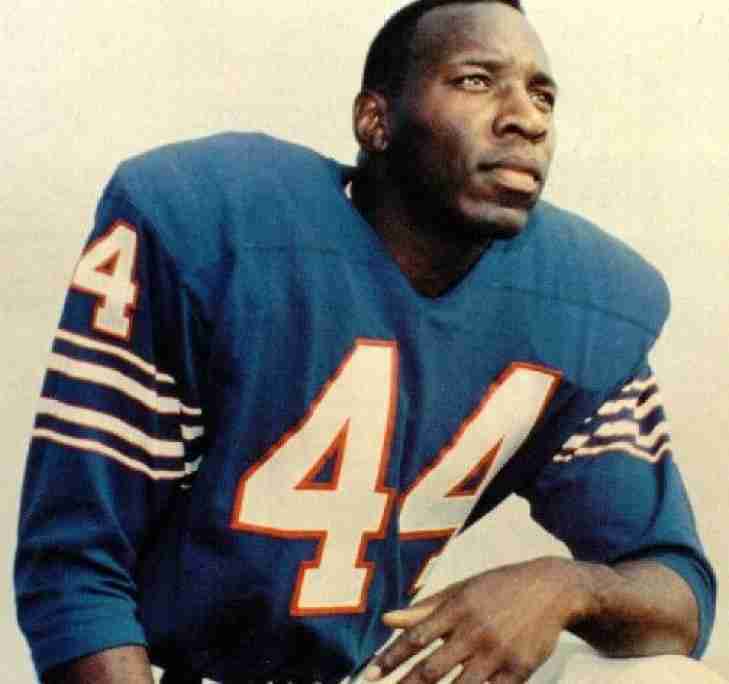
Drafted in the 14th round of the 1959 NFL Draft by the Cleveland Browns out of Bluffton College, Elbert Dubenion instead signed with the upstart Buffalo Bills for their inaugural 1960 season. Nicknamed "Golden Wheels" for his track-level speed, Dubenion became an original AFL star and the franchise's first elite vertical threat.
Dubenion was a flanker built for vertical acceleration and big-play potential. In Lou Saban's offense, he was known for blowing past man coverage on go routes and deep posts. He paired smooth tracking on long passes with open-field quickness, routinely turning short hitches and sweeps into massive chunk plays.
Dubenion's peak occurred in 1964, during which he achieved one of the most efficient seasons for big-play receiving in the history of professional football. Receiving passes from Jack Kemp and Daryle Lamonica, Dubenion secured 42 receptions for 1,139 receiving yards and 10 touchdowns, with an impressive average of 27.1 yards per reception. He was awarded his first AFL All-Star selection and Second-Team All-AFL honors, contributing significantly to Buffalo's 12–2 record. Additionally, he established a place in the record books during the 1963 postseason; in the Eastern Division playoff game against the Boston Patriots, Dubenion caught a 93-yard touchdown pass from Daryle Lamonica—the longest reception in AFL playoff history.
Dubenion was a core offensive engine during Buffalo's back-to-back AFL Championship runs in 1964 and 1965. Though a severe knee injury limited him to three games in 1965, he returned to post 747 receiving yards in 1966 as Buffalo captured its third straight division title.
A true original who played his entire nine-year career in Buffalo (1960–1968), Dubenion finished his AFL career with 294 receptions, 5,294 receiving yards, and 35 receiving touchdowns, averaging 18.0 yards per catch. He would later be chosen for the Bills Wall of Fame.
49. John Fina
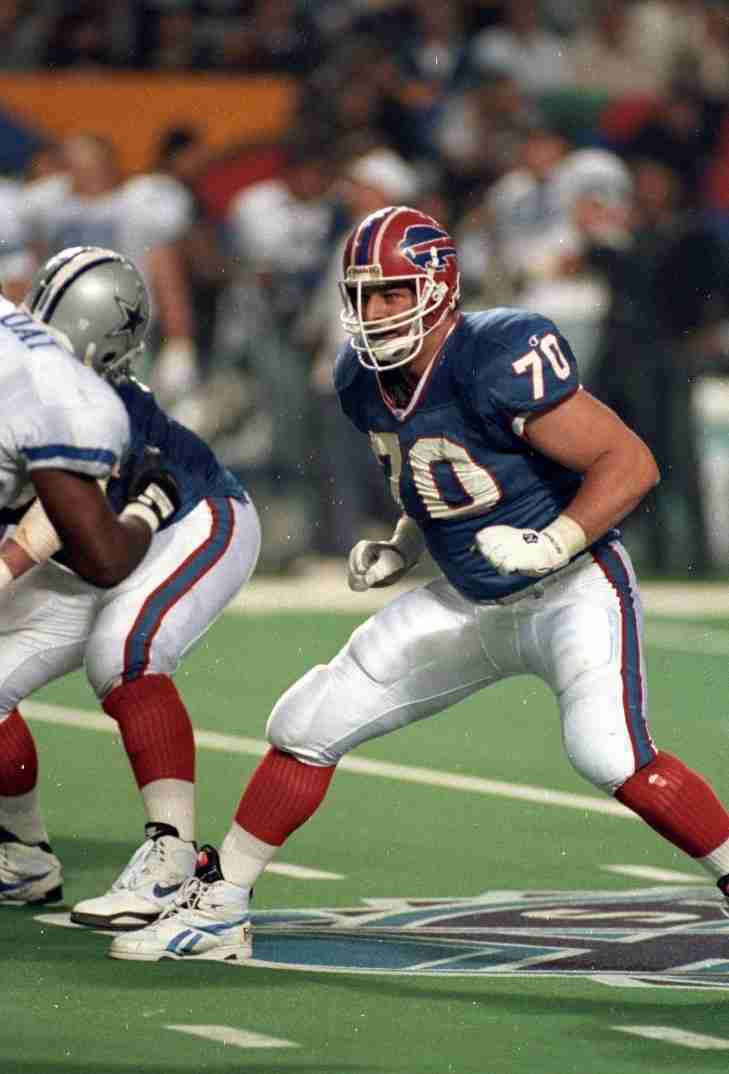
Taken 27th overall in the first round of the 1992 NFL Draft out of Arizona, John Fina became the long-term successor at left tackle for Marv Levy’s championship-caliber offense. Taking over as the full-time protector of Jim Kelly’s blindside in his second season, Fina spent a decade serving as an anchor along Buffalo’s offensive line.
Fina demonstrated integrated leverage, swift lateral footwork, and functional strength. Serving predominantly as the starting left tackle, his primary proficiency was in pass protection; he had the range to establish a wide stance against speed rushers on the edge, while employing effective hand placement to anchor against power rushes, thereby maintaining the integrity of the pocket within Buffalo’s K-Gun passing scheme.
Following his tenure as a primary rotational lineman and special teams contributor as a rookie in 1992—where he participated in Super Bowl XXVII—Fina assumed the role of starting left tackle in 1993. He commenced all 16 regular-season games and three playoff games, including Super Bowl XXVIII, thereby facilitating opportunities for Thurman Thomas and safeguarding Jim Kelly during Buffalo's fourth consecutive AFC championship campaign.
Fina served as the Bills' primary left tackle for nine successive seasons (1993–2001). Renowned for his consistent performance amid evolving offensive strategies and quarterback changes, he provided stability to offensive lines that facilitated 1,000-yard rushing seasons for Thurman Thomas, Bryce Brown, and Antowain Smith.
Fina ended his ten-year Buffalo tenure after 2001, then played his final NFL season with the Arizona Cardinals in 2002. He started 131 of 148 games for Buffalo.
32. Jim Dunaway
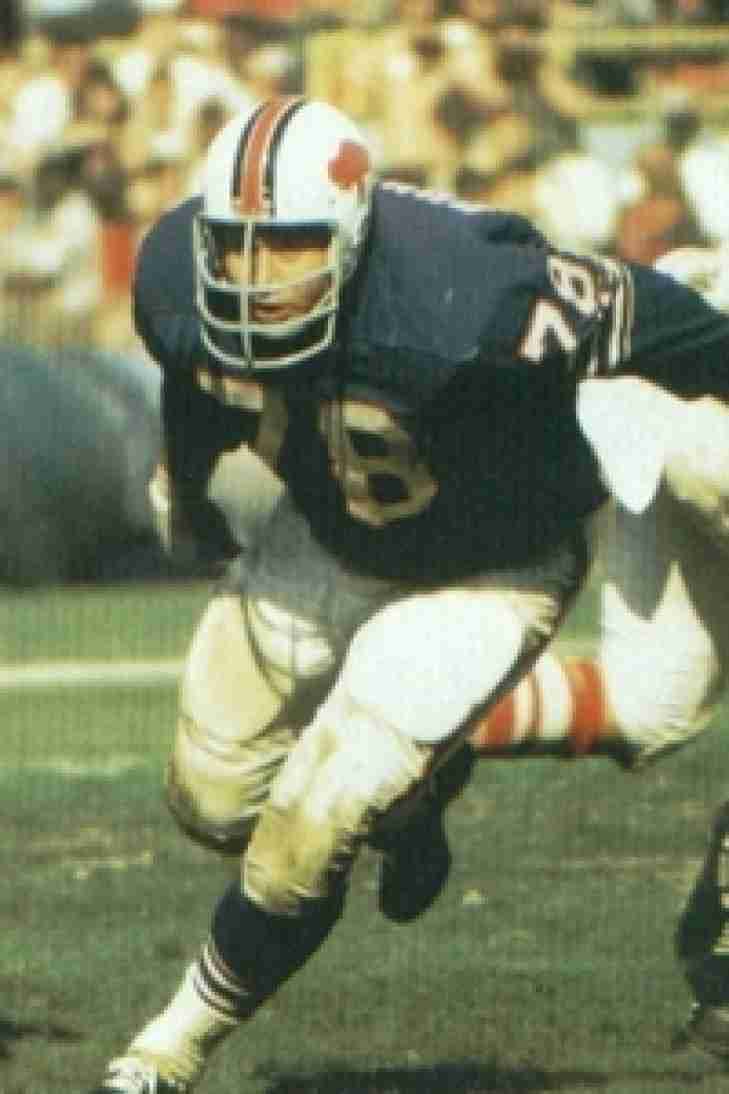
Jim Dunaway, selected ninth overall in the second round of the 1963 AFL Draft from Ole Miss—where he was a consensus All-American and national champion—joined Western New York as a highly regarded interior lineman. Playing next to Tom Sestak, Dunaway quickly proved himself to be a powerful, relentless tackle who contributed to one of the most formidable defensive fronts in professional football history.
Dunaway had remarkable strength and lateral agility for his time. Playing as a left defensive tackle, he was adept at filling A-gaps, overpowering offensive guards, and disrupting running plays early. His skill in resetting the line made it hard for opponents to set up an inside run, and his strength in collapsing the pocket often pressured quarterbacks into hurried throws.
Dunaway was a central force behind Buffalo's dominance in the mid-1960s, helping lead the franchise to consecutive AFL Championships in 1964 and 1965. He was a core member of the legendary Bills front seven, which set an All-Pro football record by holding opposing ball-carriers to zero rushing touchdowns for 17 consecutive games across the 1964 and 1965 seasons.
During his peak, Dunaway received four consecutive AFL All-Star selections (1965–1968) and was honored as a First-Team All-AFL selection in 1966. His interior presence enabled Buffalo's defense to maintain a consistently leading position in the league concerning points and yards allowed during the AFL's prosperous years.
Following nine seasons in Western New York (1963–1971) and accumulating 126 regular-season appearances with the Bills, Dunaway's tenure concluded prior to the 1972 season when he was released by Buffalo. He was promptly acquired by division rival Miami, where he spent his final NFL season as a primary rotational tackle on the undefeated 1972 Dolphins team that secured victory in Super Bowl VII.
With the Bills, Dunaway played 126 regular-season games (114 starts), won 2 AFL Championships, earned 4 AFL All-Star selections, 1 First-Team All-AFL honor, and recorded 22.5 unofficial sacks along with 12 fumble recoveries.
26. Reggie McKenzie
41. Ben Williams
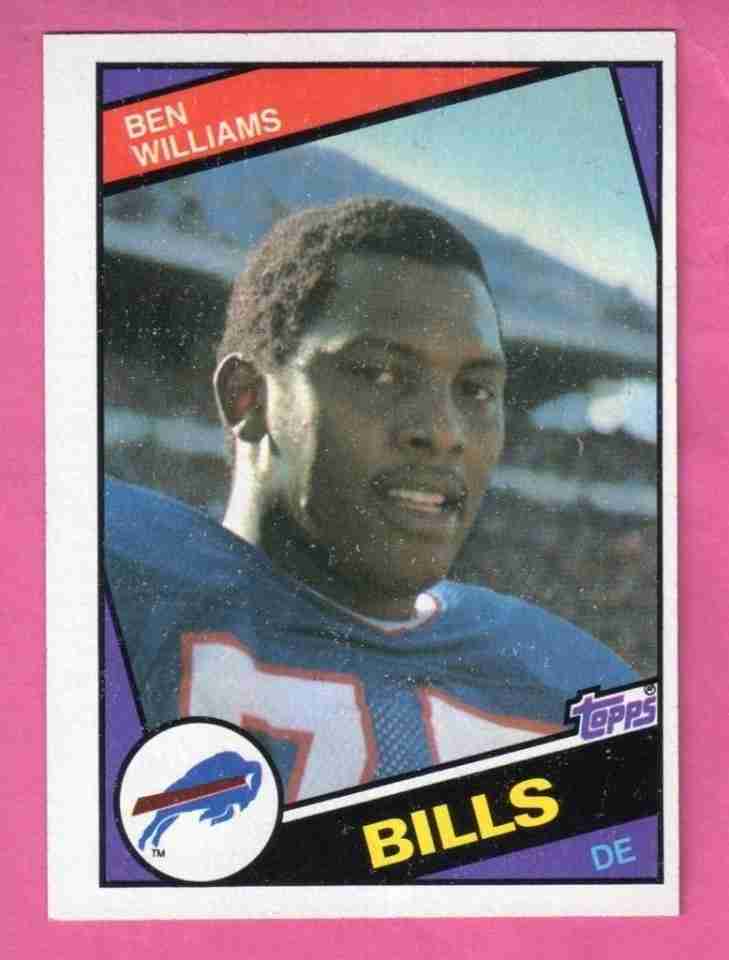
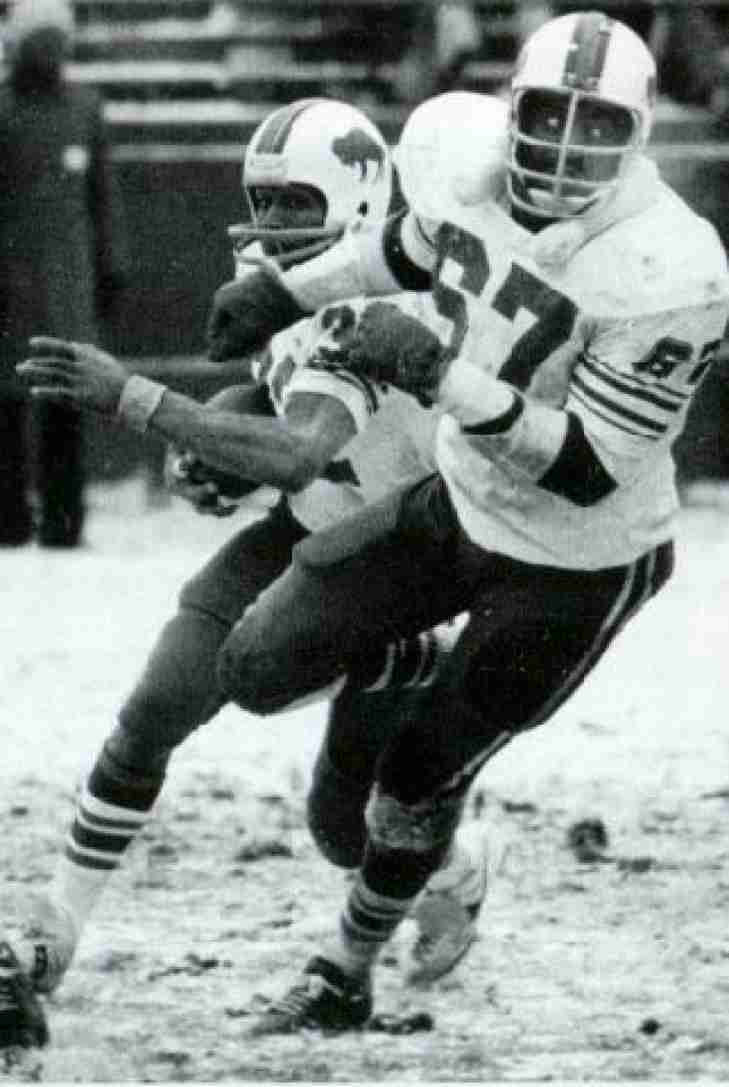
Ben Williams came to Buffalo as a historic figure. As the first Black student-athlete to play varsity football at Ole Miss—earning the affectionate nickname "Gentle Ben" off the field—Williams (3rd round, 78th overall in 1876) translated his collegiate dominance directly into a ten-year career as an anchor on the Bills' defensive front.
Williams possessed a physical, leveraged style of play that allowed him to line up across multiple spots on the defensive line. Operating primarily as a left defensive end, his defining trait on tape was his lateral quickness and upper-body strength; he could shed double-teams on run plays and shoot interior B-gaps to disrupt timing in opposing backfields.
Williams was a fundamental piece of head coach Chuck Knox's early-1980s playoff teams. He produced his most prolific pass-rushing season in 1980, registering an impressive 12.0 sacks (along with four forced fumbles) as Buffalo won the AFC East title. He followed that up with a 10.0-sack campaign in 1981, helping lead the Bills back to the postseason.
During the strike-shortened 1982 season, Williams started all nine games and recorded 4.0 sacks, earning his first career Pro Bowl selection. He bounced back with another 10.0-sack year in 1983, marking his third season with double-digit sack production.
Williams played all ten of his NFL seasons exclusively in Buffalo (1976–1985) and had 52 sacks for the organization.
35. Ron McDole
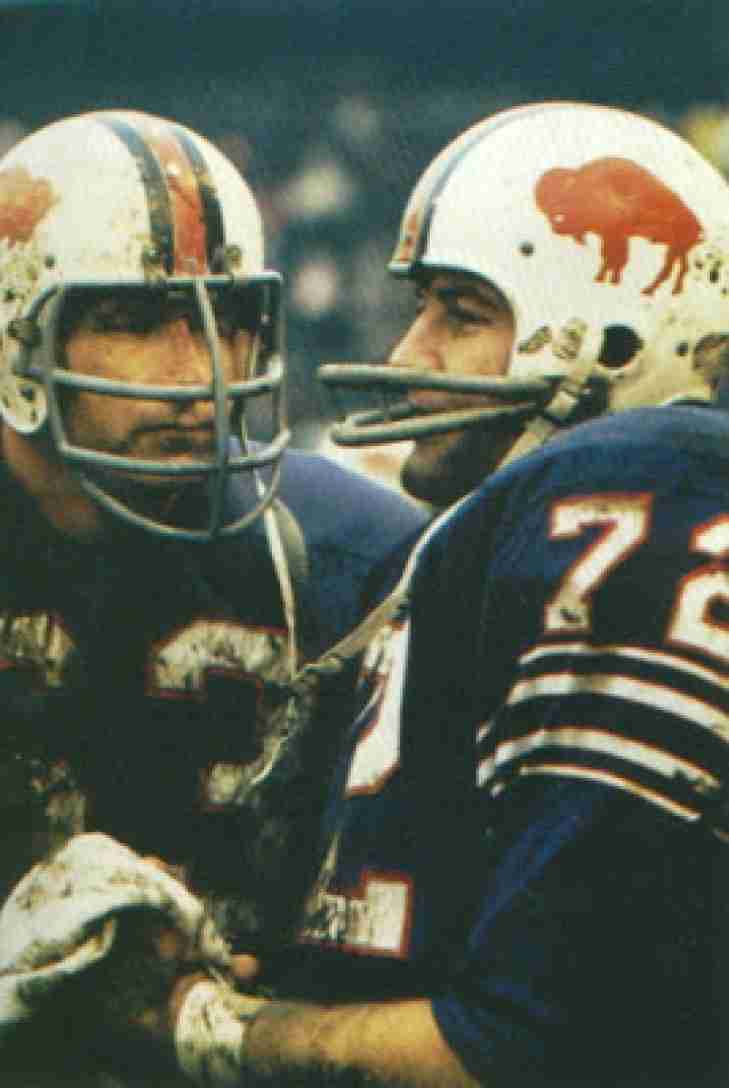
Nicknamed "The Dancing Bear" for his deceptive agility and massive frame, Ron McDole joined the Buffalo Bills in 1963 after brief stints with St. Louis and Houston. Lined up at left defensive end, McDole became a fixture in Western New York, serving as a defensive team captain and combining relentless run defense with unbelievable ball skills for a lineman.
McDole combined strength, football instincts, and spatial awareness along the edge. Instead of relying solely on speed off the corner, he used precise hand placement to shed blocks, establish a strong edge against perimeter sweeps, and collapse passing pockets. His standout skill was his vision: McDole read quarterback eyes and screen passes better than most linemen of his era, often raising his hands to deflect throws or dropping into passing lanes to make turnovers.
McDole’s career in Buffalo started in 1963, where he played 12 games as a key rotational end during the team's run to the AFL Eastern Division title game. In 1964, he became a full-time starter at left defensive end, playing all 14 games and recording a safety as Buffalo won its first AFL Championship. The following year, in 1965, McDole was selected as an AFL All-Star, recovering five fumbles and leading a defense that repeated as AFL Champions. He continued his excellence with an AP First-Team All-AFL selection in 1966, starting every game and helping Buffalo advance to its third consecutive AFL title game.
McDole received his second AFL All-Star nomination in 1967. In 1968, he delivered an impressive season, with two intercepted passes for 47 yards and a fumble recovery. He continued to demonstrate durability in 1969, starting all 14 games and earning his fifth straight All-AFL honor. McDole concluded his notable career in Western New York by starting 13 games during the 1970 AFL-NFL merger season, bringing his total to 109 regular-season games with the Bills.
In May 1971, after completing eight seasons in Western New York, the Bills traded McDole to Washington in exchange for draft picks. In the capital, McDole rejuvenated his career as a seasoned leader for George Allen's "Over the Hill Gang," starting in Super Bowl VII and playing eight more seasons before retiring in 1978 at age 39 with a total of 240 career games.
In Buffalo, McDole had 34 sacks and six picks over 141 games.
25. George Saimes
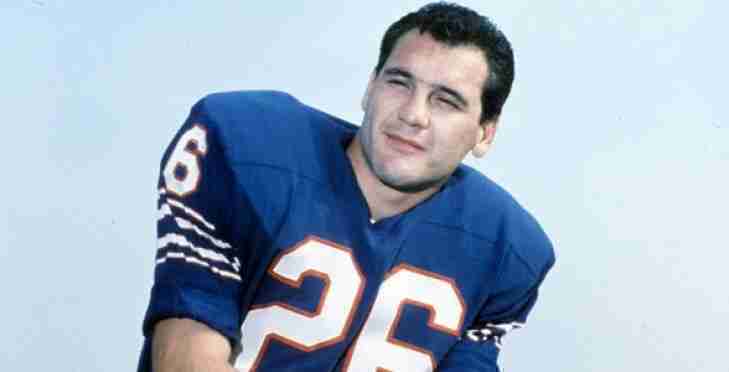
As for the Bills, they inducted the two-time AFL Champion into their Wall of Fame in 2000.
39. Joe Devlin
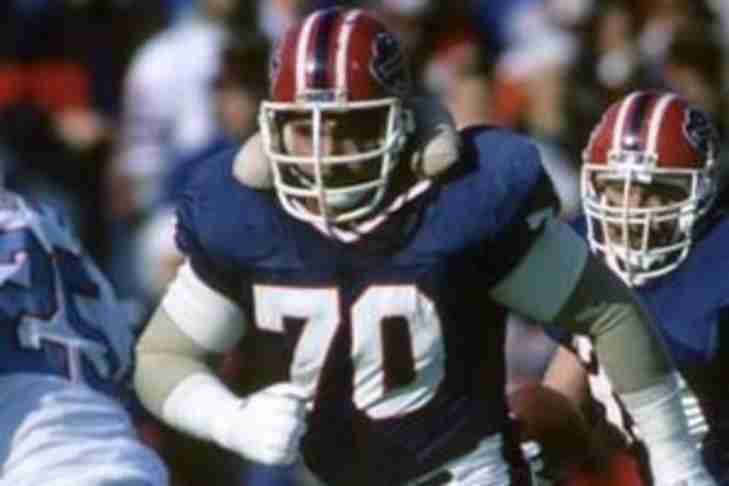
36. Aaron Schobel
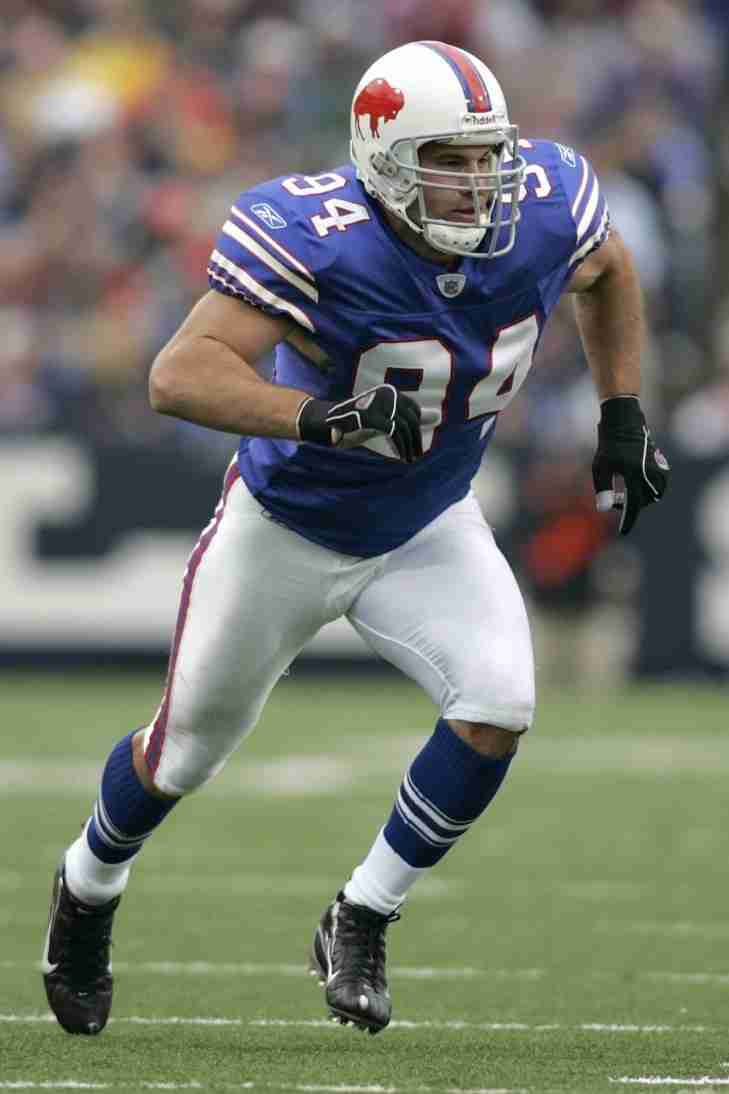
28. Shane Conlan
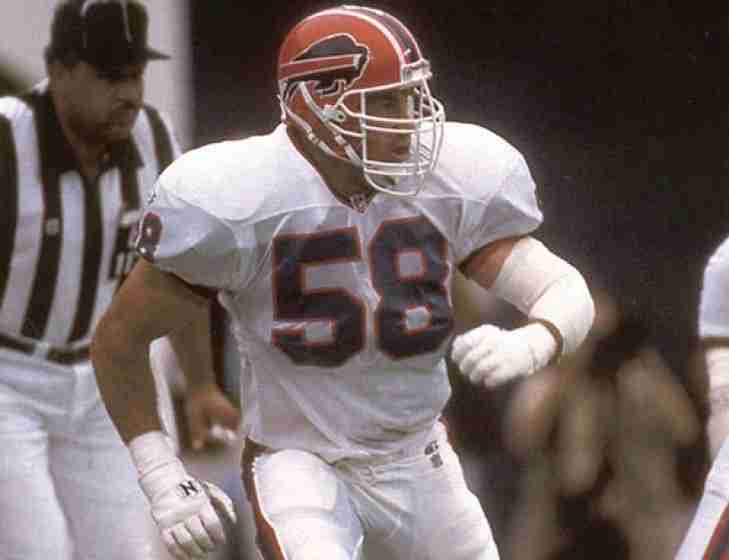
Drafted eighth overall in the first round of the 1987 NFL Draft from Penn State—where he earned unanimous All-American honors and helped the Nittany Lions win a national title—Frewsburg native Shane Conlan quickly became a beloved hometown hero in Western New York. Playing a vital role in Buffalo’s defense alongside stars like Bruce Smith and Cornelius Bennett, Conlan brought lively, relentless tackling that truly helped turn the Bills into a formidable team.
Conlan integrated instinctive diagnostic speed with formidable open-field tackling skills. Positioned as the inside linebacker within Buffalo’s 3-4 defensive scheme, he diligently analyzed pre-snap formations, diagnostic pull blocks, and flow plays to strategically shoot gaps before offensive guards could advance to the second level. His proficiency in lateral quickness against perimeter sweeps, combined with his closing speed in pass coverage, enabled him to neutralize running backs in space and disrupt screen plays.
Conlan made an immediate impact upon entering the professional ranks. During his 1987 rookie campaign, he racked up 114 tackles and led Buffalo's defense, earning AP NFL Defensive Rookie of the Year honors and a spot on the PFWA All-Rookie Team.
Building on that rookie success, Conlan launched into an elite three-year stretch, earning three consecutive Pro Bowl selections (1988–1990) and three Second-Team All-Pro nods. His relentless tackling and run defense anchored a unit that captured three straight AFC East titles, setting the defensive foundation for Buffalo's legendary championship runs.
Conlan was a cornerstone during the early phase of Buffalo’s unprecedented four-straight Super Bowl appearances, starting at middle linebacker in Super Bowls XXV, XXVI, and XXVII. His big-game heroics were showcased in Super Bowl XXV, where he recorded eight tackles against the New York Giants.
Following the 1992 season, Conlan departed as a free agent to sign with the Los Angeles Rams, where he played his final three NFL seasons (1993–1995). With Buffalo, Conlan appeared in 88 regular-season games, racking up 545 combined tackles, 5.5 sacks, and 5 interceptions.
19. Kyle Williams
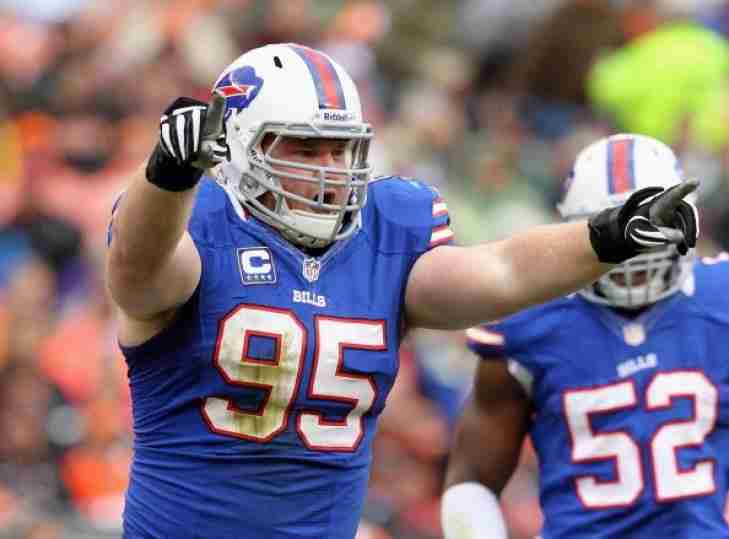
Selected in the fifth round (134th overall) of the 2006 NFL Draft out of LSU, Kyle Williams was widely written off by talent evaluators as undersized for an interior defensive lineman. Standing 6 feet 1 inch and tipping the scales around 300 pounds, "Meatball" proved his doubters wrong almost instantly, seizing a starting job as a rookie and serving as the uncontested heart and soul of Western New York for 13 seasons.
What Williams lacked in prototypical length, he made up for with a low center of gravity, cat-like initial quickness, and a motor that never stopped. Operating as a 3-technique and nose tackle across multiple defensive schemes, he used leverage and explosive hand placement to shoot interior gaps before guards could set their bases. Against the run, he routinely disrupted plays in the backfield, while his relentless effort as a pass rusher made him a constant threat to push the pocket from the inside.
Williams secured his full-time starting position in 2006 and gradually established himself as one of the league’s most esteemed interior defenders. His standout season came in 2010, showcasing an exceptional performance. During that year, he recorded 73 tackles, 5.5 sacks, and 14 tackles for loss, earning Second-Team All-Pro honors and his first Pro Bowl invite.
Throughout the decade, consistency defined his career. Williams earned four additional Pro Bowl selections in 2012, 2013, 2014, and 2016. In the 2013 season, he partnered with Marcell Dareus, Mario Williams, and Jerry Hughes to create the formidable "Cold Front" defense, achieving a personal best with 10.5 sacks while playing as a defensive tackle.
Williams, the longest-serving Bill during a prolonged postseason absence, showcased his leadership culminating in 2017. He played a key role in returning Buffalo to the playoffs after 17 years, even lining up as a fullback to score a rushing touchdown in Week 17, securing their spot. He finished his illustrious career in 2018 with his sixth Pro Bowl selection before retiring.
Williams, who played his entire career as a Bill, played 183 games (178 starts), with 610 tackles, 103 tackles for loss, and 48.5 sacks—setting the franchise record for sacks by a defensive tackle.
33. Phil Hansen
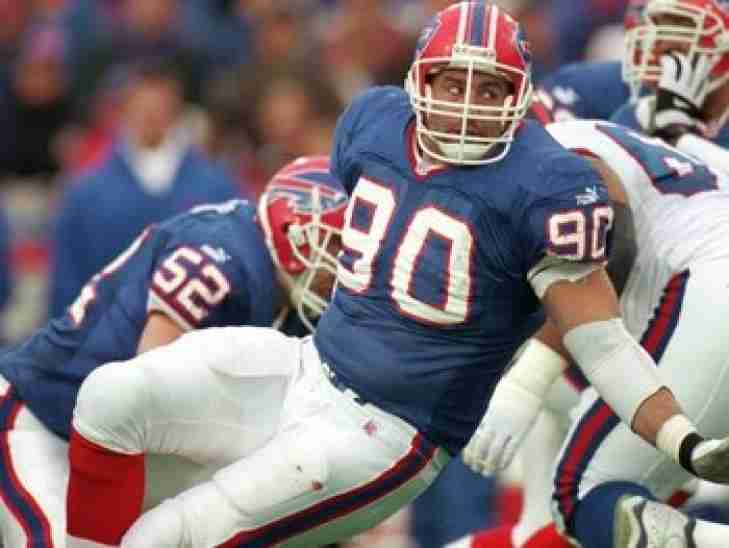
Drafted in the second round (54th overall) of the 1991 NFL Draft from Division II powerhouse North Dakota State, Phil Hansen made his way to Western New York as a determined and unassuming defensive end. Throughout his 11-season NFL journey, Hansen grew into a quiet hero of Buffalo's defense, constantly fighting to contain the run with fierce determination and pairing up with Bruce Smith to challenge opposing offensive lines.
Hansen demonstrated optimal length, leverage, and an unwavering motor at the defensive end position. Predominantly operating on the left side, he excelled in establishing a firm boundary against the run, employing a powerful bull-rush to collapse the pocket, thereby enabling linebackers to execute plays in open space. Although he seldom garnered national headlines, his exemplary technique against double-teams and persistent second-effort rushes rendered him an essential component of Buffalo's defensive strategies.
Hansen distinguished himself as a rookie in 1991, starting in 10 games and receiving PFWA All-Rookie Team honors as the Buffalo Bills advanced to their second consecutive AFC Championship. He rapidly became a regular starter, playing a crucial role on the offensive line during the team's postseason campaigns to Super Bowl XXVII and Super Bowl XXVIII.
One of his defining postseason moments came in the 1992 AFC Championship Game against Miami, when he made a crucial interception off Dan Marino, helping seal a 29–10 victory and sending Buffalo to its third consecutive Super Bowl. Hansen reached a personal peak in 1995, recording a career-high 10.0 sacks, followed by a career-best 132 tackles in 1996.
After the 2001 season, Hansen retired from professional football, having spent 11 years in Western New York and playing exclusively for the Bills. In 2011, the franchise honored his enduring contributions by inducting him into the Buffalo Bills Wall of Fame.
37. Henry Jones
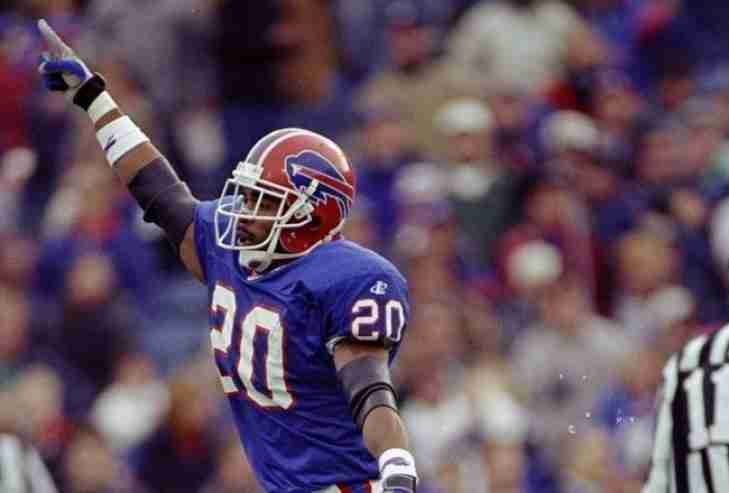
Taken in the first round (26th overall) of the 1991 NFL Draft out of Illinois, Henry Jones joined the Buffalo Bills during the peak of their championship contention. Stepping into the secondary as a strong safety, Jones combined hard-hitting physicality in run support with sharp defensive instincts, making himself a staple in Buffalo's defensive backfield for a decade.
Jones possessed the size to defend against physical running backs in close proximity and the range to retreat into deep zone coverage. From his position as a strong safety, he demonstrated exceptional skill in reading the quarterback's eye progression, utilizing a rapid closing burst to intercept intermediate passing lanes or deliver powerful hits to receivers over the middle. His capacity to transform pass defenses into immediate high-yardage return opportunities rendered him a consistent and formidable threat for big plays during his prime.
Following his initial season in 1991, during which he primarily participated as a special teams player and a rotational defensive back, Jones distinguished himself dramatically in 1992 by ascending to prominence on the national stage. In one of the most exemplary individual seasons by a safety in franchise history, Jones jointly led the entire National Football League (NFL) with eight interceptions, which he returned for a league-leading 263 yards and two touchdowns. He also contributed 92 tackles and two forced fumbles, resulting in his inclusion on the 1992 Pro Bowl roster and his designation as a First-Team All-Pro. His outstanding performance played a pivotal role in guiding the Buffalo team to its third consecutive Super Bowl appearance.
Although Jones never replicated those extraordinary statistical contributions again, he established a notably consistent role as a reliable, multi-season starter within Buffalo's defensive backfield. Throughout the remaining years of the 1990s, he continued to serve as a durable enforcer, starting all 16 games in five separate seasons for the Bills.
After ten seasons as a Western New York anchor (1991–2000), Jones left the Bills after 2000 during their rebuilding phase. He played two final NFL seasons: 2001 with the Minnesota Vikings and 2002 with the Atlanta Falcons before retiring. With the Bills, Jones appeared in 148 games (129 starts), with 18 interceptions, 455 return yards, and four touchdowns.
30. Nate Odomes
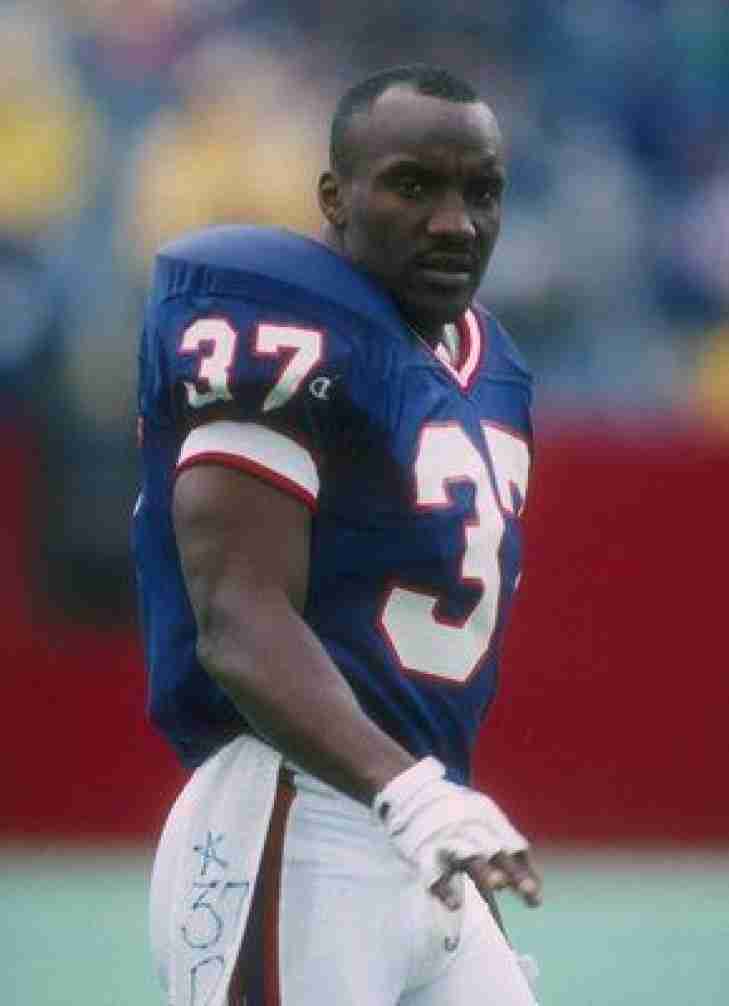
Taken in the second round (29th overall) of the 1987 NFL Draft out of Wisconsin, Nate Odomes stepped directly into the Buffalo secondary and became a key defensive pillar throughout the franchise's legendary run of four straight AFC Championships. Functioning as a ball-hawking shutdown cornerback on the outside, Odomes possessed the rare instincts and closing speed that routinely turned defensive stops into game-changing turnovers.
Odomes integrated physical press coverage at the line of scrimmage with outstanding ball-tracking abilities in deep zone schemes. When defending against the opponent's best wideouts, he employed quick, fluid hips and an aggressive recovery burst to break up route stems. His defining trait was his diagnostic vision: Odomes immediately recognized quarterback eye progression, jumping intermediate passing lanes to turn precise throws into quick interceptions.
Odomes has a talent for making crucial plays in high-pressure postseason moments. In the notable 1992 AFC Wild Card Game—"The Comeback"—he made a decisive interception of Oilers quarterback Warren Moon, which led to the game-winning field goal and marked the greatest comeback in playoff history. He maintained his reputation for clutch performance by intercepting passes in both Super Bowl XXVII and Super Bowl XXVIII.
His individual performance peaked during his 1993 campaign. Odomes co-led the NFL with a career-high nine interceptions, spearheading Buffalo's pass defense and earning his second consecutive Pro Bowl selection and Second-Team All-Pro honors.
During his seven seasons with the Bills (1987–1993), Odomes started 107 regular-season games, recording 26 interceptions, eight fumble recoveries, and two defensive touchdowns. He signed with the Seattle Seahawks as a free agent in 1994, but severe knee injuries kept him out for two seasons. He made a brief comeback with Atlanta in 1996. Odomes's significant impact was honored when he was named to the Buffalo Bills 50th Anniversary Team.
22. Butch Byrd
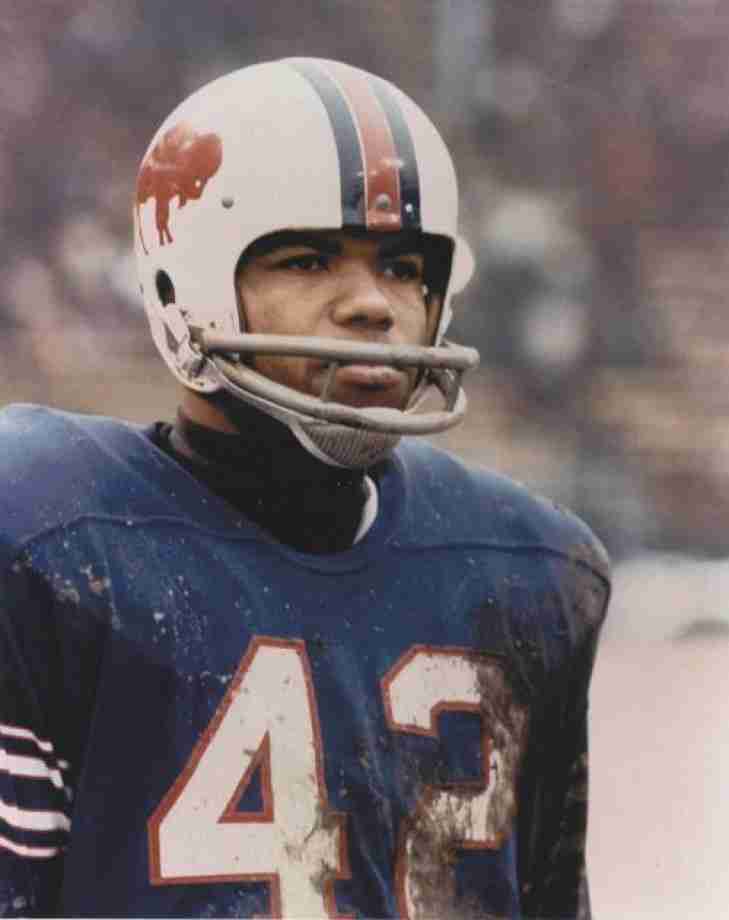
Chosen in the fourth round (25th overall) of the 1964 AFL Draft out of Boston University, Butch Byrd arrived in Western New York as an explosive, physical athlete. Stepping straight into the starting lineup as a rookie, Byrd locked down the right cornerback spot and quickly established himself as the premier ball-hawking defensive back in the American Football League.
Byrd uniquely combined sprinter's quickness with the physical strength typical of a 1960s cornerback. Playing on the island in Lou Saban's defense, he was adept at reading quarterbacks’ eyes, intercepting boundary routes, and breaking up deep passes. When he gained possession, his experience as a college running back quickly became evident—transforming interceptions and punt returns into pivotal scores with his open-field running ability.
Byrd made a notable impact in his rookie 1964 season, intercepting seven passes and returning one for 72 yards and a touchdown. He also recorded another interception in the postseason, contributing to Buffalo's 20–7 win over San Diego in the AFL Championship. His dominance reached its peak during Buffalo's 1965 title defense, where he snagged five interceptions while also returning punts. Byrd was named First-Team All-AFL and earned his second of five AFL All-Star selections as the Bills secured back-to-back AFL Championships.
Byrd was a relentless big-play threat in the late 1960s. In 1966, he intercepted six passes and returned a 74-yard punt for a touchdown in the AFL Championship Game. He received First-Team All-AFL honors in 1966 and 1969, and Second-Team All-AFL awards in 1964 and 1968. Over seven seasons with Buffalo, he started 98 straight regular-season games without missing any.
After the 1970 season, the Bills traded Byrd to Denver, where he played one final year in 1971 before retiring. His career excellence was recognized by the Pro Football Hall of Fame when he was named to the AFL All-Time Second Team.
In Western New York, Byrd played in 98 regular-season games, leaving as the undisputed single-season and career king of the Bills' secondary. Over half a century later, he remains Buffalo's all-time franchise leader in interceptions (40), interception return yards (666), and interception return touchdowns (5).
23. Steve Tasker
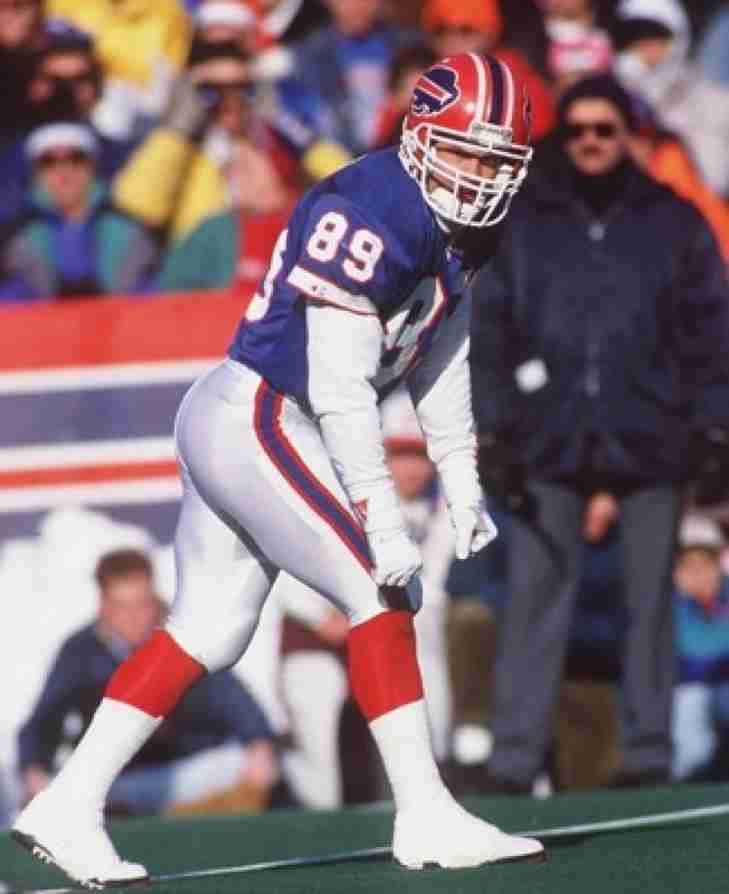
Claimed off waivers from Houston midway through the 1986 season, Steve Tasker came to Western New York as an unassuming 5-foot-9, 185-pound receiver. Over the following 12 years, he dramatically changed the NFL's perspective on the gunner role, transforming kick and punt coverage into a craft and cementing his reputation as the most outstanding pure special teams player in football history.
Tasker was not especially large but made up for it with keen instincts, an relentless engine, and explosive pad level at contact. As Buffalo's main gunner on punts and the kickoff containment leader, he excelled at shedding double blocks quickly, fighting jam attempts, and meeting returners precisely when the ball arrived. Besides coverage, Tasker had an unusual ability to time his pre-snap movement, often bursting through interior gaps to block or deflect kicks.
Tasker quickly transformed Marv Levy's special teams unit into a game-changing phase during Buffalo's ascent in the late 1980s. By 1987, he earned his first career Pro Bowl selection, setting the template for how teams evaluated gunners.
As the Bills embarked on their historic run of four consecutive AFC Championships (1990–1993), Tasker served as the heart and soul of the roster alongside stars like Jim Kelly and Bruce Smith.
His standout moment came at the 1993 Pro Bowl, where in an all-star game filled with future Hall of Famers, Tasker stood out by forcing a fumble, blocking a field goal, and making four special teams tackles. These impressive plays earned him the Pro Bowl MVP award—marking him as the first and only pure special teams player in NFL history to win this honor.
In total, Tasker earned seven Pro Bowl selections (1987, 1990–1995) and five First-Team All-Pro honors, redefining a position that had previously been viewed as an afterthought. Though primarily a coverage ace, he remained an effective spot receiver in the offense when called upon, hauling in 51 passes for 779 yards and nine touchdowns as a Bill. He also played in 168 regular-season games, racking up 204 special teams tackles, seven blocked punts, and 1,019 kickoff return yards for the team. Although Canton eluded Tasker, he was inducted into the Bills Wall of Fame in 2007.
7. Kent Hull
15. Tom Sestak
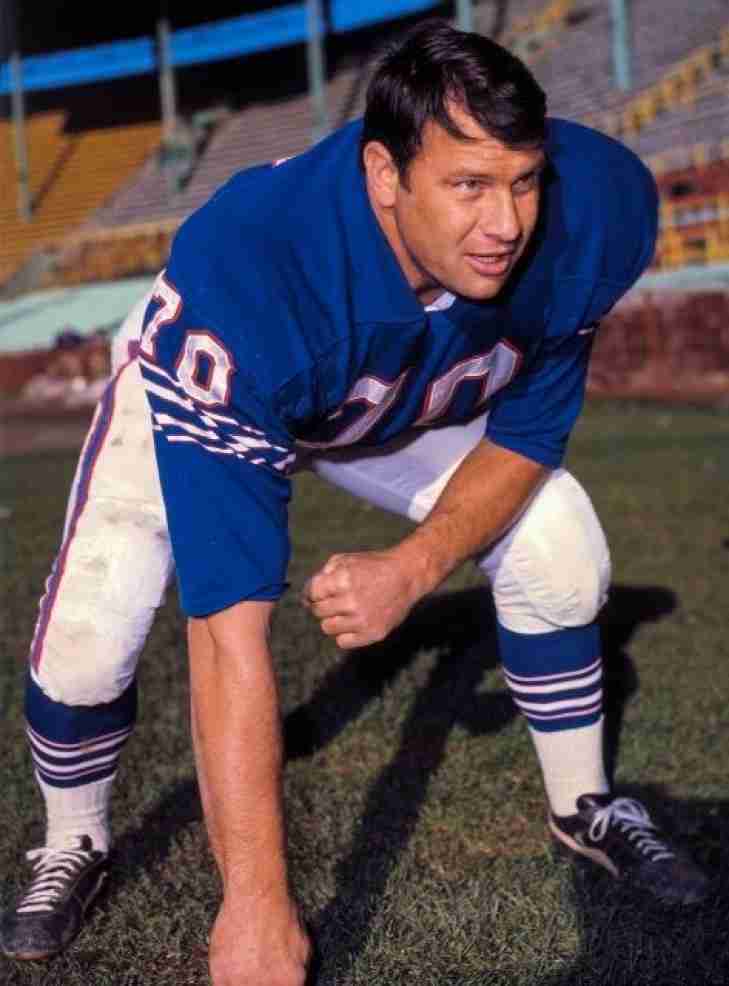
Tom Sestak joined Western New York as a 17th-round pick (132nd overall) in the 1962 AFL Draft from McNeese State. He quickly established himself as one of the most dominant defensive players in professional football. Throughout his seven-year career, he remained with the Bills, anchoring the interior of a formidable defensive line that led Buffalo to two consecutive league championships.
Sestak brought a unique blend of impressive size, lightning-fast quickness, and formidable upper-body strength to the 1960s AFL. Playing as a defensive tackle, he often darted through double-teams with a powerful swim move or disrupted rushing plays directly by driving guards straight into their quarterbacks. When it came to stopping the run, he had the agility to quickly move across gaps and tackle ball carriers before they could get past the line of scrimmage.
Sestak made a notable impact during his inaugural 1962 season, receiving First-Team All-AFL recognition and his initial AFL All-Star selection. His peak performance occurred in 1964, where he played a pivotal role as the driving force behind a defense that secured Buffalo’s first AFL Championship. During this period, Sestak achieved one of the most remarkable individual performances by an interior lineman in history. He led the AFL with an unofficial total of 15.5 sacks over just 14 regular-season games, which earned him First-Team All-AFL honors and his third consecutive AFL All-Star nomination.
Sestak backed that up during the 1965 championship defense, earning his fourth AFL All-Star trip and third First-Team All-AFL nod while leading a unit that set an AFL record by going 17 straight games without allowing a rushing touchdown.
Despite facing tough knee injuries that paused his career after the 1968 season, Sestak continued to be a strong presence during his seven years in Buffalo. He recorded an impressive 52.0 unofficial career sacks in just 85 regular-season games. His remarkable performance earned him a unanimous spot on the AFL All-Time Team, and Pro Football Weekly also recognized him by naming him to its All-1960s All-Pro team alongside Bob Lilly. In 1987, Buffalo proudly inducted Sestak into their Wall of Fame.
21. Joe Ferguson
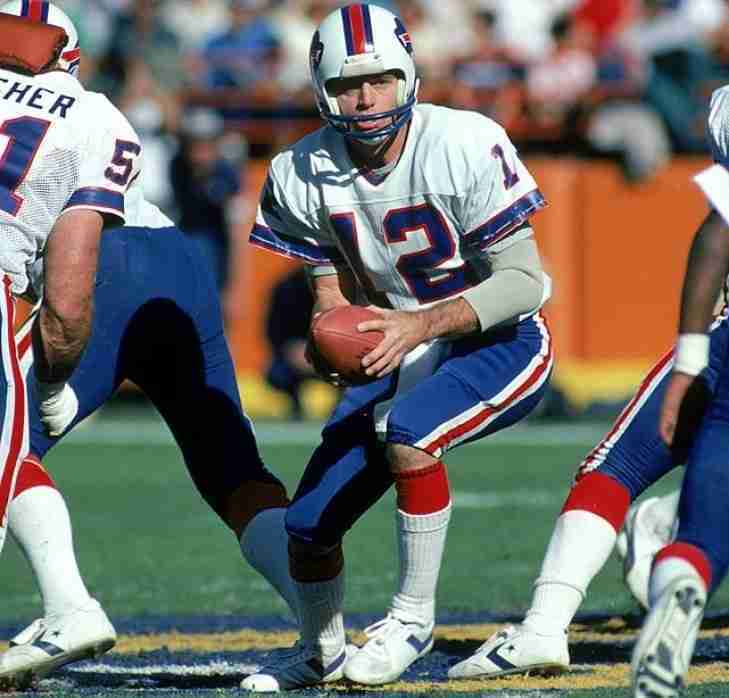
Drafted in the third round (57th overall) of the 1973 NFL Draft out of Arkansas, Joe Ferguson stepped into Western New York as a rookie and immediately took over the starting quarterback role. Over the next 12 seasons, "Fergie" served as the steady, tough-as-nails commander under center, directing the offense through major stylistic shifts—from handoffs to O.J. Simpson to air-it-out aerial assaults.
Ferguson was known for his quick release, deep-ball accuracy, and impressive toughness. Early in his career, he served as a control-oriented game manager, often executing play-action plays based on Simpson’s renowned running ability. When the team shifted into Chuck Knox’s era in the late 1970s, Ferguson demonstrated greater versatility by dropping into frequent passing formations and staying composed in collapsing pockets to throw accurate intermediate passes even under heavy coverage.
Ferguson’s early career was defined by his complementary play during O.J. Simpson's historic 2,000-yard season in 1973. He managed the offense with poise, taking the Bills to the playoffs in 1974.
His statistical peaks came as the offense opened up. In 1975, Ferguson tied Fran Tarkenton for the NFL lead with 25 passing touchdowns, throwing for 2,426 yards while driving the league's highest-scoring offense. Two years later, in 1977, he led the NFL in passing yards with 2,803, proving he could handle heavy volume.
After a 12-year streak of starting every healthy game, an ankle injury and a 1–10 record in 1984 marked the end of his era. In spring 1985, Buffalo traded the veteran quarterback to the Detroit Lions. He then spent six more seasons as a key backup and occasional starter with Detroit, Tampa Bay, and Indianapolis before retiring in 1990.
In Buffalo, Ferguson played in 164 regular-season games, leaving as the franchise’s all-time leader in passing yards (27,590) and passing touchdowns (181). Buffalo inducted Ferguson into their Wall of Fame in 1995.
