
The Pro Football Hall of Fame Revisited Project: 1972 Final VOTE
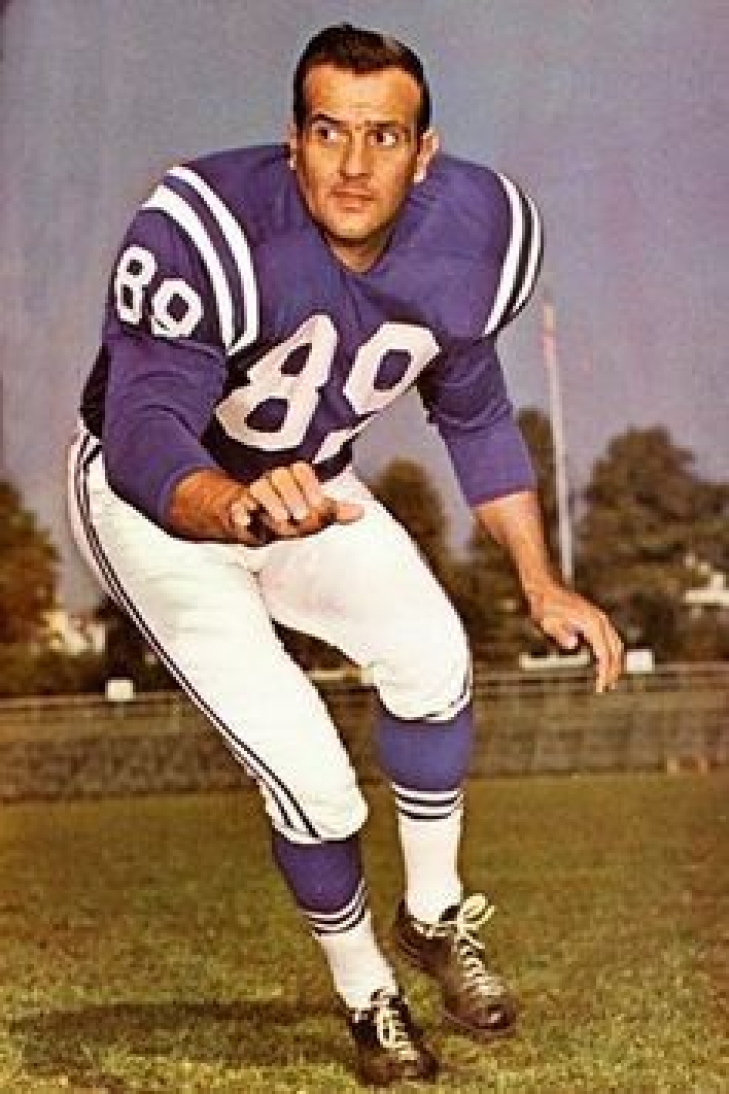
1972 Pro Football Hall of Fame Revisited Project Class.
Here we are! Again!!
If you have been following our Pro Football Hall of Fame Revisited Project, you know we have asked the rhetorical question: What if the PFHOF began in January 1946?
After soliciting and obtaining a passionate group of football fans and historians, we sent out a ballot for a Preliminary Vote, in which we asked each voter to give us 25 names as their semi-finalists and 5 in the Senior Pool. We then asked the group to vote for their 15 Finalists in the Modern Era and 3 in the Senior Category. The final stage was to vote for their five Modern Era inductee and one Senior inductee.
This is the result of the 27th official class;
Below are the final results of this project based on 30 votes.
Remember that the group took a vote in “1970”, and we have reverted to the top five candidates entering the Hall, PROVIDING THEY MAKE 50% of the vote. This will be put to a vote again in “1973”.
This is for the “Modern Era”
*Bold indicates they have been elected to the Pro Football Hall of Fame Revisited Class of 1972:
|
Player |
Year of Eligibility |
Vote Total |
|
Gino Marchetti DE-T-DT |
1 |
28 |
|
Bill George LB-G-MG-DT |
1 |
24 |
|
Ollie Matson RB-FL |
1 |
18 |
|
Paul Hornung HB |
1 |
14 |
|
John Henry Johnson FB-HB |
1 |
14 |
|
Mike McCormack T-G |
5 |
13 |
|
Stan Jones G-DT-T |
1 |
10 |
|
Billy Howton E-FL |
4 |
6 |
|
Pat Harder FB |
14 |
5 |
|
Alan Ameche FB |
7 |
4 |
|
Joe Fortunato LB |
1 |
3 |
|
Jimmy Patton DB |
1 |
3 |
|
Ward Cuff WB-QB-HB |
20 |
2 |
|
Charlie Conerly QB |
6 |
2 |
|
Pete Retzlaff E-HB-TE |
1 |
1 |
This is for the “Senior Era”,
*Bold indicates they have been elected to the Pro Football Hall of Fame Revisited Class of 1972.
|
Joe Kopcha |
11 |
14 |
|
Al Nesser |
15 |
8 |
|
Buckets Goldenberg |
2 |
6 |
|
None of the Above |
N/A |
2 |
This is for the “Coaches/Contributors”,
*Bold indicates they have been elected to the Pro Football Hall of Fame Revisited Class of 1972.
|
Tim Mara |
3 |
16 |
|
Buddy Parker |
3 |
10 |
|
Clark Shaughnessy |
3 |
3 |
|
None of the Above |
N/A |
1 |
About the 1972 Inductees:
Gino Marchetti DE-T-DT, DTX 1952, BAL 1953-64 & 1966: Inducted in the Pro Football Hall of Fame Revisited Project in 1972 on his 1st Ballot. Inducted into the actual Pro Football Hall of Fame in 1972.
Easily the best defensive player in Colts history, Gino Marchetti might also have been the best pass rusher in the NFL for a decade. Marchetti was also a great run defender and was regarded by many offensive players as the toughest player they ever faced. The Pro Football Hall of Famer would be named a First Team All Pro seven times and many have stated that the Colts would never have won the 1958 and 1959 NFL Championship without him.
Bill George, LB-G-MG-DT, CHI 1952-65 & RAM 1966. Inducted in the Pro Football Hall of Fame Revisited Project in 1972 on his 1st Ballot. Inducted into the actual Pro Football Hall of Fame in 1974.
There are many influential football players in the 1950s, especially as the game was evolving away from two-way players to specific roles. Bill George played on both sides of the ball, but his calling as a Linebacker proved to be his calling card.
Playing all but his final year with the Chicago Bears, George would settle in as the team’s Middle Linebacker, essentially becoming the first player to truly master the position. The former Demon Deacon started dropping back at the snap, and he controlled the middle of the field, and inadvertently created the 4-3 Defense.
Recording 18 Interceptions over his career, George went to eight straight Pro Bowls (1954-61), was a seven-time First Team All-Pro, and won an NFL Championship late in his career with the Bears.
Ollie Matson, RB-FL, CRD 1952 & 1954-58, RAM 1959-62, DET 1963 & PHI 1064-66: Inducted in the Pro Football Hall of Fame Revisited Project in 1972 on his 1st Ballot. Inducted into the actual Pro Football Hall of Fame in 1972.
Over the 14 seasons he played in the NFL, Ollie Matson, a 4x400 Olympic Gold Medalist in Helsinki, only was on two winning teams, but don’t put that on the speedster, who was especially in the first half of his career carried his team.
Matson played the first half of his career with the Chicago Cardinals, where he was a Pro Bowl in all six of his seasons, was a five-time First Team All-Pro, and was a two-time league-leader in All-Purpose Yards. The Rams traded nine players for him, but after his first year there (1959), injuries mounted, but the strength of his first six years earned him his gold jacket.
Tim Mara, Owner, NYG 1925-58. Inducted in the Pro Football Hall of Fame Revisited Project in 1972 on his 3rd Ballot. Inducted into the actual Pro Football Hall of Fame in 1963.
NFL President, Joe Carr believed that New York City should have a franchise for the betterment of the league. He was right of course, but he could not convince his friend and boxing promoter, Bill Gibson to be the money man for a team in New York. Gibson did however introduce Carr to his friend, Tim Mara. Mara jumped at the opportunity.
Mara would become the first owner of the New York Giants, and his presence brought stability to a fluctuating league and he became an influential force in the NFL. Mara brought stability, standing up to rival leagues (AFL in 1926, and the AAFC from 1946 to 1949), and keeping the Giants strong in trying times (The Great Depression and World War II) played a large part in the league’s growth.
Mara passed away 1959, and under his leadership, the Giants won four NFL Championships (1927, 1934, 1938 & 1956).
9. Ollie Matson
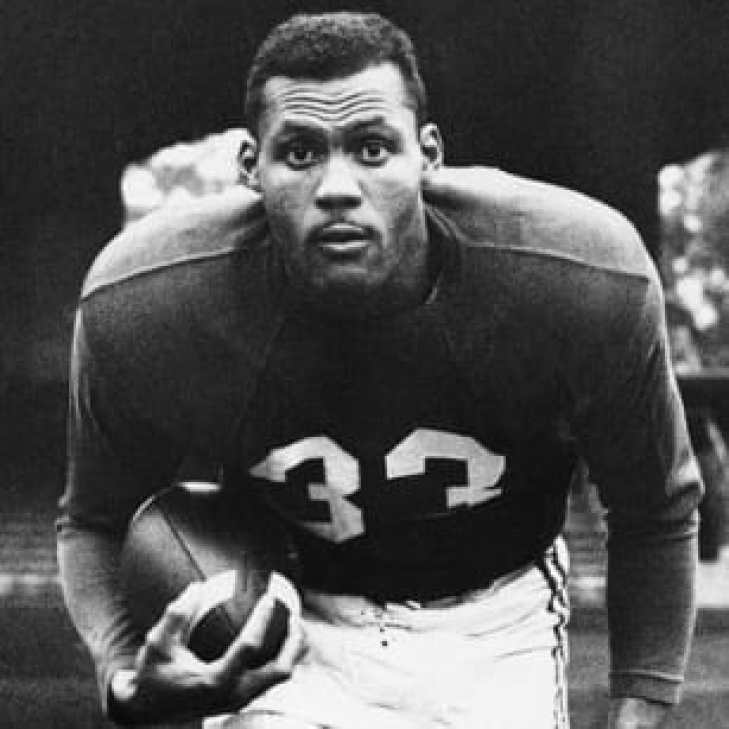
Before recording his first professional football carry, Ollie Matson had already made a significant mark in global athletic history. As a standout consensus All-American running back at the University of San Francisco, his exceptional track speed propelled him to the 1952 Helsinki Olympics, where he earned a silver medal in the 4x100-meter relay and a bronze in the 400-meter dash. Drafted third overall in the first round of the 1952 NFL Draft by the Chicago Cardinals, the versatile athlete quickly proved to be one of the most explosive and game-changing players the league had ever seen.
Matson had an exceptional stride length that enabled him to clear angles easily in open space. Unlike typical sprinters who avoided contact, he ran with aggressive, high-knee motion, powering through arm tackles at the line of scrimmage before accelerating into top speed. His versatility was nearly unrivaled in the 1950s: he served as a main rushing threat from the backfield, an elite receiver downfield, and the most feared kickoff and punt returner in the NFL.
His debut in the NFL in 1952 was an immediate showcase of talent. Matson had a remarkable rookie year, gaining 1,326 all-purpose yards and scoring 9 touchdowns, which earned him a Pro Bowl invitation and a First-Team All-Pro spot. However, just as his career was gaining momentum, it was interrupted when he joined the military, causing him to miss the entire 1953 NFL season while serving in the U.S. Army.
Upon returning in 1954, Matson proved to be an even more formidable player. He dominated defenses across the NFL, accumulating 1,666 all-purpose yards—an average of 5.3 yards per carry—and scoring 9 touchdowns, earning his second First-Team All-Pro honor. Throughout his time in Chicago, he maintained this high level of performance, never falling below 1,200 all-purpose yards in any season with the team. In 1956, he repeated as the NFL’s top all-purpose yardage leader, totaling 1,524 yards and scoring 9 touchdowns—including a 100-yard kickoff return and a 79-yard punt return. Over six seasons with Chicago, Matson averaged more than 1,420 all-purpose yards annually, led the NFL in combined yardage twice, and was the focal point of the Cardinals’ offense.
Despite Matson’s individual brilliance—which generated six consecutive Pro Bowls (1952, 1954–1958) and five First-Team All-Pro selections in Chicago—the Cardinals struggled to build a competitive roster around him. The team managed only one winning season during his tenure. Recognizing his immense market value, Chicago engaged in a historic, blockbuster transaction prior to the 1959 season, trading the superstar to the Los Angeles Rams in exchange for nine players (seven players and two draft picks). While the massive package failed to revitalize Chicago’s fortunes, Matson’s grueling workload in the desert and Midwest meant his elite vertical speed naturally began to taper off in Los Angeles, though he played eight more seasons as a respected veteran across the league.
Matson left behind a towering footprint of 8,544 all-purpose yards and 46 total touchdowns in just 74 games for the Cardinals. At the time of his ultimate retirement in 1966, his combined career running and receiving yards trailed only the legendary Jim Brown on the NFL's all-time list.
Matson, a top halfback on the NFL 1950s All-Decade Team, was inducted into the Pro Football Hall of Fame in 1972 and joined the Cardinals’ Ring of Honor as part of the inaugural group in 2006.
