

31. Larry Centers
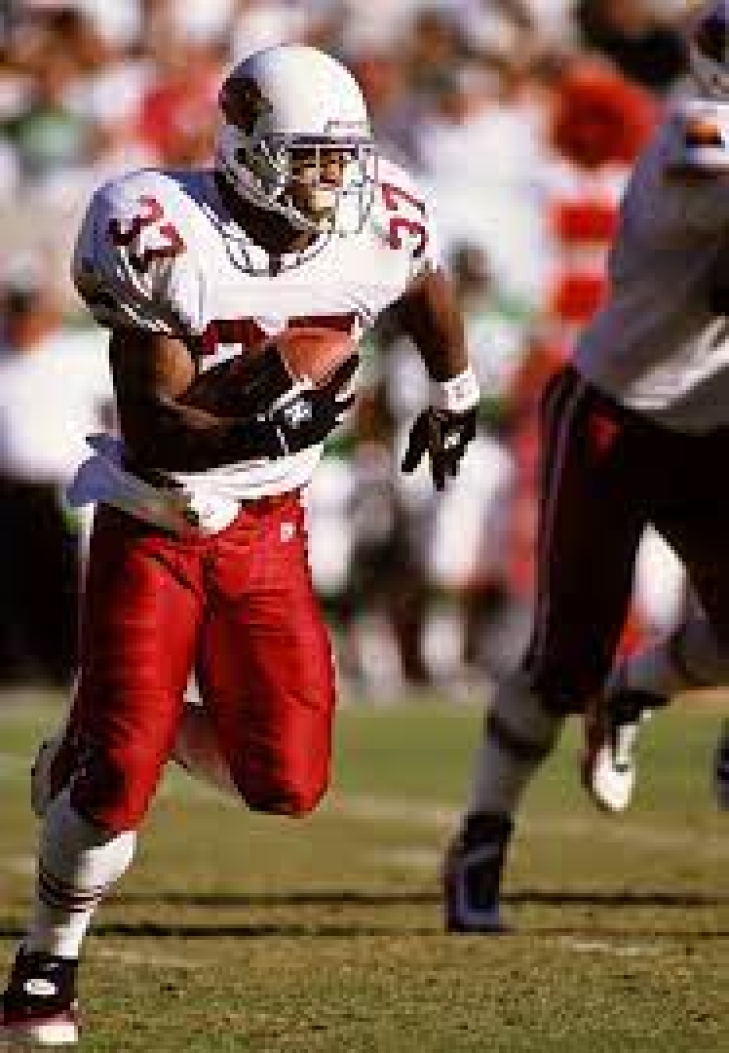
In an era where fullbacks were viewed strictly as lead-blocking battering rams, a fifth-round pick out of Stephen F. Austin fundamentally changed how NFL offenses weaponized the backfield. Selected 115th overall in the 1990 NFL Draft, Larry Centers spent his first two seasons operating in near obscurity. Once the coaching staff recognized his elite hands and open-field route running, Centers transformed into a pass-catching machine who completely revolutionized his position.
Centers lacked the traditional, bone-crushing girth of classic 1990s fullbacks, but he possessed the movement skills and soft hands of a slot receiver. Operating out of the backfield as a primary check-down option, he excelled at finding soft spots in zone coverage, executing quick flat routes, and turning short dump-offs into first downs. His uncanny durability made him a security blanket for every quarterback who suited up for the franchise during his tenure.
After expanding his role with 50 catches in 1992 and 66 in 1993, Centers began posting receiving numbers that rivaled elite wideouts. With Buddy Ryan's arrival in 1994, his usage exploded. His historic peak arrived during the 1995 season, when he hauled in an unbelievable 101 receptions for 962 yards, becoming the first running back or fullback in NFL history to break the 100-catch threshold in a single campaign while earning his first Pro Bowl selection.
Centers followed up that landmark performance with another masterclass during the 1996 campaign, catching 99 passes for 766 yards and a career-high 7 receiving touchdowns while adding 425 yards on the ground to earn First-Team All-Pro honors and his second Pro Bowl invitation. He remained an essential offensive pillar for two more seasons, helping Arizona capture a famous playoff victory in 1998, before salary cap constraints led to his release prior to the 1999 season.
Centers continued his career with successful stops in Washington, Buffalo, and New England—winning Super Bowl XXXVIII with the Patriots in 2003 and retired with 827 career receptions, the most ever by a back at the time of his retirement. In nine seasons with the Cardinals, he accumulated 535 receptions, 4,617 receiving yards, 1,739 rushing yards, and 29 total touchdowns.
35. Pat Harder
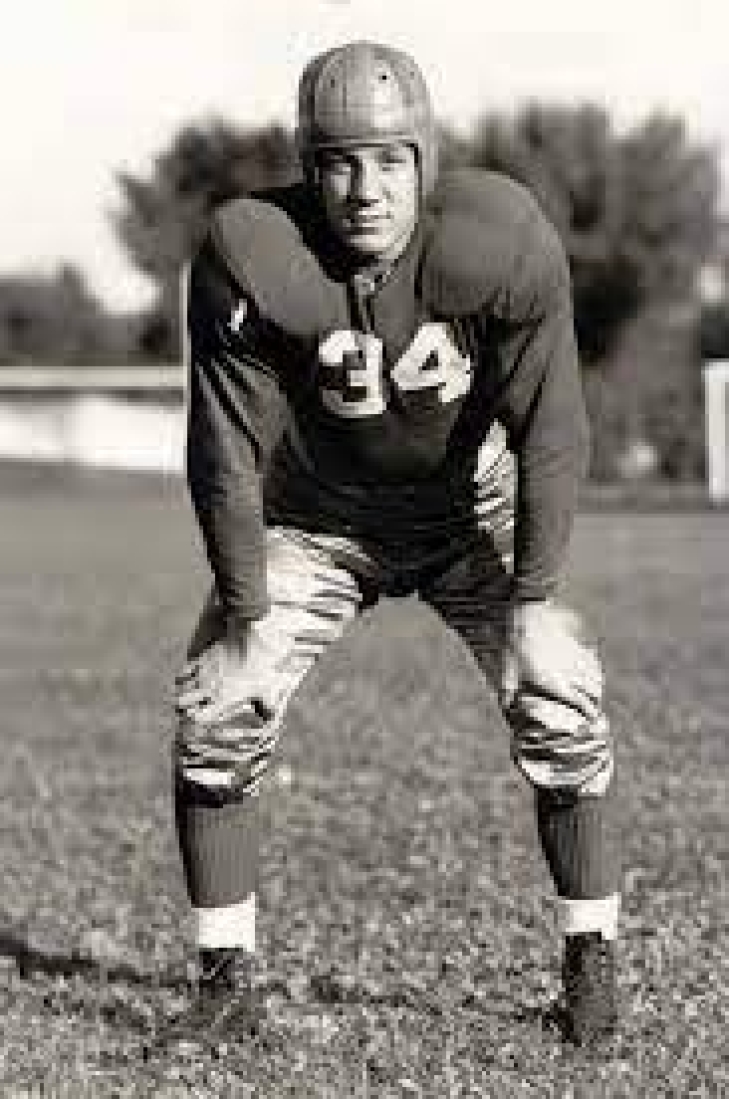
Pat Harder, drafted second overall in the 1944 NFL Draft from Wisconsin, paused his football career to serve in the U.S. Marine Corps during World War II. He debuted with the Chicago Cardinals in 1946, joining a legendary backfield as the power-running fullback in Chicago's renowned "Million Dollar Backfield" with Paul Christman, Charley Trippi, and Marshall Goldberg.
At 5 feet 11 inches and a solid 205 pounds, Harder brought a low-center-of-gravity, downhill rushing style that delivered punishment to opposing linebackers. What made him truly irreplaceable, however, was his dual-phase scoring capability. Beyond his rugged inside running and bone-crushing lead blocking, Harder took over placekicking duties for Chicago and quickly turned himself into the most lethal point-producer in professional football.
Harder's early career in Chicago saw one of the most impressive three-year stretches by any back of that time. In 1947, he topped the league with 102 points and played a key role in Chicago's victory over the Philadelphia Eagles to win the 1947 NFL Championship, which was the franchise's last world title.
He reached the peak of his career in 1948, earning UPI NFL Most Valuable Player honors after leading the league with 110 points, perfect on all 53 extra-point attempts, and rushing for 554 yards. In 1949, he again led the NFL in scoring with 102 points, becoming the first player in NFL history to surpass 100 points in three consecutive seasons. His exceptional performance earned him three consecutive First-Team All-Pro selections (1947–1949) and a place on the NFL 1940s All-Decade Team. Harder scored over 100 points during three straight seasons from 1947 to 1949, leading the league each year and setting a record for individual scoring consistency in the NFL.
After a standout Pro Bowl season in 1950, Harder was traded to the Detroit Lions in 1951. He maintained his winning form in Detroit, playing as fullback and placekicker for consecutive NFL championship teams in 1952 and 1953 until knee injuries led to his retirement. During his five seasons with the Cardinals, Harder racked up 2,371 rushing yards, 510 receiving yards, made 25 field goals, 171 extra points, and scored a total of 412 points across 58 regular-season games.
28. Calais Campbell
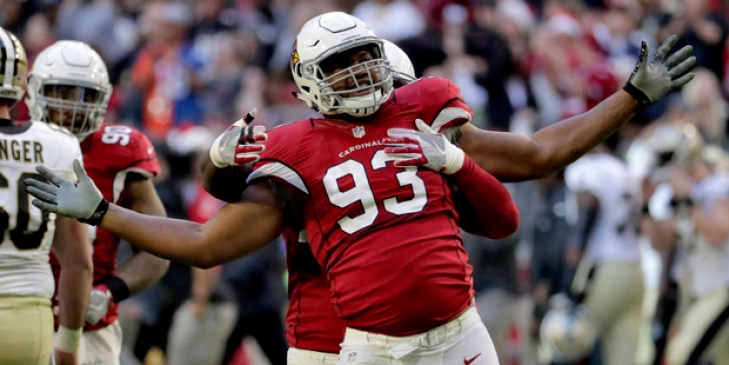
Calais Campbell, standing 6 feet 8 inches and weighing over 300 pounds, entered the league as a second-round draft pick from Miami in 2008. His career post-Arizona earned him major national awards such as the Walter Payton NFL Man of the Year and an All-Decade team selection, but it was his nine-year tenure in Arizona that laid the groundwork for his Hall of Fame-worthy career.
Campbell, with an impressive 85-inch wingspan, combined exceptional size, leverage, and lateral agility for a five-technique defensive end. He posed a formidable challenge for opponents: impossible for single blockers to move in the running game, yet quick and powerful enough to collapse interior pockets or swat passes at the line of scrimmage.
In 2008, as a rookie, Campbell played a crucial role in Arizona's exciting journey to Super Bowl XLIII. He became the full-time left defensive end in 2009, and his performance gradually shifted from a physical interior disruptor to one of the most versatile and complete defensive linemen in the league. His national recognition came in 2014 when he recorded 7.0 sacks and 15 tackles for loss, earning his first Pro Bowl and Second-Team All-Pro honors. He repeated this success in 2015 with a second Pro Bowl appearance, leading the front seven for a division-winning team with 13 wins.
His early years in Arizona peaked during the 2016 campaign, when Campbell recorded 8.0 sacks, 12 tackles for loss, two forced fumbles, and an interception, earning his second Second-Team All-Pro honor. During his first nine seasons in the desert, he accumulated 56.5 sacks and 107 tackles for loss, acting as the defensive leader throughout the franchise's most stable period of success in recent times.
In 2017, Campbell joined Jacksonville, marking a peak in his statistics. He achieved a personal-best 14.5 sacks in his debut season there, received First-Team All-Pro recognition, and was honored as the 2019 Walter Payton NFL Man of the Year for his exceptional charitable efforts. He continued to be productive with Baltimore (2020–2022), Atlanta (2023), and Miami (2024), where he surpassed 100 career sacks.
In a storybook reunion, Campbell returned to the desert for the 2025 season, re-joining the Cardinals to provide veteran leadership and interior push for a young defense. Starting all 17 games, the 39-year-old defensive lineman defied Father Time once again by racking up 6.5 sacks and 26 solo tackles. Following that single-year homecoming, Campbell departed once more in 2026 to rejoin Baltimore for another championship push.
Across his ten total seasons wearing a Cardinals jersey, Campbell accumulated 63.0 sacks, 536 combined tackles, and 119 tackles for loss.
39. Bobby Joe Conrad
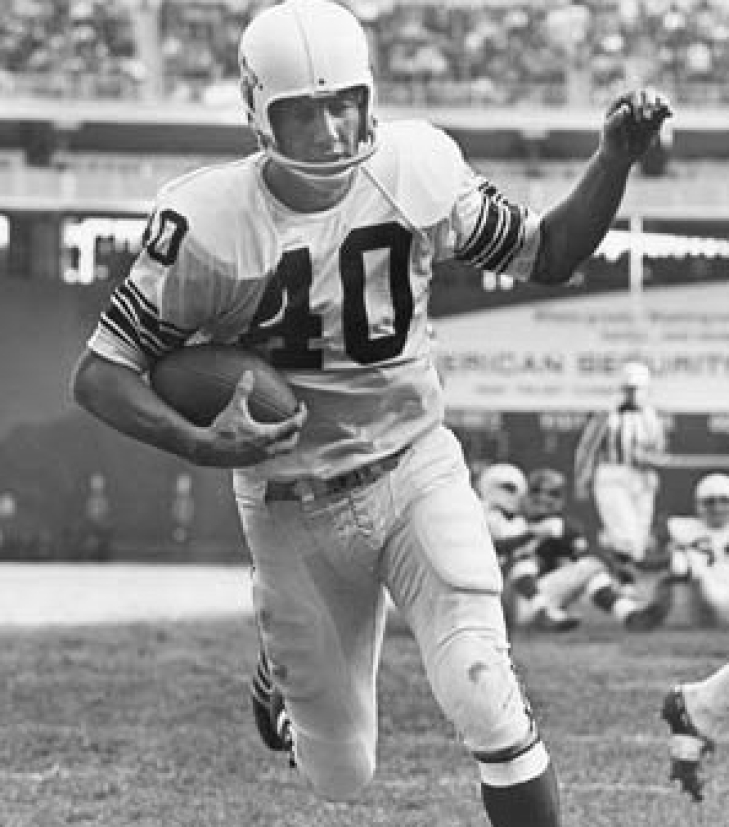
Long before positional versatility became a headlining trend, a fifth-round draft choice out of Texas A&M quietly became the ultimate utility knife for the Cardinals franchise. Drafted by the New York Giants in 1958 and traded to Chicago before ever playing a snap, Bobby Joe Conrad arrived without a set home on the depth chart. What followed was an 11-year run in a Big Red uniform defined by total adaptability, as Conrad transitioned seamlessly from defensive back to halfback, placekicker, and ultimately one of the premier flankers in professional football.
Conrad was not a runaway burner, but he possessed uncanny spatial awareness, soft hands, and crisp route precision. His football IQ allowed him to learn multiple playbooks on the fly: as a rookie in 1958, he picked off 4 passes as a defensive safety, took handoffs as a halfback over the next two seasons, handled placekicking duties, and eventually slid out to flanker in 1962.
Once locked in at receiver, Conrad hit an extraordinary peak alongside quarterback Charley Johnson. His 1963 season stood as a masterclass in possession efficiency: Conrad led the entire NFL with 73 receptions, generating 967 receiving yards and 10 touchdowns to earn First-Team All-Pro honors.
He backed that performance up in 1964 with 61 catches for 780 yards and 6 touchdowns, collecting his first career Pro Bowl invitation. Conrad added another stellar campaign in 1965, leading the team with 909 receiving yards. Across an eight-year span from 1961 to 1968, he established a remarkable franchise record by catching a pass in 101 consecutive games.
When Conrad departed St. Louis following the 1968 season, he left as the Cardinals' all-time leader in receptions with 418 catches, a benchmark that stood for two decades. After a final reserve campaign with the Dallas Cowboys in 1969, Conrad called it a career. In eleven seasons with the Cardinals, he compiled 418 receptions, 5,828 receiving yards, 38 receiving touchdowns, 14 field goals, and 7,633 all-purpose yards.
44. Pat Tilley
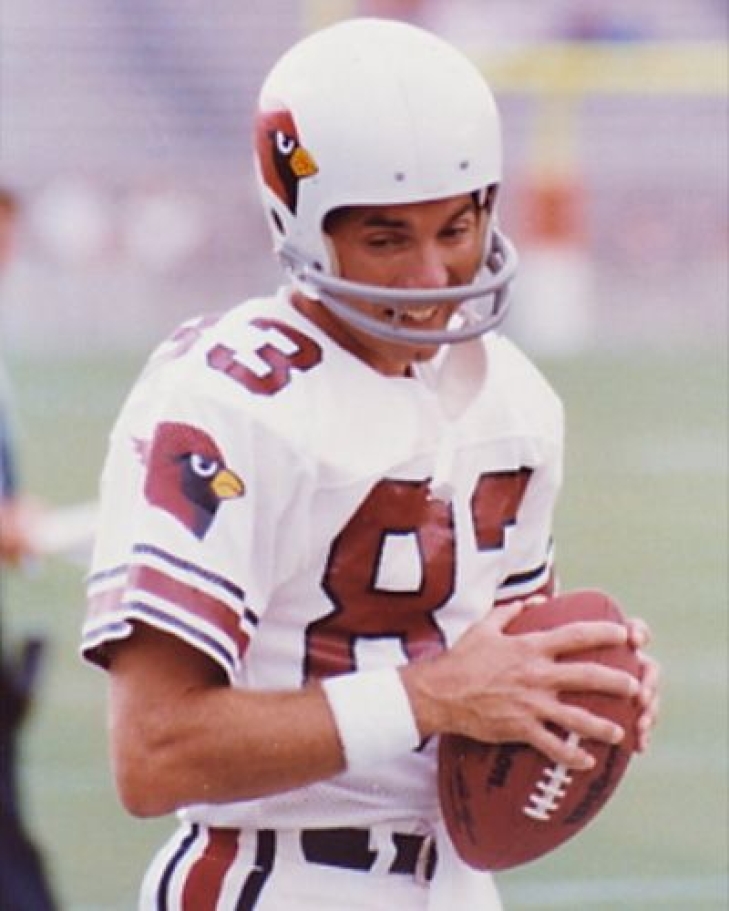
Although high-profile deep threats like Mel Gray and Roy Green grabbed national attention, the St. Louis Cardinals discovered their key possession receiver in the 1976 NFL Draft's fourth round. Drafted 114th overall from Louisiana Tech, Pat Tilley entered the Big Red offense discreetly, but his route precision, fearless catches over the middle, and durability made him a dependable target for 11 seasons, establishing himself as one of the franchise's most reliable players.
Tilley didn't have elite speed for breakaways, but he compensated with precise route running and excellent spatial awareness against zone defenses. Whether in the slot or near the sideline, he served as a reliable safety valve for quarterbacks Jim Hart and later Neil Lomax, regularly converting crucial third downs.
Tilley took full control of a starting job in 1978, launching a run in which he led the Cardinals in receiving yards for five consecutive seasons (1978–1982). He recorded four straight years with at least 900 receiving yards. His performance earned him a Pro Bowl selection in 1980 after hauling in 68 passes for 966 yards and six touchdowns.
His statistical peak arrived during the 1981 campaign. Tilley posted his first career 1,000-yard season, catching 66 passes for 1,040 receiving yards while averaging 15.8 yards per catch. He remained a vital piece of the offense through the mid-1980s, starting every game from 1983 through 1985.
Tilley retired following the 1986 season, spending his entire 11-year NFL career wearing a St. Louis jersey. At the time of his retirement, his 468 receptions ranked second in franchise history, behind only Jackie Smith. Across 147 regular-season games, he accumulated 7,005 receiving yards and 37 touchdown catches.
36. Neil Lomax
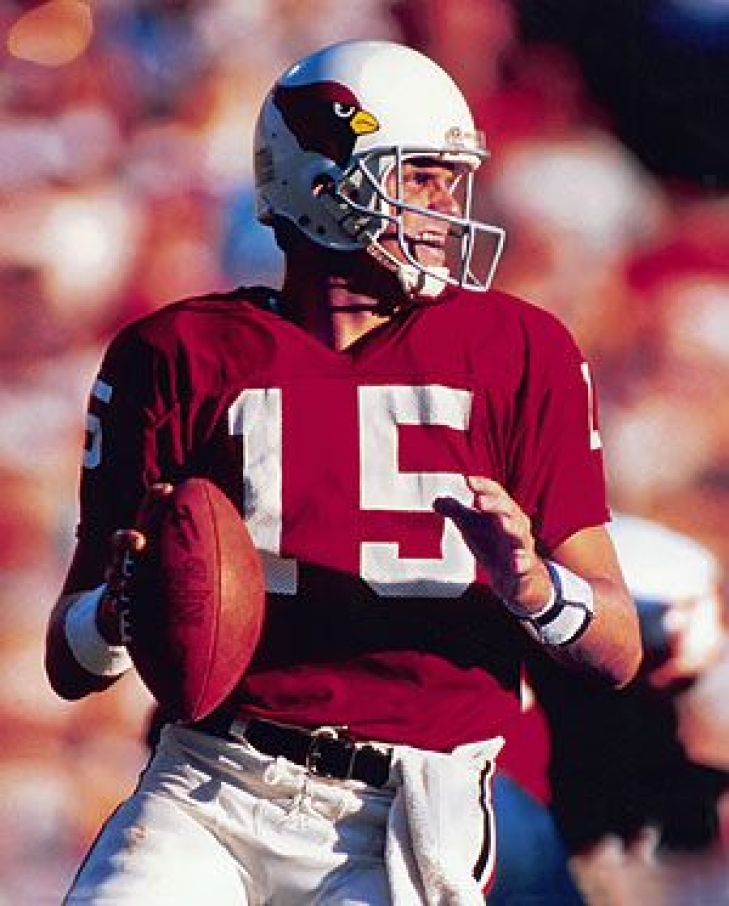
In the past, small-school quarterbacks often drew first-round draft attention, but a prolific passer from Portland State showed that strong arm talent can succeed anywhere. Neil Lomax set NCAA records in Mouse Davis’s renowned Run and Shoot offense, showcasing his arm strength. He entered the 1981 NFL Draft, where the St. Louis Cardinals picked him in the second round (33rd overall). With Jim Hart as a franchise legend in the locker room, Lomax was positioned as the heir and quickly proved that his quick release could uplift an entire team.
Lomax had a traditional drop-back frame, a quick release, and a knack for deep balls. In a tough, physical NFC East, he thrived by speeding up the game, confusing safeties, and allowing deep routes to unfold. With talented receivers like Roy Green and Pat Tilley, Lomax made St. Louis one of the most explosive passing teams in the league.
After earning PFWA All-Rookie honors and taking over late in his first 1981 season, Lomax officially became the starting quarterback in 1983. He had a standout 1984 season, setting a personal best with 4,614 passing yards and 28 touchdowns, which earned him his first Pro Bowl selection. His passing total that year was one of the most impressive single-season performances in league history at the time. Lomax's 4,614 yards in 1984 set a franchise record and marked a period when his deep throws were considered among the most dangerous in professional football.
Lomax delivered another masterclass during the strike-shortened 1987 season. Pacing the NFL with 3,387 passing yards and 275 completions, he threw 24 touchdown passes in just 12 games, earning his second Pro Bowl selection. He remained a steady presence under center as the franchise relocated to Phoenix in 1988, throwing for nearly 3,400 yards in his debut desert campaign.
Sadly, severe hip arthritis ended his career at his physical prime. The joint deterioration sidelined him for the entire 1989 season. Despite intense rehabilitation efforts, he couldn't overcome the pain, leading to his retirement in early 1990 at only 30 years old. Over his career, Lomax achieved 22,771 passing yards, 136 touchdown passes, and 10 rushing touchdowns in 108 regular-season games.
25. Chandler Jones

When New England traded Chandler Jones in March 2016 after his Pro Bowl and Super Bowl victory, Arizona gained a pass rusher near his peak. The Syracuse alum joined the desert team and quickly made the edge his domain, transforming from a solid defender into one of the most disruptive, high-strip-sack players in NFL history.
Jones, standing 6-foot-5 and weighing 265 pounds with an 84-inch wingspan, used his physical advantage to outmatch most edge rushers of his era. His key move—a swift cross-chop combined with a long-arm extension—enabled him to dominate boundary tackles and gain leverage while maintaining speed. What set him apart was his exceptional ball awareness during his rush; instead of just sacking the quarterback, he often targeted the passer's arm, transforming fast rushes into immediate turnovers.
His first season in 2016 in Arizona saw him immediately record 11.0 sacks and 15 tackles for loss. However, his 2017 season set a new standard for individual excellence in franchise history. Transitioning smoothly to outside linebacker, Jones led the entire NFL in both sacks (17.0) and tackles for loss (28). His single-season franchise record for sacks earned him First-Team All-Pro honors, a Pro Bowl invitation, and a third-place finish in NFL Defensive Player of the Year voting.
Even after the franchise switched to a 4-3 defense in 2018, requiring Jones to move to defensive end, he continued to perform at a high level, recording 13.0 sacks. In 2019, he surpassed himself with an outstanding display of edge rush skills. Jones broke his own single-season team record with 19.0 sacks and led the league with 8 forced fumbles, finishing as the runner-up for NFL Defensive Player of the Year and earning his second First-Team All-Pro selection as a Cardinal. His 2019 season included two games with four sacks each, establishing him as a key player during an era in which he forced 23 fumbles in a Cardinals uniform.
After suffering a torn bicep that largely sidelined his 2020 season, Jones made a powerful comeback in 2021. He made a major impact by tying the franchise single-game record with 5.0 sacks in the season opener against Tennessee. He ended the season with 10.5 sacks and earned his fourth career Pro Bowl selection. Before moving to Las Vegas in 2022, Jones established himself as Arizona's top modern-era pass rusher. In just 84 games with the team, he accumulated 71.5 sacks, 81 tackles for loss, 131 quarterback hits, and 23 forced fumbles.
30. Jim Bakken
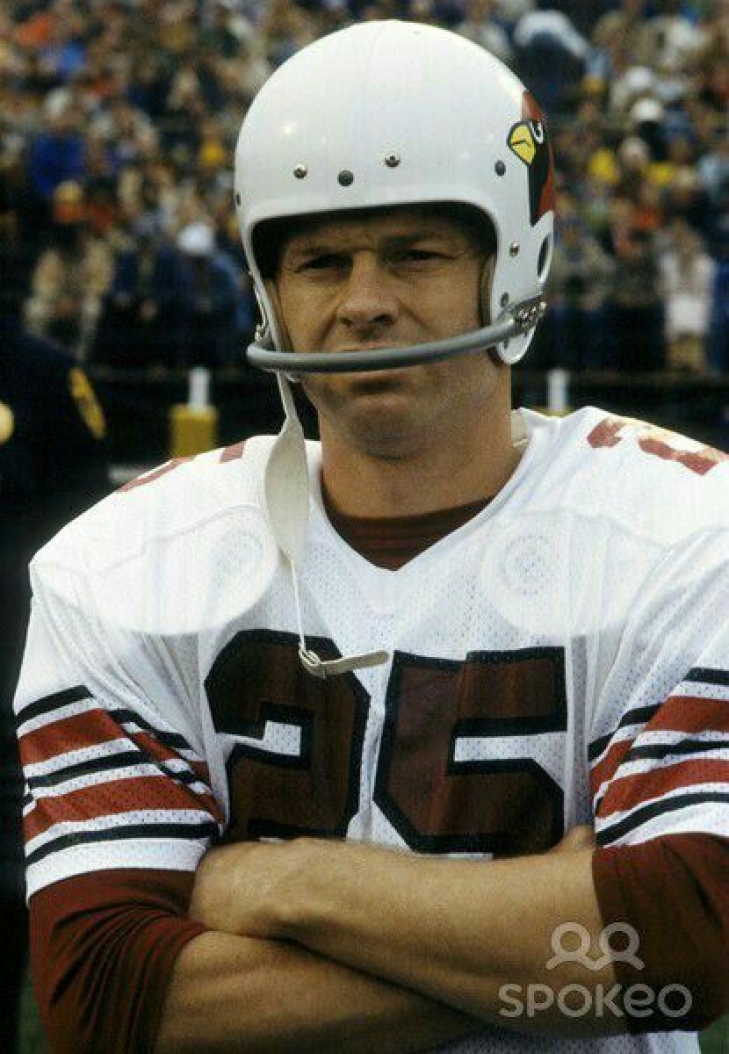
An undrafted free agent pickup after being released by the Los Angeles Rams, Jim Bakken signed with St. Louis in 1962 and proceeded to anchor the franchise's kicking game for 17 seasons. His arrival coincided with a rapid evolution in special teams tactics, turning a former Wisconsin defensive back into one of the sport's pioneering full-time placekicking specialists.
Operating with a traditional, straight-on kicking style, Bakken was renowned for his mental composure, trajectory control, and execution in heavy crosswinds. Beyond his scoring, his endurance was exceptional: between 1963 and 1978, he appeared in 234 consecutive regular-season games for the Cardinals, establishing an ironclad attendance record at the position.
Bakken's early peak included an iconic performance on September 24, 1967, against Pittsburgh. Playing through gusting winds at Pitt Stadium, Bakken converted 7 field goals in a single game, setting an NFL record that stood untouched for four decades. That historic afternoon propelled him to the 1967 NFL scoring title with 117 points while earning his second career Pro Bowl invitation.
He sustained an elite competitive level straight into the mid-1970s as the high-scoring "Air Coryell" offenses provided constant field-position scoring opportunities. Bakken turned in back-to-back dominant years in 1975 and 1976, earning consensus First-Team All-Pro honors and Pro Bowl nods in both campaigns. His consistency across two distinct decades earned him selections to both the NFL 1960s All-Decade Team and the NFL 1970s All-Decade Team.
By the time he hung up his cleats following the 1978 season, Bakken had accumulated 1,380 total points, converting 282 field goals and 534 extra points. That total ranked second in NFL history at the time of his retirement and remains an untouched Cardinals franchise scoring record.
29. Bob DeMarco
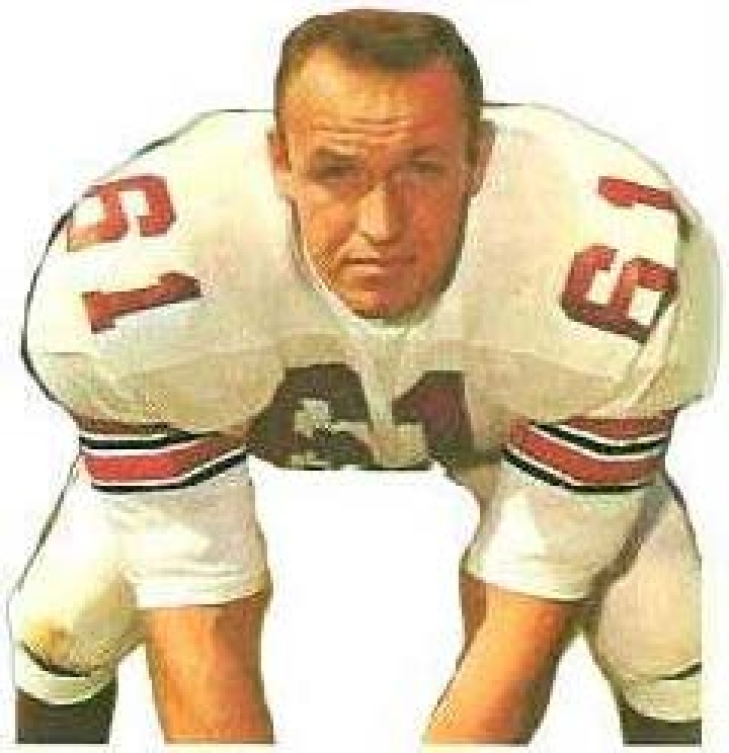
Drafted in the 14th round of the 1960 NFL Draft from Dayton, Bob DeMarco arrived in St. Louis with modest expectations but soon became a key part of the team. After playing a few games as a rookie guard in 1961, he took over as the starting center in 1962 and kept that role for the rest of the decade.
DeMarco was a resilient and technically skilled interior blocker, thriving in an era focused on physical, ground-and-pound football. Renowned for his sharp pre-snap line calls and quick snap-and-step execution, he consistently managed tough head-up nose tackles while creating running lanes for backs like John David Crow and Johnny Roland. His durability at the pivot offered essential continuity for an offense that frequently changed backfield setups during the 1960s.
DeMarco earned his first national recognition during the 1963 campaign, garnering his first Pro Bowl selection and AP Second-Team All-Pro honors. He maintained a high standard of play at center, securing a second Pro Bowl invitation in 1965.
His career peaked in the 1967 season, when his dominant play in the trenches earned him consensus First-Team All-Pro honors and his third Pro Bowl selection. He continued to build on his reputation with a Second-Team All-Pro selection in 1968, cementing his status as one of the NFC's top interior linemen. From 1962 to 1969, DeMarco started 103 of 107 games at center for St. Louis, anchoring the offensive line during the height of his career.
Following nine seasons in St. Louis, DeMarco departed after the 1969 campaign. He went on to play six more seasons across stints with Miami, Cleveland, and Los Angeles before retiring in 1975 with 185 total games played.
27. Mel Gray
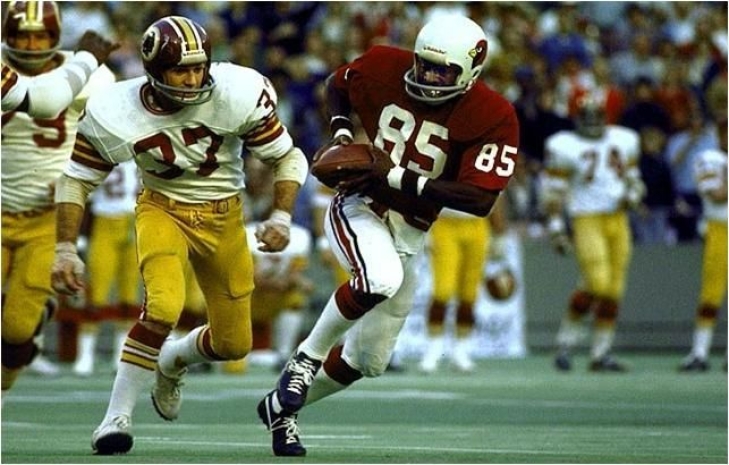
Before modern spread offenses made the deep pass a regular part of the game, only a few receivers could truly stretch the field like the track star who remained in his college hometown. Mel Gray, a world-class sprinter at the University of Missouri who matched national high school and conference records in the 100-yard dash, chose to stay local when the St. Louis Cardinals selected him in the sixth round of the 1971 NFL Draft. The team discovered a top home-run threat of 1970s football, a receiver capable of changing the scoreboard with a single stride.
Gray didn't have the bulky build typical of perimeter targets, but his proven acceleration was unmatched. With a genuine sub-9.5 second speed in the 100-yard dash, he only needed two or three strides to bypass boundary cornerbacks and eliminate safety support deep. In addition to his speed, his remarkable skill in tracking deep passes over his shoulder without losing momentum made him the perfect downfield safety option for quarterback Jim Hart.
Gray's career reached elite status as Don Coryell's high-powered offense gained prominence. Starting in 1974, Gray earned four straight Pro Bowl appearances (1974–1977). Although he rarely achieved high reception totals in an era focused on the run—never exceeding 50 catches or 1,000 yards in a season—his yards per catch were remarkable. He consistently ranked among the NFL's best in yards per reception, averaging an impressive 19.7 yards in 1974 and reaching a peak of 20.6 yards in 1977.
His individual peak arrived during the 1975 season, when he emerged as the undisputed king of big plays. Gray hauled in 48 receptions for 926 yards while tying for the league lead with 11 receiving touchdowns, earning his sole career First-Team All-Pro selection as the Cardinals captured the NFC East crown.
Notably, out of Gray's 46 career total touchdowns, an astonishing 28 of them spanned more than 40 yards, highlighting an explosive downfield capability rarely equaled in NFL history.
Gray remained a trusted focal point in St. Louis through the early 1980s, establishing a franchise-record streak by catching at least one pass in 121 consecutive games. By the time he departed St. Louis following the 1982 season, he had compiled 351 receptions, 6,644 receiving yards, and 45 receiving touchdowns across 145 regular-season contests.
24. Anquan Boldin
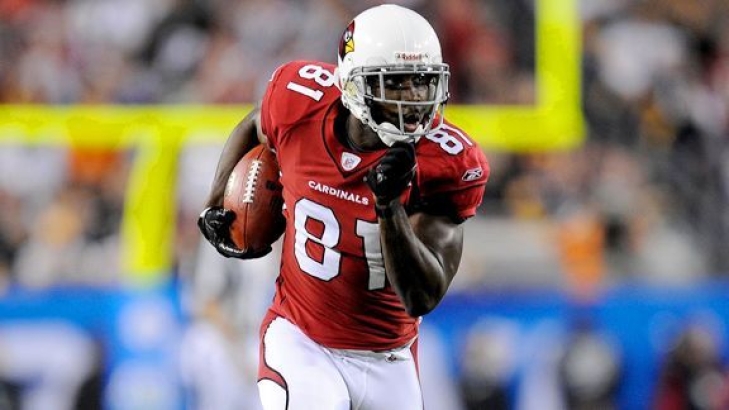
Few wide receivers in modern NFL history have set such a physical and relentless tone as the second-round pick from Florida State. Drafted 54th overall in 2003, Anquan Boldin quickly transformed the Arizona receiving corps’ identity. With strong hands, a running back's build, and an unwavering unwillingness to be tackled on first contact, Boldin set a toughness standard that shaped the franchise's offense for seven seasons (2003–2009).
Boldin demonstrated a formidable combination of strength and interior leverage. Unlike speed-focused perimeter receivers, his most impactful plays occurred in busy middle-field zones. He had exceptional contested-catch ability and body control, often shielding off boundary defenders much like a power forward boxing out for a rebound. Once he secured the ball, his aggressive running style turned him into a powerful runner in open space, breaking arm tackles to gain significant yards after the catch.
His 2003 debut in the professional league was one of the most extraordinary rookie seasons in NFL history. In his first regular-season game against Detroit, Boldin made a spectacular entrance by breaking the all-time record for rookie receiving yards in a debut, with 217 yards on 10 receptions. He finished his first season with 101 catches, 1,377 yards, and 8 touchdowns, earning AP NFL Offensive Rookie of the Year and his first Pro Bowl invitation.
Despite missing six games due to injury in 2004, Boldin was fully healthy in 2005, delivering an outstanding season. He recorded 102 catches for 1,402 yards and 7 touchdowns, leading the NFL in receiving yards per game at 100.1. Playing alongside Larry Fitzgerald, Boldin created arguably the most dangerous wide receiver duo in the league.
Between 2006 and 2008, Boldin earned two additional Pro Bowl selections (2006, 2008). His fighting spirit was notably demonstrated in 2008, just three weeks after facial fracture surgery from a helmet-to-helmet hit against the Jets. Boldin returned to the game, scoring two touchdowns against the Panthers. That season, he caught 89 passes for 1,038 yards and scored 11 touchdowns, playing a vital role in Arizona's remarkable journey to Super Bowl XLIII.
After being traded to Baltimore in 2010, Boldin won Super Bowl XLVII with the Ravens and also played effectively with San Francisco and Detroit. Off the field, his leadership and character earned him the 2015 Walter Payton NFL Man of the Year Award and the 2014 NFLPA Alan Page Community Award.
Boldin hauled in 586 receptions for 7,520 receiving yards and 44 touchdown catches for the Cardinals.
23. Luis Sharpe
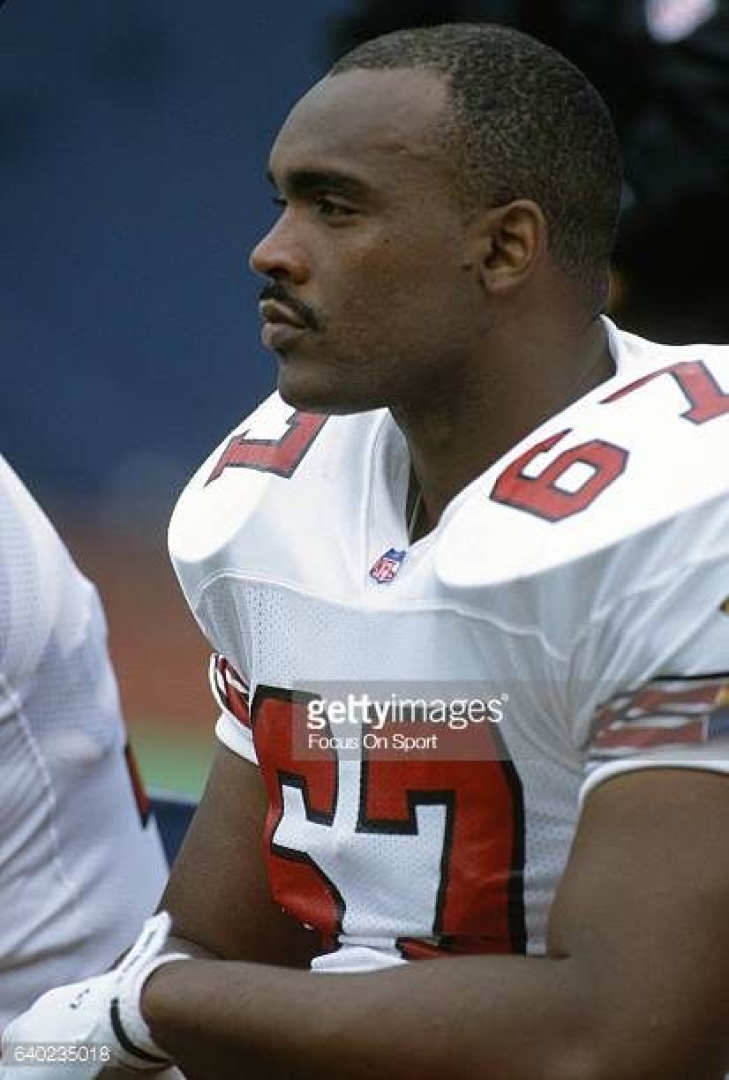
Selected in the first round (16th overall) of the 1982 NFL Draft out of UCLA, Luis Sharpe was the second offensive tackle off the board behind future Hall of Famer Mike Munchak. That draft investment paid off immediately, as the Cuban-born edge protector stepped into the starting lineup and anchored the left side of the Cardinals' offensive line for 13 seasons (1982–1994).
Standing 6 feet 5 inches and weighing 295 pounds, Sharpe possessed exceptional long-arm extension and quick footwork, allowing him to neutralize pass rushers on the blindside. His physical durability was a constant staple during turbulent years for the franchise; he holds the rare distinction of starting all 189 regular-season games he played for the organization, bridging the team's geographical shifts across St. Louis, Phoenix, and Arizona.
Sharpe's individual reputation hit its stride in the late 1980s as he transformed into one of the premier left tackles in the NFC. He earned three consecutive Pro Bowl invitations (1987, 1988, 1989) and picked up Second-Team All-Pro honors in 1988 and 1990. Despite playing on rosters that rarely competed in January—appearing in just one career playoff game—Sharpe remained a trusted, reliable building block for over a decade.
Across 13 seasons in a Cardinals uniform, Sharpe started 189 games, earning 3 Pro Bowl selections and 2 Second-Team All-Pro honors.
26. Tom Banks
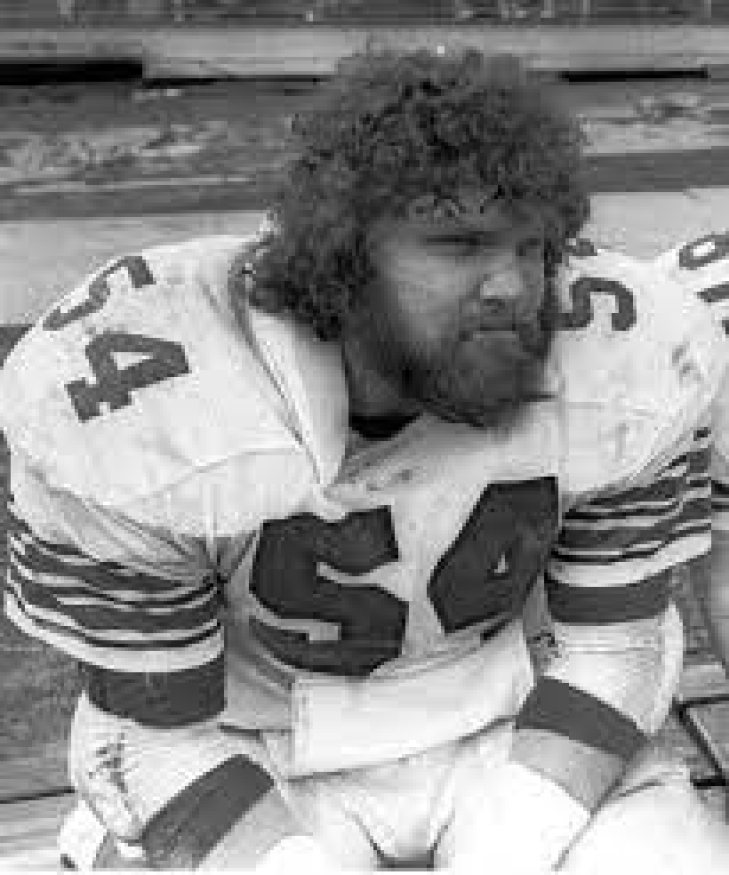
Selected in the eighth round (189th overall) of the 1970 NFL Draft out of Auburn, Tom Banks arrived in St. Louis as a completely overlooked prospect. A severe injury forced him to miss his entire rookie season, but once he stepped onto the field, he transformed into the cerebral, uncompromising anchor of one of the most dominant offensive lines in professional football history.
Standing 6 feet 1 inch and weighing 245 pounds, Banks operated as the quick-snapping, hyper-intelligent brain of the front five. What he lacked in towering stature, he more than made up for with explosive leverage, a relentless lower-body drive, and masterclass pre-snap callouts. Linebacker blitzes and complex interior fronts rarely caught St. Louis off guard because Banks identified defensive stunts before the ball was snapped. Alongside legendary linemates like Dan Dierdorf and Conrad Dobler, he spearheaded an offensive front famously dubbed the "Great Wall of St. Louis”.
After overcoming early-career injuries, including a knee injury that cut short nearly all of his 1974 season, Banks fully took charge of the quarterback position in 1975. He played all 14 games at center, leading an offensive line that permitted only eight sacks throughout the season, the second-lowest total in NFL history for a 14-game season. His exceptional line calls earned him his first Pro Bowl appearance and helped the Cardinals post an 11-3 record and win their division.
That breakout performance launched a four-year run of individual brilliance. Banks hit his career apex during the 1976 season, earning consensus First-Team All-Pro honors and a second Pro Bowl selection as the St. Louis offense again paced the league in pass protection. He added two more Pro Bowl invitations in 1977 and 1978, cementing his status as arguably the premier center in the NFC.
Banks played two more seasons in St. Louis, battling through wear and tear before retiring from the NFL following the 1980 campaign. Across ten active seasons with the franchise, he appeared in 116 regular-season games and made 110 starts.
19. Ernie McMillan
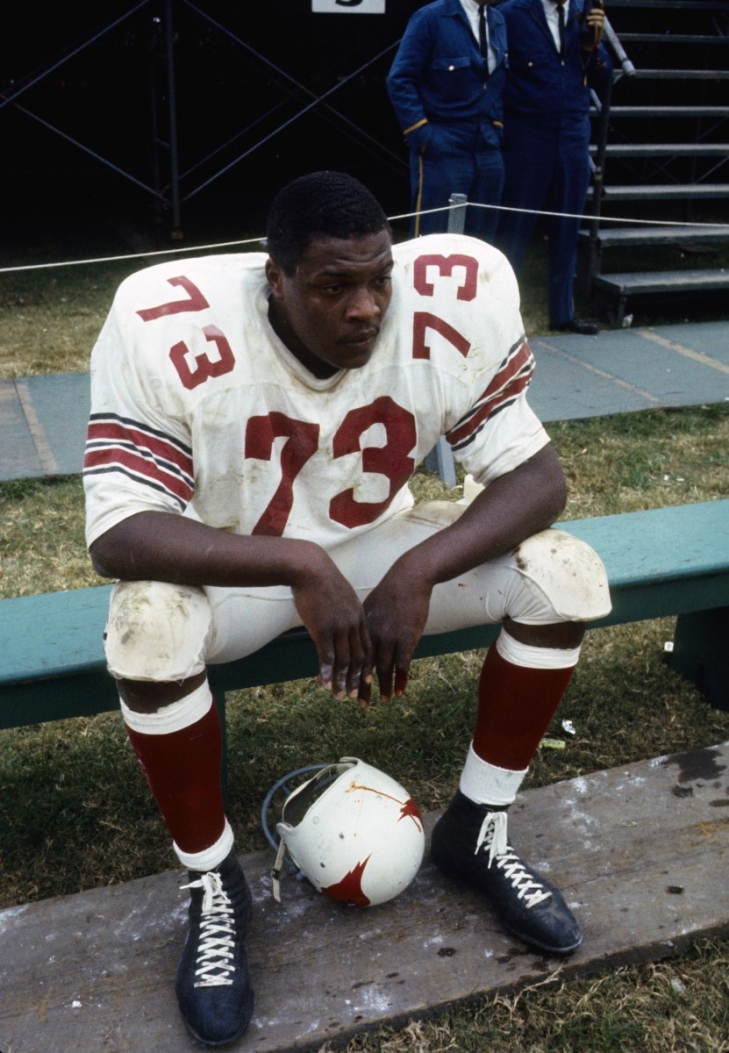
Before the "Air Coryell" offenses of the mid-1970s captivated the football world, the trench work in St. Louis was anchored by a quiet, unheralded draft steal out of Illinois. Selected in the 13th round (176th overall) of the 1961 NFL Draft, Ernie McMillan arrived at training camp as a converted college tight end. The Cardinals quickly shifted his 6-foot-5, 275-pound frame to offensive tackle, unleashing a cerebral, technically sound blocker who would anchor the edge for fourteen consecutive seasons (1961–1974).
The mechanics of his play relied heavily on leverage, geometry, and exceptional lateral balance. In an era where pass protection was a hand-to-hand brawl against legendary edge rushers, McMillan excelled through calculated body control and precise angles. He was a textbook technician who mastered the art of mirroring pass rushers, once grading out at a staggering 96 percent efficiency on pass blocks across a single season. His endurance was equally remarkable; after taking over as the full-time starter in his second year, he set a franchise record by starting 162 consecutive games without missing a single contest due to injury over his first twelve seasons.
In a testament to his selflessness and leadership, McMillan willingly moved from his longtime right tackle slot to left tackle late in his St. Louis tenure to accommodate the rise of young star Dan Dierdorf. That positional sacrifice allowed the Cardinals to field one of the most formidable tackle tandems in league history. After a final 1974 season in St. Louis where he helped secure a division title, he finished his career with a brief stint in Green Bay in 1975, retiring with 190 career regular-season games.
22. Roy Green
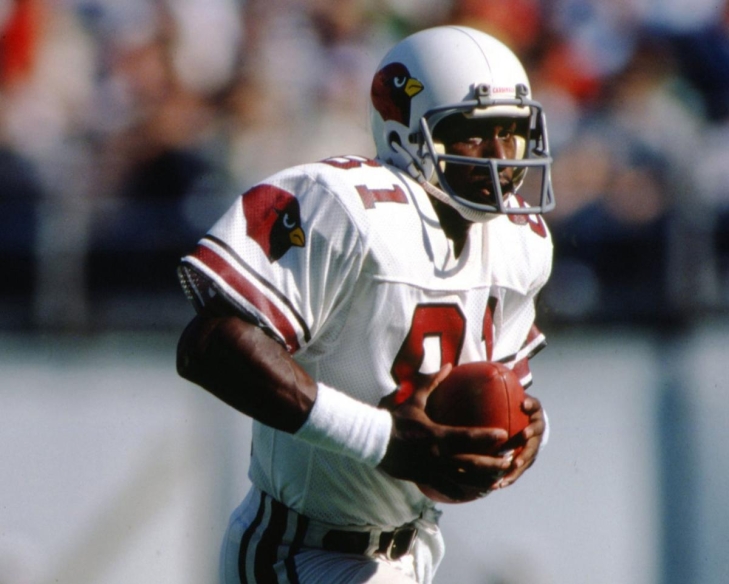
In the same draft that delivered star running back Ottis Anderson to St. Louis, the Cardinals landed a fourth-round steal out of Henderson State named Roy Green. Drafted as a defensive back, "Jet Stream" Green began his career playing safety and returning kicks, famously tying an NFL record in 1979 with a 106-yard kickoff return touchdown against Dallas. His elite vertical speed and ball skills eventually forced the coaching staff to give him snaps on offense, creating a rare two-way threat who intercepted passes and caught touchdowns in the same game.
Green possessed game-breaking, long-striding acceleration that allowed him to run past boundary corners with ease. His tracking ability on deep passes was elite, and his background in the secondary gave him a violent edge in open-field running after the catch.
After becoming a full-time wide receiver in 1982, Green quickly established himself as one of the top deep threats in professional football. His 1983 season was a showcase of aerial prowess: with 78 receptions, 1,227 yards, and 14 touchdowns, the most in the league, earning him his first First-Team All-Pro honor and a Pro Bowl selection.
Green elevated his performance even further during the 1984 season. As the main target of Neil Lomax's passing game, he led the NFL with 1,555 receiving yards, an impressive 19.9 yards per catch, and scored 12 touchdowns, earning his second straight First-Team All-Pro honor. Over the two seasons of 1983 and 1984 combined, Green totaled 156 receptions for 2,782 yards and 26 touchdowns, establishing himself as one of the most deadly big-play receivers in the league.
While nagging injuries slowed his production over the mid-1980s, Green remained an essential offensive weapon when the franchise relocated to Arizona in 1988. In his debut season in Phoenix, he notched his third career 1,000-yard campaign, catching 68 passes for 1,097 yards and 7 touchdowns. He played two more seasons in the desert before finishing his career with a brief stint in Philadelphia, retiring after the 1992 season. In a Cardinals uniform, Green logged 522 receptions, 8,496 receiving yards, and 66 touchdown catches.
In 2016, he was inducted into the Arizona Cardinals Ring of Honor.
20. Darnell Dockett
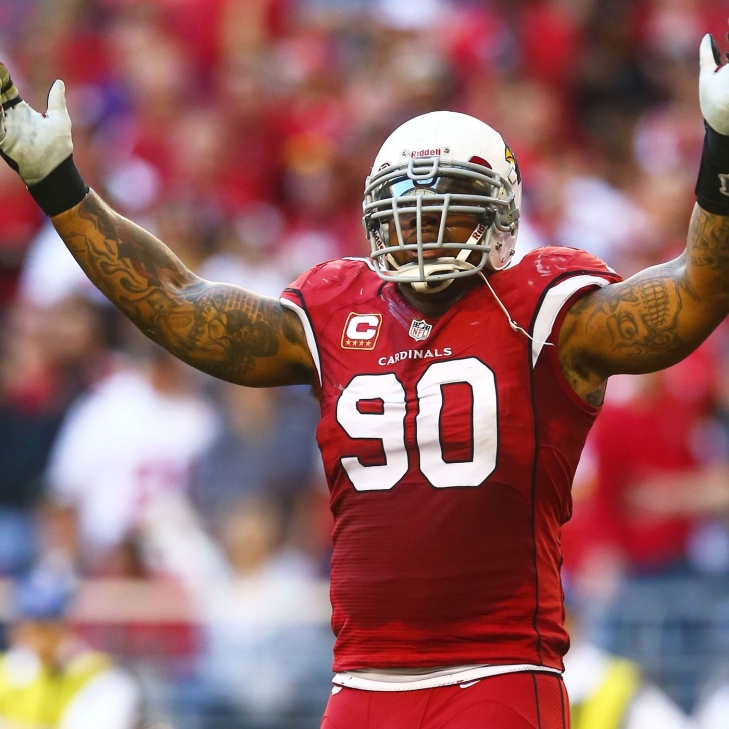
The defensive identity of the Arizona Cardinals during their historic Super Bowl XLIII run was forged in the disruptive energy of a third-round draft steal out of Florida State. Drafted 64th overall in the 2004 NFL Draft due to pre-draft character concerns that dropped his stock, Darnell Dockett arrived in the desert with a massive chip on his shoulder. He stepped onto the field and instantly evolved into one of the most explosive, penetration-style interior defensive linemen of his era.
Dockett had a quick, lethal first step that enabled him to penetrate gaps before offensive guards could establish their pass protection. Mainly functioning as an interior pass rusher, he used a combination of upper-body strength and aggressive hand techniques to collapse the pocket from the inside. Additionally, Dockett played with a relentless, fierce attitude that created an aggressive physical presence for the entire front seven.
His debut in 2004 made an immediate impression by securing a starting role and earning PFWA All-Rookie honors after recording 3.5 sacks and 39 tackles. His rise to elite status occurred in 2007, when he excelled at penetrating interior blocking schemes, achieving a career-high 9.0 sacks and 58 tackles, which led to his first Pro Bowl selection.
Dockett's standout moment came during the 2008 postseason on the sport's biggest stage. In Super Bowl XLIII against the Pittsburgh Steelers, he showcased an exceptional individual performance, tying the NFL Super Bowl record by sacking Ben Roethlisberger 3.0 times. His dominant play continued into the 2009 season, where he moved between defensive tackle and end, recording 7.0 sacks, earning Second-Team All-Pro honors and his second Pro Bowl invitation. He secured a third Pro Bowl selection in 2010, solidifying his role as a key interior defender early in the decade.
After missing the 2014 season due to a torn ACL, Dockett briefly joined division rival San Francisco in 2015. He was released before the start of the regular season and decided to return to Arizona, signing a ceremonial one-day contract in 2016 to officially retire as a lifelong member of the organization. Over ten seasons with the Cardinals, he accumulated 40.5 sacks, 459 tackles, 7 forced fumbles, and 4 interceptions across 158 games.
18. Marshall Goldberg
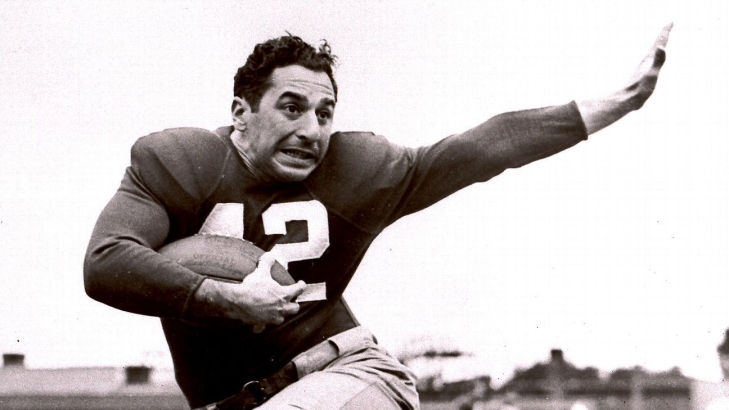
Marshall Goldberg, a two-time consensus All-American and Heisman Trophy finalist under Jock Sutherland at Pitt, became a national star when the Chicago Cardinals picked him in the 1939 NFL Draft's second round. As one of the earliest notable Jewish superstars in pro football, Goldberg's unique blend of backfield strength, return speed, and defensive savvy quickly boosted the team's competitiveness.
Goldberg had a low, powerful running style that made him effective between the tackles, combined with the quick acceleration of a track athlete. His versatility enabled him to play as a fullback, halfback, kick returner, and safety effortlessly. On defense, his quick decision-making and knack for turnovers made him a persistent threat to intercept passes from opponents, while his open-field tackling often stopped large plays in their tracks.
His multi-phase versatility peaked during the 1941 season. Goldberg delivered an impressive single-season performance, rushing for 427 yards, catching passes for 313 yards, and leading the NFL with 290 kickoff return yards. His total of 1,236 all-purpose yards topped the league, earning him a Pro Bowl spot and All-Pro honors. Not satisfied with offensive dominance alone, Goldberg also excelled on defense, tying for the league lead with 7 interceptions. He carried this exceptional energy into 1942, finishing fifth in all-purpose yards and continuing to excel in the secondary.
During his prime, Goldberg paused his football career to serve in the U.S. Navy for two years in the South Pacific during World War II. After returning to Chicago in 1946, he chose to play primarily as a safety to support the Cardinals' renowned "Dream Backfield,” which included Charley Trippi, Paul Christman, Elmer Angsman, and Pat Harder. His unselfish switch to safety became the defensive cornerstone of the memorable 1947 season, ending with a thrilling victory over the Philadelphia Eagles that secured the franchise's only NFL Championship to date.
Goldberg played one more season before calling it a career. He recorded 1,644 rushing yards, 775 receiving yards, 1,083 return yards, and 19 interceptions across 77 regular-season games. The Cardinals enshrined Goldberg into their Ring of Honor in 2006.
21. Kurt Warner
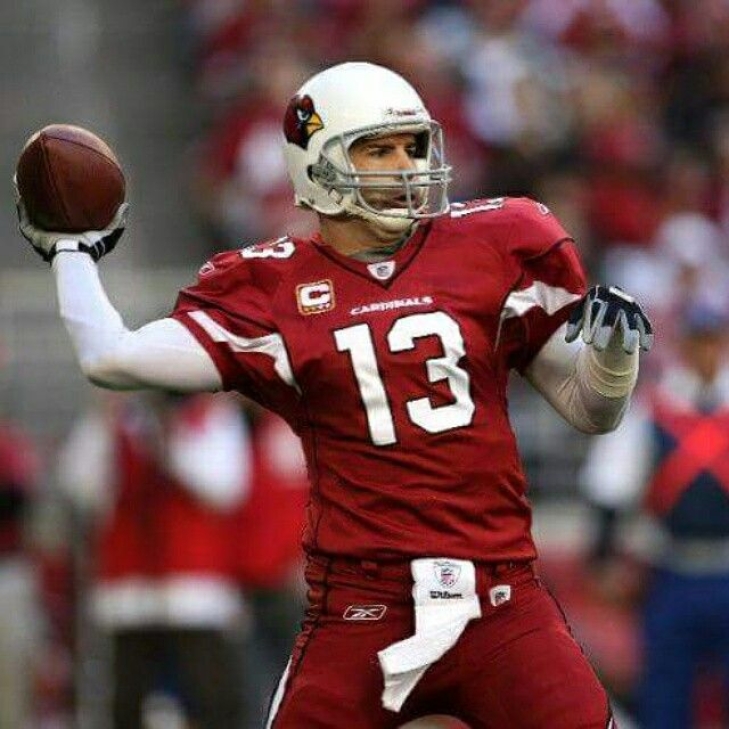
Kurt Warner's early fame was cemented by the sensational "Greatest Show on Turf" in St. Louis, but his resurgence in Arizona confirmed his Hall of Fame caliber. After a rocky transition year with the Giants in 2005, the experienced quarterback joined a Cardinals team desperately seeking stability at quarterback. What started as a bumpy, uncertain period in Arizona eventually evolved into one of the most remarkable second careers in football history.
His passing style depended on quick, instinctive pre-snap reads combined with exceptional pocket bravery. With elite processing speed and a gentle touch, Warner allowed routes to unfold downfield, trusting his arm and releasing the ball well before his receivers made their cuts. Supported by a dynamic receiving duo in Larry Fitzgerald and Anquan Boldin, he turned Arizona’s passing game into a potent vertical threat.
His early years in the desert involved a lot of instability. In 2005, injuries and inconsistent performance led him to share playing time with Josh McCown. The following season, in 2006, head coach Dennis Green shifted the offense to focus on rookie first-round pick Matt Leinart. Despite these changes, whenever Warner played, his precision was clear. After quietly regaining the starting role during the 2007 season and throwing 27 touchdown passes, he headed into the 2008 training camp in a true competition with Leinart.
Warner secured the starting role after camp and delivered a standout 2008 season. Rewinding the clock, he passed for 4,583 yards and 30 touchdowns, earning his fourth Pro Bowl selection and the 2008 Walter Payton NFL Man of the Year Award. During the 2008 playoffs, Warner achieved an incredible 1,261 passing yards and 11 TDs over four games, leading Arizona to its first Super Bowl appearance in franchise history. He carried that momentum into Super Bowl XLIII against the Steelers, passing for 377 yards and 3 touchdowns in a tight, exciting game. Warner's success continued in 2009 with another great season, throwing for 3,753 yards and returning the Cardinals to the postseason. Notably, he threw 5 touchdowns for 379 yards in a wild-card game against Green Bay, completing more touchdowns than incompletions (4).
After resolving all questions about his longevity, Warner chose to retire on his own terms following the 2009 season. His impressive five-year tenure with Arizona included 15,843 passing yards, 100 touchdowns, and a memorable postseason run that transformed the franchise. Warner was inducted into the Pro Football Hall of Fame in 2017, and we believe the 2008 season with the Cardinals was pivotal in establishing his Hall of Fame credentials. In 2014, Arizona also honored him by inducting him into their Ring of Honor.
17. Ottis Anderson
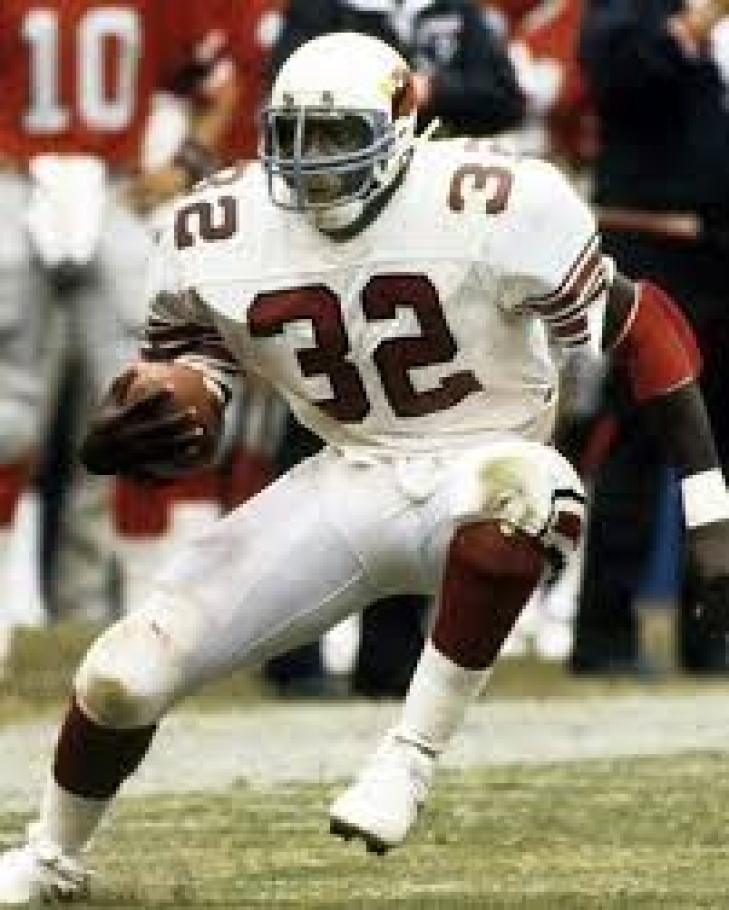
After setting the University of Miami school record as the first player in Hurricanes history to break the 1,000-yard mark, Ottis Anderson entered the professional ranks with immense expectations. Selected eighth overall in the first round of the 1979 NFL Draft by the St. Louis Cardinals, Anderson stepped into the backfield and instantly altered the physical identity of the franchise.
Anderson was the ultimate blend of power-back violence and open-field elusiveness. Running with a high-knee stride, lower-body drive, and sharp vision, he routinely punished defenders at the second level and had enough top-end speed to erase angle pursuits. Beyond his rushing volume, his smooth hands out of the backfield made him a lethal dual-threat weapon on third downs.
His professional debut in 1979 was one of the most remarkable in NFL history. In his very first regular-season game against Dallas, Anderson made an immediate impact with 193 rushing yards. He finished the season with a career-best 1,605 rushing yards and 1,913 total yards from scrimmage, earning AP NFL Offensive Rookie of the Year, a First-Team All-Pro honor, and his first Pro Bowl selection. Additionally, both UPI and The Sporting News named him NFC Player of the Year.
Anderson maintained a demanding workload into his 1980 sophomore season, rushing for 1,352 yards and 9 touchdowns while also catching 36 passes, earning his second Pro Bowl. During his first six seasons with St. Louis (1979–1984), Anderson exceeded 1,000 rushing yards five times, an achievement that would probably have been six straight if the 1982 strike hadn't shortened the season.
This set the stage for four years of consistent, high-volume production from 1981 to 1984. Anderson started the 1981 season by rushing for 1,376 yards and gaining 1,763 yards from scrimmage, becoming the franchise's all-time leading rusher halfway through his third season. In the strike-affected 1982 season, he helped keep the offense active with 587 rushing yards in just eight games, equivalent to a 1,000-yard season—and played a key role in leading the Cardinals to the playoffs. Fully healthy again, he posted consecutive 1,000-yard seasons in 1983 (1,270 yards) and 1984 (1,174 yards), anchoring a potent Big Red offense alongside quarterback Neil Lomax and establishing himself as an essential offensive force.
After injuries slowed his production in mid-1985 and 1986, the Cardinals executed a surprise mid-season trade, sending their legendary back to division rival New York. While his initial stint with the Giants was spent in a situational role, Anderson engineered a famous second act, winning the 1989 NFL Comeback Player of the Year Award and capturing Super Bowl XXV MVP honors in 1991.
He accumulated 7,999 rushing yards, 2,495 receiving yards, 10,494 yards from scrimmage, and 53 total touchdowns across 99 games as a Cardinal.
15. Ken Gray
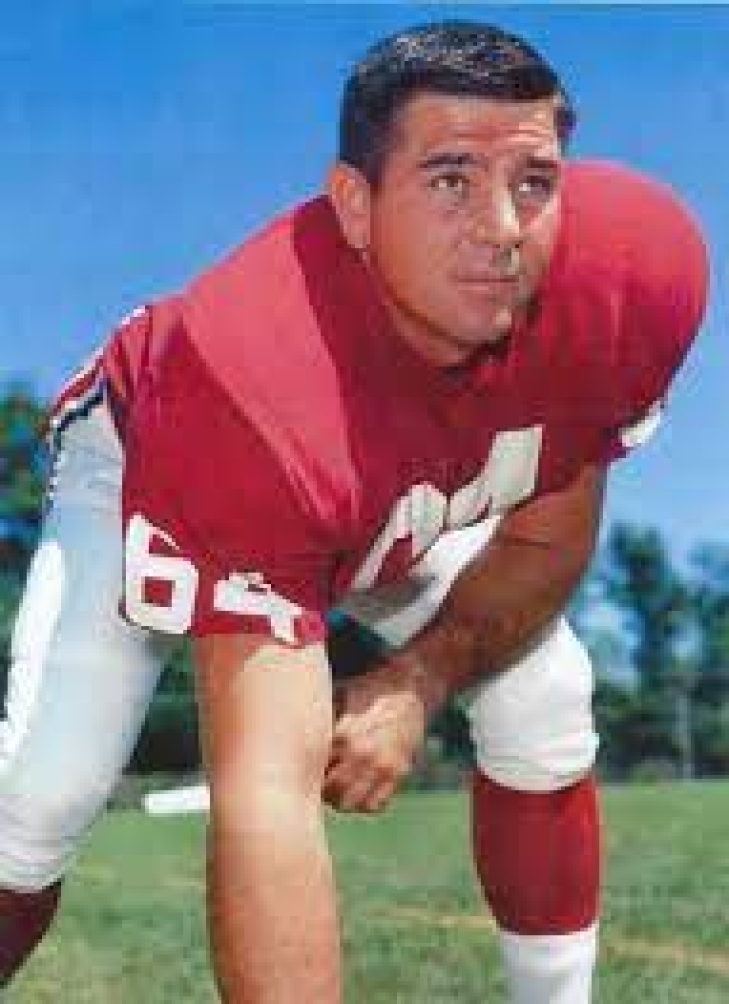
Selected in the sixth round of the 1958 NFL Draft by Green Bay, Ken Gray faced tough competition in a deep roster, playing alongside future Hall of Famers. Unable to secure a permanent spot with the Packers, the Texas native was claimed by the Chicago Cardinals, making his debut as a defensive end in his rookie year. However, this defensive stint was short-lived; before his second season, the coaching staff moved him back to right guard, where he became one of the most formidable interior blockers of his time.
Gray epitomized the classic open-field pulling guard with a perfect blueprint. He had explosive short-area quickness from his stance, enabling him to lead-block on the perimeter with devastating impact. With a fierce, punishing attitude, Gray often dominated defensive ends and linebackers in single coverage, creating large running lanes for stars like John David Crow, Johnny Roland, and Prentice Gautt. His legendary toughness made him a teammate favorite; he was a respected team captain for seven straight seasons and frequently played through serious knee injuries.
While his initial years in Chicago were spent establishing his footing, the franchise's relocation to St. Louis in 1960 coincided with Gray's rise to absolute individual stardom. He secured his first career Pro Bowl invitation in 1961, establishing himself as an elite interior presence. By 1963, Gray had evolved into an untouchable force at right guard, kicking off a seven-year stretch of consensus postseason honors.
His peak performance arrived during the 1964 season, when his dominant drive-blocking and pass protection earned him consensus First-Team All-Pro honors alongside his third Pro Bowl selection. Between 1961 and 1968, Gray was voted to six Pro Bowls (1961, 1963, 1964, 1966, 1967, 1968), serving as the undisputed anchor of the Cardinals' offensive line throughout the entire decade. Gray's relentless individual consistency at right guard earned him All-Pro or All-Conference recognition in seven consecutive seasons from 1963 through 1969.
After twelve seasons and 151 games in a Cardinals uniform, knee injuries finally caught up with the veteran leader, leading to his release prior to the 1970 season. He closed out his career with a single season in Houston before hanging up his cleats.
Gray was named as a First-Team guard on the NFL 1960s All-Decade Team, cementing his status as one of the premier interior linemen of his generation.
