
7. LaMarcus Aldridge
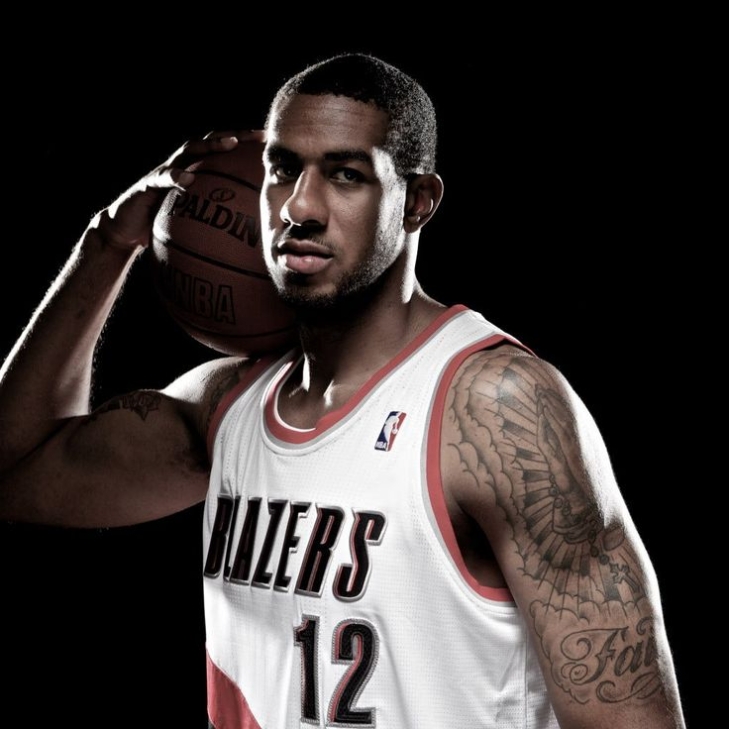
The Portland Trail Blazers have had some bad luck in previous NBA drafts, but they have had success with draft day trades. One such trade brought them LaMarcus Aldridge, the second overall pick from the Bulls, and it turned out to be a great move for them.
Aldridge quickly established himself as a star player in Portland, earning All-Rookie honors and becoming a starter in his second year. He was also a top contender for the Most Improved Player of the Year award. Aldridge's numbers continued to improve as he dominated in the paint, and by the 2010-11 season, he was one of the most well-rounded players in the league. He excelled at rebounding on both ends of the court, and his fadeaway jumper was a thing of beauty.
Although Aldridge did not make the All-Star Team in 2011, he did earn a spot on the All-NBA Third Team. He continued to put up similar numbers over the next few years and earned All-Star honors in each of those seasons. He was also named to the Third Team All-NBA in 2014 and the Second Team All-NBA in 2015, with MVP finishes of tenth and seventh, respectively. Despite his impressive achievements, Portland was not a championship contender, and Aldridge wanted more national recognition.
Aldridge eventually signed with the San Antonio Spurs and continued to be a top player. He earned All-Star honors three times and added more All-NBA accolades to his collection. He also finished in the top ten for MVP voting in 2017-18. However, Aldridge still wanted a title.
In the 2020-21 season, Aldridge was traded to the Brooklyn Nets, but his time with the team was short-lived due to an irregular heartbeat. Although he was eventually medically cleared to return, he played in only 21 more games before announcing his retirement. He was not the same player he had once been, and the Nets did not live up to the hype that came with their star-studded lineup of Kevin Durant, Kyrie Irving, and James Harden.
Despite having Hall of Fame-worthy stats, Aldridge's name recognition never quite matched his talent.
9. Earl Thomas
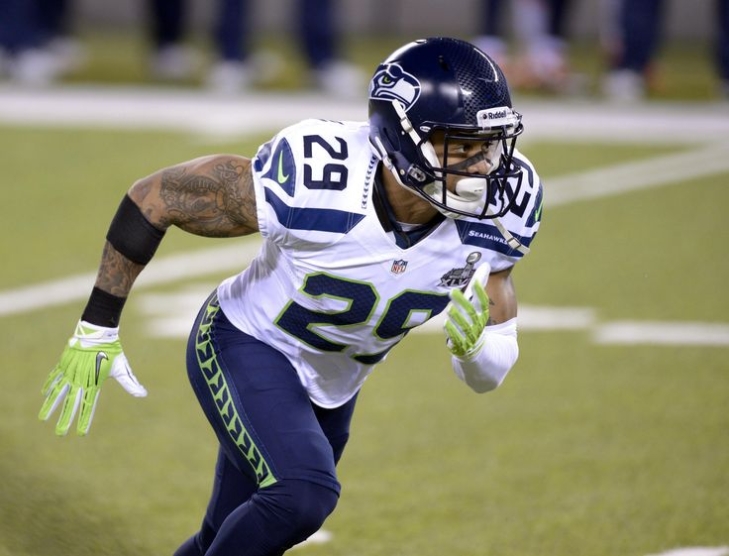
Earl Thomas was a superstar at Texas, where he received All-American honors. He was selected as the 14th pick of the 2010 NFL Draft and became an immediate starter at Free Safety. In his sophomore season of 2011, he began a five-year streak of Pro Bowls and a three-year run of First Team All-Pro selections in 2012. Thomas was an essential member of the Legion of Boom, a group of Defensive Backs that helped the Seattle defense hold Denver to only eight points in their Super Bowl XLVIII Championship win.
Despite Richard Sherman receiving more attention, Thomas was equally as good and earned his sixth Pro Bowl in 2017. However, Thomas left the Seahawks for Baltimore as a Free Agent in 2019. After one Pro Bowl year, an altercation in practice with a teammate (Chuck Clark) proved to be too much for the Ravens, as his toxic nature wore out its welcome not only in Baltimore but in the rest of the NFL. Domestic violence issues surrounding him further tarnished his reputation.
Earl Thomas may not have ended his career on his own terms, but he was one of the best Safeties of the 2010s. Few former players made an All-Decade Team, but Thomas certainly earned that honor.
280. Derrick Johnson

Derrick Johnson played all but his last season of his career with the Kansas City Chiefs and the former 1stRound Pick from Texas would slowly work his way to the upper echelon of NFL Linebackers and he would be named to four Pro Bowls out of five from 2011 to 2015. Johnson, who was also named a First Team All-Pro in 2011 would have five years where he had more than 105 Combined Tackles and retired with 1,168 overall with 27.5 Quarterback Sacks and 14 Interceptions.
271. Bud McFadin
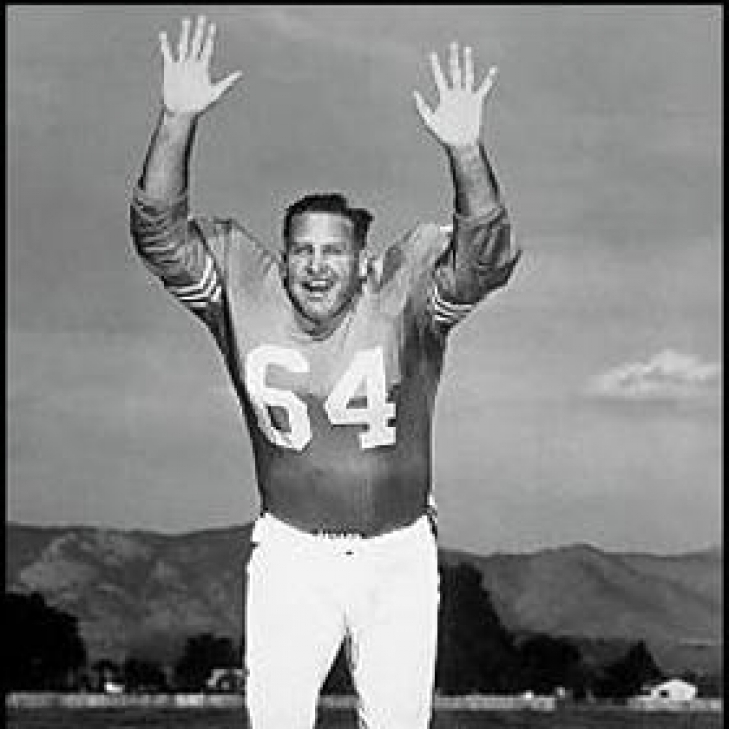
Bud McFadin had an excellent career in pro football, yet when it comes to discussing him for the Hall of Fame, his name never comes up. Perhaps it should, but we get why it doesn't.
251. Spec Sanders
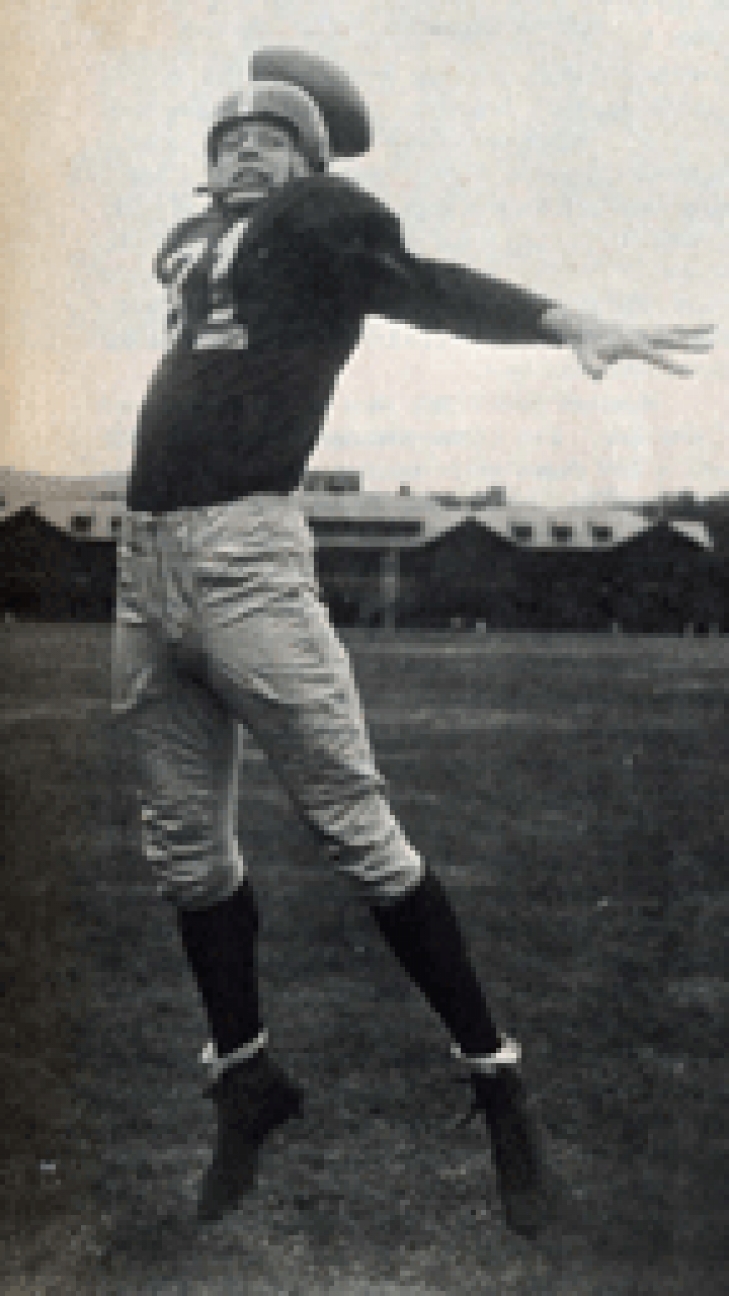
At first, this might seem like someone who doesn’t deserve a rank, but the more we look, the more we think he deserves a spot on this list.
Spec Sanders was chosen by the Washington Redskins as the 6th Overall Pick in the 1942 NFL Draft, but as this occurred during WWII, Sanders would serve his country in the military until the end of the war. Afterward, Sanders joined the New York Yankees of the AAFC, and arguably became the first unquestioned offensive juggernaut of the new league.
In 1946, he was the inaugural Rushing Champion with 709 Yards and would also finish atop the AAFC leaderboard in Rushing Touchdowns (6) and All-Purpose Yards (968). That was good, but Sanders would shatter that in 1947, when he would have 1,432 Rushing Yards and 18 TDs on the ground. It would take over a decade for those single-season numbers to be eclipsed, as Jim Brown would rush for 1,527 Yards in 1958, and Jim Taylor would break his rushing Touchdown record in 1962. Sanders was also one of the better passers in those two years, and his offensive prowess in the AAFC had few, if any, equals.
Knee issues forced his early retirement, but he returned in 1950 with the New York Yanks of the NFL, and while focusing on the defensive side of the ball, he set a then-record of 13 interceptions in a season. That would be the last year that Sanders played pro football, but for a brief career, it certainly was spectacular!
What obviously hurts Sanders in his Hall of Fame quest is that the teams he played for no longer exist, and his best run happened in a league that was absorbed in 1950. It is next to impossible for a legacy to get past those two obstacles.
131. Priest Holmes

Priest Holmes played for the high-profile Texas Longhorns in college, but it didn't lead to a draft selection. Undrafted in 1997, Holmes would sign with the Baltimore Ravens. The Running Back would see no action as a rookie but would rush for 1,008 Yards in 1998 and did well until Jamal Lewis supplanted him as the lead back for Baltimore. Holmes won a Super Bowl ring, but he wanted a starting role, so he signed with the Kansas City Chiefs, where he got that opportunity.
Holmes went on a three-year (2001-03) tear as an elite Running Back, earning First Team All-Pro honors each season. Holmes led the NFL in Rushing Yards in 2001, with first-place finishes in Rushing Touchdowns in 2002 & 2003. In all of those seasons, Holmes would have a 2,000 Yards From Scrimmage season, the first two being league-leading. Overall, in that triumvirate of seasons, he would amass 6,566 Yards From Scrimmage with 61 Touchdowns and an Approximate Value of 61. Injuries would pile up, and Holmes played only four more years, missing an entire season in one of them (2006) and playing only 19 more games in total. He would retire with an excellent sum of 11,134 Yards From Scrimmage and 94 Touchdowns.
18. Ox Emerson
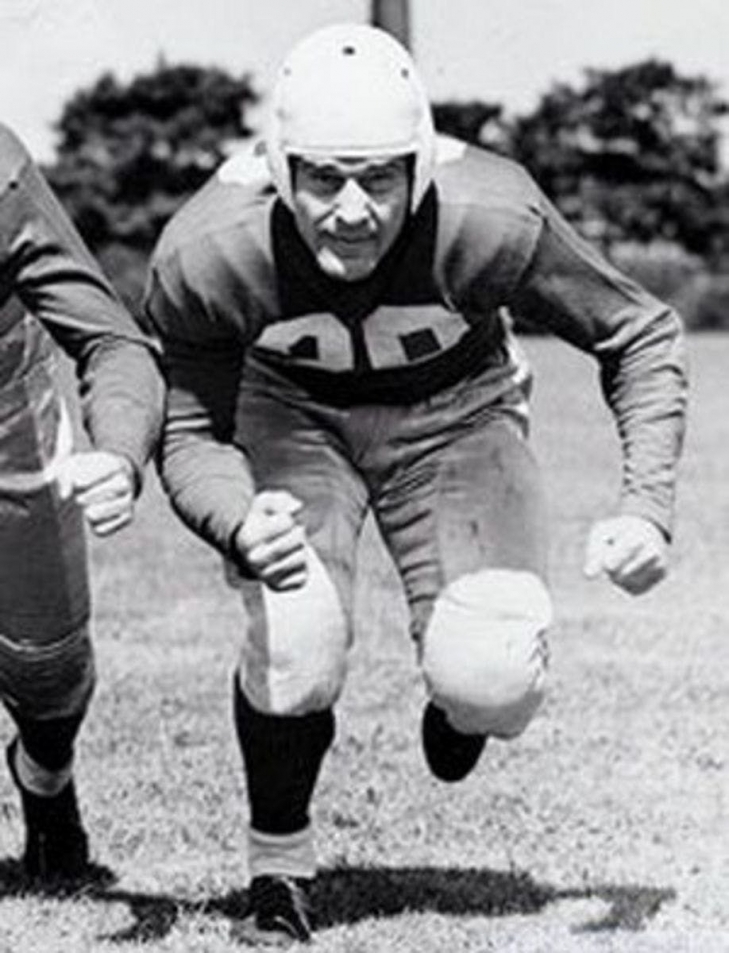
Ox Emerson was a member of the NFL All-Decade 1930's Team. He started his professional football career in 1931 with the Portsmouth Spartans. In his second season, he was selected to his first of five straight First Team All-Pros. Despite being ironically nicknamed due to his height of under six feet and weight of less than 200 pounds, Emerson used his skill and smaller size to his advantage, evading tacklers with his footwork and positioning.
After the Spartans relocated to Detroit, the team was renamed the Lions. Emerson played a crucial role in their 1935 championship win. Throughout his career, his work in the trenches was vital to the team's rushing success, making him one of the best linemen Detroit ever had. Emerson has been a Centennial Slate Hall of Fame Finalist, indicating he may gain entry through a seniors committee in the future, though given the Hall’s recency bias, we would not bet on it.
36. Tommy Nobis
In the first incarnation of our Football list, how could we forget about a legendary Atlanta Falcon? Granted, there have not been that many in the past history of the Falcons, but we may very well have forgotten about a solid Linebacker in Tommy Nobis, who was easily the first bright spot of the Southern franchise.
As one of the finest linebackers in collegiate history, Tommy Nobis was the first draft pick (and first overall of 1966) for the expansion Atlanta Falcons. Nobis was a feared tackler and was the star of the early Falcons defensive squads. He was a Pro Bowler in his first three seasons and would lead the Falcons in tackles on nine occasions.
Tommy Nobis is justifiably placed in the Falcons Ring of Honor, but he was not as dominant in the Pro ranks as he was at college. His post-career accolades will likely never leave the state of Georgia, though the Finalist slot at the 100th Centennial Class offers hope.
Should Tommy Nobis be in the Hall of Fame?
289. Casey Hampton
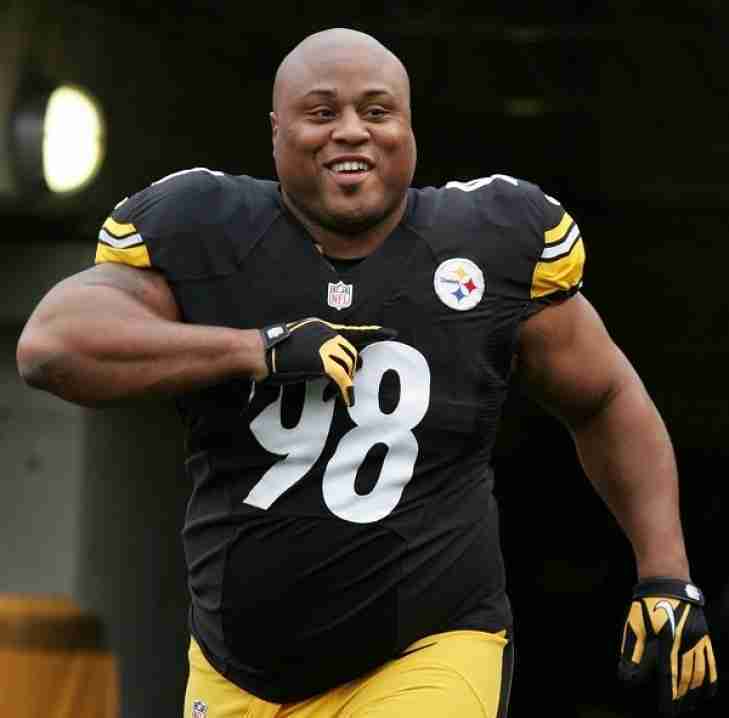
A former Big XII Defensive Player of the Year at the University of Texas, Casey Hampton was drafted 19th Overall in 2001 by the Pittsburgh Steelers, which would be the only team that he would ever play for professionally.
